
Roofers in Ferring
Flint village core and seaside streets
Ferring's roofs run from the flint buildings round St Andrew's Church in the 1976 conservation area to the holiday homes and houses that filled the ground between the sea and the A259.

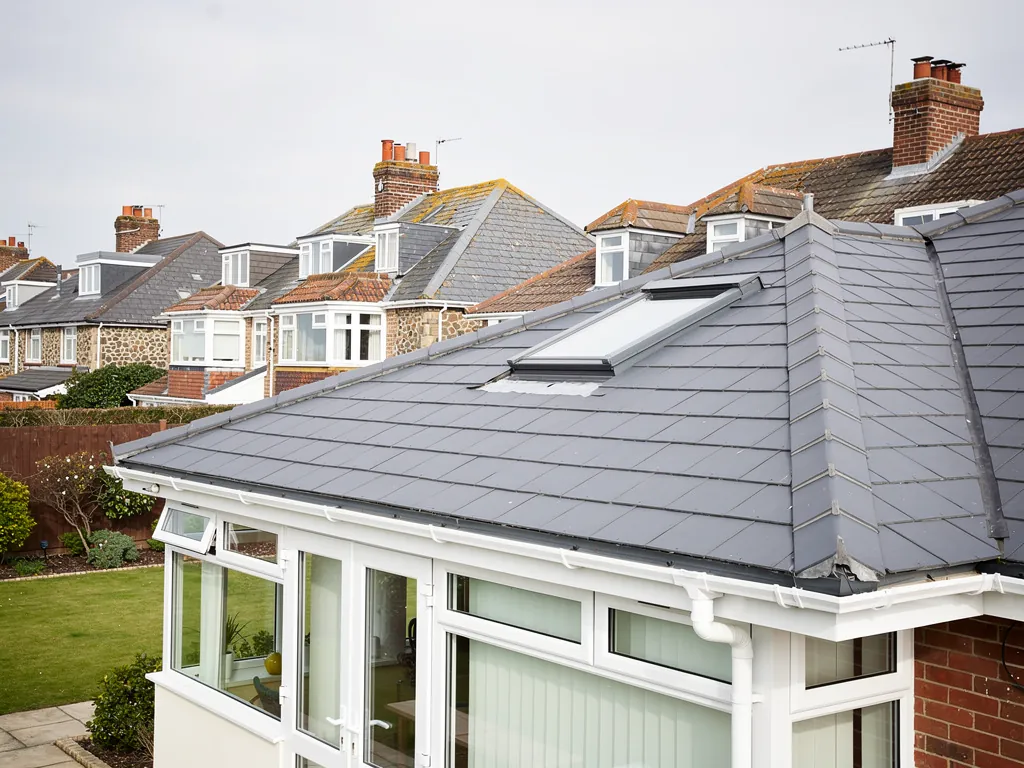
Ferring roofs
From St Andrew's flint to the holiday streets
-
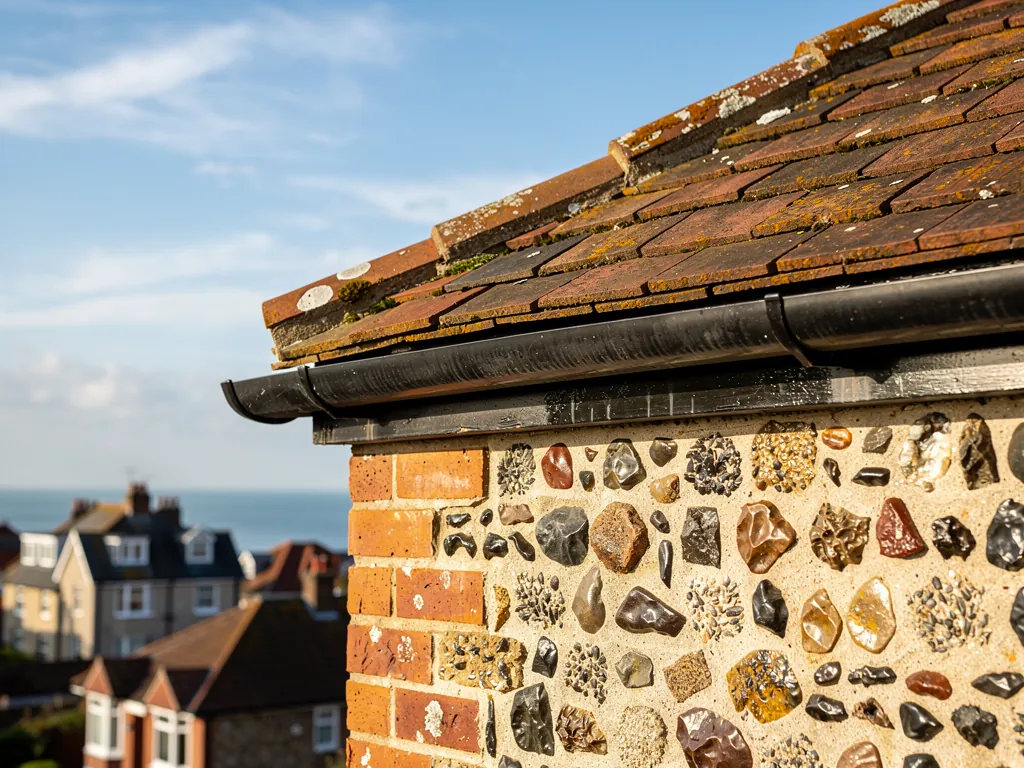
Flint buildings round the church
The conservation area, designated in April 1976, is the old core around St Andrew's Church. Arun's guidance records considerable uniformity of character through the use of flint, in the buildings and in the boundary walls.
-
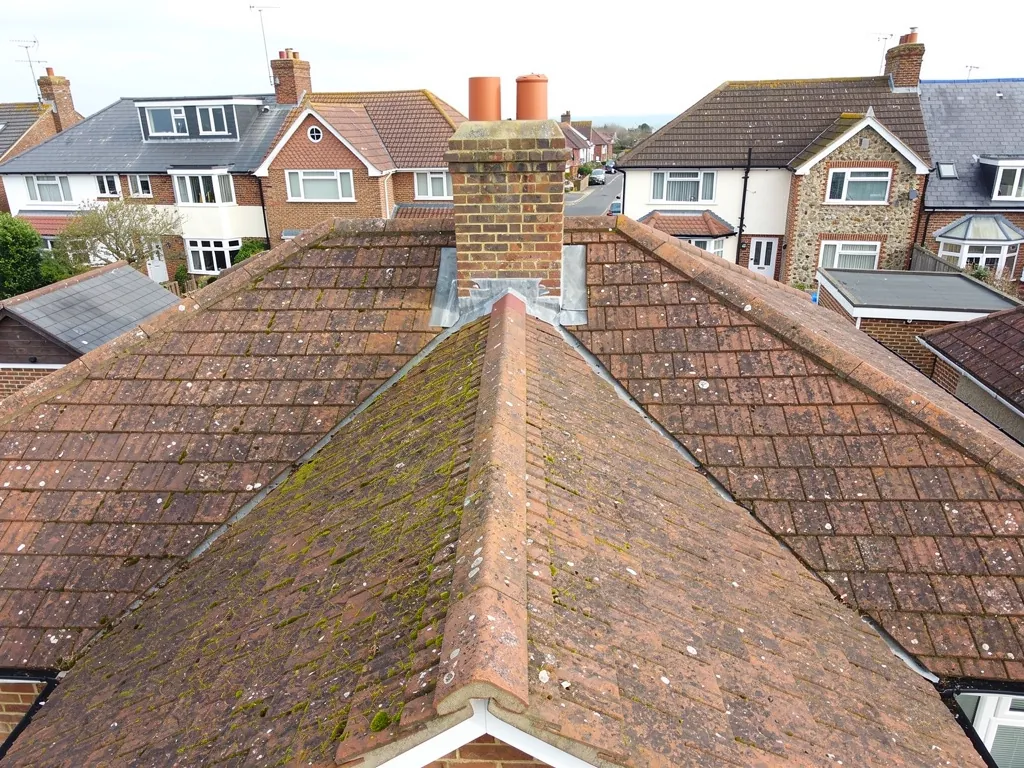
A Grade I church and its neighbours
St Andrew's is listed Grade I, and The Old Barn and Church Cottage nearby are both Grade II. Listed roofs follow their own rules, so a survey in the old village starts with the list entry.
-
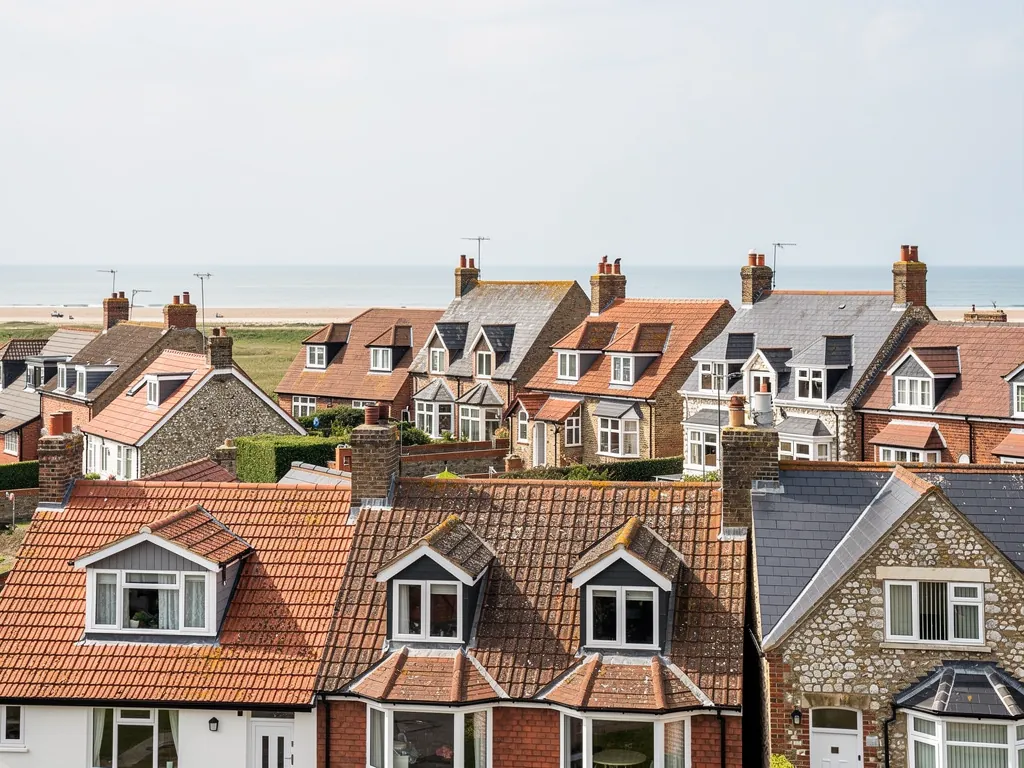
Holiday homes and twentieth-century streets
Until the 1920s Ferring was a small village. It grew as the south coast was built up, particularly with holiday homes, and the conservation area is now a small patch surrounded by 20th-century development.
Map of Ferring, 13.7 road miles east of Bognor Regis, with the nearest towns we also cover.
Ferring Conservation Area, April 1976
- Council
- Arun District Council
- County
- West Sussex County Council
- Conservation area
- Ferring Conservation Area, designated April 1976: Ferring Street south of the shops, Church Lane, and Ferringham Lane north of Grange Close
- Article 4
- None recorded for Ferring on Arun's conservation areas page
- Listed landmarks
- Parish Church of St Andrew, Grade I; The Old Barn and Church Cottage, both Grade II
- Distance
- 13.7 road miles east of Bognor Regis, about 24 minutes by car
Ferring notes
Flint lanes, holiday streets and the shore
Three parts of Ferring, from the flint core to the holiday-home years and the sea edge, and what each means for the roof you live under.
Chapter 1: Flint walls, Ferring Street and Church Lane2623
Sheet 01 / 03Ferring lies between the sea and the A259, and its old heart is small. Arun District Council designated the Ferring Conservation Area in April 1976, and its guidance describes a compact area of Ferring Street south of the shops, Church Lane, and Ferringham Lane north of Grange Close, wrapped in twentieth-century development. What holds the area together, in the council's words, is a considerable uniformity of character through the use of flint, both in the buildings and in the boundary walls. Whatever the covering above those walls, the roofs here have to meet a material that does not forgive a rough junction.
Before a roof job near the Ferring flint
- Is the house listed?
- Does the work reach a flint wall?
- Is the lead lasting or past it?
- Has Arun confirmed the rules?
1.1 Where a slope runs into flint
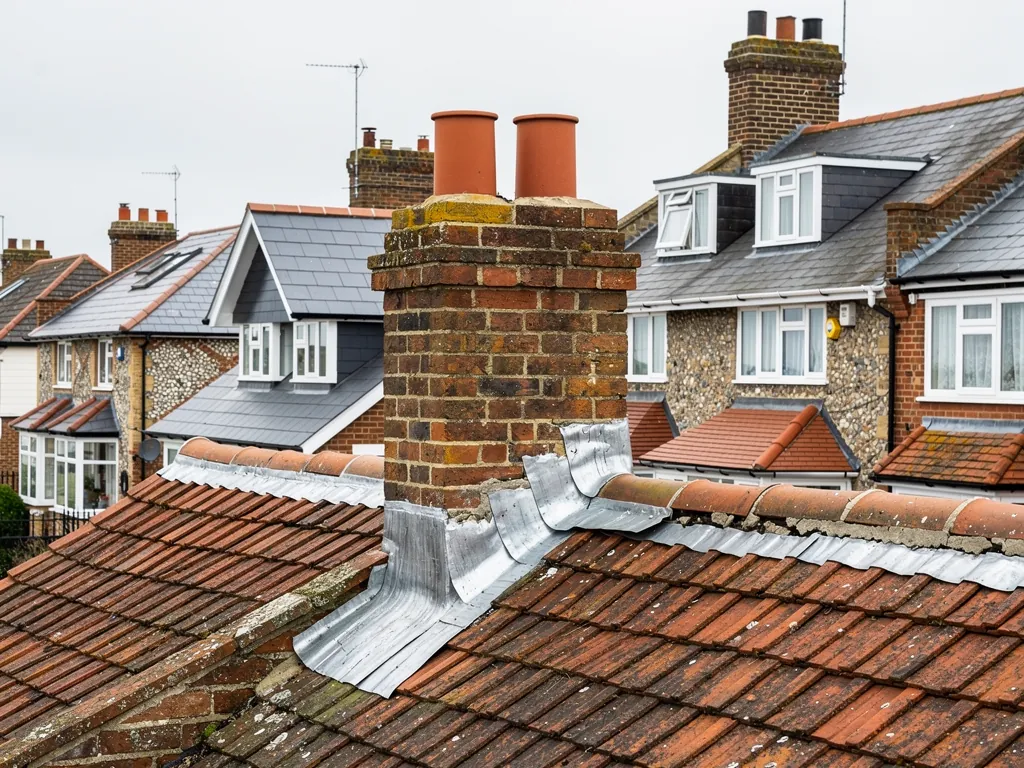
Flint is hard, irregular and set in lime or mortar joints that are older and softer than modern cement. A roof edge butting against such a wall needs a flashing, the lead strip tucked into a joint of the wall and folded down across the roof covering. Cutting a neat slot into flint is slow work, and a lazy fix with a bead of sealant shrinks and splits within a season or two. We chase the lead into the joint, wedge it and point it in a matching mortar, which keeps the flint intact. The same care applies to a chimney in a flint gable, where the lead around the stack is the first thing to fail. For stacks, chimney repairs sets out what we check.
1.2 Listed neighbours and the conservation officer
St Andrew's is listed Grade I, and The Old Barn and Church Cottage nearby are both Grade II. Arun's conservation areas page records no Article 4 direction for Ferring, and under section 55 of the 1990 Planning Act, work that leaves a building's outward look materially unchanged is not development. A listed building is different: changes touching its character need listed building consent. If you are unsure which side your house falls on, put the question to the planning team at Arun, or to the conservation officer there, before you book anyone, and send us the answer so we can price the right job.
1.3 Lead around a stack: what it costs
Lead is the part of a chimney that fails first, and MyJobQuote, in a guide last updated in September 2026, puts a patch repair to chimney lead at £150 to £250. A full renewal runs £350 to £460 without scaffold and £700 to £920 with it. Those are national figures, and a stack in a flint gable, or one that is hard to reach, can sit above them. We climb up, photograph the lead and say whether a patch will hold, since a patch that fails in a season is money wasted.
Chapter 2: Holiday homes and the 1920s growth2074
Sheet 02 / 03Until the 1920s Ferring was a small village, and it grew when the south coast began to be built up, particularly with holiday homes. That history matters on a roof because a holiday house is used differently from a family home. It may stand empty through the winter, it may be let for a week at a time, and it may have been extended or patched by several owners who never compared notes. Our job at the survey is to work out what the roof has been through and what it needs next, not to guess from the street.
Two kinds of Ferring roof use
Lived-in family home
A leak shows on a ceiling within days, so repairs are usually caught early.
Holiday home left empty
A leak can run unseen for a long time, so a post-gale check is worth having.
2.1 Left empty between visits
A leak in a lived-in house shows as a brown patch on a ceiling within days. In a house nobody visits, the same leak can run unseen, soaking insulation and timber until someone lets themselves in. After a gale, a second-home owner who lives away is best served by a roof check that includes the loft and photographs of every fault, sent to the owner so there is no need to be present. Our roof inspections and surveys page explains what the survey covers, and once we have surveyed, you are sent one written quote showing a single total.
2.2 Roofs from the building boom
A roof laid in the first wave of seaside building and never re-covered is approaching a century old. Its tiles may still be fine, while the battens, nails and underlay behind them have given up long ago. Ridge and hip tiles from those years were bedded in mortar alone, and since BS 5534 was revised in 2014 the accepted method adds mechanical fixings. We check each one for movement, and we refix where it is loose instead of replacing the whole roof.
2.3 Old garages, sheds and the asbestos question
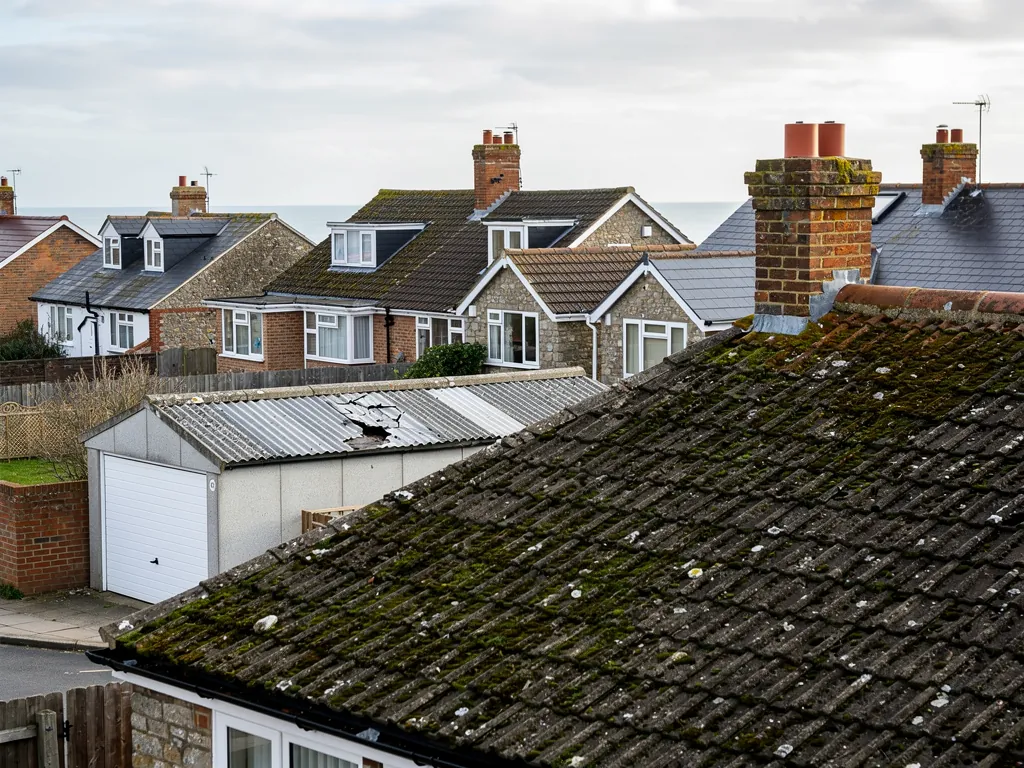
Holiday properties often have a garage or outbuilding with a sheet roof. The HSE guidance is to assume asbestos is present if a structure dates from before 2000 or was refurbished at that time. Sheets of asbestos cement lifted out whole count as non-licensed work, but once they are badly broken the job becomes notifiable, and the waste leaves site under a consignment note. We do not cut or drill an unidentified sheet, and our roof asbestos check explains how a sample is identified first.
Chapter 3: Between the sea and the A2591708
Sheet 03 / 03The Ferring parish stretches from the A259 down to the sea, and its beach is a mixture of pebbles and stones, reinforced by groynes. The houses nearest the shore take the sea weather first: gales, driving rain and salt air. Roofs facing the water earn their keep at the edges, where the wind gets underneath, so edge details matter more than the field of the roof. Verges, ridges and the lead flashings on bay windows are worth a look after any gale, and a flat roof over a garage or extension is worth a look at least once a year.
Typical UK prices for flat roof work
- Flat roof replacement£2,800 to £7,500
- Re-felt of a garage roof£1,000 to £2,000
- Scaffold for a full house re-roof£700 to £1,300
These are national guide figures, and the flat roof row is shown with VAT added on top. Access and size set your own total, and we write the quote once the survey is done.
Source: Checkatrade roof replacement cost guide, updated October 2026
3.1 Flat roofs, balconies and falls
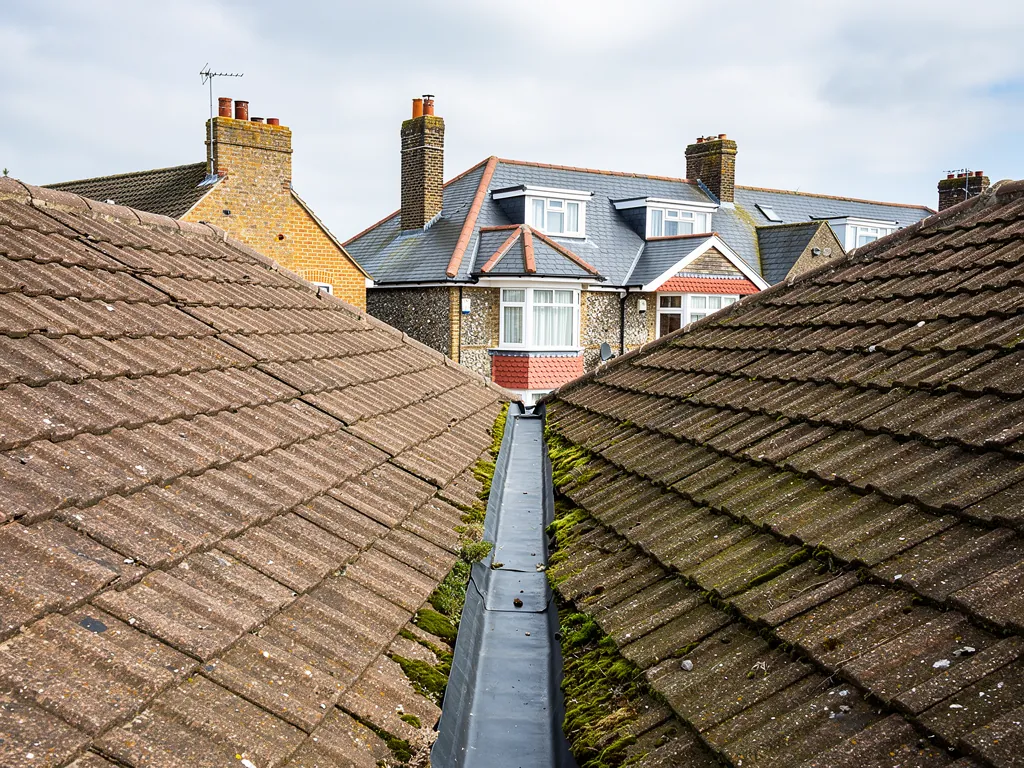
A flat roof must shed water, and BS 6229:2025 sets a minimum finished fall of 1:80, with designers working to around 1:40 so a roof still drains once it has settled. Typical lives, as published, are 20 to 30 years or more for EPDM, 25 to 40 years for GRP and 10 to 20 years for felt, and none of them is a promise. A flat roof that ponds, blisters or splits at its upstands may need a new deck and covering, while a roof with a single fault may need only a patch. Our flat roofing page sets out how we judge the two.
3.2 Insulation, membranes and Part L
Under Approved Document L, a new membrane on a flat roof is renovation of that element, so if more than 50 per cent of its surface is renovated, the insulation level comes into question. A roof that is only being patched stays outside that test, which is one reason a repair can be the cheaper and quicker answer where the deck is still sound. Where a full recovering is the honest answer, we explain what the regulations ask of the build-up and who notifies building control.
3.3 Gutters and rooflines near the shore
Gutter runs are laid to a slight fall to the outlet, roughly 1:600 to 1:350 depending on the system, and brackets close enough to carry a full gutter of water without sagging. A sagging run overflows at the low point and stains the wall below it. Fascias and soffits near the shore need paint or a replacement lining eventually, and the HSE asbestos advice for soffits applies to any older boarding.
Where we can help in Ferring
Frequently asked questions
Questions from Church Lane to the Ferring shoreline
Can the roof beside a Ferring flint boundary wall be repaired without disturbing the flint?
Yes, in nearly every case. The lead flashing is chased into an existing joint, wedged and pointed in a matching mortar, so the flint itself stays put. Where the old lead has failed we renew it in new sheet and leave the wall as we found it. If the wall belongs to a listed building, we check the list entry first and agree the method with Arun's conservation officer.
Do I need consent to repair the roof of a house inside Ferring Conservation Area?
Arun District Council's page shows no Article 4 direction for Ferring, and repairs in matching materials that do not change how the building looks are not usually development. A listed building is different and needs consent for anything affecting its character, such as a change of covering or a new roof window. Because rules change, confirm your address with the planning team at Arun, or the conservation officer there, and keep their reply with the quote.
Should a Ferring holiday home that stands empty in winter have its roof checked after a gale?
It is a sensible habit. A leak in an empty house can run unseen, so a survey of the loft and the roof edge after a bad storm is a smaller job than finding wet timber in spring. If the owner is miles away, nobody needs to be present: we report by photograph. We photograph every fault and send the pictures to you, with a plain verdict on whether to repair, patch or replace.
Does a seafront position change which flat roof covering suits a Ferring house?
It changes the detailing more than the product. Published lives are 20 to 30 years or more for EPDM, 25 to 40 for GRP and 10 to 20 for felt, and none is a promise. Near the sea, edges, trims and upstands take the harshest weather, so we pay attention to how those are finished. The survey decides the covering, and we write the quote after it.
Nearby areas
Get a quote
Tell us about your roof
Describe what's happening and we'll call you back.
Loading the enquiry form. You can also call 01243 252373.