
Roofers in Goring-by-Sea
Moderne render, pantiles and old flint
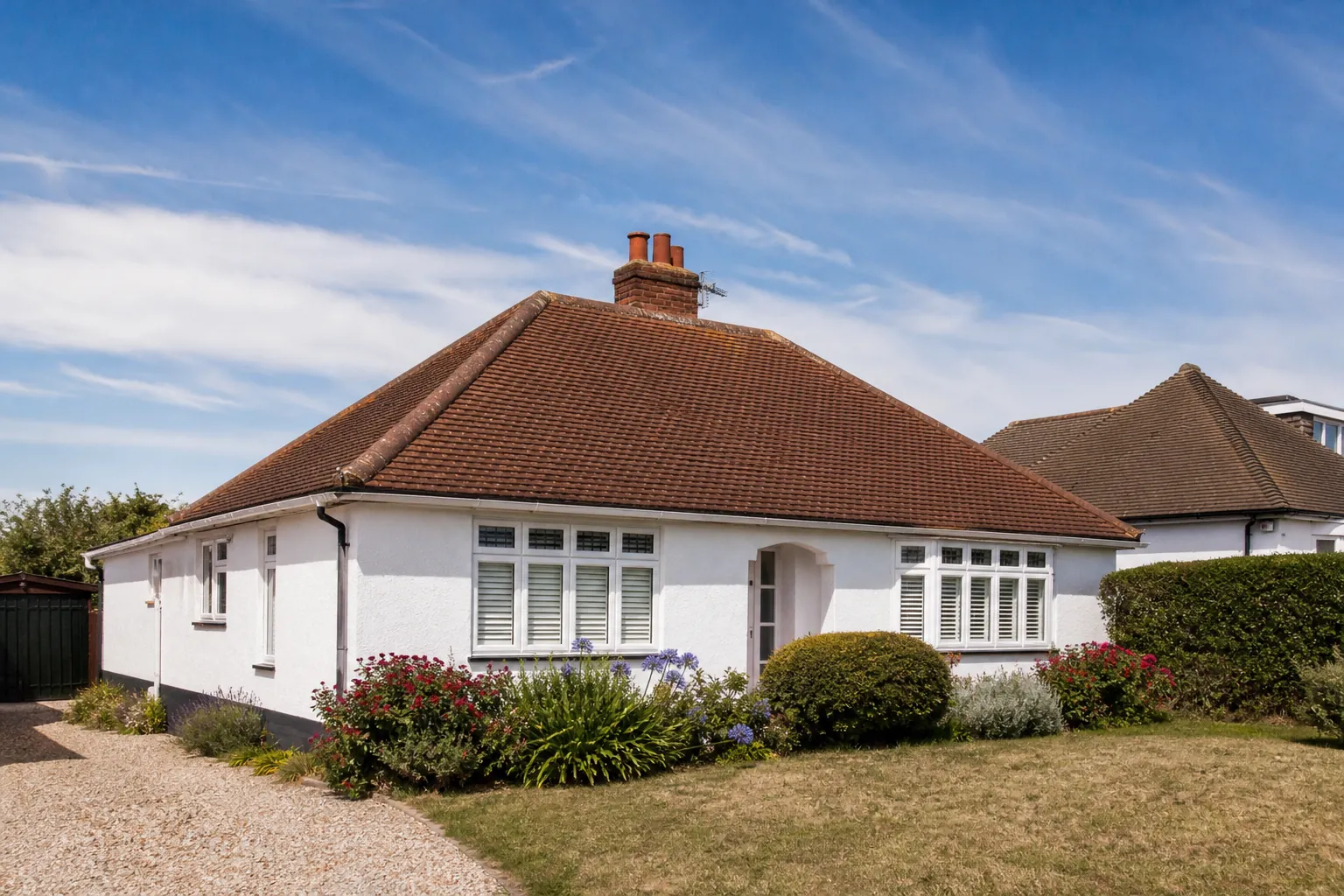
Goring-by-Sea grew from a rural backwater into a 1930s suburb: white-rendered moderne houses under pitched roofs, sometimes pantiled, with flint survivals around the church and Jefferies Lane.
Goring-by-Sea roofs
From Sea Lane to Jefferies Lane
-
Moderne houses on Sea Lane
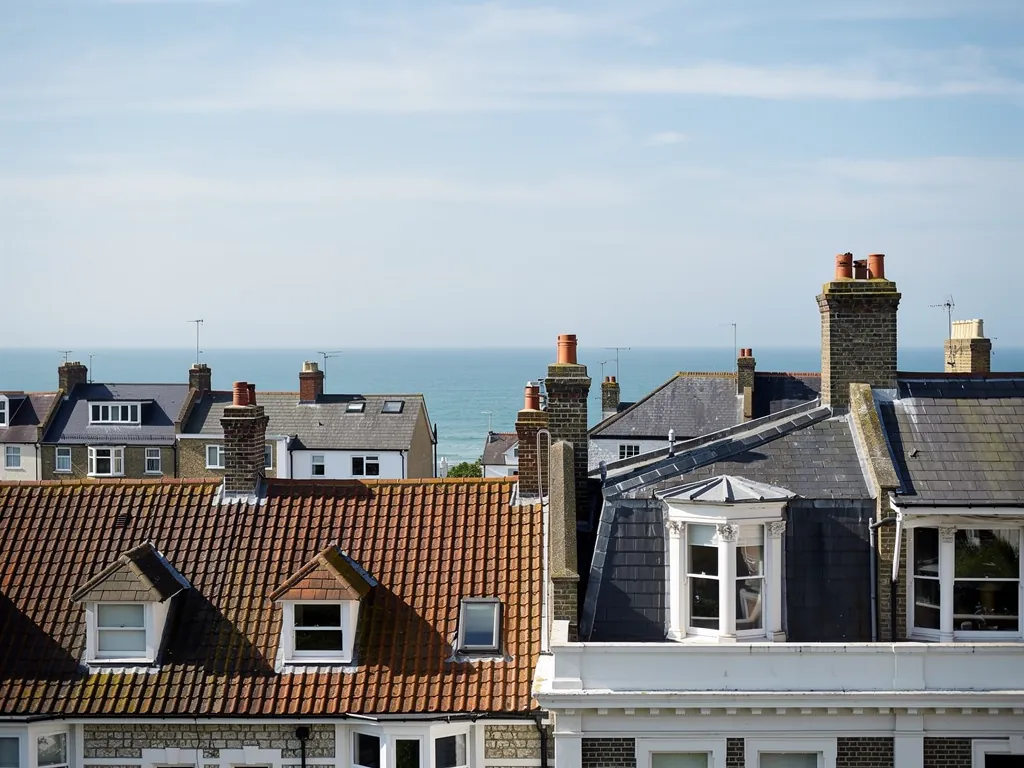
Sea Lane's detached houses are chiefly of the 1930s, those on the west side built by Hesketh Estates in the moderne style, in white-painted render under pitched roofs. Some of those roofs carry pantiles, the curved clay tile.
-
Flint around St Mary's
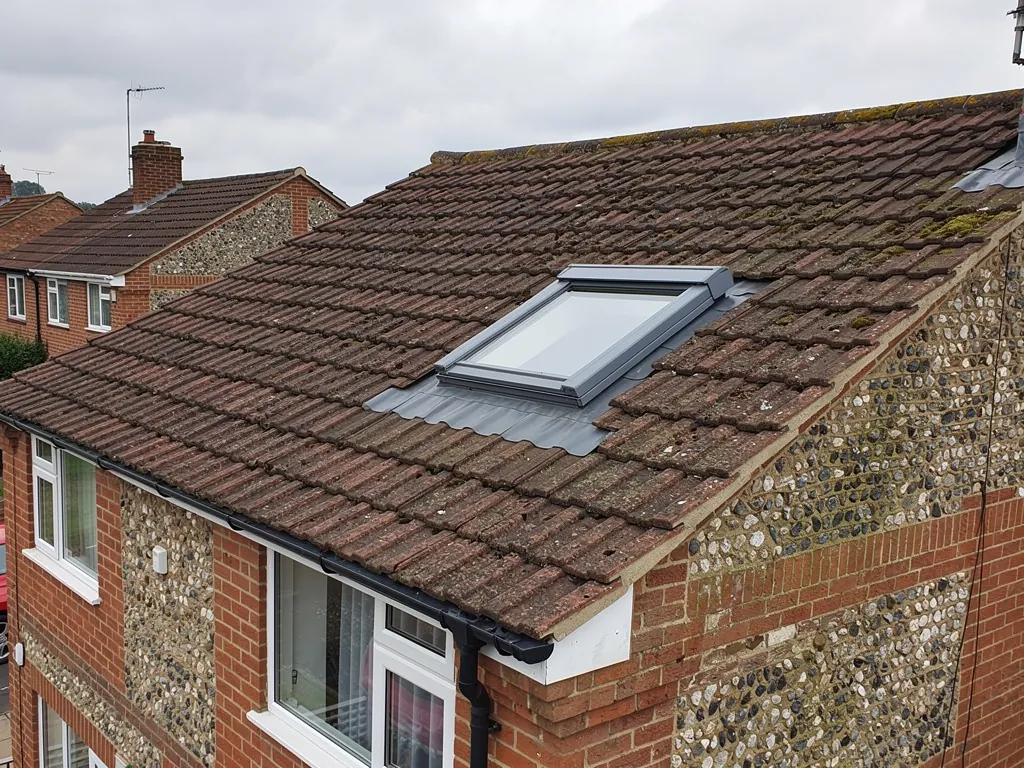
Flint is common in the older parts of the conservation area, around the church and the Court House, both of them listed. Beside a flint wall, lead flashing has to be let into the joint, not simply stuck on.
-
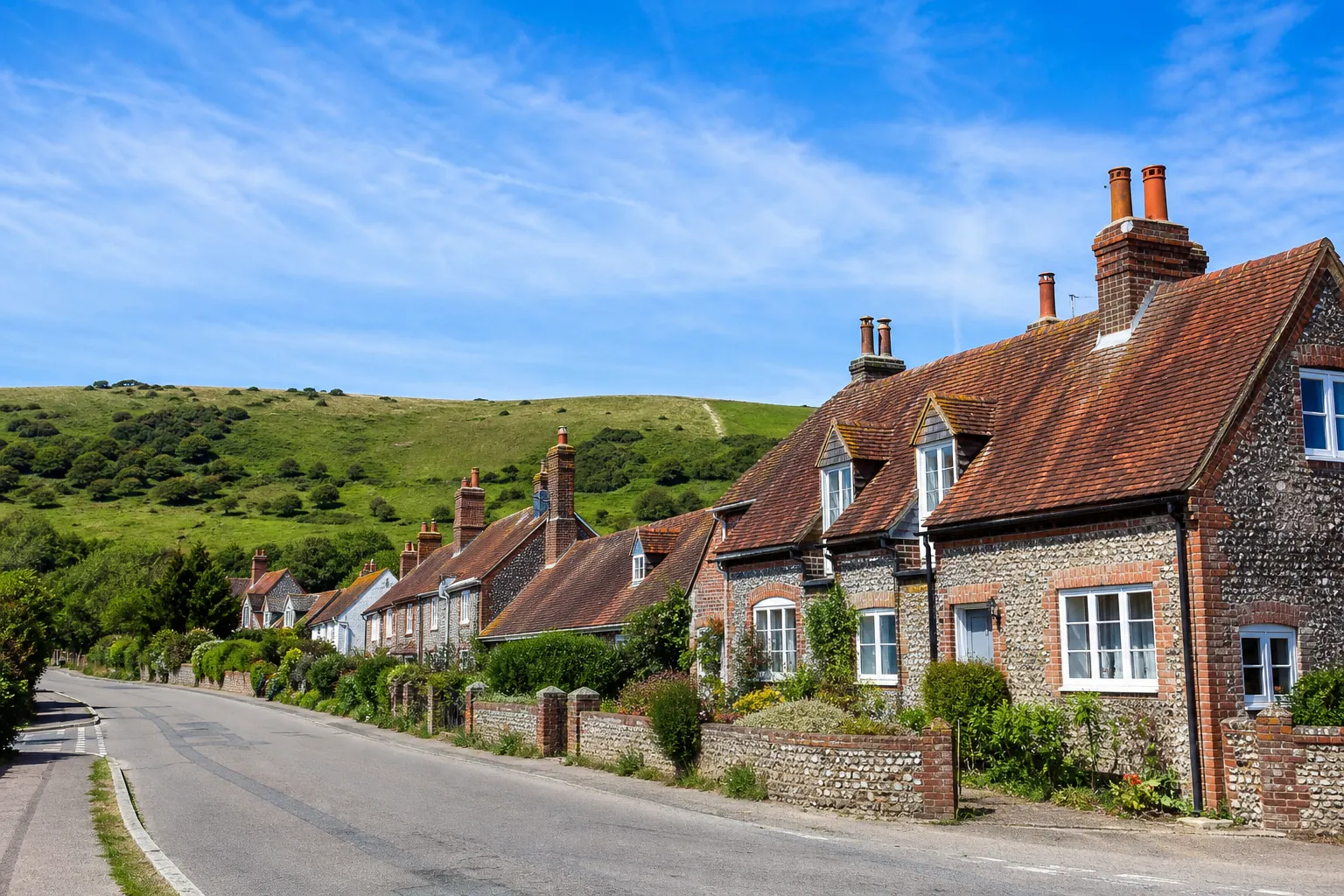
The village lane that stayed
Jefferies Lane is named after the naturalist Richard Jefferies, who spent his last months there, and it keeps its 19th-century village character amid the 1930s streets around it. Older roofs in a lane like that are repaired to match.
Map of Goring-by-Sea, 14.5 road miles east of Bognor Regis, with the nearest towns we also cover.
Goring's two conservation areas
- Council
- Worthing Borough Council
- County
- West Sussex County Council
- Conservation areas
- Goring, dated 14 March 2000 on Worthing's list (original 1985); Goring Hall, 29 April 1997
- Article 4
- Worthing's list includes land west of The Plantation, confirmed 28 March 1969; ask the council what it covers
- Historic parish church
- St Mary's, Goring
- Distance
- 14.5 road miles east of Bognor Regis, about 24 minutes by car
Goring notes
Pantiles, flint and a suburb built fast
A rural parish became a seaside suburb within a generation, and the roofs of each stage have their own habits.
Chapter 1: Sea Lane's moderne houses and their pantiles2684
Sheet 01 / 03The Worthing council appraisal of Goring records that the detached houses lining Sea Lane are chiefly of the 1930s, with those on the west side built by Hesketh Estates in the moderne style: white-painted render, pitched roofs, and in some cases pantiles. Between the 1930s and now is the best part of a century, and a roof that nobody has ever stripped has been up there for most of it. That alone does not mean it needs replacing. It does follow that the battens (the timber strips the tiles hook onto), the underlay beneath them and the fixings holding each tile have all had a long time to tire, and that is what a survey looks at, not the surface alone.
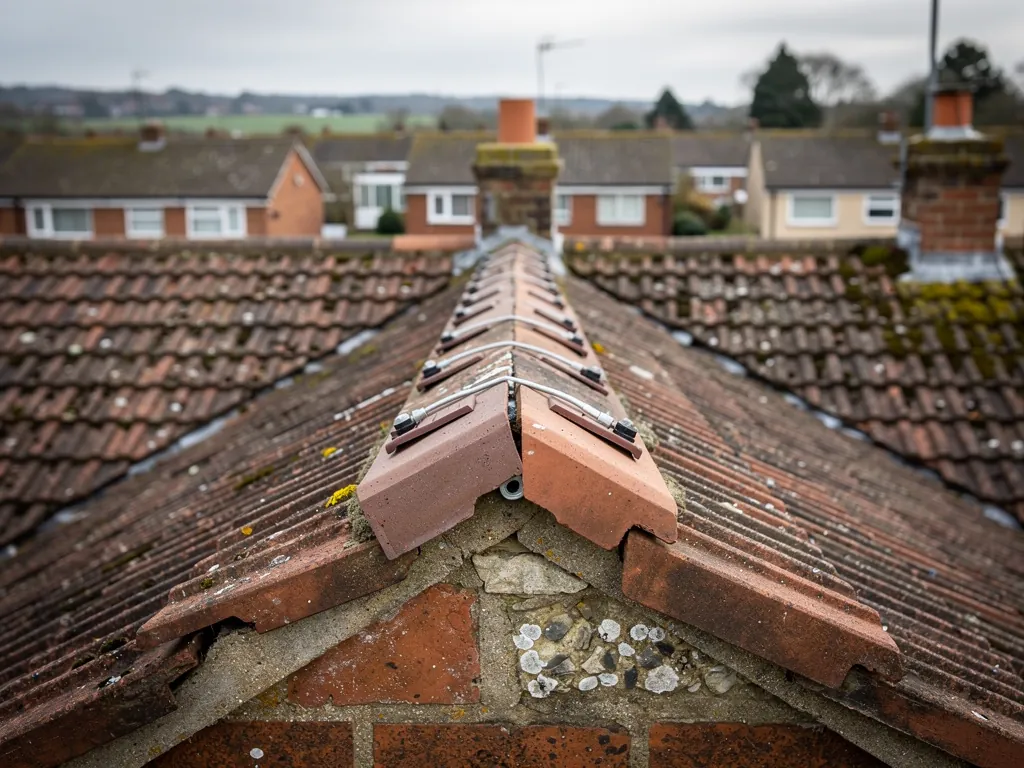
Two ways to hold a ridge
Mortar bed alone
Relies on the bed staying sound, so a cracked joint lets tiles loosen in a gale.
Bedded and fixed
Mortar plus screws or clips, the arrangement BS 5534 expects after its 2014 revision.
1.1 Pantile roofs and what goes wrong
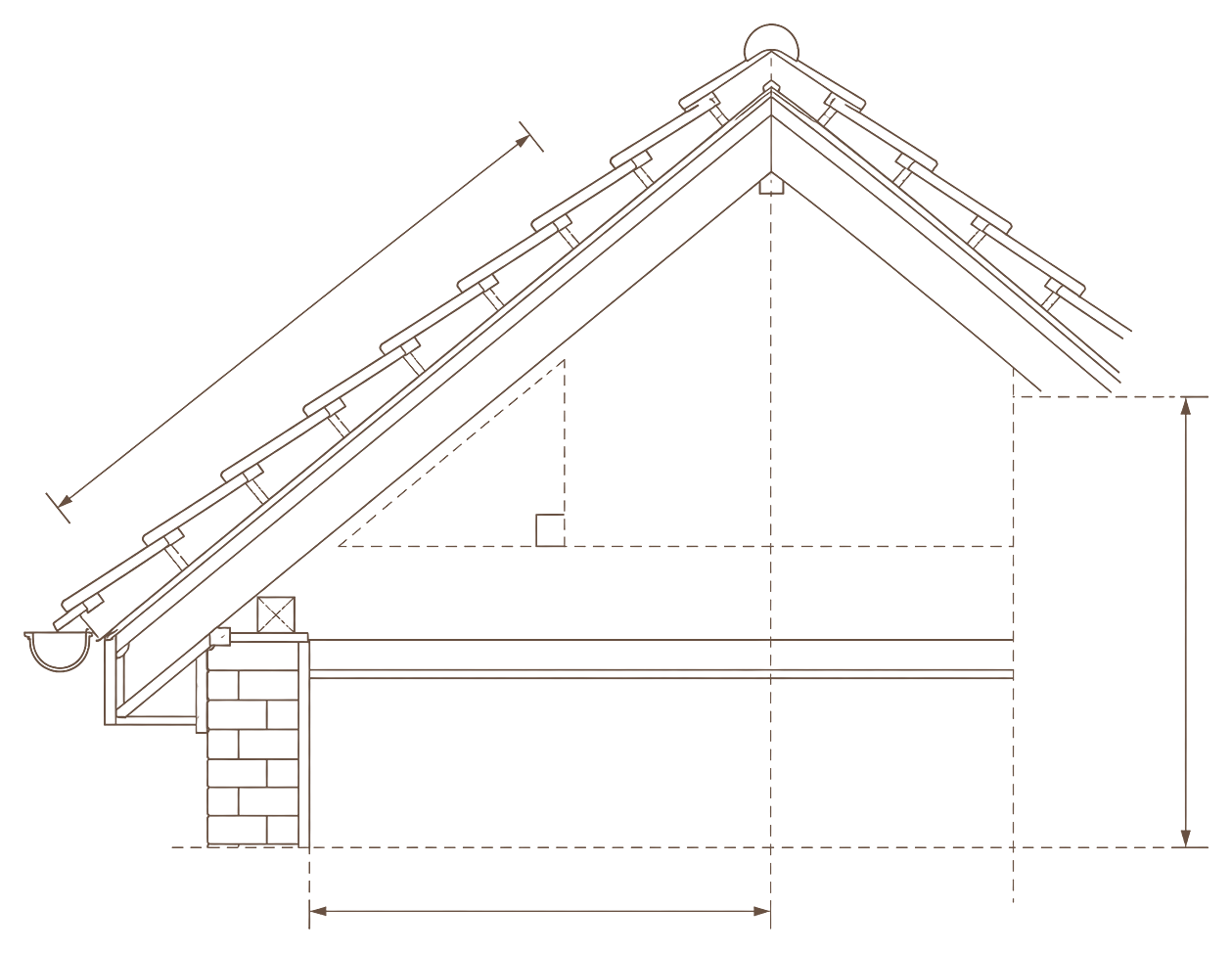
A pantile is a clay tile with an S-shaped curve, laid in a single layer with the curves interlocking. That keeps the roof simple, but the single layer leans on the fixings and the laps. Marley lists its clay pantile with a minimum pitch of 15 degrees, so a shallow pantiled roof has less margin than a steep plain-tile one. We look for tiles that have slipped on their battens, cracked pantiles at the valley, and the mortar around the ridge and hip. Pantiles can usually be taken off, graded and put back over fresh battens and underlay if most are sound, and replacements are matched for colour and profile. See our ridge tile repairs page for the details of ridges.
1.2 Render, verges and the white wall line
Rendered walls and a pitched roof meet at the verge (the trimmed edge along a gable end) and at the eaves, and those lines are where a moderne house shows its age. A cracked verge mortar lets water behind the render, and a stain appears on a wall that looks as if the wall is at fault. We trace it back to the roof edge. The fix is a verge fixed mechanically, not on mortar alone, and the render touched up by whoever knows the finish. A roof contractor who repairs the verge and walks away from a hairline crack in the render has only done half of it, so we say what else the survey shows, even where it is not our trade. Where the render needs a plasterer, we tell you that plainly and hold the roof repair until the wall can be put right too, so the same water does not simply find another way in.
Chapter 2: Flint, Jefferies Lane and two conservation areas2928
Sheet 02 / 03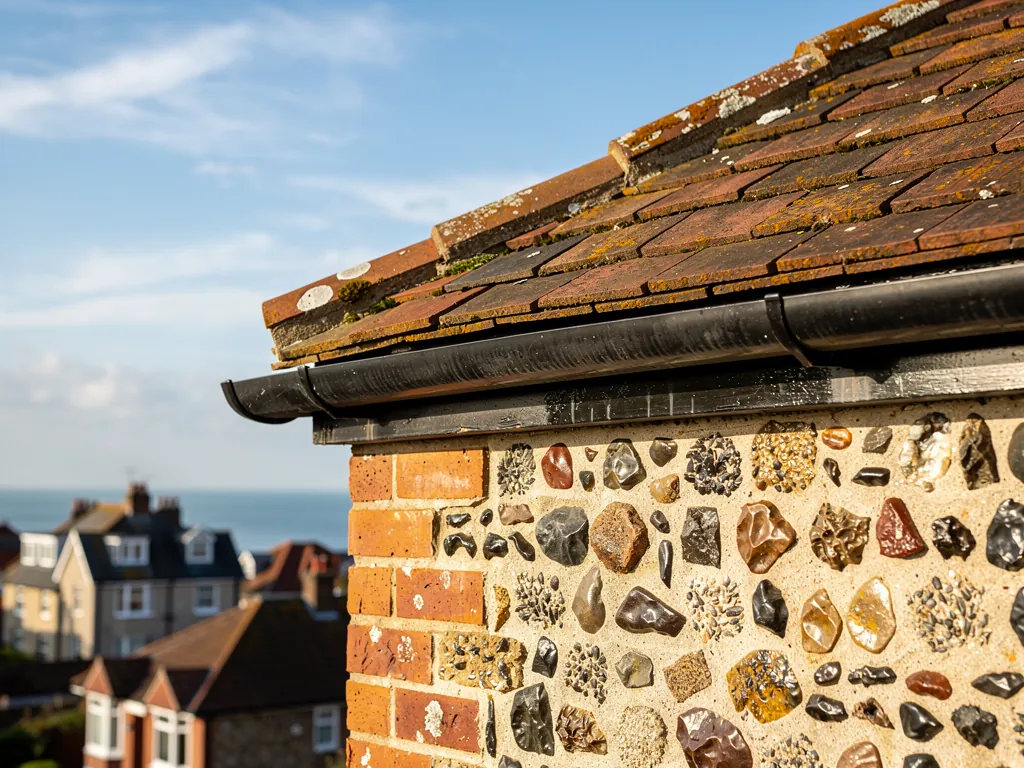
Goring has two conservation areas on Worthing's list. The Goring Conservation Area is dated 14 March 2000 and was originally designated in 1985, and the separate Goring Hall Conservation Area dates from 29 April 1997. The council's appraisal describes flint as a common material in the older parts of the first, notably Jefferies Lane and around the church and the Court House, which are both listed buildings. So within a short walk the roofs change from suburban render and tile to flint walls and old lanes. If your house is close to either boundary, ask Worthing Borough Council to confirm whether it falls inside. Goring Hall's area is named for a house, and Jefferies Lane keeps the feel of a village lane, so expect buildings of several ages within a few hundred yards, and the occasional flat-roofed addition at the back.
Before roof work near Jefferies Lane
- Ask the council about the boundary
- Find any list entry
- Cut lead into the flint joint
- Match old tiles and slates
2.1 Flint walls and the lead that meets them
Flint walls are built of hard nodules in thick mortar, and a lead flashing needs a slot cut into the mortar course, or a raked joint, to sit in. Lead is never glued to flint. The strip is let into the joint, dressed down over the tile or slate edge, and pointed. Over time the joint wears and the lead lifts, and the sign inside the house is a stain on the ceiling near the chimney breast or beside a wall. Renewing that lead is a smaller job than a re-roof, and it is often the whole job. We lift the old strip, check the joint behind it, and put in new lead of a suitable code (the thickness grade, from code 3 to code 8), with codes 4, 5 and 6 the ones Royston's brochure lists for flashings. Our lead roofing and leadwork page shows the lead codes and where each is used.
2.2 Listed buildings and the old Article 4 entry
For a listed building, such as the Court House, works that would change its character need listed building consent, so the list entry is read before any roof quote beyond a like-for-like repair. Worthing's list of Article 4 directions includes one for land west of The Plantation, confirmed on 28 March 1969. It may not be near your house, so do not assume it affects your roof, and ask the council what it covers. The council can answer in a short email. Fancy a roof window in either conservation area? Our skylight planning permission guide is the place to start.
Chapter 3: South of the railway: a suburb built at speed2745
Sheet 03 / 03The southern part of Goring was built up rapidly and on a large scale. By 1938 most of the land south of the railway had been laid out with roads, according to the Victoria County History, and the appraisal says the area had been a sparsely populated rural backwater before that. The practical point for us is simple. Streets built in a few years have roofs of the same age, laid with the same fixings, and the problems tend to arrive together along a road, not house by house. Ridge mortar cracks, verge tiles loosen and the old underlay goes brittle at about the same time, because the original materials were the same and the weather has treated them alike. If your neighbour has just had slipped tiles seen to, it is worth having yours looked at before the next gale.
Typical UK repair figures
- Clay tile repair, per square metre£110 to £160
- Concrete tile repair, per square metre£90 to £120
- Ridge tile repairs, per metre£50 to £70
- Lead flashing repairs, per metre£50 to £70
These are national typical figures before VAT. For your roof there is one total price, in a written quote that follows the survey.
Source: Checkatrade roof repair cost guide (table last updated June 2026)
3.1 Garages and flat-roofed extensions
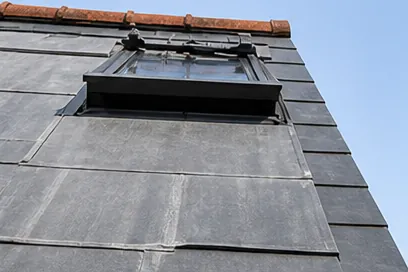
Houses of this age gather add-ons: garages, porches, a flat-roofed kitchen at the back. BS 6229:2025 sets a minimum finished fall of 1:80 for a flat roof, and roofers usually design steeper, around 1:40, so the finished roof still drains. A flat roof that ponds water after rain has usually lost its fall, and a patch will not cure that. Standing water finds the smallest weakness in a covering, so when the deck is sound we relay the covering with a better fall worked in, and when the deck is soft we renew it first. The HSE advises treating a garage that predates the year 2000, or was refurbished before it, as containing asbestos until a check says otherwise. Moving asbestos cement sheets carefully, with no breakage, counts as non-licensed work; once it is substantially broken, the job becomes notifiable. Waste from it needs a consignment note. Our garage roof replacement page covers what is involved.
3.2 What the national figures say
Typical UK repair costs vary with the covering, and the figures in the panel are national ones, not our prices. Scaffold, if the job needs it, is a separate matter: a scaffold that stands on or reaches over the road needs a highway licence, which West Sussex County Council issues, with at least 10 working days' notice and a published fee of £266 for one month. Ask every firm whether VAT and scaffolding sit inside its price, and ask for the verdict on the roof in writing before you decide.
What we fix on Goring-by-Sea roofs
Frequently asked questions
Questions from Sea Lane to Jefferies Lane
Can pantiles on a Sea Lane house be lifted and reused, or must the roof be re-covered?
When most pantiles are sound, they can be taken off, graded and put back over fresh battens and underlay, with matched pantiles filling any gaps. That costs less than a full re-covering. If many are cracked, flaking or have lost their fixings, relaying with the old tiles will not last. We photograph the tiles, show you the sorted pile and give a plain verdict.
Is my Goring-by-Sea roof inside the Goring or Goring Hall conservation area?
Ask Worthing Borough Council, which keeps the boundaries. Goring Conservation Area is dated 14 March 2000 on its list, with an original designation in 1985, and Goring Hall Conservation Area dates from 29 April 1997. A house on a 1930s road may be outside both, but do not assume. If it is inside, like-for-like repairs are still routine, and changes of material or new roof windows need a conversation first.
My Goring garage has old corrugated sheeting. Could it contain asbestos?
It could. For anything built or refurbished before 2000, the HSE tells owners to treat it as asbestos-containing until testing shows it is not. Weathered asbestos cement that is not badly damaged counts as non-licensed work, provided it comes off carefully and whole. Substantial breakage makes it notifiable, and the waste needs a consignment note. Do not drill, scrub or break the sheets yourself. Send us photographs first.
Who handles planning and building control for roof work in Goring-by-Sea?
Worthing Borough Council is both the local planning authority and a building control body, and a registered building control approver is the private alternative. Putting back the same covering does not normally count as development, with caveats for listed buildings, conservation areas and Article 4 directions. Whether building control needs an application depends on the Planning Portal limits of 25 per cent of the building envelope and 50 per cent of the roof.
Nearby areas
Get a quote
Tell us about your roof
Describe what's happening and we'll call you back.
Loading the enquiry form. You can also call 01243 252373.