
Roofers in Havant
Clay-tiled hips, brick stacks, Welsh slate
Havant grew round a crossroads at the head of Langstone Harbour, and its old core wears handmade clay tile and a little natural slate, while behind Homewell brick chimneys rise over clay-tiled hips.
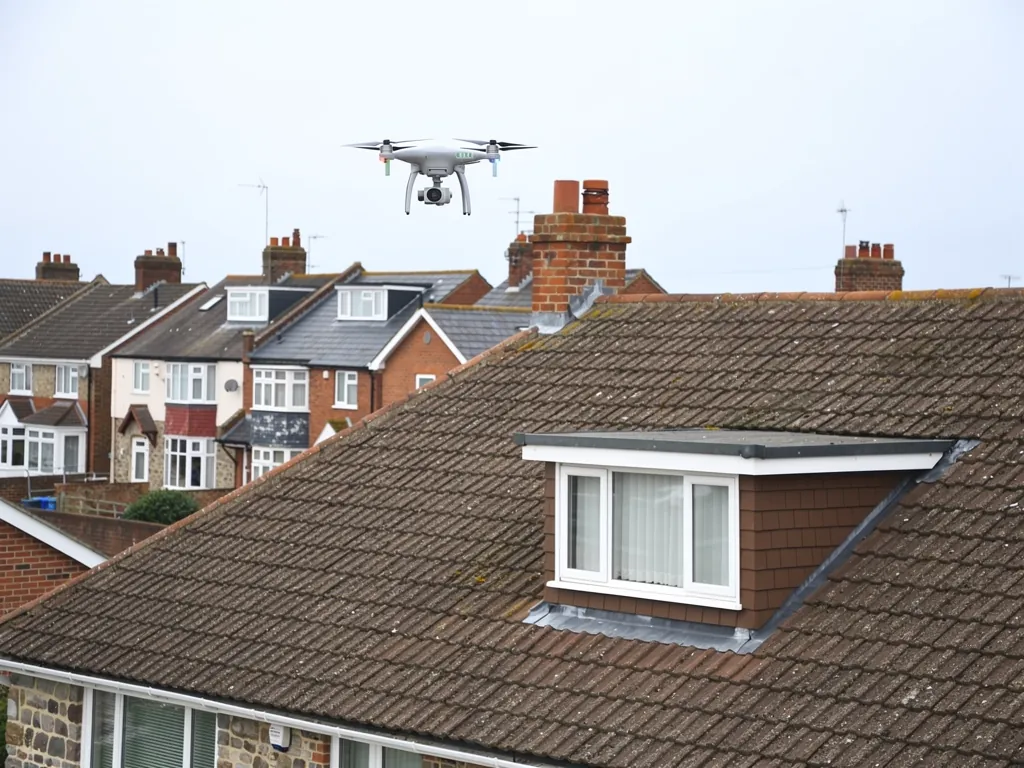
Havant roofs
From the St Faith's crossroads to Homewell
-
Handmade clay and some slate
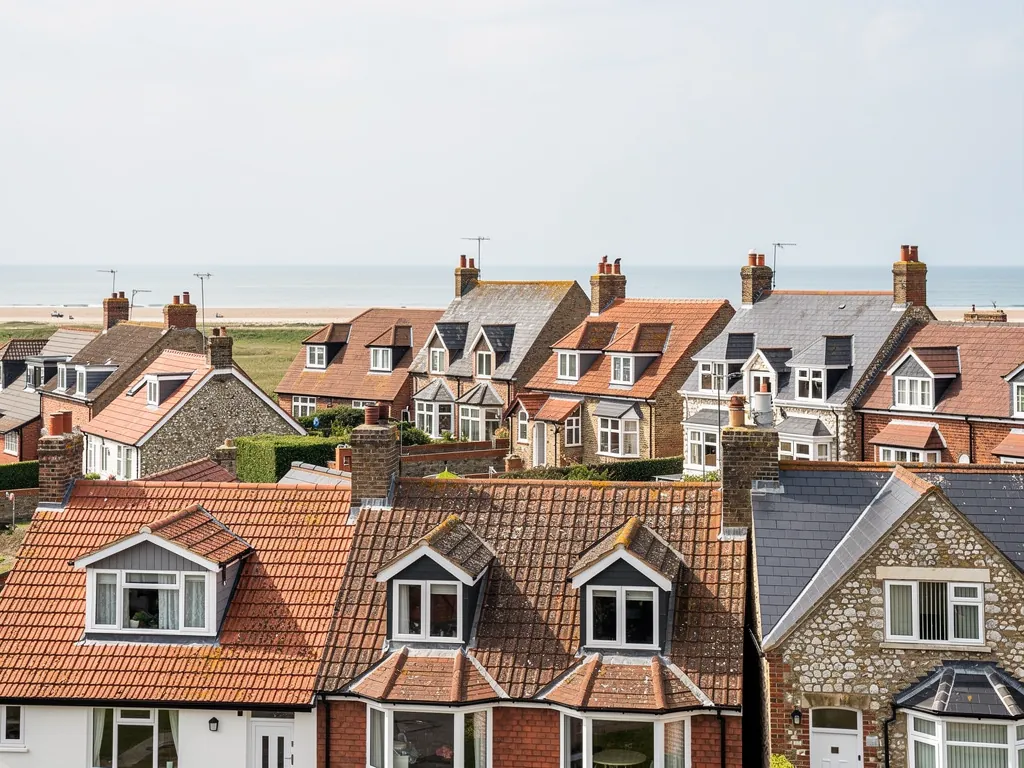
In the historic commercial core, the council's appraisal says roofs are often hidden from view, and that handmade clay tiles and some natural slate show where they can be seen from the street.
-
Hips and brick stacks at Homewell
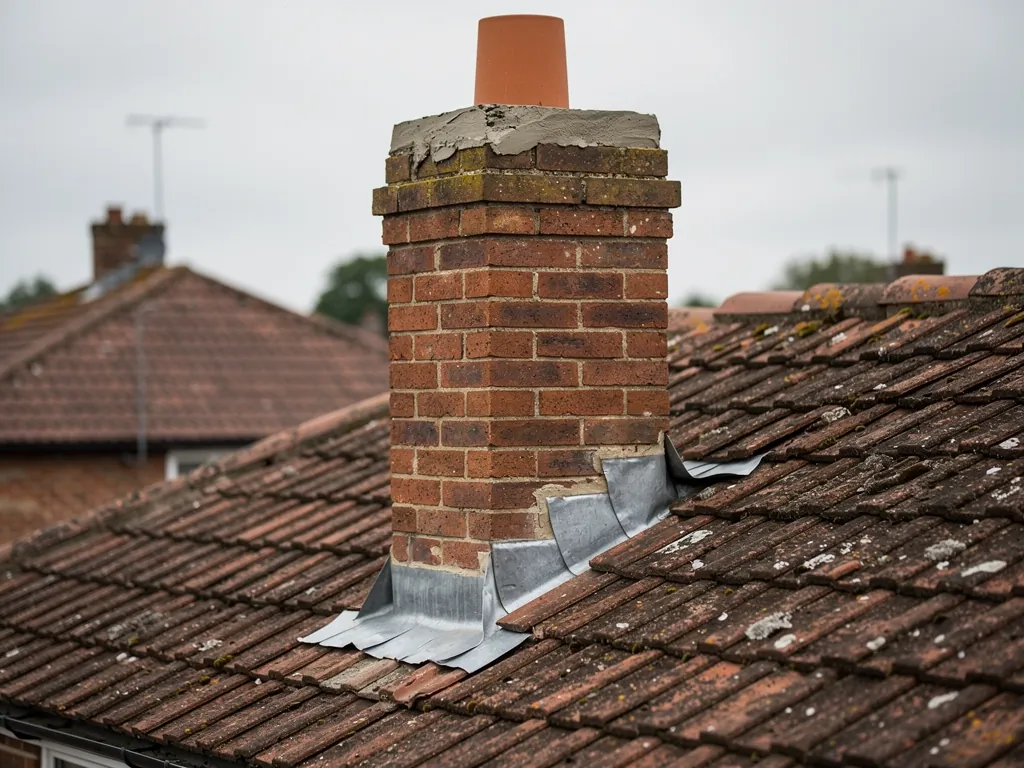
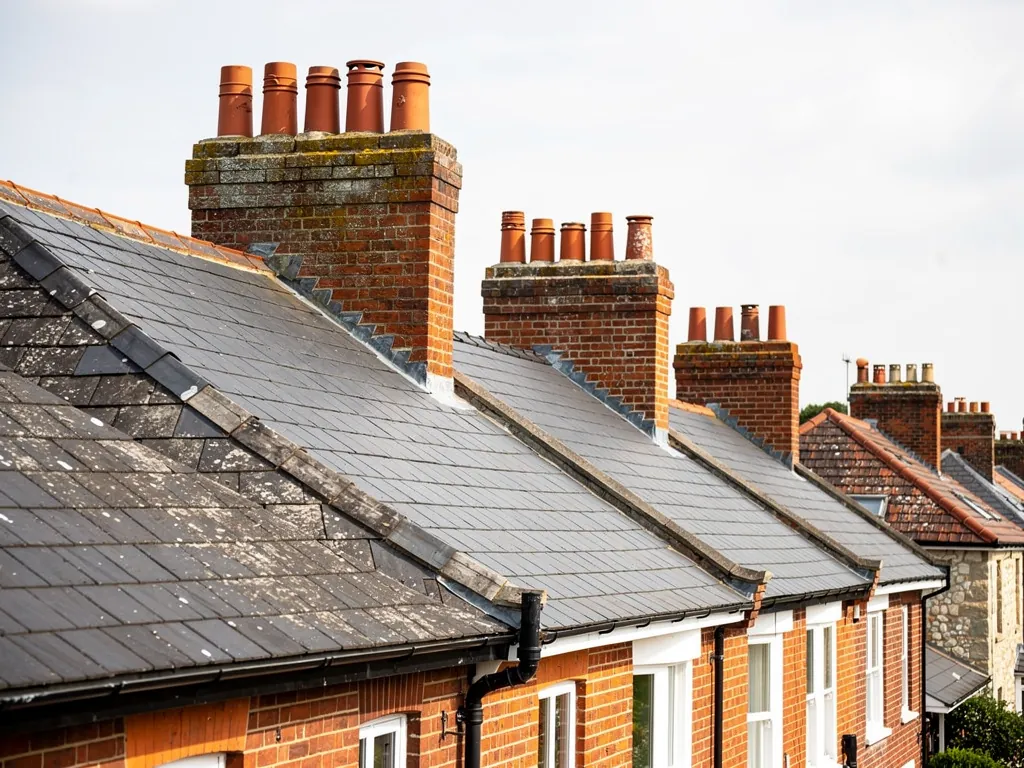
Behind the Homewell terrace, the appraisal describes an exceptionally high-quality roofscape of clay tiles laid in hips with brick chimneys, the sloping corners and the tall stacks on view together.
-
Victorian streets in clay and slate
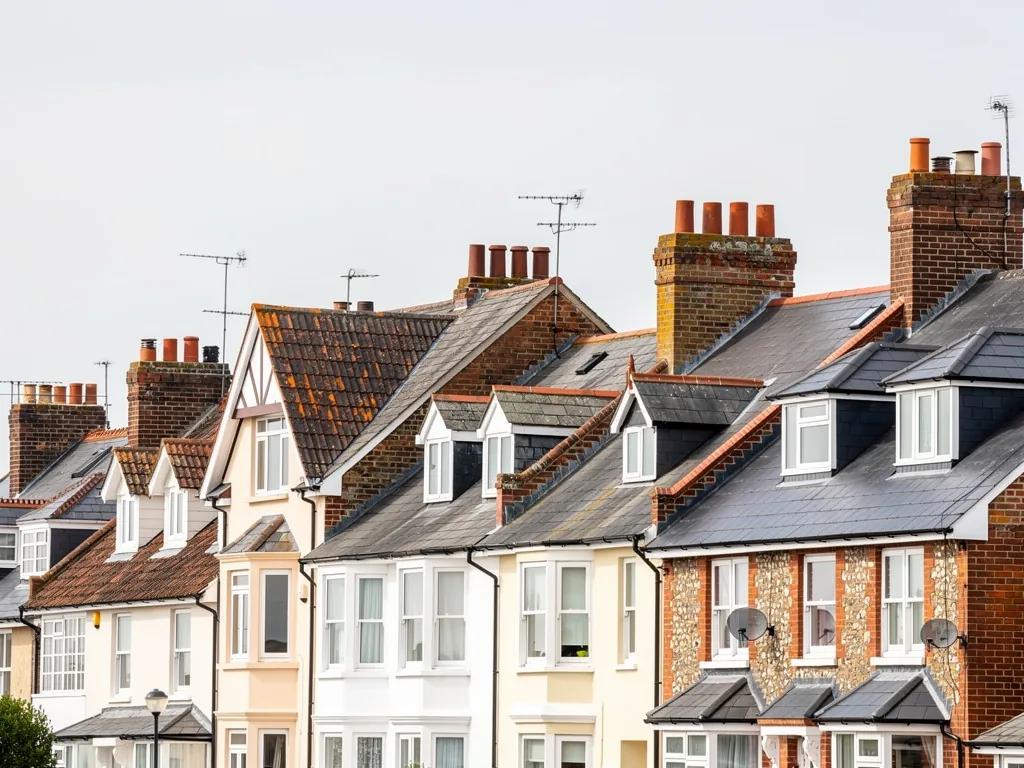
The appraisal also records clay tiles and Welsh slate on the town's Victorian streets, so a street of terraces can hold two different coverings, each ageing in its own way.
Map of Havant, 16.4 road miles west of Bognor Regis, with the nearest towns we also cover.
Conservation areas and Article 4 directions
- Council
- Havant Borough Council
- County
- Hampshire County Council
- Conservation areas
- St Faith's Conservation Area, and Brockhampton, designated 13 April 2005
- Article 4
- Homewell, dated 26 July 1985, and Langstone, made 6 June 2012
- Listed landmark
- Church of St Faith, Grade II*, first listed 16 May 1952
- Distance
- 16.4 road miles west of Bognor Regis, about 24 minutes by car
Havant notes
A crossroads town between harbour and Downs
Havant's roofs follow its history: a market crossroads, Victorian streets, and two Article 4 areas that change what you can do without asking, each explained below with the roofer's view.
Chapter 1: The crossroads, St Faith and the clay roofscape2867
Sheet 01 / 03The Victoria County History describes Havant as a market town built very regularly round the crossroads of the Chichester to Southampton road and the road from Hayling Island to Rowland's Castle. At the south-west angle of that crossroads stands the church of St Faith, with a low central tower seen above the houses around it. The list entry records it as Grade II*, first listed on 16 May 1952. Near the church the county history singles out the late 16th-century half-timbered Old House at Home as the most interesting house. That is a lot of age packed into a small area, and the roofs follow. Some of it you can see from the street. Much of it you cannot, because the appraisal notes that roofs in the commercial core are often obscured, so a roof can be ageing out of sight until a stain shows on a ceiling. That is why we survey from the roof itself and photograph what we find.
Two ways to repair an old Havant tile roof
Reuse and refix
Sound handmade tiles are lifted, sorted and relaid with matching new ones where needed.
Replace the covering
Battens and underlay are renewed, with tiles chosen to match the street's colour and size.
1.1 Handmade clay with a little natural slate
Havant Borough Council's St Faith's Conservation Area appraisal, dated July 2007, says that in the historic commercial core roofs are often obscured, but where seen the covering is handmade clay tile with some natural slate. A handmade tile is not perfectly flat or evenly coloured, which gives an old roof its soft, varied look. It also means a modern machine-made tile never quite matches, and a repair patch can show from the street. So when tiles slip we try to reuse sound ones from the same roof, and where new ones are needed we choose a tile of the same size, thickness and colour range. A bright new patch in a soft old slope shows from the street.
1.2 Hips, brick stacks and the Homewell roofscape
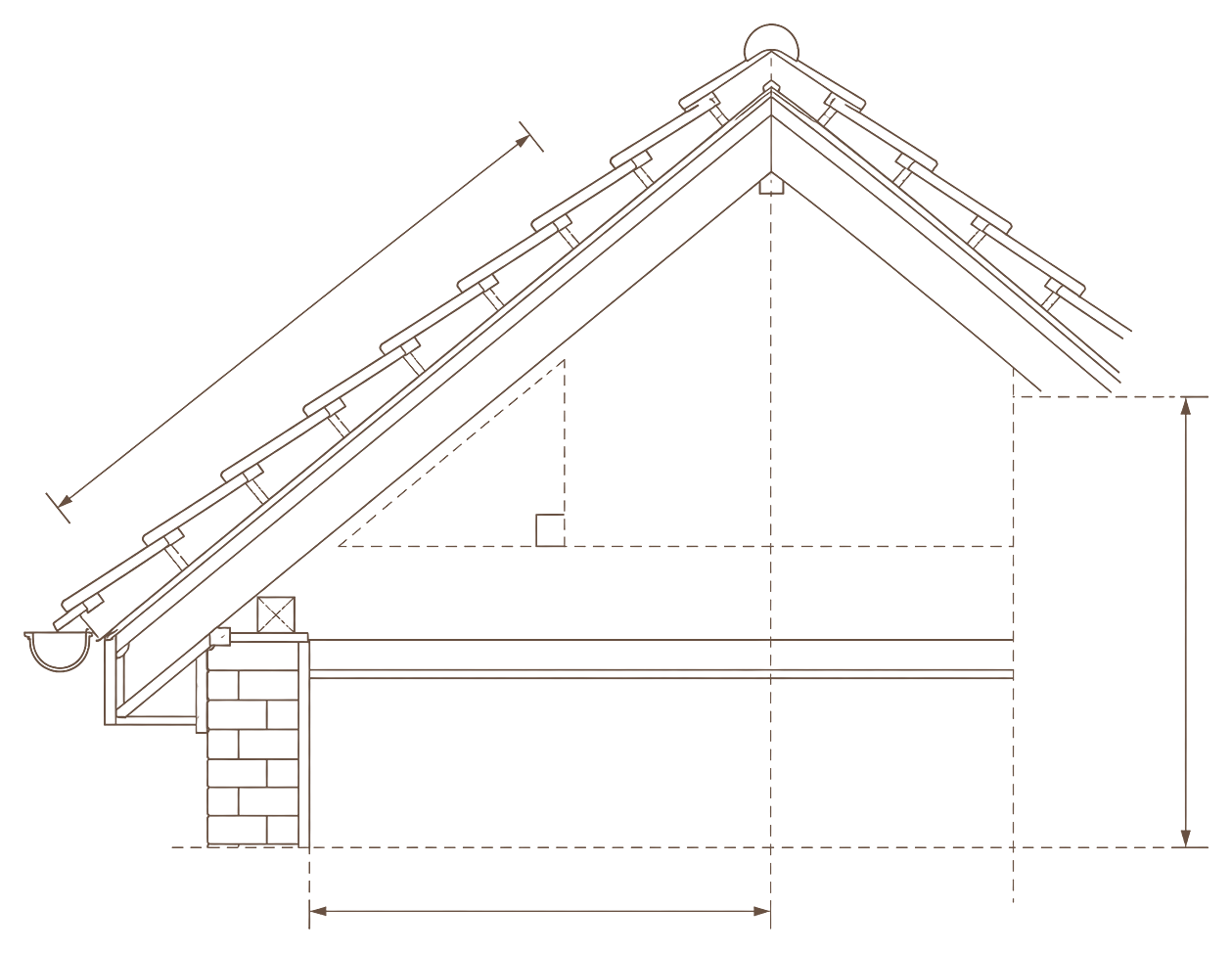
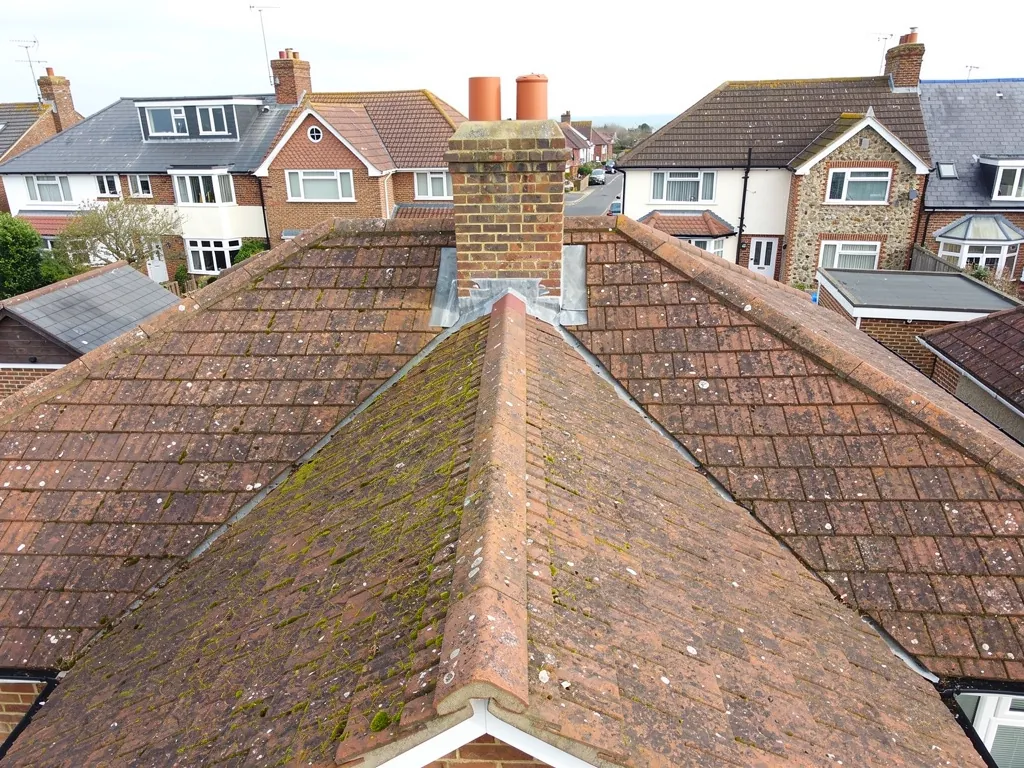
Behind the Homewell terrace the appraisal notes an exceptionally high-quality roofscape of clay tiles laid in hips with brick chimneys. On a hipped roof the hips are the angled ridges running from the top down to each corner, finished with a row of hip tiles. Each hip tile is cut or shaped to follow the angle and fixed at its foot, and the brick stacks that stand beside them need good flashings and sound pointing. Where a hip or a stack has failed, our chimney repairs page explains what a repair involves and when rebuilding is the answer. A stack that leans, or a flaunching (the mortar that holds the pots at the top of the stack) that has cracked and let water in, is one of the first things we check when a Havant ceiling shows a stain.
Chapter 2: Welsh slate, terraces and old tanning yards2623
Sheet 02 / 03Havant is a working town as well as a historic one. The county history records that the fellmonger's trade, with parchment works and tanneries in West Street, prospered from the 17th century. The appraisal's materials note gives the town's Victorian streets clay tiles and Welsh slate. Where a garage or outbuilding has been added behind an older house, its roof is often a lighter build than the main slope and is worth checking on the same visit, because a small roof that leaks can soak the wall it leans against. Slate is a thin, hard stone split into sheets, and each sheet is hung from a nail or hook at the head of its course.
Three verdicts on a Havant slate roof
- TingleOne or two slipped slates held back with clips and left alone.
- RefixFailed nails replaced across a slope while the slates are reused.
- RenewCracked slates, battens and underlay replaced across the whole roof.
2.1 When a slate roof slips
Slates fail in a few predictable ways. The fixing nails rust through, so the slate slides down and leaves a gap. A slate cracks across its width, usually from a footstep or from frost. Or moss builds up at the lap and holds water against the nail. A rear extension with a flat roof is a separate question again: its covering, its falls and its edge trims decide whether it drains, and the straight answer on an old felt roof is sometimes a new covering rather than another patch. For a single slipped slate, a clip called a tingle can hold the replacement without stripping the courses above it. When nails have failed right across a slope, the good slates come off, get sorted, and go back on new nails or hooks. CORC, a roofing materials guide, says slate that is well maintained can last 100 years or more, so replacing a slate roof that is sound apart from its fixings is rarely the right call. Our slate roofing page sets out the options.
2.2 Prices and what moves them
As a national guide, Checkatrade's slate roof page (table last updated September 2026) gives typical costs of £160 to £210 per square metre for a slate roof. That is a typical UK range, not a figure for Havant. The quote for your roof follows the survey and carries one total price, and what moves it is the size of the roof, the access, the slate you choose and what the old roof turns out to need. The survey comes first, with photographs, so you see the fault before you see a figure. If a scaffold is needed, check that any quote you compare with includes it, and whether VAT is added.
Chapter 3: Homewell, Langstone and asking first2196
Sheet 03 / 03For Havant, planning and building control both sit with the borough council, while the county council looks after the highway. Two parts of the area carry Article 4 directions that bear on roofs. Homewell's is dated 26 July 1985 and was made under the 1977 General Development Order, removing Class I, which covers extending, improving or otherwise altering a dwellinghouse. Langstone's, made on 6 June 2012, covers unlisted buildings and removes, for elevations facing the highway, any alteration to the roof of a house, for example the insertion of roof light windows. It also covers demolishing a chimney stack visible from the highway, along with solar panels and thermal equipment, so a Langstone owner planning any of those should speak to the council before booking anyone.
Before roof work in Homewell or Langstone
- Ask Havant about your address
- Check the Article 4 area
- Keep the covering matching
- Photograph the front slope
3.1 What that means in practice
A direction does not forbid roof work. It means certain changes that would normally go ahead without an application need one, and the council decides each case on its merits, so ask early and ask in writing. A plain like-for-like repair on a pitched roof is generally not what these directions are about. Swapping tiles for a different covering, or fitting a roof window on the front slope of a house in Langstone, is something to raise with the council first. The Homewell direction is older and written in the language of the 1977 order, so the council is the right place to confirm what it still catches today. Havant Borough Council's planning team can confirm whether your address falls inside either area. The borough also has the Brockhampton Conservation Area, designated on 13 April 2005, so a house there deserves the same early question to the planning team. Planning a roof window somewhere else in the town? Our guide to skylight planning permission is the place to start.
3.2 Scaffold licences and the church
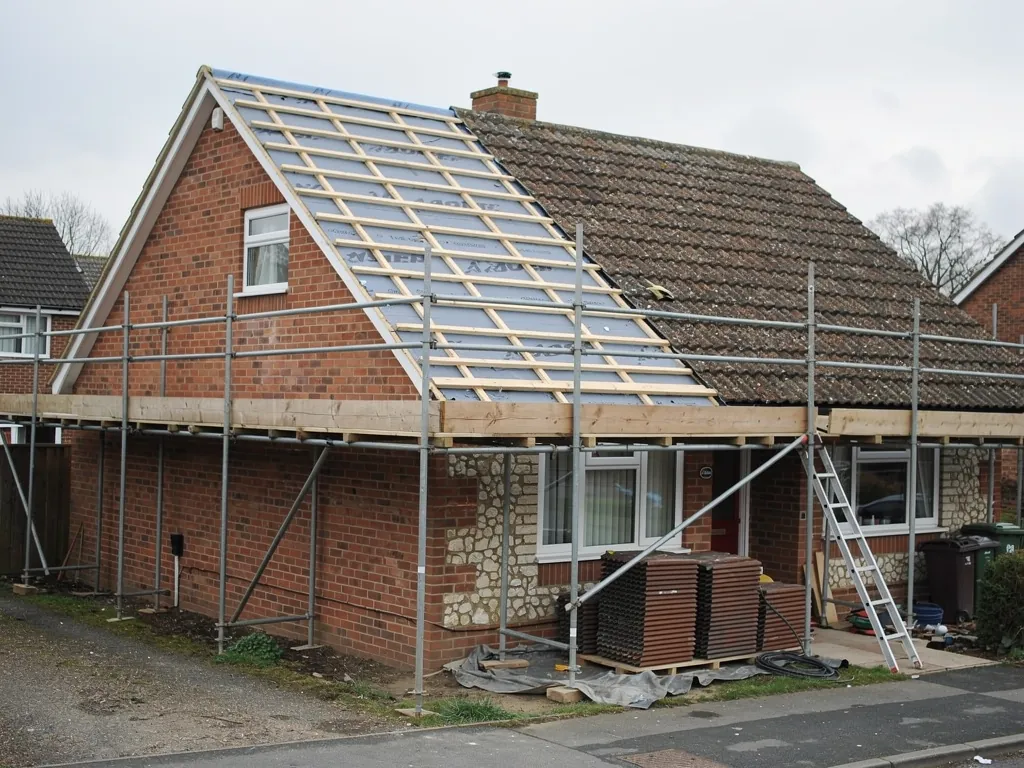
Scaffolding on a public highway in Havant needs a licence from Hampshire County Council, which the scaffold company applies for on your behalf. The county wants a gap of ten clear working days between applying and starting, and charges £211.90 for the first two weeks. St Faith is Anglican and still in use for worship, so the ecclesiastical exemption applies and repairs are authorised by faculty; an application for planning permission remains necessary where the exterior is affected. Where work is notifiable under the Building Regulations, we explain it and handle the notification. Both bats and nesting birds are protected, which is why the eaves and roof space are checked before stripping, and the site is cleared and waste taken away at the end of the job.
Every part of the roof, in Havant
Frequently asked questions
Questions from St Faith's to Langstone
Can the handmade clay tiles near St Faith's be repaired rather than replaced?
In most cases the answer depends on the battens and fixings, not the tiles. Sound handmade tiles can be lifted, sorted and refixed, with a matching tile used for the few that are broken or too soft to reuse. If the battens are rotten across the slope, that part is stripped and relaid, reusing the good tiles. We photograph every fault so the answer comes from what we see on your roof, not from a guess made at the kerb.
Does the Langstone Article 4 direction stop me repairing my front roof slope?
No. The direction, made on 6 June 2012, removes rights for changes to a house roof where it fronts the highway, including new roof lights, and for demolishing a chimney stack visible from the highway. Mending a roof with matching material is a separate question, but ask Havant Borough Council before changing the covering or fitting a window on the front slope.
Why do the Homewell terrace's hips and brick chimneys need special care?
The council's appraisal singles out that roofscape as exceptionally high in quality, which means any change shows and a clumsy repair stays visible for years. Hip tiles must follow the corner and be fixed securely, and brick stacks need good pointing and flashings. The Homewell Article 4 direction dated 26 July 1985 also covers alterations to dwellinghouses, so ask Havant Borough Council before you alter a roof there.
Who approves roof repairs at the church of St Faith in Havant?
St Faith is listed Grade II* and is an Anglican church in use, so the ecclesiastical exemption applies and repairs are authorised by faculty, not by listed building consent. A planning application is still needed where work affects the exterior. The parish officers are the first people to talk to. We can survey the roof and give them a written, photographed report.
Nearby areas
Get a quote
Tell us about your roof
Describe what's happening and we'll call you back.
Loading the enquiry form. You can also call 01243 252373.