
Roofers in Kirdford
Stone slates, handmade tiles, timber frames
Kirdford's roofs run from Horsham stone slate on the Grade I church to handmade clay tile on winklestone, red brick and timber-framed houses, on a plateau above the River Kird.


Kirdford roofs
Stone slate, handmade tile and winklestone walls
-
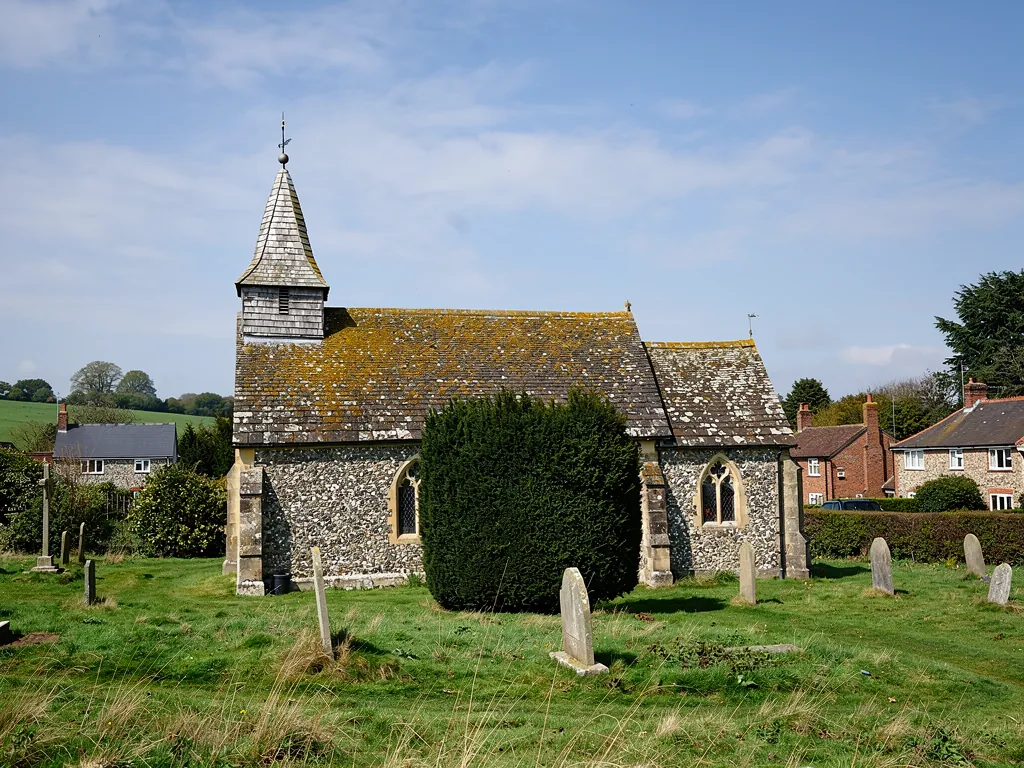
Horsham stone slate on the church
St John the Baptist's Church, listed Grade I, is notable for its Horsham stone slate roof, and it keeps an early 12th-century nave and a 15th-century tower. Stone slates are heavy, laid in diminishing courses, and repaired by hand.
-
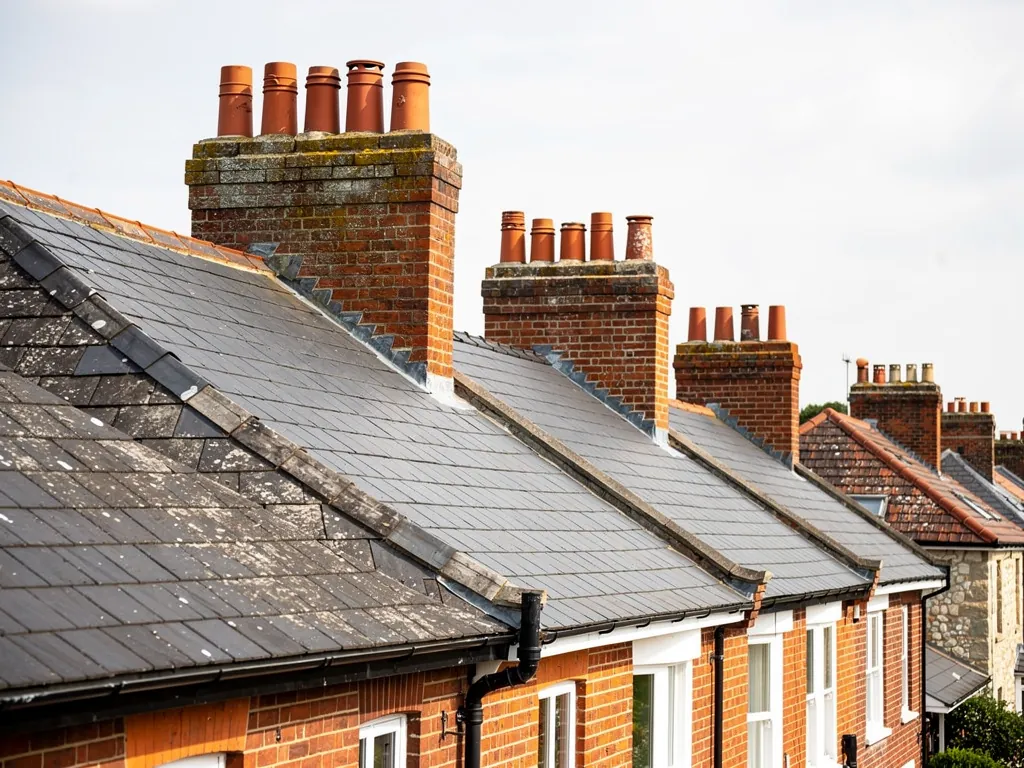
Handmade clay tiles and red brick
The council's appraisal lists handmade clay tiles and red brick among the village's building materials. Handmade tiles vary in colour and curve, which gives a roof its texture and makes a close match hard to find.
-
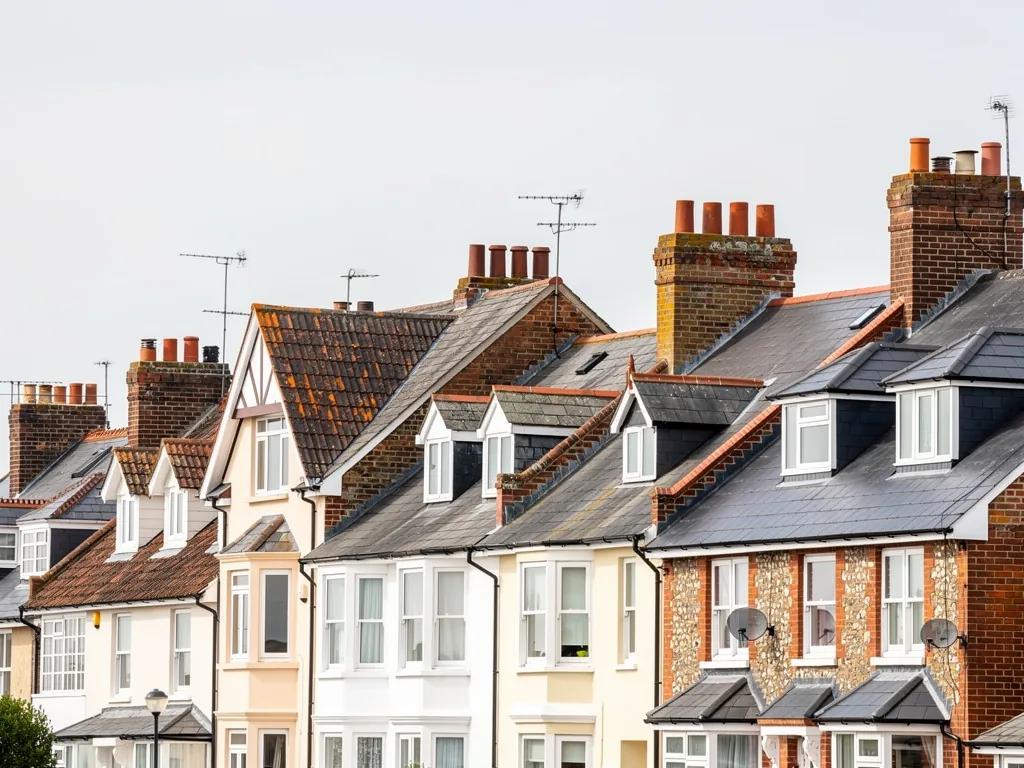
Winklestone and timber-framed houses
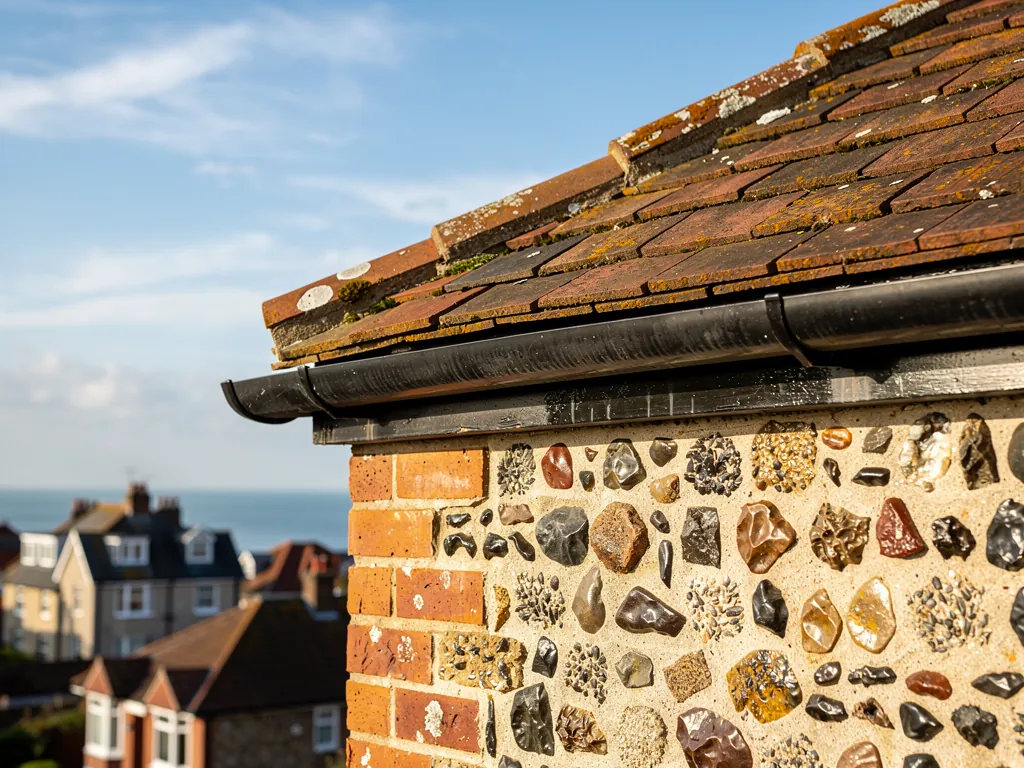
Local Wealden greensand stone, called winklestone, and timber framing make up the walls of the older houses, some dating to the 17th century or earlier. Roof timbers in framed houses move, and flashings must allow for it.
Map of Kirdford, 22.2 road miles north of Bognor Regis, with the nearest towns we also cover.
Kirdford Conservation Area and its 1984 boundary
- Council
- Chichester District Council
- County
- West Sussex County Council
- Conservation area
- Kirdford Conservation Area, designated 14 November 1984
- Listed buildings
- Twenty inside the conservation area; the church is Grade I
- Article 4
- Ask Chichester District Council before relying on permitted development
- Distance
- 22.2 road miles north of Bognor Regis, about 40 minutes by car
Kirdford notes
Stone slates, glass-makers' woods and the Kird
Three strands of Kirdford's building stock, each with its own roof habits and its own consent questions.
Chapter 1: Horsham stone slates on a Weald plateau2379
Sheet 01 / 03Kirdford looks over the valley of the River Kird, which eventually joins the Arun, from a flattish plateau at the western edge of the Weald, close to the Surrey border. The council's 2010 character appraisal singles out the Grade I church of St John the Baptist for its Horsham stone slate roof. Horsham slabs, as roofers call them, are sandstone slabs split from Wealden rock, far thicker and heavier than Welsh slate, and they are laid in diminishing courses: big, thick slabs at the eaves and progressively smaller ones towards the ridge. That graded pattern is much of why these roofs look as they do, and it is also why they cannot be handled like an ordinary slope.
Two ways a stone slate roof can be put right
Repair in place
Slipped or cracked slabs replaced one by one, with the sound courses left undisturbed.
Strip and relay
Slabs numbered, lifted, sorted by size and set down again on fresh laths.
1.1 Why weight changes the repair
A stone roof loads its timbers heavily. When a slab slips or cracks, the first questions are what made it move and whether the fixings or the frame beneath have shifted. A single slab can be lifted out and replaced from reclaimed stock, but a slope that has lost pegs or nails across a wide area is better stripped and relaid, the sound slabs going back in their original order. We photograph the underside of the covering as well as the top, so the verdict rests on what is actually there. Our Horsham stone roofing page goes through the work in full.
1.2 Ridges, hips and valleys on stone
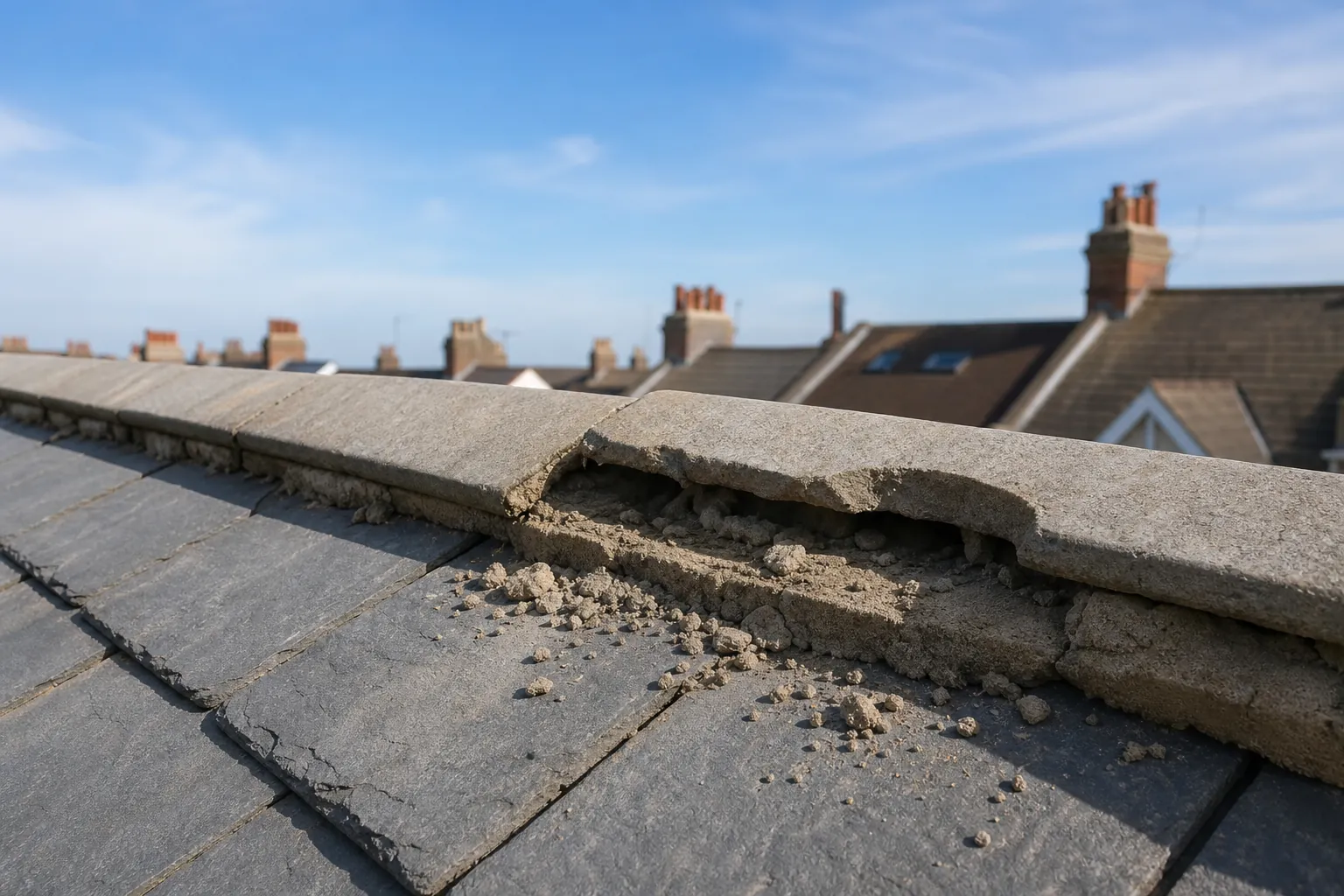
On old stone roofs the ridge and hips are capped in stone or clay and bedded in mortar, while the valleys are either swept, meaning curved from the slabs themselves, or lined in lead. A mortar bed on a historic roof is not the same question as on a modern tiled one. BS 5534, the standard for slating and tiling, concedes that old roofs built of traditional or reclaimed materials do not always fit its recommendations. For that reason, fixing methods on Kirdford's older roofs are chosen slope by slope instead of from a catalogue.
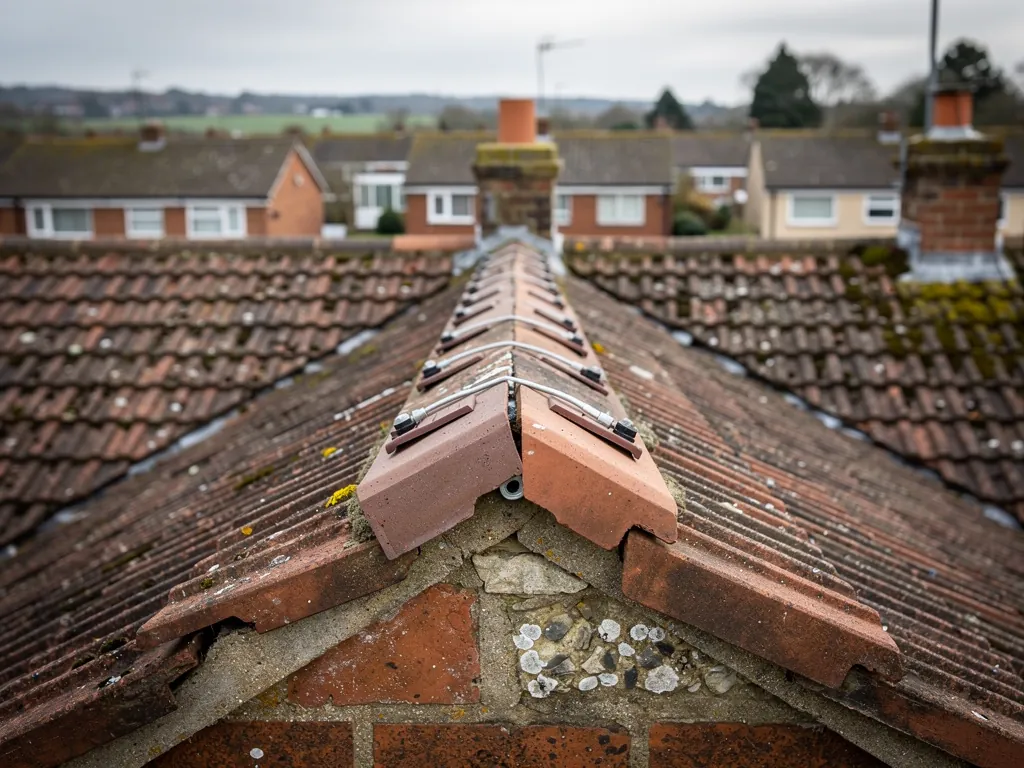
The ridge is also where a gale does its first damage. A capping that has lost its bed lifts as a unit, so on every visit we look along the whole line and push each piece to see whether it moves. On a plateau open to the weather, that small test often finds the problem before a storm does. Anything loose is rebedded and mechanically fixed, and the verge, where the covering finishes over a gable wall, receives the same attention.
Chapter 2: Handmade tiles, winklestone and timber frames2745
Sheet 02 / 03Away from the church, the appraisal's list of local materials reads like a recipe: winklestone, timber framing, red brick, handmade clay tiles and Horsham stone slates. Winklestone is the local name for Wealden greensand, a warm, rough stone that builds thick walls with an uneven top edge. A roof sitting on a wall like that rarely has a dead straight line, and a good roofer works with the building rather than fighting it. The conservation area contains twenty listed buildings, some of the houses dating to the 17th century or earlier, so a roof may hide repairs nobody recorded.
Before matching a Kirdford tile
- Bring a spare tile to compare
- Check tile length and camber
- Look at colour in daylight
- Photograph the front slope
2.1 Handmade clay: variety is the point
Handmade clay tiles are moulded by hand before firing, so each one differs a little in size, camber and colour. That is why an old roof looks lively in low light. It also means a replacement from a catalogue looks flat beside it. We reuse sound tiles on the visible slope, source reclaimed or hand-made matches for the gaps and set a few spares aside for the next repair. A tile that has lost its nib, the small lug that grips the batten, is held on only by its own weight, and a gale can overcome that easily.
2.2 Timber frames and the joints that move
A timber-framed house shifts with the seasons. Oak dries, joints open and close, and a roof built into the frame travels with it. A rigid flashing, or a bead of mastic where lead should be, cracks at the first real movement. We dress lead with room to move and key it into the wall with wedges, not a smear of sealant. Our lead roofing and leadwork page shows the details we form at chimneys, abutments and dormer cheeks.
The brick and stone chimneys on these houses deserve the same patience. A stack that has leaned over three centuries is not rebuilt for the sake of it. We check whether it is stable, repoint what is loose and renew the flashing, and recommend a rebuild only when the courses have separated. Pots, flaunching and the cap are looked at together, because water that gets into the top of a stack runs down through the brickwork and stains the chimney breast below. Chimney repairs are usually quoted together with the roof work around them.
Chapter 3: Twenty listed buildings and the glass-makers' woods3111
Sheet 03 / 03Between about 1300 and 1600, timber was felled around here for glass making, with Kirdford and Wisborough Green both important centres, and iron making used local ironstone from the greensand ridges. Where trees overhang a house, leaf fall packs the valleys and gutters, and the shade keeps moss alive on north slopes. On a stone or handmade tile roof, moss lifts edges and holds water against the joints, so a clean-down is done by hand and with care, never with a pressure lance that would blow the pegs and bedding out of an old roof. The conservation area was designated on 14 November 1984. The village sits outside the National Park, which keeps the process simpler: Chichester District Council handles planning and building control alike.
Three outcomes for a listed Kirdford roof
- Like for likeA cracked stone slate or tile replaced with a close match, in the same place.
- Ask firstDifferent material, pitch or detail needs the council's view before anyone starts.
- RelayWhole slope lifted and reset in the original order, with failed fixings renewed.
3.1 Listed buildings and the line between repair and change
With twenty listed buildings inside the conservation area, plenty of Kirdford roofs carry consent questions. The law protects a listed building against works that would alter its character, and swapping the covering for another material usually does. Putting a matching stone slate where one has cracked sits differently, yet it is wise to confirm with the council's conservation officer before starting. Look up the list entry, ask the council, and keep dated photographs of the roof as found. Our roof inspections and surveys page describes the survey that produces those photographs.
3.2 The churchyard neighbours
St John the Baptist is a Church of England building. While worship continues there, the ecclesiastical exemption routes its roof through the faculty jurisdiction instead of a listed building application. Houses nearby have no such exemption, so a listed cottage follows the standard listed building rules. The 2010 appraisal proposed boundary extensions, so ask the council where the line runs if your house is near the edge. We would rather hold a quote until that is settled than price work that might need consent. A written quote means little if the scheme behind it changes after the council replies.
Where a job is plainly like for like and nothing is listed, the paperwork stays light, and the work can be programmed once the survey is done and the quote accepted. Where the plateau's older houses are involved, the survey and the council's reply come first and the price follows, so you are never asked to commit to a scheme that might change.
Roofs we look after in Kirdford
Frequently asked questions
Questions from the Kird valley to the churchyard
Can a cracked Horsham stone slate on a Kirdford house be replaced singly?
Usually, if the slabs around it are sound. A cracked slab is lifted and a matching reclaimed one fitted in its course, which keeps the diminishing pattern intact. If several have slipped together, we look under the roof for decayed pegs or nails, because a relay with the good slabs reused may last longer than a run of single repairs. You get photographs of the cause and a written quote, and the old slab goes back to you if you want to keep it as a sample.
Why do handmade clay tiles on old Kirdford houses never match new ones?
Hand moulding leaves each tile with its own camber, edge and colour, and decades of weathering soften them further. Modern machine-made tiles are uniform and sit flatter. We reuse good tiles on the front slope, fill the back with reclaimed or hand-made matches and avoid a patchwork of colours that shows from the lane. A sample tile held up beside the roof settles most arguments, and we are happy to leave one with you while the quote is considered.
Who handles planning for a roof in Kirdford, given it is not in the National Park?
Chichester District Council, for both planning and building control, because the village falls beyond the South Downs National Park boundary. Any listing and the conservation area still apply. Put your question to the council's planners before changing a covering on a listed or conservation-area building. Putting back the same covering seldom needs planning permission, though a listing or a direction can change that, and a building control application is not normally needed while less than 25 per cent of the building envelope and less than 50 per cent of the roof is affected.
Does the church's Grade I listing affect the roofs of neighbouring houses?
Not directly. The listing covers the church itself, and its exemption from listed building consent applies only while it is in use for worship and never extends to neighbouring houses. A house nearby needs consent only if it is listed in its own right or the conservation area imposes limits. Check the list entry for your address, and read the council's appraisal before planning any work on a visible slope. If you are unsure which category your house falls in, ask at the survey and we will point you to the right desk at the council.
Nearby areas
Get a quote
Tell us about your roof
Describe what's happening and we'll call you back.
Loading the enquiry form. You can also call 01243 252373.