
Roofers in Loxwood
Red brick, Cokelers' shops, canalside homes
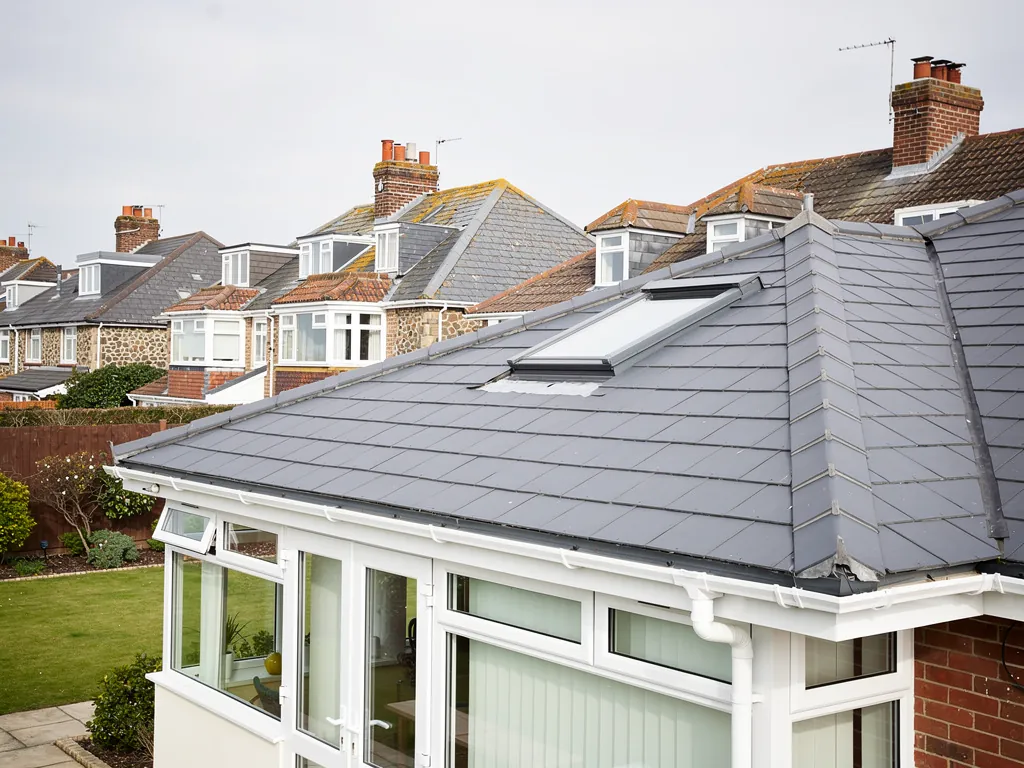
Loxwood sits in the Low Weald beside the Wey and Arun Canal, and its roofs run from a red-brick church of 1898 to 1900 and the old Combination Store shops to canalside houses.

Loxwood roofs
From the Cokelers' chapel to the canal bank
-
A red-brick church
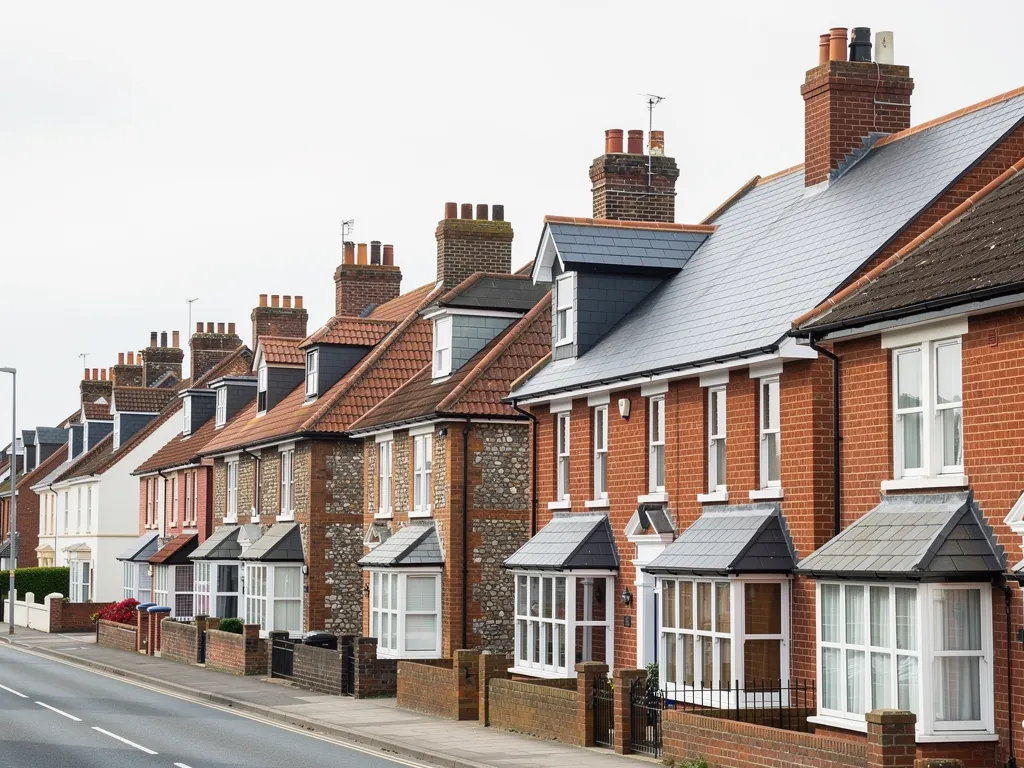
St John the Baptist, designed by R Plumbe and built from 1898 to 1900, is red brick with stone dressings. It followed a brick chapel of 1822, which had itself replaced a chapel of about 1410.
-
The Combination Store
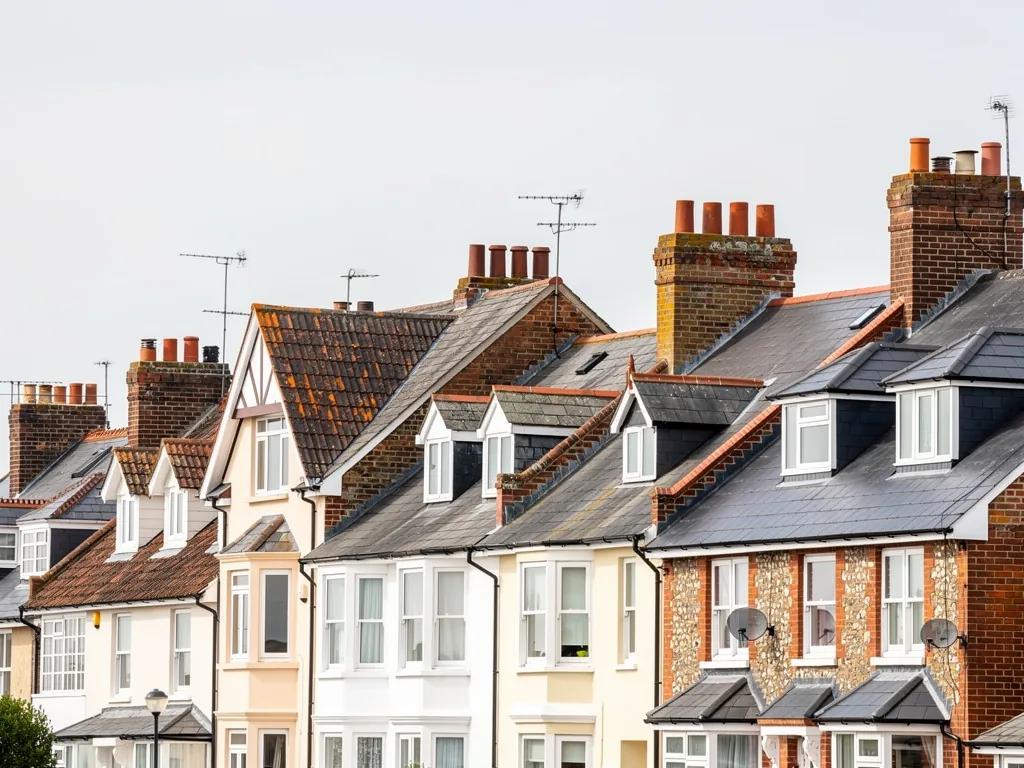
The Cokelers ran a Combination Store, and its building houses the village shops today. A roof over shops carries different duties from a roof over a house: access, trading hours and shared gutters.
-
Low Weald and the canal
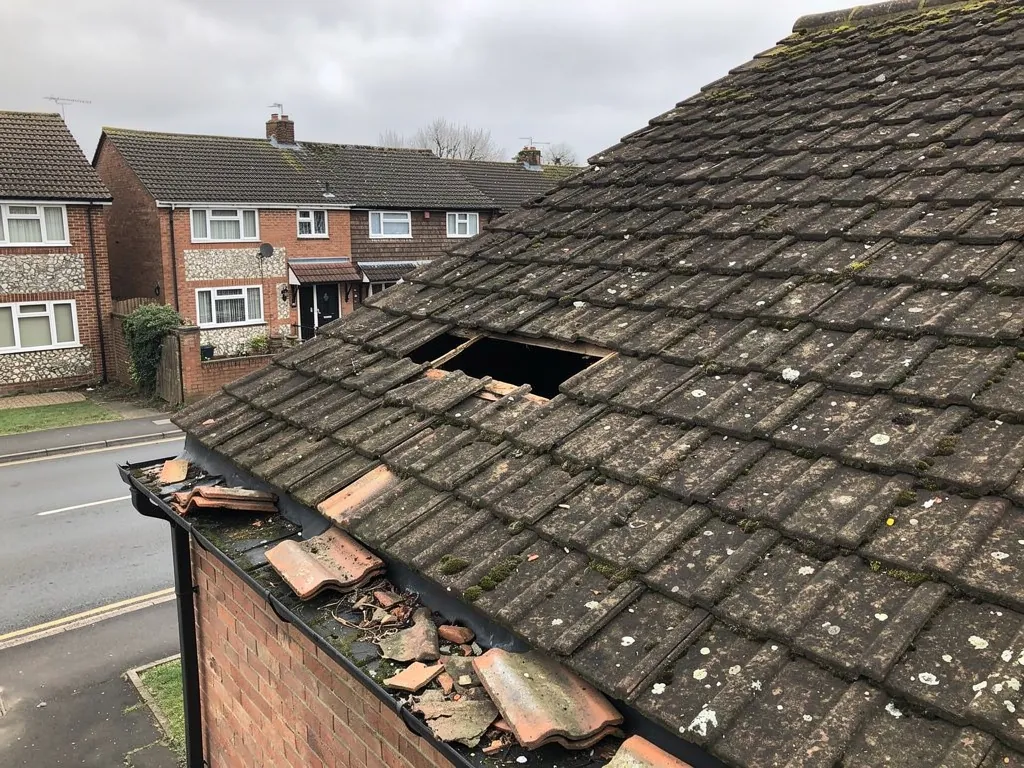
Loxwood is a village in the Low Weald, with the Wey and Arun Canal passing to the east and south. Houses near water and trees need their gutters and shaded slopes checked first.
Map of Loxwood, 25.8 road miles north of Bognor Regis, with the nearest towns we also cover.
Loxwood and the Wey and Arun Canal
- Council
- Chichester District Council
- County
- West Sussex County Council
- Conservation area
- Chichester District Council's maps show any boundary
- Article 4
- Ask Chichester District Council before relying on permitted development
- Parish church
- St John the Baptist, Church of England, in the Diocese of Guildford
- Distance
- 25.8 road miles north of Bognor Regis, about 44 minutes by car
Loxwood notes
Plumbe's brick church to the canal bank
Three sides of Loxwood, from the brick church and the old store to the wet ground beside the canal, and the work each calls for overhead.
Chapter 1: Red brick and stone dressings at St John's2562
Sheet 01 / 03Loxwood's first chapel was built around 1410 as a chapelry of Wisborough Green and was rebuilt in brick in 1822. The village became a parish in 1873. The church standing today, St John the Baptist, was designed by R Plumbe, started in 1898 and finished in 1900. It is built of red brick with stone dressings, and in 1978 the parish was linked with Alfold in Surrey, within the Diocese of Guildford. A building of 1900 is a little over a century and a quarter old, young for a church and old for a roof. Whatever covers it has had time to find every weak joint, and the stone dressings are where those joints tend to cluster.
Two ways to seal lead to stone
Built in
Lead tucked into a cut groove, wedged and pointed, so water runs over the stone.
Stuck on
A bead of mastic over an open joint, which splits as stone and lead move.
1.1 Dressings, copings and where roofs meet stone
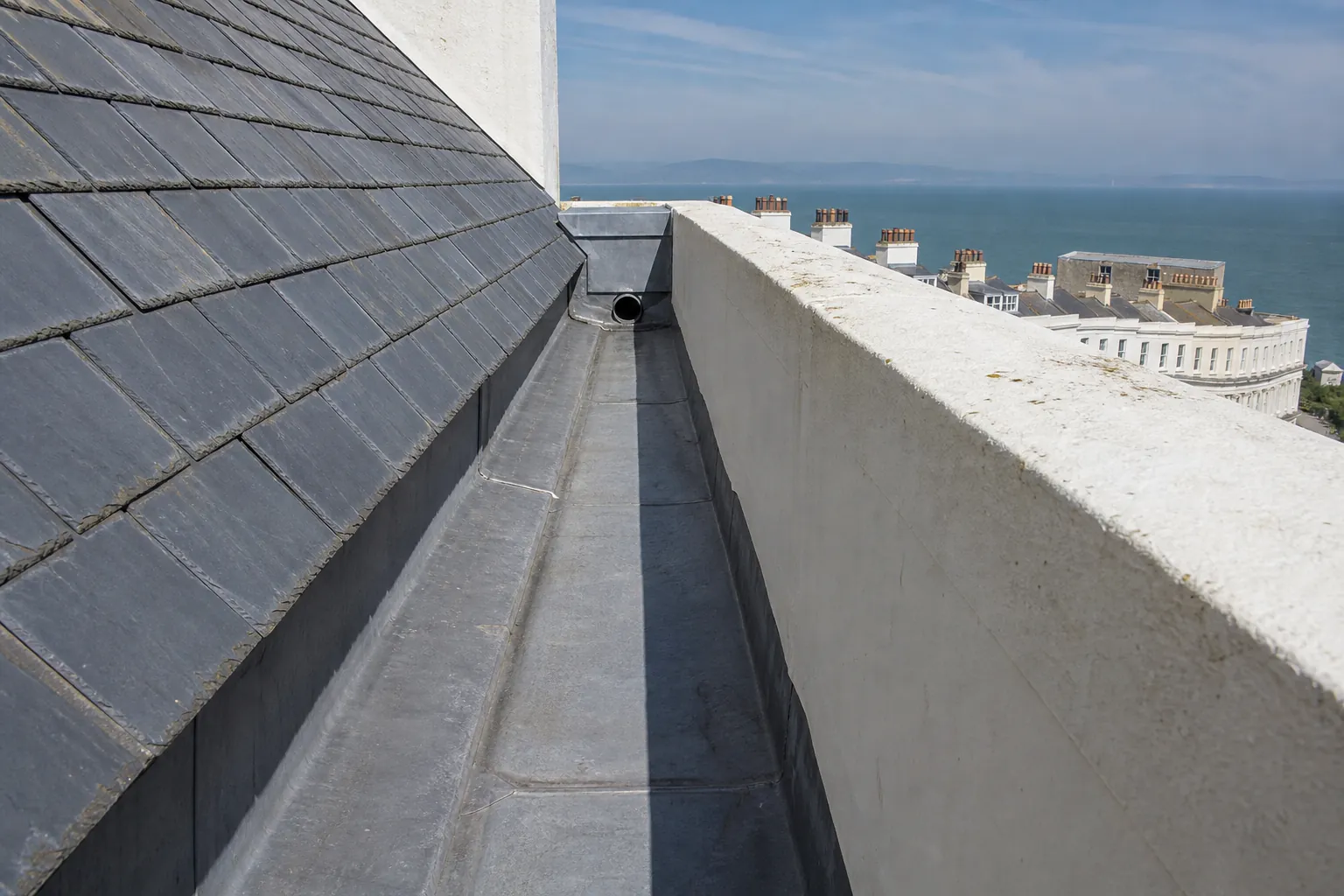
Stone dressings are the carved or cut pieces that trim a brick building: window surrounds, gable copings, the stones at a corner. Where a roof meets one of them, a flashing (a dressed strip of lead bridging roof and wall) has to be tucked into a groove in the stone and pointed, so water runs over the stone and not behind it. A bead of mastic over an open joint looks neat on the day and splits when the materials move. Repointing in a mortar that is harder than the stone also does harm over time, so the mix matters as much as the lead. Gable copings and kneelers (the shaped stones at the foot of a gable) stand proud and take the worst of the weather. If one is loose, or the joint beneath it has opened, water enters the wall below the roof line and stains the brick inside long before anyone sees a tile out of place. We look along every coping from a ladder, not from the churchyard path.
1.2 Parapets, box gutters and the consent route
Behind a parapet or a gable coping, rain collects in a box gutter, a lead-lined channel that has to fall steadily to an outlet. Royston's brochure lists lead codes 5 to 8 for parapet and box gutters, and the heavier codes cost more but take more movement. Outlets are small and fill first, and a box gutter that cannot clear in a downpour spills into the wall, so we check the outlet, the falls and the dressed ends before judging the lead itself. As an Anglican parish church in use, St John's sends its works through the faculty system rather than listed building consent, and planning rules still reach changes to the outside. Church roofs also draw in bats and nesting birds, both protected. Our lead roofing and leadwork page explains the sheet, the dressing and the falls in more detail.
Chapter 2: Cokelers, the Combination Store and shop roofs2806
Sheet 02 / 03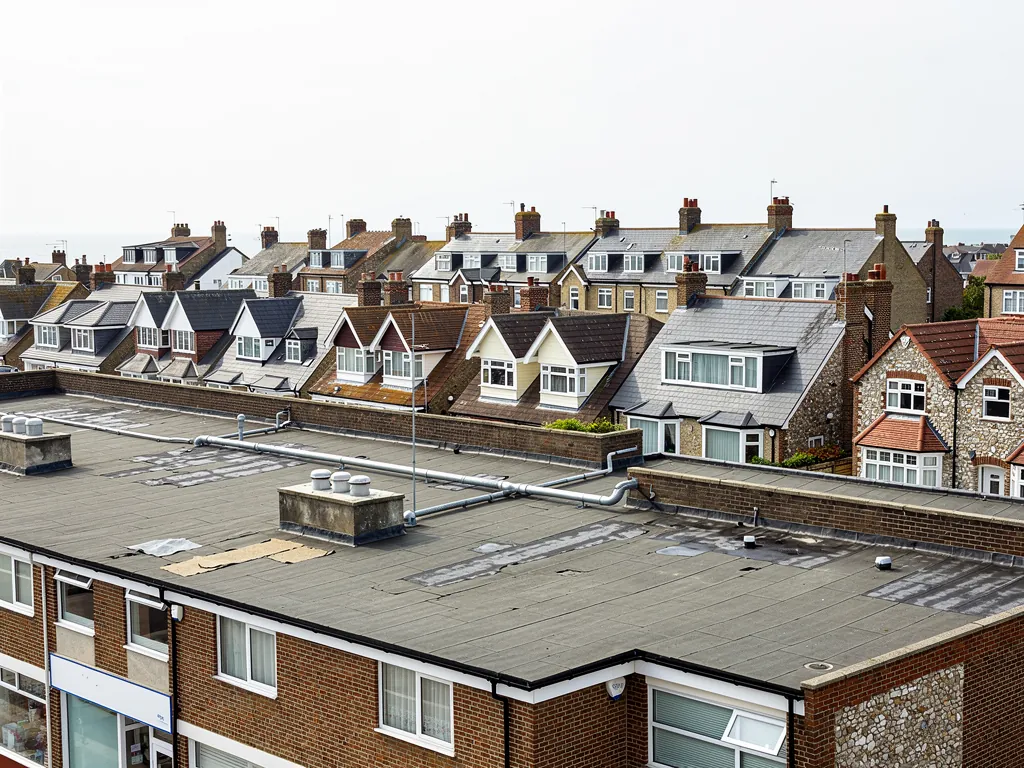
The Society of Dependants, known as the Cokelers, built their first chapel in Loxwood and ran a Combination Store whose building houses the village shops today. The history is local, but the roofing lesson is general: a building that has changed use over a century has usually had its roof altered along with it. Extensions behind the shopfronts, flat-roofed stores, linking valleys and shared gutters are all places where one patch has been laid over another. Before we price anything on a roof like that, we find out how many layers there are and what lies beneath the top one. A leak above a stockroom costs a shopkeeper far more than a roofer's visit, which is why finding the true source matters more than finding a quick patch.
A shop-roof visit in four moves
- 1Agree accessWe settle how to reach the roof without blocking the shop doors.
- 2Photograph firstGutters, upstands and outlets are recorded before anything is touched.
- 3Make safeWe stop the water coming in before planning the longer job.
- 4Written totalThe quote arrives in writing, one total, with the photographs beside it.
2.1 Roofs over shops carry different duties
A shop roof has to be reached without blocking customers, signs or deliveries, and it often has plant, aerials or flues standing on it. That changes the method as much as the covering. Where a building serves trade, we agree how the roof will be reached, which door stays clear and what is done at the end of each day to leave it watertight. For larger or multi-unit buildings our commercial roofing page sets out how that planning works, and the same page will help a landlord who owns the whole row. If you own the freehold and let the units, tell us when you ring. A roof over several tenancies is repaired for the whole building, and a written quote that names the units affected keeps the paperwork in step with the building.
2.2 Flat sections, falls and how long they last
Flat roofs behind shops are where leaks start, because water ponds. BS 6229:2025 sets a minimum finished fall of 1:80, and roofers design to about 1:40 so the finished surface still drains. Sources differ on lifespan, as they should: GreenSpec gives EPDM an expected service life of 20 to 30 years, and Less says a torch-on felt roof lasts 10 to 20 years, with a good job reaching 20 and a poor one failing in under 10. None of those figures is a promise. We look at ponding marks, blistering and the state of the upstands (the edge of the covering where it climbs a wall), then hand you a repair-or-replace verdict with photographs of the roof itself. Upstands are a usual weak point, because the wall and the roof move differently, and a replacement that skips them mends only the middle of the roof.
Chapter 3: Low Weald damp, tree cover and the canal bank2745
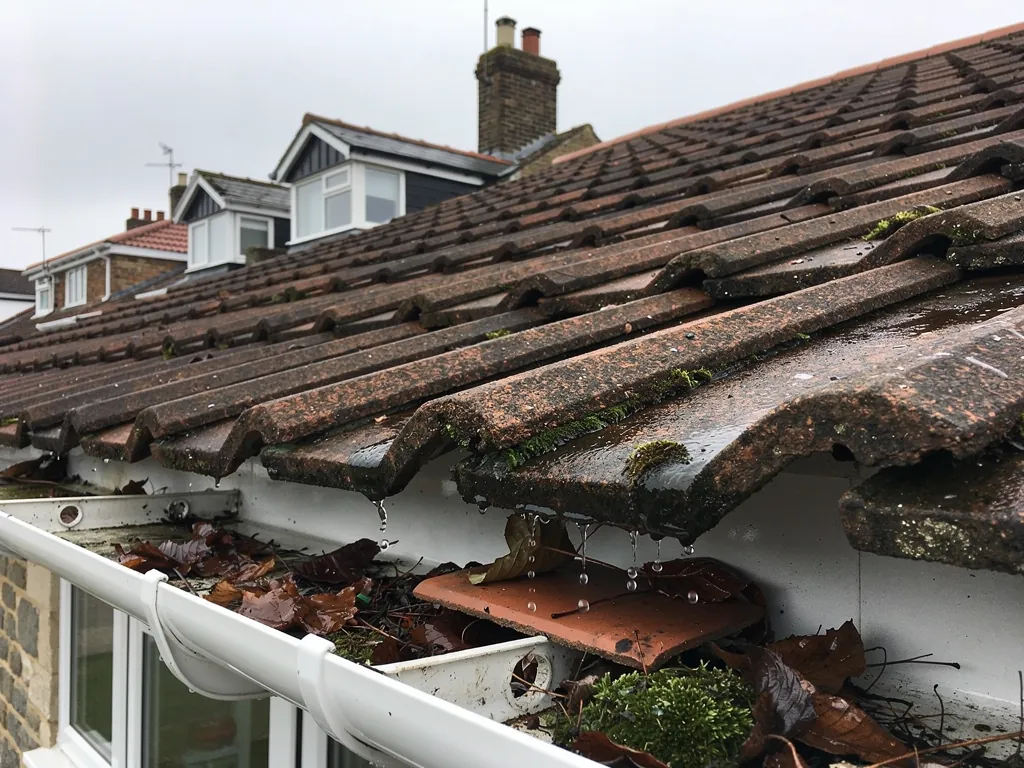
Sheet 03 / 03Loxwood lies in the Low Weald, and the Wey and Arun Canal passes to the east and south. Land beside water tends to hold trees, and trees shed leaves, needles and twigs onto roofs. None of that makes a roof fail by itself, but it changes what we check first: the gutters, the lower courses of the slope and any section that the sun reaches late. Damp that lingers on a shaded slope feeds moss, and moss lifts tiles and blocks gutters. A roof clean is sometimes the right answer, and sometimes a sign that the covering is closer to its end than the moss suggests. A gentle clean and a close look beat a hard power jet on old tiles, which can strip the face from them. Moss is also a clue about the hidden parts: where it thrives, the slope above has often stayed wet for months, and the battens beneath are worth a check.
Looking after a tree-lined roof
- Gutters clear at every outlet
- Shaded slopes checked for moss
- Eaves vents kept open
- Flat sections free of ponding
3.1 Gutters, falls and leaf fall
Gutters need a fall to move water towards the outlet. Brett Martin's installation guide suggests 1 mm for every 600 mm, with brackets no more than 900 mm apart, while FloPlast gives 1:350 for its MiniFlo system, so the fall depends on the system fitted. A sagging run holds a pond that overflows at the first heavy shower. If the overflow soaks the wall below, the damp that results is often blamed on the roof. Fascias and soffits (the boards under the eaves) soak up the same overflow, which is why a gutter job often finishes with some timber to replace. Our guttering, soffits and fascias page covers how we renew the run and where the fascia board behind it needs replacing as well.
3.2 Ventilating a roof that stays damp
A damp roof space needs air to leave it. Marley says a cold roof with a high-resistance underlay needs a 25 mm opening along the eaves on pitches up to 15 degrees, and 10 mm above that. BS 5250:2021 on moisture in buildings is listed by BSI as current but under review. We check that insulation has not been pushed into the eaves and that the vents are clear. Bathroom and kitchen fans that vent into the loft add moisture of their own, so a leak is not always the roof's fault. Bats and nesting birds in the eaves are protected too, and we stop and take advice if we find signs of either. Our guide to underlay and ventilation covers the options in more depth.
What we fix on Loxwood roofs
Frequently asked questions
Questions from St John's to the canal bank
How do you seal a roof against stone dressings like those on St John's church?
By cutting a groove in the stone, tucking the lead into it, wedging it and pointing it, so the joint is built in, not glued on. The pointing mortar is chosen to suit the stone, because a mix that is too hard can damage it. Mastic is only a short-term cover. Photographs of the joint go in your file at both stages.
Can a flat roof behind one of Loxwood's shops be repaired rather than replaced?
Often, when the damage is local. Blisters, a split seam or a failed upstand can be cut out and patched. If water is ponding across the whole roof, or the deck beneath has softened, a patch only delays the job. We look for ponding marks, check the outlets and give a verdict with photographs, and the quote follows in writing.
Does a roof beside the Wey and Arun Canal need clearing more often than one elsewhere?
Not by a set timetable. Tree cover and shade decide it, not the water. A roof under overhanging branches collects leaf litter and stays damp longer, so moss and blocked gutters follow. We look at the gutters, the lower courses and the shaded slopes, and tell you whether a clean, a gutter clear-out or a repair is the sensible next step.
Is Loxwood in a conservation area, and does that change a re-roof?
Chichester District Council's maps show whether an address falls in a conservation area, so ask the council for them and for any Article 4 direction. Re-roofing like for like seldom calls for planning permission, though on a listed house anything that changes its special interest needs consent first. Send us your address and we will help you check the list before work is planned.
Nearby areas
Get a quote
Tell us about your roof
Describe what's happening and we'll call you back.
Loading the enquiry form. You can also call 01243 252373.