
Roofers in Petworth
Steep clay tile, hips, half-hips and sandstone
Petworth's roofs are steep clay plain tiles, varied by gables, hips and half-hips, on a hill town of sandstone and greensand that sits inside the South Downs National Park.

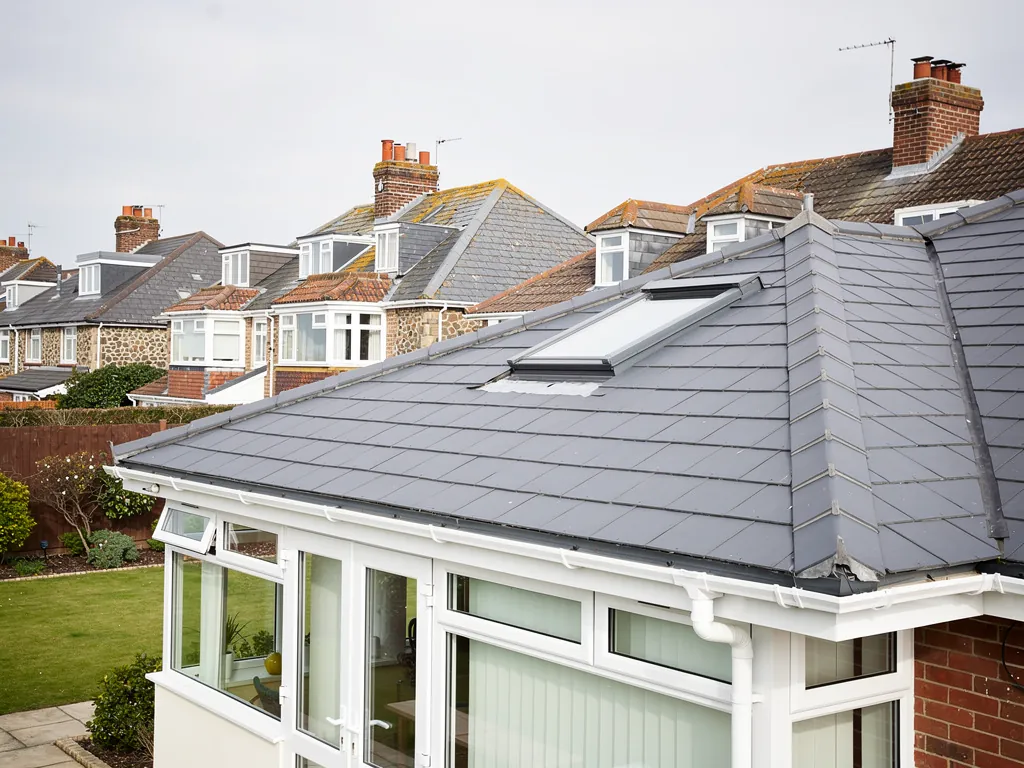
Petworth roofs
Tile, stone and the town on its sandstone ridge
-
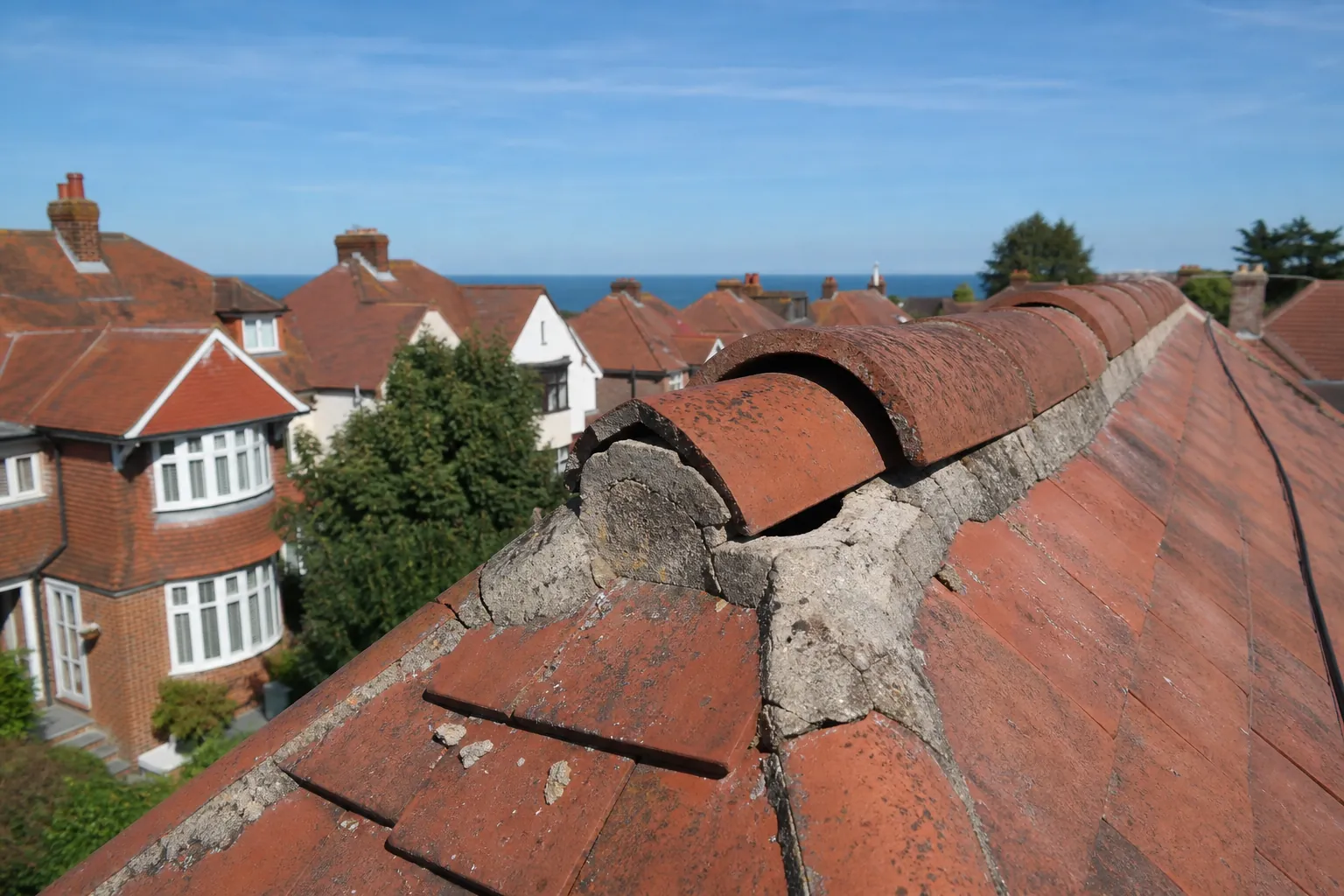
Steep clay plain-tile roofs
The conservation area appraisal says steep clay plain-tile roofs predominate, varied by gables, hips and half-hips. A steep slope sheds water well, and it also means every ridge and hip is a long, exposed run.
-
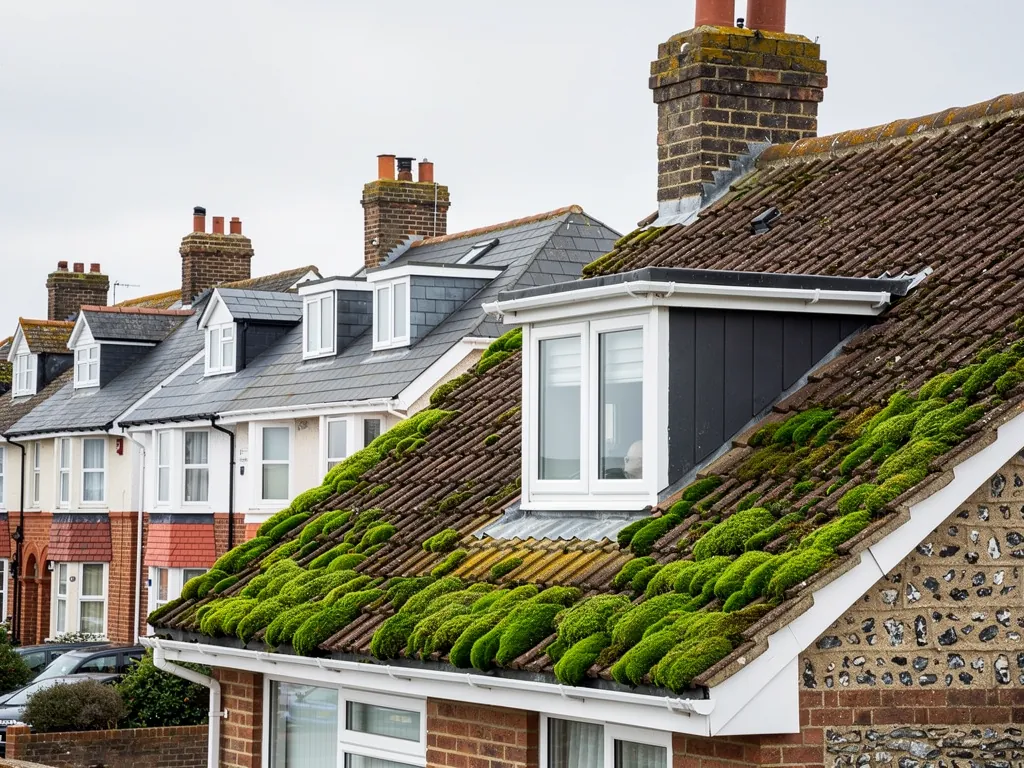
St Mary's and Petworth House
The parish church of St Mary and Petworth House are both listed Grade I. Plans that go further than a plain repair, near such buildings or on a listed neighbour, begin with the list entry.
-
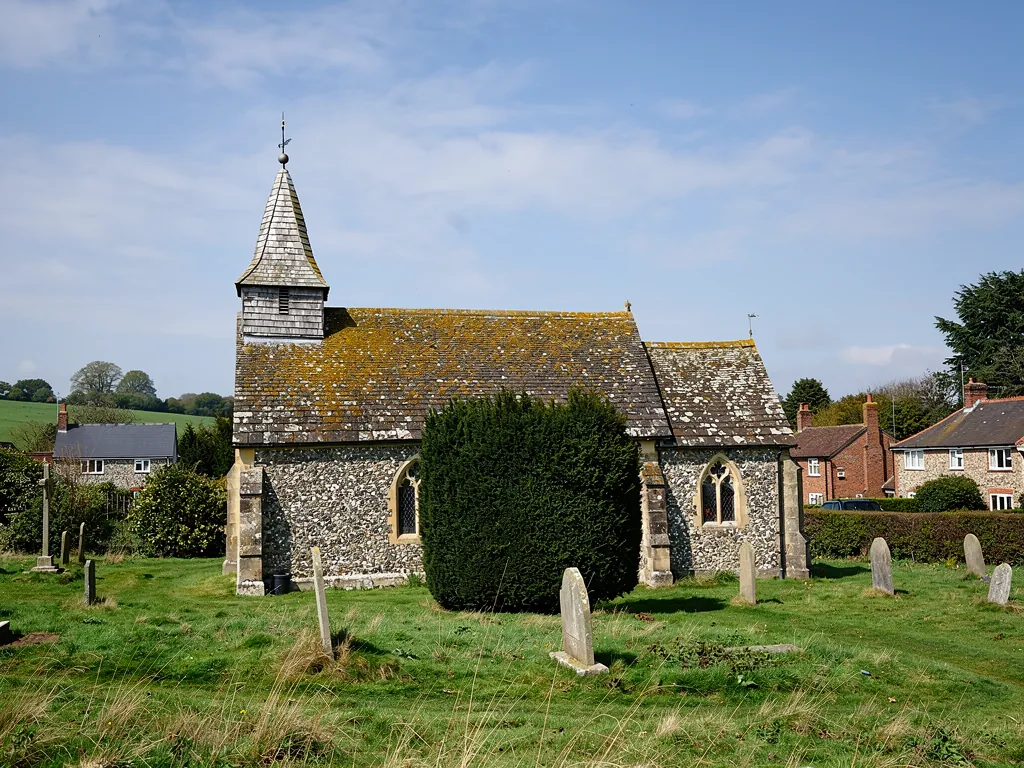
Greensand, sandstone and flint
Local sandstone and greensand give the walls their character, and the Sacred Heart church on Angel Street, finished in 1896, is built in greensand with stone and flint chequer panels. Every roof edge that meets such a wall needs a neat, dressed flashing.
Map of Petworth, 17 road miles north of Bognor Regis, with the nearest towns we also cover.
A ridge-top town inside the National Park
- Council
- Chichester District Council
- Planning
- South Downs National Park Authority
- County
- West Sussex County Council
- Conservation area
- Petworth, first designated on 6 September 1971 by West Sussex County Council
- Article 4
- None recorded in the town on the South Downs National Park Authority's list
- National Park
- South Downs National Park, planning authority since April 2011
- Distance
- 17 road miles north of Bognor Regis, about 30 minutes by car
Petworth notes
Steep tiles on a sandstone ridge
Three things that shape a roof in Petworth: the clay tile, the long list of protections and the stone it meets.
Chapter 1: Steep clay tiles, hips and half-hips2196
Sheet 01 / 03Petworth is a hill town on a sandstone ridge at the southern edge of the Low Weald, about four miles north of the chalk scarp of the South Downs. The conservation area appraisal says steep clay plain-tile roofs predominate there, varied by gables, hips and half-hips. That one sentence tells a roofer a good deal. A plain tile is small and thin, laid in overlapping courses, and on a steep slope the roof sheds rain quickly but every tile has to stay put against the pull of gravity and the push of the wind. Hand-made tiles have a slight camber and a mottled colour that machine-made ones rarely copy exactly, so when a few need replacing we look for a close match, often from reclaimed stock. A hip is the angled rib at an outer corner, where two slopes of tile come together. A half-hip is a gable whose top is clipped back into a small hipped end, so a house with one has a short sloping triangle at the top of the gable wall where a flat wall might have been. Each one adds a line of cut tiles, and each cut is a place to look for slipped or cracked tiles. Plain tiles are also laid with a wide overlap, so a tile that cracks usually has a sound one beneath it, and a single replacement can restore the roof without any further stripping. That is the kind of small, accurate repair we prefer to recommend before a new roof comes into the conversation.
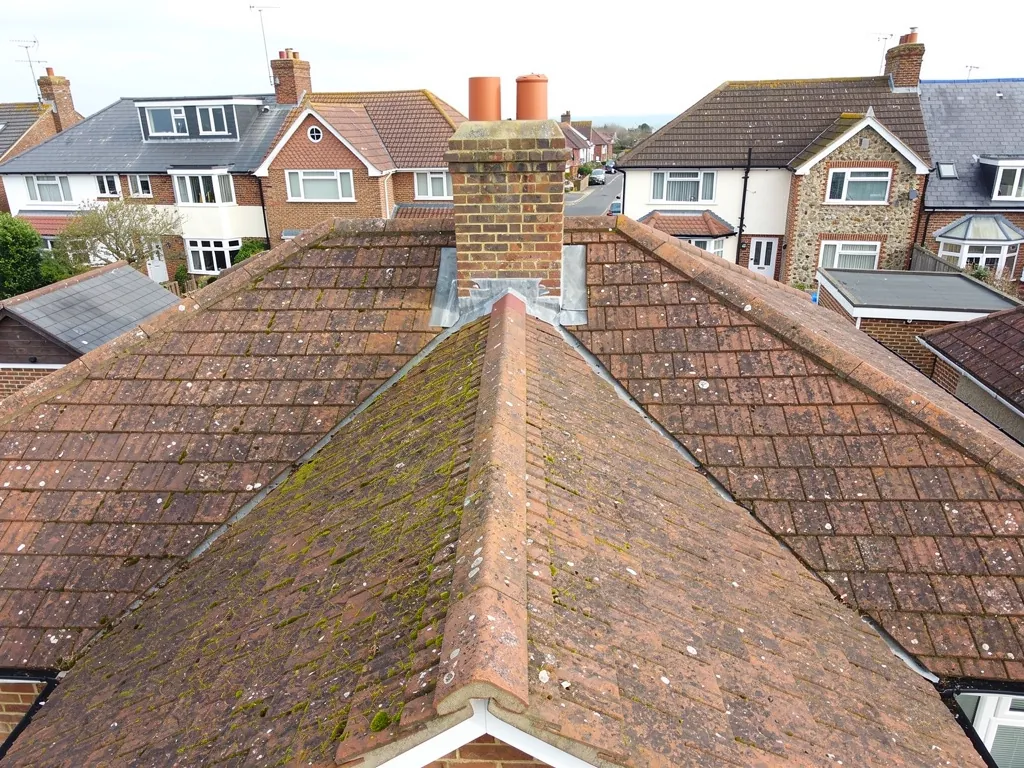
What a tired Petworth tile roof may need
- RefixSlipped tiles put back and ridge or hip capping fixed down mechanically.
- PatchCracked tiles swapped for matching clay while the rest stays sound.
- RelayBattens, underlay and nails renewed and the good tiles laid again.
1.1 Looking after clay plain tiles
Clay is a durable covering. Marley cites a Building Research Establishment minimum of 60 years for clay, while a building conservation article calls that number unreliable for old peg-tile roofs. On old roofs the tiles often outlast the timber and nails beneath them. Marley's clay plain tiles are rated to minimum pitches of 30 to 40 degrees, depending on the model, which is the territory Petworth's steep roofs sit in. When we survey, we check for tiles that have slipped, spalled on the face or cracked across, and for soft or rotten battens, the timber strips each tile hooks onto. A roof that has lost its nibs, the little lugs on the back of a tile, is slipping slowly even if nothing has fallen yet.
1.2 Ridge and hip tiles on a steep slope
The ridge capping runs along the top. BS 5534 was revised in 2014, and since then nobody leans on a mortar bed alone for the ridge and hip tiles. That is the job of screws, clamps or a dry-fix system, which BS 8612:2018 tests for ridge, hip and verge. An older Petworth roof may still have mortar beds that have crumbled where the weather reaches them first. Replacing the bed and adding fixings is a modest repair. Our ridge tile repairs page explains the process, and our plain clay tile roofs guide covers the covering itself.
Chapter 2: Listing, the Park and who decides2013
Sheet 02 / 03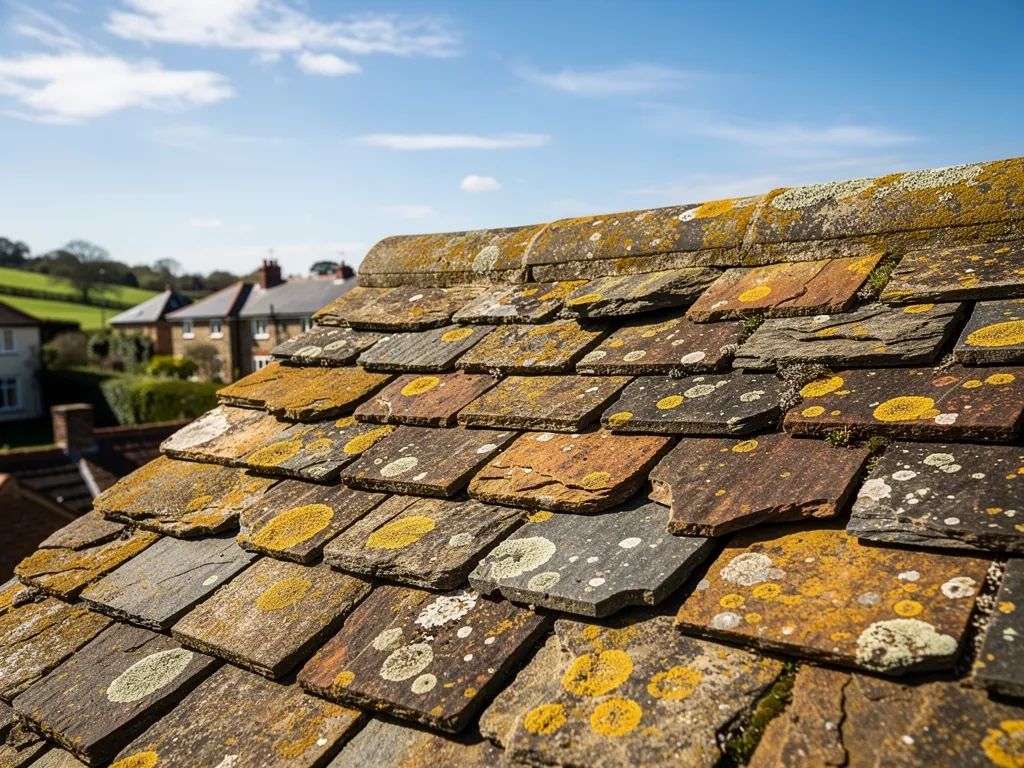
Petworth was first designated a conservation area by West Sussex County Council on 6 September 1971. Chichester District Council reviewed it in 1999 and adopted an appraisal in November 2000, and the South Downs National Park Authority became the planning authority in April 2011. Three layers can therefore apply to one roof: the conservation area, the National Park and, on some buildings, a listing. In this corner of the Park the district council receives and processes planning applications for the Authority, and building control remains with the district too. If you are not sure which body to ask, our advice is to start with a call to the district planners, who can say where your application goes.
Before altering a Petworth roof
- Listed or unlisted
- Conservation area boundary
- Which body takes it
- Will the covering change
2.1 Grade I neighbours: the church and the house
The Parish Church of St Mary and Petworth House are each listed Grade I. Listing protects the whole building, roof included, so the covering of a listed house has protection in its own right. Under the 1990 Act, works that would affect a listed building's character need consent unless they are authorised, though the Authority's own guidance says upkeep and little in-situ mends that match the existing work sit outside listed building consent. St Mary's is an Anglican parish church. While it remains in use the faculty route applies, a process run by the church rather than the council. The Catholic church of the Sacred Heart, designed by F. A. Walters, would follow its own denomination's procedure while in use. We check which route applies before anything is priced.
2.2 No Article 4 direction in the town
An Article 4 direction withdraws permitted development rights from a defined area. The Authority's list shows none with a Petworth town address; the only one carrying a Petworth address is for Wassell Barn at Ebernoe, which lies outside the town. The conservation area management plan says the Authority will consider directions, which is a policy position and not a direction. Listed houses still need consent for anything that changes their character. Planning rules also change, so for any change that alters the roof's appearance, such as new roof windows, the planning guide in our skylights and roof windows section is the place to begin, and the Authority's planners are the people to ask. If your house stands beside the market square, a back lane or the park wall, the answer can differ from a house a street away, so we always give the address when we ask.
Chapter 3: Where tile meets sandstone and greensand2440
Sheet 03 / 03Petworth's walls carry as much character as its roofs. The appraisal names local sandstone and greensand as the materials, and the Sacred Heart church shows how they were used, with flint chequer panels set into the greensand. A tiled roof that runs into a stone wall needs a joint that moves a little and still keeps water out. Mortar fillets alone crack as the materials flex at different rates, which is why traditional work uses lead set into a groove in the wall, known as a chase, with the other edge dressed over the tiles. Lead comes in codes by weight, and Royston's cast-lead brochure lists codes 4, 5 and 6 as suitable for flashings. Choosing the code is part of a good flashing job, and on a steep roof the lead is also dressed with enough overlap that driving rain cannot track behind it.
Two ways to seal tile against stone
Mortar fillet alone
Quick and cheap to form, but it cracks as roof and wall move at different rates.
Lead set into a chase
Flexes with the joint, sheds water over the tiles and lasts far longer when dressed properly.
3.1 Chimneys, valleys and half-hip junctions
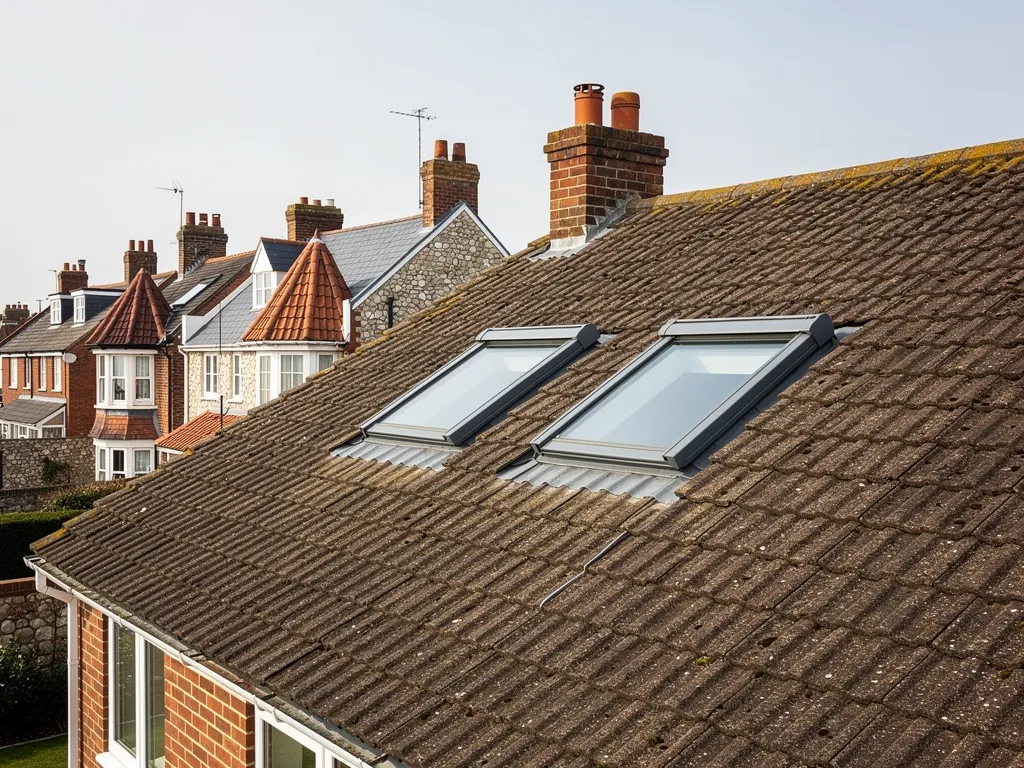
A chimney stack on a steep roof needs a flashing round its base, a tray or gutter behind it and a lead apron on the downhill side. A valley is the trough between two slopes at an inner corner, collecting water from both, so it needs a properly lined channel. Half-hips and hips create further junctions, so a Petworth roof often has more joints than a plain gable. A damp patch on a ceiling below a stack usually points to a failed joint at the stack, and not necessarily a leaking tile, so we trace the water before proposing a fix, which often means a short look in the loft after rain, and sometimes a hose test, working from the bottom of the roof upwards. Our chimney repairs page covers repointing a stack, renewing its flashings and checking the flaunching that beds the pots.
3.2 Working safely above a steep slope
A steep roof is not a place to improvise. West Sussex County Council licenses scaffolding that obstructs the highway. The firm erecting it files the application, at least 10 working days ahead, and a month's licence is listed at £266. We plan access first and build the programme around it, because the ladder positions, the scaffold lifts and the delivery of tiles all depend on where the roof can safely be reached. Bats and nesting birds are covered by wildlife law, so the roof void gets a look before any stripping starts. When the survey is finished, the whole job is priced as one written total.
Roof jobs we handle in Petworth
Frequently asked questions
Questions from the market town on the ridge
Why do half-hip roofs in Petworth cause more leaks than plain gables?
A half-hip adds a short hip and extra cut tiles at the top of the gable, so there are more junctions where a tile can slip or a joint can open. The ridge, hip and verge capping also meet at one point that has to be bedded and fixed carefully. We check each of those junctions on the survey and report on them one by one, with a picture of every fault, so you can see the cracked tile or the open joint for yourself.
Can I replace Petworth clay plain tiles with concrete ones?
Inside the conservation area, a change of covering is a question for the council, because the appraisal records steep clay plain tiles as the town's prevailing roof. A different material also changes the weight and look, and can bring building control into play. Ask the district council's planning team before you choose a covering, and we will match clay to the existing tile.
Who decides roof applications in Petworth, the National Park or Chichester?
In Petworth the district council receives planning applications on the Authority's behalf, while the Authority remains the planning authority. Building control stays with the district council. If a listing is involved, listed building consent follows the same route. Contact the district council's planning team and they will confirm the process for your address.
Are there Article 4 restrictions on roofs near Petworth Park?
The Authority's Article 4 list shows no direction for Petworth town. The only direction carrying a Petworth address is for Wassell Barn at Ebernoe, outside the town. Listed buildings still need consent for alterations affecting their character, and planning rules do change, so check with the planning team before altering any roof.
Nearby areas
Get a quote
Tell us about your roof
Describe what's happening and we'll call you back.
Loading the enquiry form. You can also call 01243 252373.