
Roofers in Wisborough Green
Horsham slabs, village green, Newbridge canal
Wisborough Green's roofs include the Horsham slabs on St Peter's church, cottages and houses facing a large village green, and homes near the Arun at Newbridge inside a conservation area.
Wisborough Green roofs
From the slab roofs of St Peter's to the green
-
Horsham slabs on the church mound
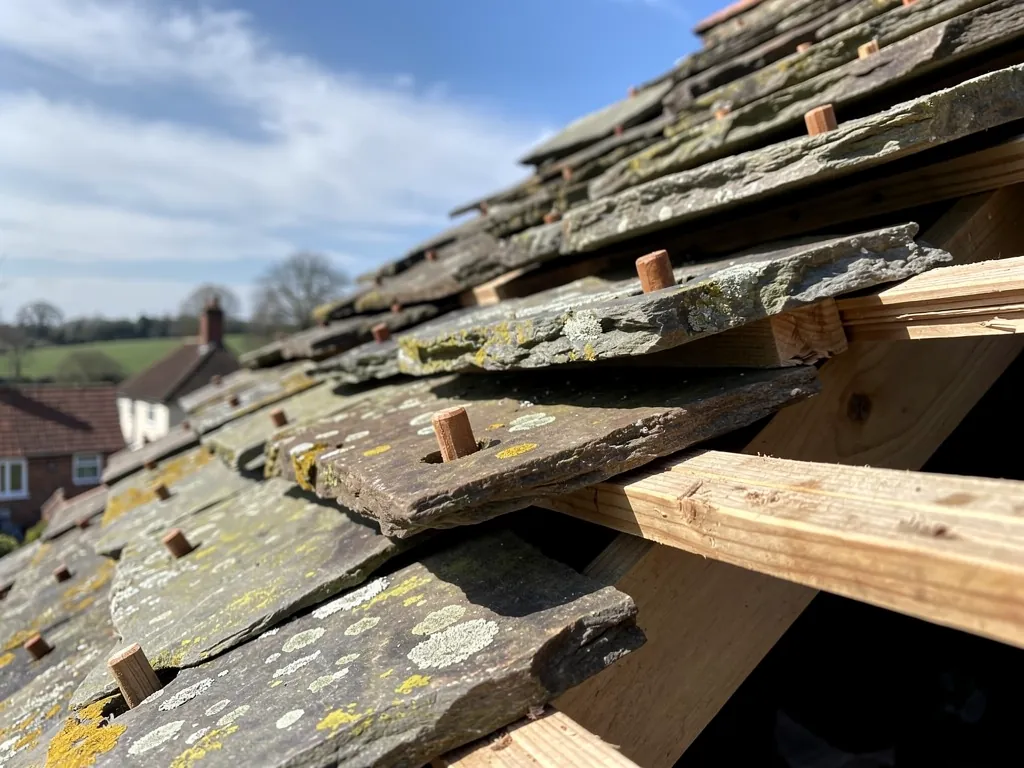
St Peter ad Vincula stands on a low mound, and its restorer E Christian kept the Horsham slab roofs in 1867 to 1868. Sussex Parish Churches calls them some of the finest in Sussex.
-
Houses facing the village green
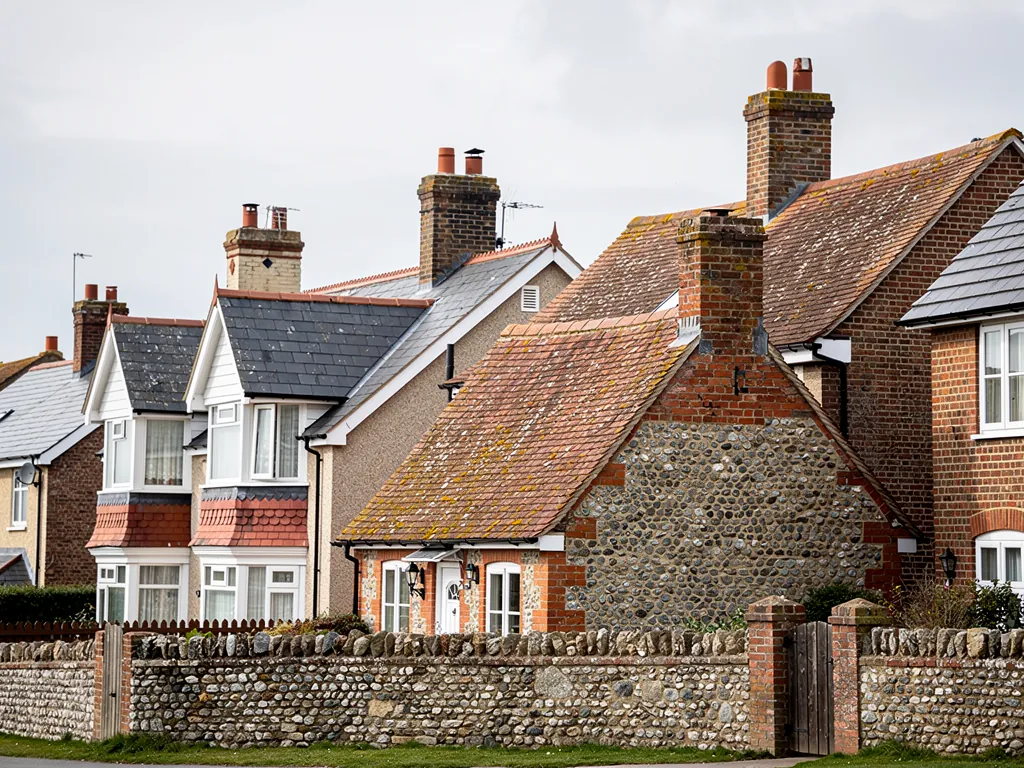
The large green, used for cricket and football and owned by the Parish Council, is the open middle of the village. Roofs facing it are seen from the road and the pitch alike, so a repair must look right.
-
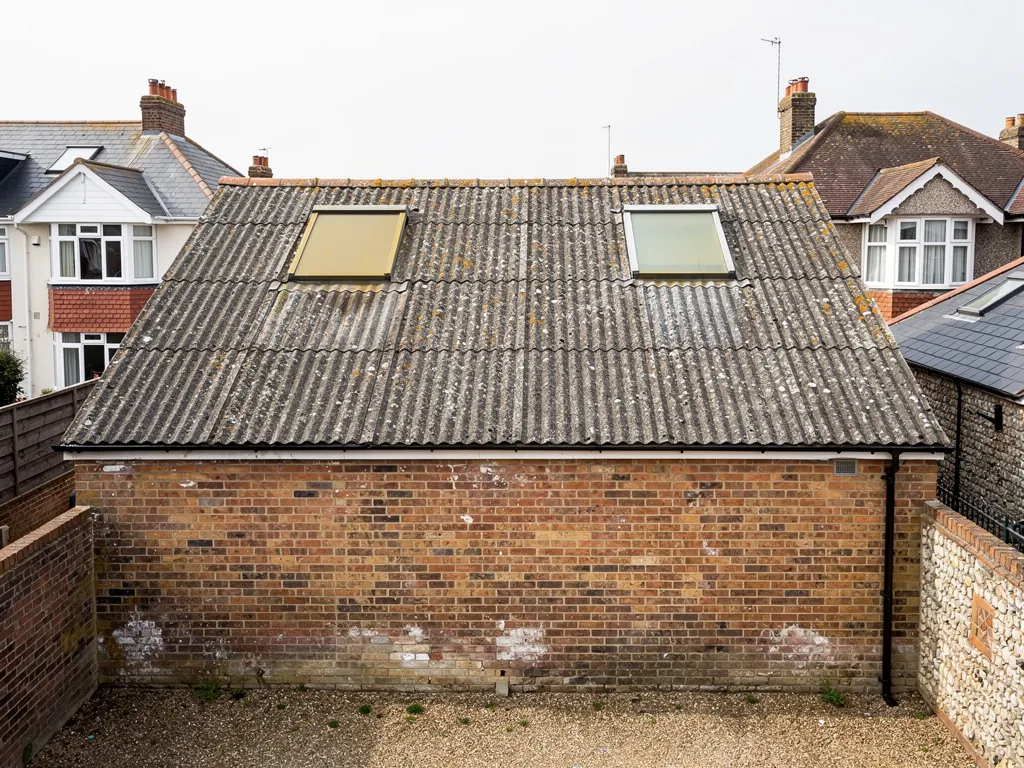
Zoar Chapel and older buildings
Zoar Chapel was built in 1753 for the Strict Baptist denomination and now houses an independent evangelical church. Roofs of that age have been mended many times, so we begin with the timbers before the covering.
Map of Wisborough Green, 22.5 road miles north-east of Bognor Regis, with the nearest towns we also cover.
Wisborough Green and its conservation area
- Council
- Chichester District Council
- County
- West Sussex County Council
- Conservation area
- Wisborough Green Conservation Area, with 40 listed buildings
- Article 4
- Ask Chichester District Council about your street
- Listed landmark
- Church of St Peter ad Vincula, Grade I
- Distance
- 22.5 road miles north-east of Bognor Regis, about 36 minutes by car
Village notes
Slab roofs, the green and the Arun
A slab-roofed church, a green with cricket on it and a river crossing, read one roof at a time.
Chapter 1: Horsham slabs on St Peter's mound2013
Sheet 01 / 03St Peter ad Vincula, listed Grade I, stands on a low mound, and its roofs are stone. E Christian restored the church in 1867 and 1868 and kept the Horsham slab roofs, which the Sussex Parish Churches survey calls some of the finest in Sussex. Anyone with an old house nearby can learn something from that. A Horsham slab is a thick sandstone slate, split by hand and hung in diminishing courses, which means rows that shrink from big slabs along the eaves (the bottom edge of the roof) to small ones up by the ridge, where the two slopes meet at the top. If your own roof is stone, the questions below apply to you directly.
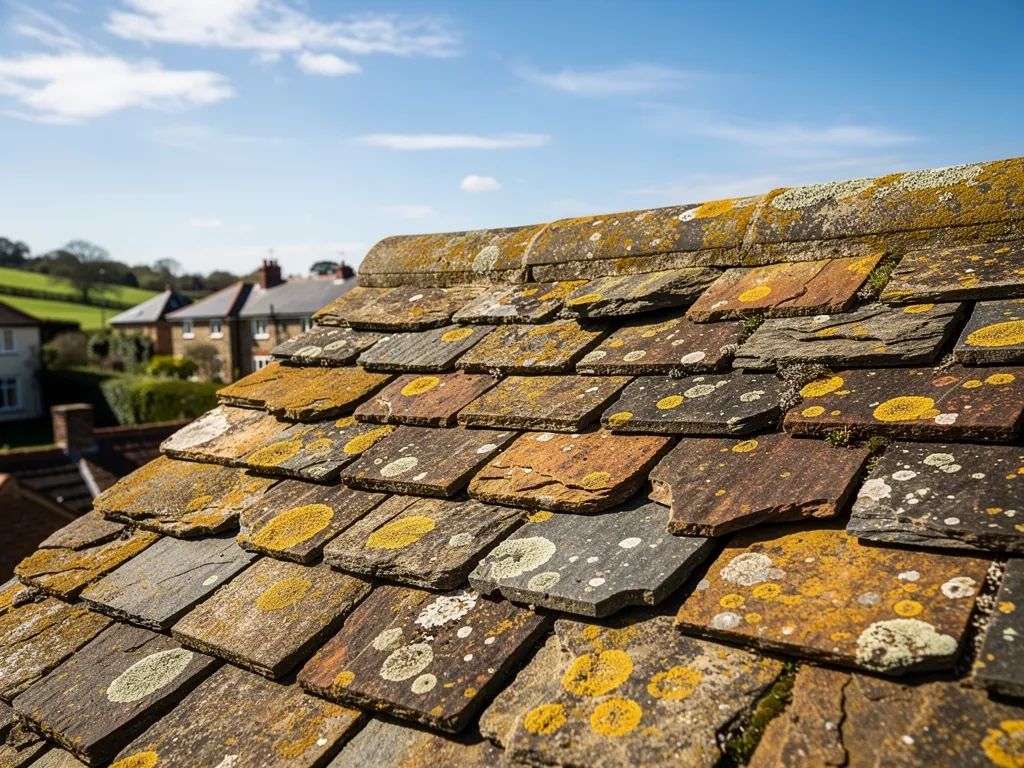
Before work on a stone slab roof
- Photograph every slope first
- Count slipped and split slabs
- Check the battens underneath
- Ask whether the house is listed
- Keep sound slabs for reuse
1.1 What a slab roof asks of a roofer
Stone is heavy, and the timbers under it were sized for that load. The Planning Portal says building control approval is needed if the replacement covering weighs 15 per cent or more above the old one, so we weigh a repair against a relay long before anything is ordered. A few slipped or split slabs can be lifted out and swapped, with the sound ones rehung alongside. A slope that sags, or has shed slabs across a wide patch, needs a relay: strip it, sort the stone, renew the battens (the timber laths the slabs hang from) and the underlay beneath the slabs, then lay the best slabs back in order, biggest at the bottom. Our Horsham stone roofing page describes the process course by course.
1.2 Lead against uneven stone
Slabs are thicker and less regular than slate, so the gap beside a chimney or wall is not a neat line. Lead flashing, the sheet-metal weathering that keeps rain out of that joint, has to be dressed to the stone's contours and chased into the wall, never smothered in sealant. It is slow work, and it is where a stone roof either stays dry for decades or starts to let in water around the chimney. We would rather spend the extra hour at the stack than come back to it.
1.3 St Peter's own route, and yours
St Peter's falls under Church of England rules, so changes to the building are decided through the faculty process rather than by listed building consent, and exterior development still has to satisfy the planning system. A house takes a different route. If yours is listed, anything altering its character requires listed building consent, and mending it in matching stone is normally the way to stay clear of that. We read what is actually on the slope, photograph all of it and then tell you which side of the line the job falls. Our guide to stone roofs in a conservation area goes further.
Chapter 2: Around the green, inside the conservation area2806
Sheet 02 / 03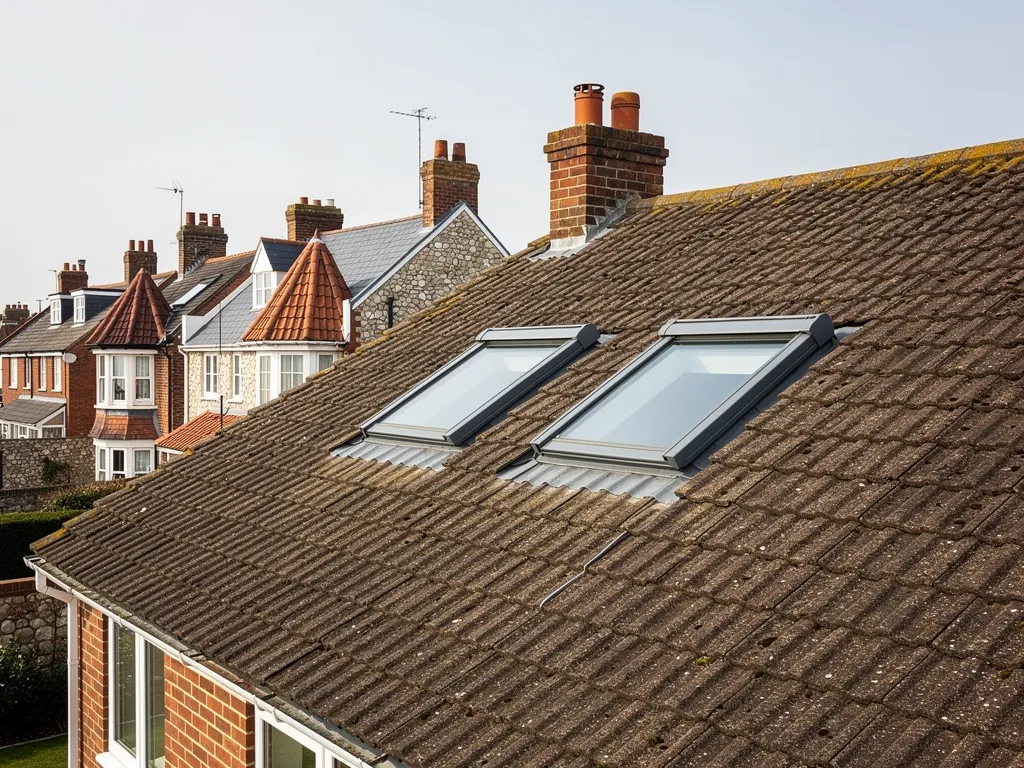
The middle of Wisborough Green is its large village green, used for cricket and football and owned by the Parish Council. Houses face it from several sides, so a roof here is read from the lane and from the boundary of the pitch, and what covers it counts towards the whole street picture. Historic England's listing data puts 40 listed buildings inside Wisborough Green Conservation Area, the Grade I church among them. Ask Chichester District Council for the boundary map and the designation details before you plan anything bigger than a repair.
Two routes for a roof near the green
Matching repair
Same material, same pattern, same look from the lane, so the roof keeps its character.
A different covering
Changes the view from the green, so speak to the planning team and read any list entry first.
2.1 Zoar Chapel and three centuries of glass
Zoar Chapel, listed Grade II, was built in 1753 for the Strict Baptist denomination and now houses an independent evangelical church, so it sits outside the ecclesiastical exemption and works affecting its character need listed building consent from the council. Wisborough Green and neighbouring Kirdford were both important centres of glass making between about 1300 and 1600, so this is a village with a long working past. A building with that much history is a reason to survey the structure before the covering, since years of patching can disguise what is happening beneath. The valleys, where two slopes meet in an internal angle, the joins between roof and wall, and the flashings round chimneys are the common weak points, and we examine those first. A look from inside the loft often tells more than a ladder does: daylight through the covering, damp patches on timbers and stained underlay all show up from underneath.
2.2 When matching becomes changing
Putting back the same material in the same pattern is not normally a matter for planning permission, though a listed building or an Article 4 direction changes that. Ask Chichester District Council whether one applies to your street. Swapping clay for concrete, or stone for a thin slate, alters the view from the green, and in a conservation area that calls for a conversation with the planning team before anyone orders materials, and ideally before anyone prices them. Re-roofing can involve building control as well. Approval is not normally required where the work affects under 25 per cent of the building envelope and under 50 per cent of the roof, though the final word rests with your building control body, who can confirm how that works for your house. The same body can say whether a thicker or thinner covering raises any structural question. Our roof repairs page covers the smaller jobs that sit comfortably inside those limits, such as replacing a handful of tiles.
Chapter 3: Newbridge, the Arun and the old canal2257
Sheet 03 / 03The A272 crosses the River Arun at Newbridge, once the highest point of the Arun Navigation and the southern end of the Wey and Arun Canal. Wisborough Green therefore has water close by, and for roofs that matters in small ways. A house near a river or under mature trees gathers leaves, moss and damp air, and trouble tends to show in the gutter before it reaches the roof. We start with what the water is doing, because a blocked outlet or sagging gutter run can soak the fascia, the long board fixed under the roof edge to carry the gutter, and the rafter ends behind it. That is a bigger job than clearing leaves, and it is cheaper to catch early.
A survey visit at your Wisborough Green house
- 1Walk the outsideWe check gutters, outlets and the line of each slope from the ground first.
- 2Climb and photographEach fault is photographed close up, which gives you pictures of your own roof.
- 3Give the verdictYou hear whether the job is a repair, a stopgap or a replacement, and why.
- 4Write it downThe written quote arrives afterwards: one total price, with the photographs attached.
3.1 Chimneys, lead and flat extensions
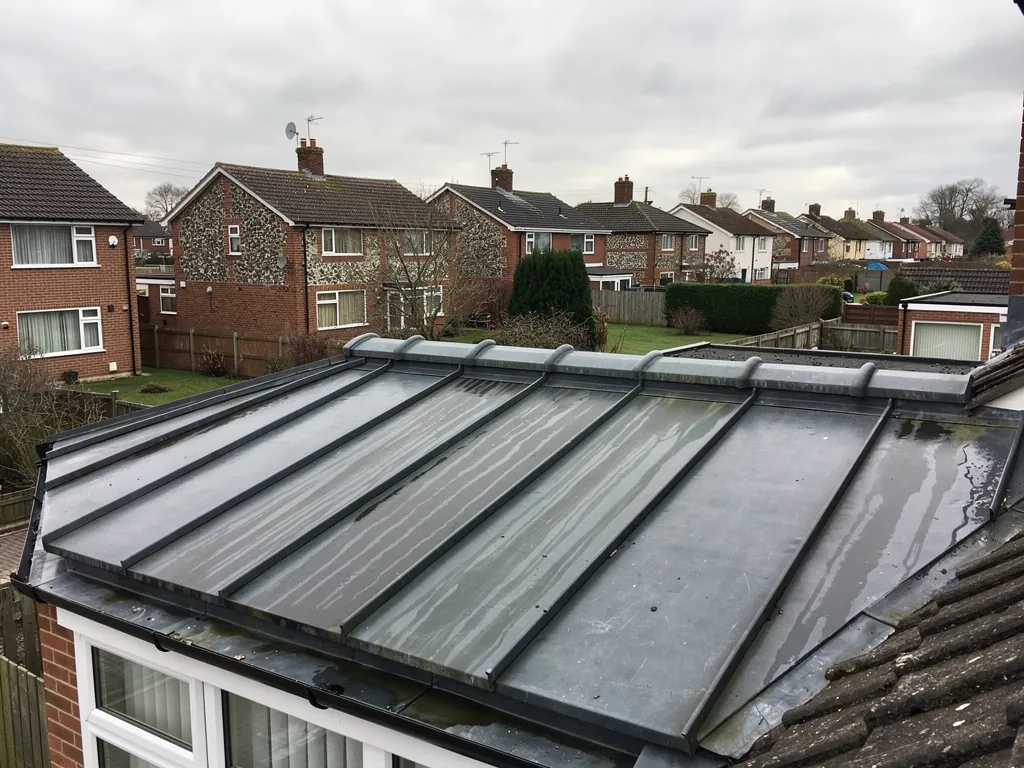
Where an older village house has a chimney stack, lead flashings seal it to the slope, and where a later extension or garage has a flat roof, that roof has weak points of its own. They fail in different ways. A flashing lifts when the mortar line behind it crumbles, and rain tracks down the inside of the wall long before any ceiling mark appears. A flat roof lets go at its edge trims and joints. In both cases we look at the whole detail rather than the one visible mark, and we say whether a repair will hold or whether renewing is the sounder call. For stacks, our chimney repairs page runs through the options, from repointing to a rebuild.
3.2 Scaffold on a village road
If your house fronts the road, a re-roof may need scaffold standing on the highway, and the Highways Act requires a licence for it, which West Sussex County Council issues as highway authority, and it asks for 10 working days' notice before the poles can go up, with a one-month licence priced at £266. We plan that wait into the programme once you accept the quote, so nobody is caught short, and a neighbour whose drive is affected hears about it early. Roosting bats and active nests are covered by wildlife law, which is why we check the eaves and ridge for signs of them before a roof is opened. At the end the rubbish leaves with us and the lane is swept, so the house looks as it did before we arrived, apart from the new roof.
Roof work we cover in Wisborough Green
Frequently asked questions
Questions from the green to Newbridge
Can slipped Horsham slabs be put back, or must the whole slope be relaid?
It turns on the timbers and the fixings holding the slabs, not just the stone. A handful of slipped or split slabs can be replaced individually, with the sound ones rehung beside them. If the fixings have given up across a slope, or the roof is sagging, relaying with the good slabs reused is the better answer. We photograph the slope first and say plainly which one applies to yours.
Do I need consent to repair a roof beside the village green?
Putting back what was there seldom needs planning permission, with two exceptions: a listed building, and any area under an Article 4 direction. A listed house needs listed building consent for works touching its character. Wisborough Green is a conservation area, so ask Chichester District Council before changing a covering. We can describe the roof and send our photographs to support that conversation.
Is a roof near the River Arun at Newbridge more likely to grow moss?
Damp air and overhanging trees both help moss and algae hold on, and gutters clog faster under leaves. Moss is not always harmful, but a thick layer can hold water against the covering and push it under laps. We look at the shade, the pitch and the gutters together, then say whether cleaning, a repair or leaving it alone is the right call.
Who decides on roof works at St Peter ad Vincula?
St Peter is an Anglican church in regular worship, which means the ecclesiastical exemption applies and alterations follow the faculty process. Exterior development still meets the planning system. That route belongs to the parish and its advisers, not to us. For a house or cottage nearby, we explain which consent route fits your building before any work begins.
Nearby areas
Get a quote
Tell us about your roof
Describe what's happening and we'll call you back.
Loading the enquiry form. You can also call 01243 252373.