
Roofers in Hammer
Brick stacks, mixed ages, county-line roofs
Hammer sits in the extreme north of Linchmere parish on the Hampshire and Surrey borders, where the Victoria County History found a good deal of building, near a former brickworks and two conservation areas.

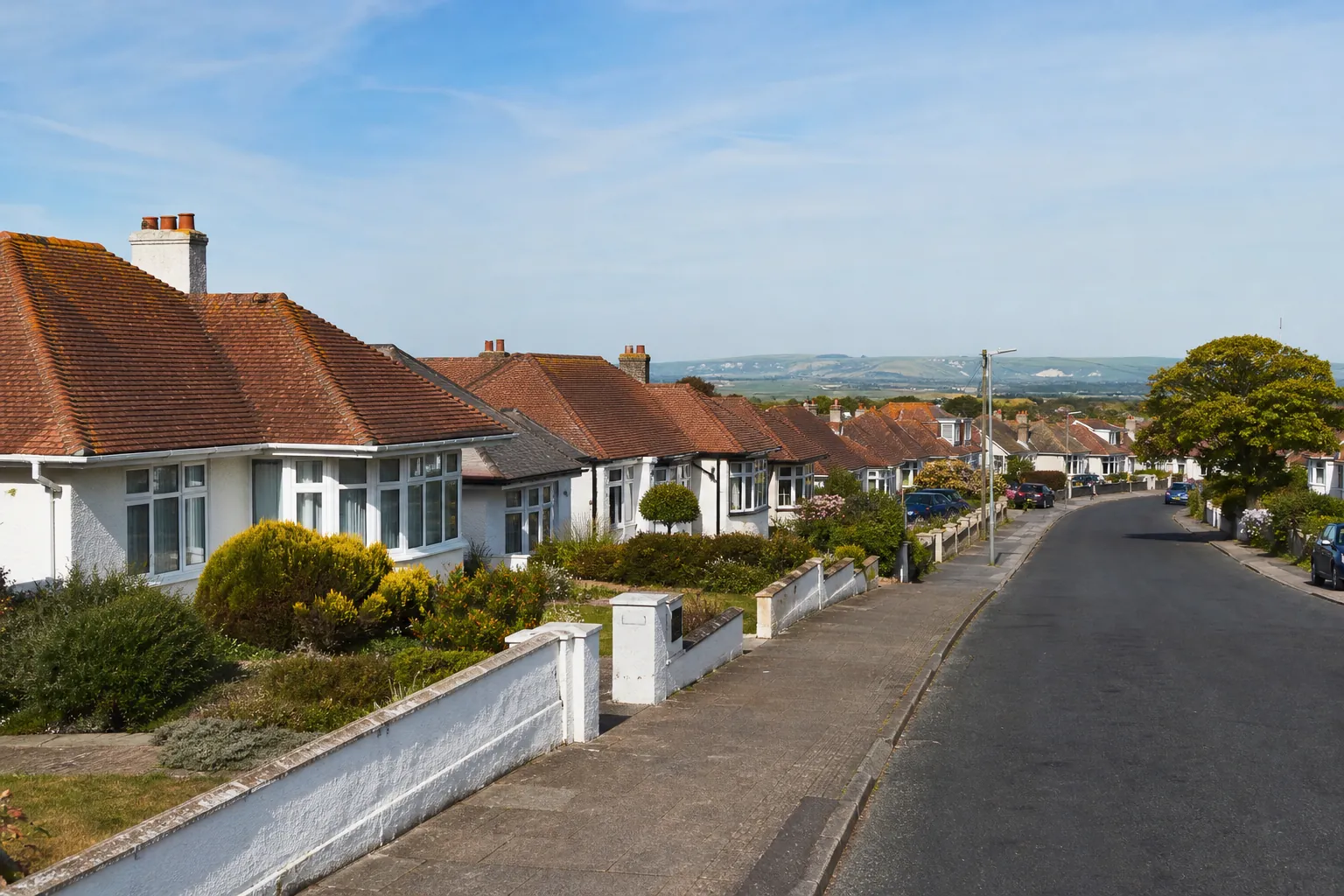
Hammer roofs
An iron-mill name and roofs of several periods
-
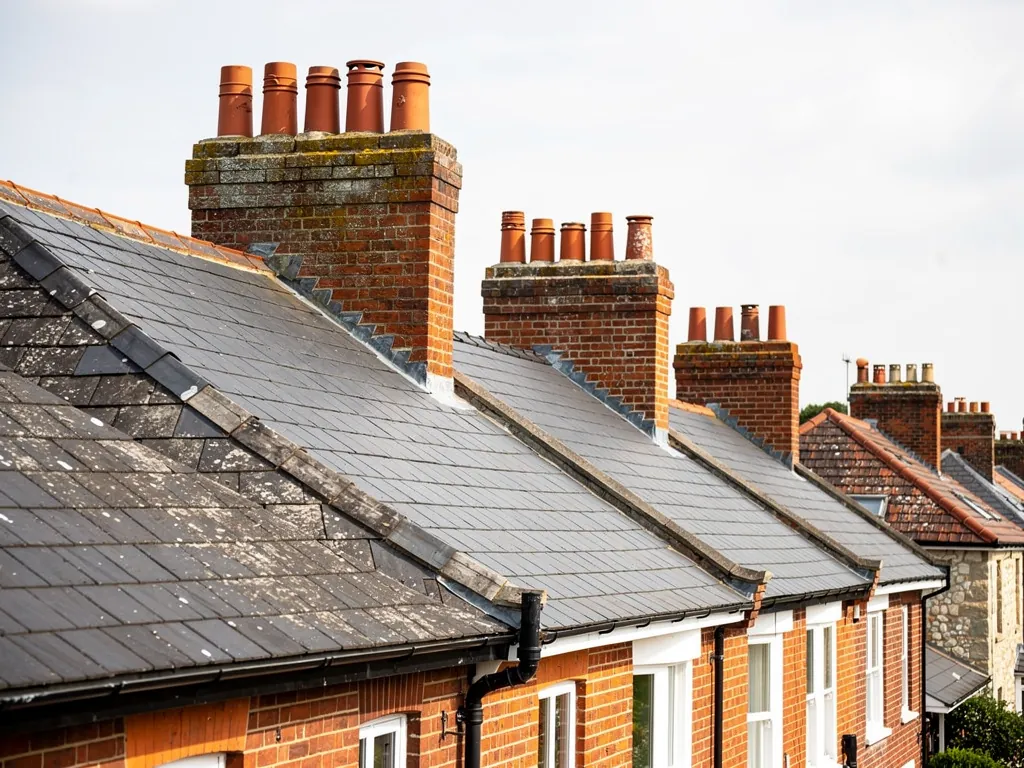
Brick from Hammer Brickworks
The South Downs National Park Authority's Lynchmere appraisal notes that Hammer Brickworks stood nearby and that, from the mid 19th century, bricks could also come from further afield. Stacks and walls may not match.
-
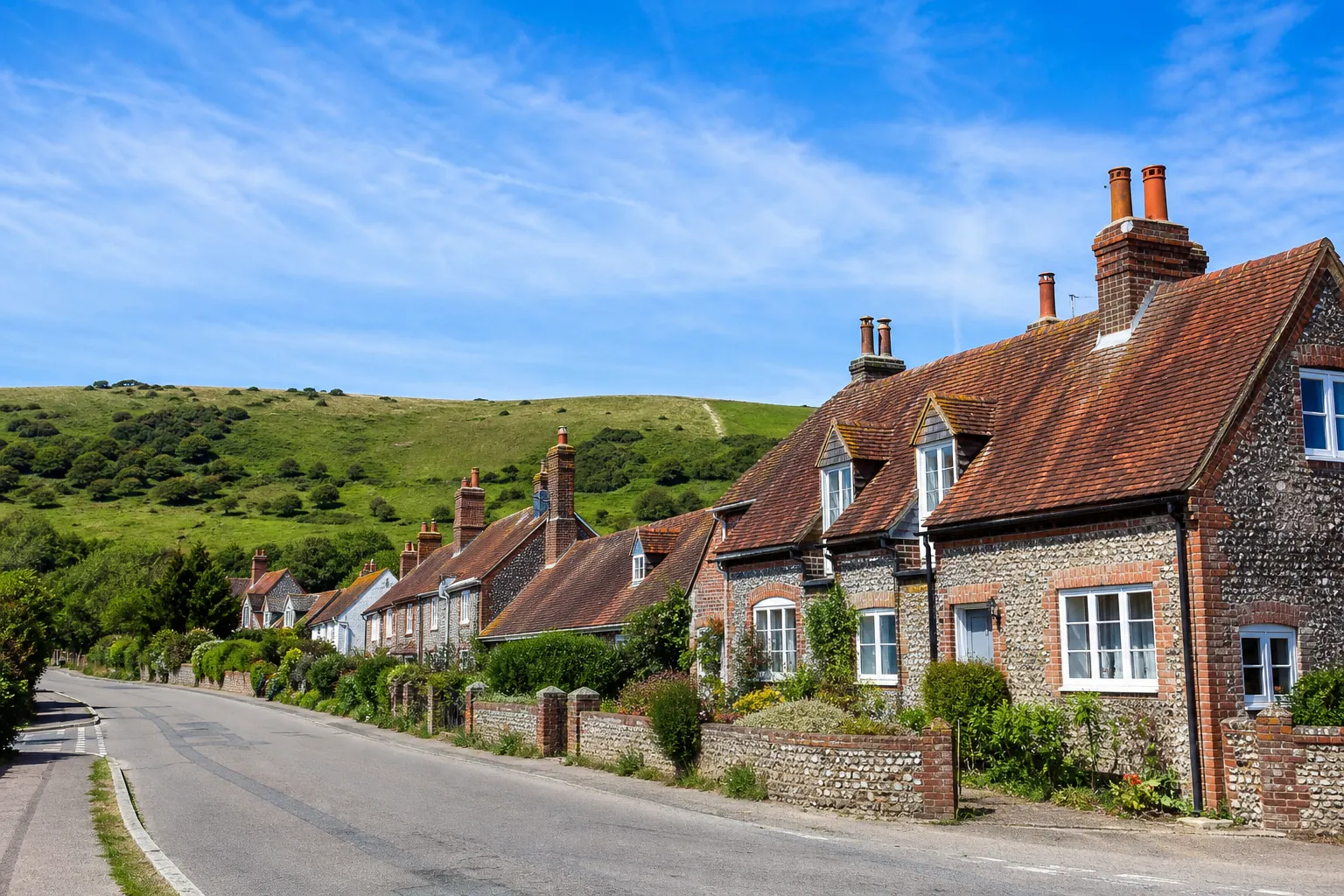
A good deal of building
The Victoria County History puts Linchmere parish's chief centre of population in the extreme north at Hammer, where there had been a good deal of building. Roofs of different ages can stand side by side.
-
Water-meadow country on the county line
The River Wey Conservation Area runs from the county boundary at Hammer Bottom to Headley Mill, protecting 18th-century water-meadow aqueducts. Houses nearby may answer to a different council from their neighbours.
Map of Hammer, 26.6 road miles north of Bognor Regis, with the nearest towns we also cover.
A parish edge shared with Hampshire and Surrey
- Council
- Chichester District Council
- County
- West Sussex County Council
- Name
- From the Pophall iron-mill, working from before 1573 until after 1730
- Setting
- North of Linchmere parish, on the Hampshire and Surrey borders
- Conservation area
- None at Hammer; River Wey (May 1983) and Lynchmere lie nearby
- Distance
- 26.6 road miles north of Bognor Regis, about 44 minutes by car
Hammer notes
From the Pophall mill to the county line
A village named for an iron-mill, built up over time and sitting where several authorities meet.
Chapter 1: Pophall iron-mill and a village built up2440
Sheet 01 / 03Hammer takes its name from an iron-mill known as Pophall, which worked from before 1573 until after 1730, according to the Victoria County History's account of Linchmere. The name outlived the mill. The same history says the parish's chief centre of population lies in the extreme north at Hammer, where there had been a good deal of building. That is a short phrase, but it fits what a surveyor expects to meet in a place like this: homes put up at different times, for different people, in different ways, with extensions and repairs added since.
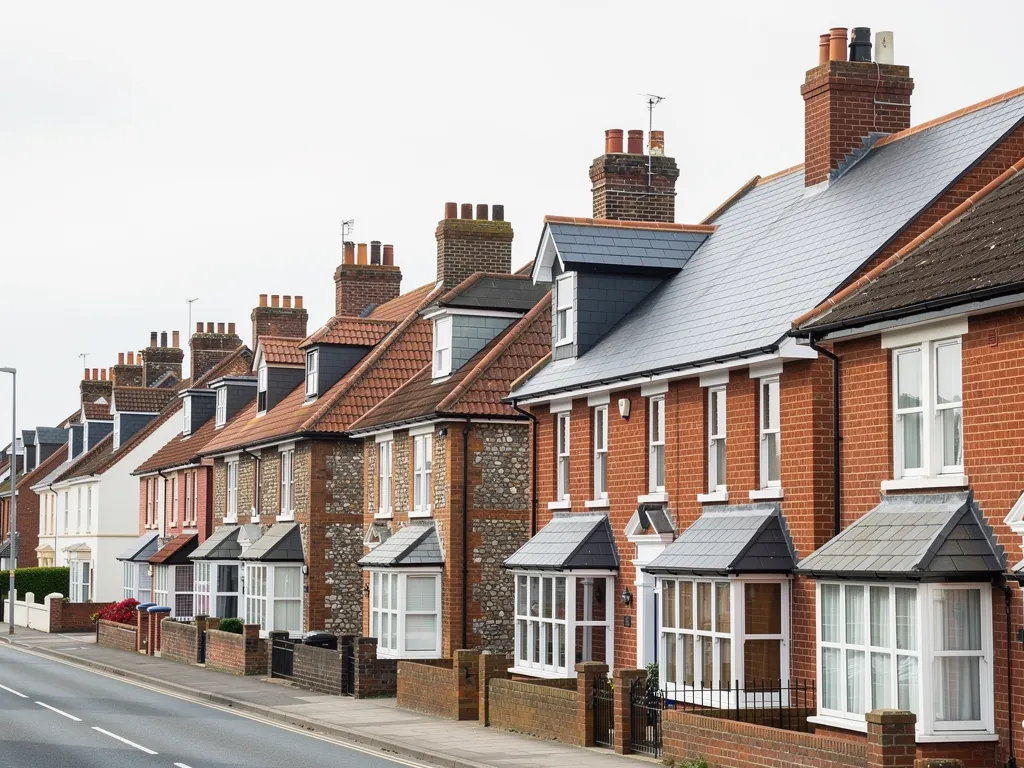
Reading a mixed-age Hammer roof
- Ridge held by mortar only
- Crumbling battens or underlay
- Stack pointing and flaunching
- Where extensions meet the old roof
1.1 Roofs of several periods side by side
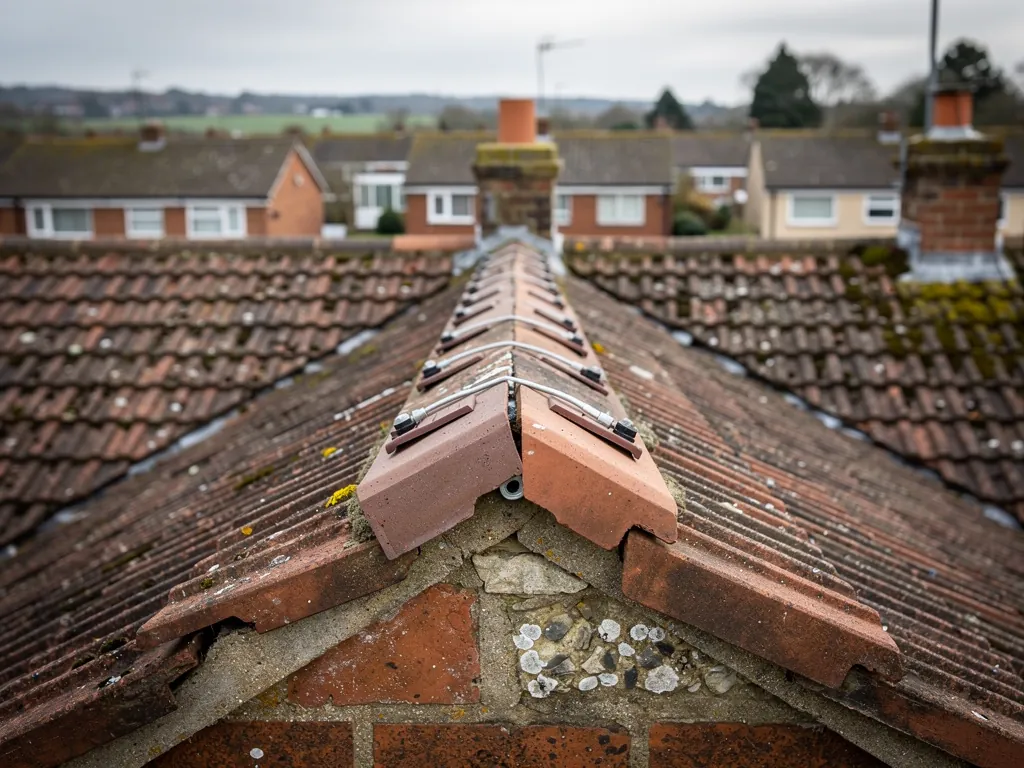
Without a single building campaign behind it, a village has no standard roof, so we do not assume one. A tiled slope on one house may be recent, while the next door neighbour's covering has been on for generations and has been patched in between. Clues to age are plain once you know them: a ridge held by nothing but a bed of mortar is a sign of an older job, a flat-roofed extension with a bubbled surface may date from a different decade to the house, and battens that crumble when handled have done their time. We record each of these in the survey photographs, so the repair, patch or replace verdict rests on what is on your roof and not on a guess about the street.
1.2 Brick from the brickworks and from further afield
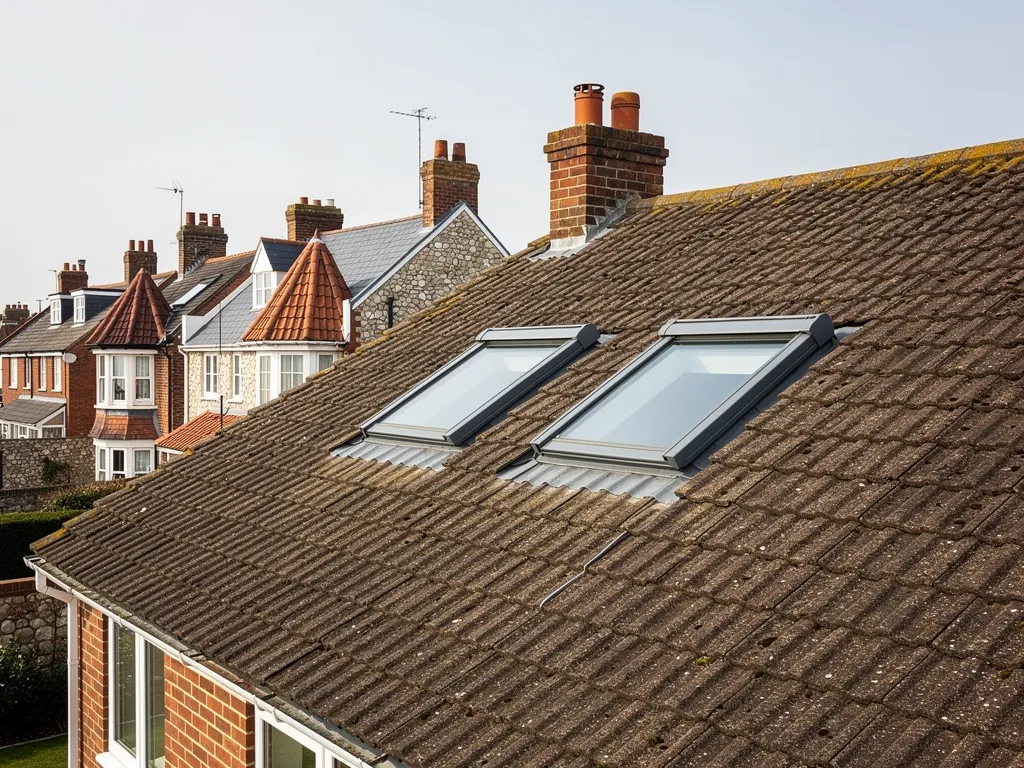
The Lynchmere appraisal prepared for the South Downs National Park Authority in December 2016 notes that Hammer Brickworks was located nearby, and that from the mid 19th century bricks could also be brought in from further afield. For a roofer that matters most at the chimney. A brick stack on an older house may have been built in one batch and repaired in another, and the pointing, the brick and the flaunching (the sloping mortar fillet round the foot of the pots) may all be of different ages. Our chimney repairs page covers the point at which a stack should come down and be rebuilt instead of repointed. If water is already showing on a ceiling below, roof repairs sets out how we trace it before quoting.
Where an extension meets an older wall, the weatherproofing is lead. Sheet lead is sold by code. Royston Lead's brochure lists Code 4 (1.80 mm) for soakers, flashings, valley gutters and dormers, and Code 5 (2.24 mm) for flashings, valleys, parapet gutters and dormers. A soaker is a folded lead piece that tucks beneath each course of tiles beside a wall or stack. Our lead roofing and leadwork page explains which weight goes where, and why the lead around a stack so often gets renewed during a chimney job.
Chapter 2: The county line at Hammer Bottom1952
Sheet 02 / 03The Victoria County History places Hammer in the north of Linchmere parish, on the Hampshire and Surrey borders. East Hampshire District Council's leaflet says the River Wey Conservation Area was designated in May 1983 and runs from the county boundary at Hammer Bottom to Headley Mill, protecting 18th-century water-meadow aqueducts; part of it lies in West Sussex. For a householder that makes the map unusually important. At Hammer a short distance can separate one council, one county and one set of fees from another.
Scaffold licensing on either side of the line
West Sussex side
The county asks for 10 working days' notice and £266 for a month of scaffold.
Hampshire side
Ten clear working days and £211.90 for the first two weeks, with no extensions.
2.1 Which side of the line your house sits on
Hammer itself is in West Sussex, and Chichester District Council handles both planning and building control there. A property over the line in Hampshire answers instead to East Hampshire. The postal address is not a reliable guide, so we check the boundary on the council map as part of the survey. It decides whom you ask about a conservation area, who inspects a notifiable job and which highway authority licenses any scaffold, and getting it wrong early can cost weeks. Building control follows the same logic: a notifiable job on the West Sussex side goes to Chichester District Council or a registered building control approver, while the Hampshire side has its own council. Say which side you are on when you first ring, and we will take it from there.
2.2 Two scaffold licences, two timetables
A scaffold standing on the highway needs a licence under section 169 of the Highways Act 1980, which the highway authority issues; ask your roofer who makes the application. In West Sussex the county council asks for 10 working days' notice and charges £266 for one month. Hampshire County Council expects ten clear working days, charging £211.90 for the first fortnight and £72 for each fortnight after that. Neither lead time is short, so the date of the licence, and not the date we would like to start, often sets the first day on site. We raise it in the survey so you are not left waiting on a scaffolder, and the written quote names the lead time. If your drive is private and the scaffold stands wholly inside your boundary, no highway licence arises at all, which is one more reason to confirm the facts early.
2.3 Checking the maps and the list entry
Before ordering materials for a house near the River Wey area or Hammer Bottom, check three things: the conservation area map, the national list for any listed building, and the council that owns the planning decision. A listed house needs consent for any work that alters its character, though everyday maintenance and minor mends that copy the original usually do not. We open the list entry first, then spell out the route in the quote we send.
Chapter 3: Lynchmere next door and the Park edge2257
Sheet 03 / 03Hammer's neighbour, Lynchmere, has a conservation area of its own, first designated by Chichester District Council and now looked after by the South Downs National Park Authority. Its character appraisal and management plan, published in December 2016, covers Lynchmere village and not Hammer. Hammer itself is outside the National Park, and Chichester District Council is its planning authority. The distinction is easy to blur because the two places share a parish, so it is worth separating what applies where. A reader who sees a conservation area mentioned in the next lane can fairly wonder whether it reaches their own roof, and the honest answer depends on a map, not on the name of the parish.
Two places, one parish
Lynchmere's conservation area appraisal covers Lynchmere village, not Hammer, so check the council map for your own address.
3.1 What the Lynchmere appraisal does and does not cover
It is a document about Lynchmere. Hammer's own streets are not drawn into that conservation area, and no conservation area is recorded at Hammer itself. Sentences you may read online about Lynchmere's roofs, tiles or boundary walls are therefore not statements about a house at Hammer. If a house is listed, listed building rules apply wherever it stands. For a house of any age, the council's planning team can tell you whether a conservation area, a listing or a direction affects your plans, and we recommend asking before work is priced. The Park authority's listed building pages say that regular maintenance and minor in-situ repairs done like for like need no listed building consent, which is useful to know before a small repair is put off for a season.
3.2 Who decides near the Park boundary
In the parts of the National Park that lie in Chichester district, the district council acts for the Park authority on applications, while building control stays with the district council wherever the Park boundary falls. A house a short distance from Hammer might therefore lie inside the Park and fall under stricter planning rules than its neighbour. Moving from district rules to Park rules changes whom you write to, not the standard of the work. Wherever a house stands, ridges, verges and flashings are done properly, and the survey tells you what yours needs. If you are considering a roof window, our guide to skylight planning permission explains what to check first.
3.3 Bats, birds and a quiet roof space
Properties near fields and water meadows can have bats or nesting birds in the roof space, and both are protected by law. If you have seen either, tell us before the survey so the work can be timed and planned around them.
The roof work we do in Hammer
Frequently asked questions
Questions from Pophall to Hammer Bottom
Why do brick chimney stacks at Hammer often need more than a repoint?
A stack built in one period and mended in another can hold bricks and mortar of different ages. Hammer Brickworks stood nearby and bricks also arrived from further afield from the mid 19th century, so one stack can contain more than one batch. We inspect the whole stack, with its flaunching and flashing, and tell you whether repointing will hold or a rebuild is the sounder job, with photographs of the cracks and loose joints beside the verdict.
Is there a conservation area at Hammer itself?
None is recorded at Hammer. The River Wey Conservation Area, designated in May 1983, begins at the county boundary at Hammer Bottom, and Lynchmere has its own conservation area a short way off. Neither is a reason to assume your house is covered or exempt. Check the council map for your address, and ask Chichester District Council's planning team about anything you are unsure of.
Does Hammer count as part of the South Downs National Park?
No. Hammer is outside the National Park, which makes Chichester District Council its planning authority. Neighbouring Lynchmere has a conservation area looked after by the South Downs National Park Authority, so a house on the other side of the Park boundary may follow different rules. We check the boundary at the survey and tell you what applies before anything is priced.
Does the county line at Hammer Bottom change how scaffold is licensed?
It can. West Sussex County Council asks for 10 working days' notice and £266 for a month, while Hampshire County Council expects ten clear working days and charges £211.90 for the opening fortnight. In both cases the licence comes from the highway authority, so confirm the timetable with it. Which authority applies depends on which side of the line the highway lies, so we confirm it at the survey and build the lead time into the programme.
Nearby areas
Get a quote
Tell us about your roof
Describe what's happening and we'll call you back.
Loading the enquiry form. You can also call 01243 252373.