
Roofers in Milland
Two listed churches, National Park homes
Milland has two Grade II listed churches, Milland Old Church listed in 1959 and the Church of St Luke listed in 2001, and its homes sit inside the South Downs National Park.
Milland roofs
Two listed churches and the roofs between them
-
Milland Old Church
Milland Old Church has been a Grade II listed building since 18 June 1959. A listed church roof is repaired under its own consent route, so the first question on any job near it is who owns the building.
-
The Church of St Luke
St Luke's Church, built from 1878 to 1880 as the new parish church, is also Grade II listed, first listed on 22 June 2001. A listing date is when a building entered the list, not when it was built, and the list entry is the place to check what it protects.
-
Homes inside the Park
Milland lies inside the South Downs National Park, which colours every roof decision. We make no assumptions about the age or covering of a house here; the roof tells us once we have climbed up and photographed it.
Map of Milland, 23.5 road miles north of Bognor Regis, with the nearest towns we also cover.
Two list entries and a Park boundary
- Council
- Chichester District Council
- Planning
- South Downs National Park Authority
- County
- West Sussex County Council
- Listed church
- Milland Old Church, Grade II, first listed 18 June 1959
- Listed church
- Church of St Luke, Grade II, first listed 22 June 2001
- National Park
- Inside the South Downs National Park
- Distance
- 23.5 road miles north of Bognor Regis, about 39 minutes by car
Milland notes
Old Church, St Luke and the Park rules
Milland's two listed churches show how consent, age and access decide a roof job before any tile is touched.
Chapter 1: Milland Old Church and its 1959 listing2379
Sheet 01 / 03Milland Old Church, also called Tuxlith Chapel, is a small chapel thought to date from the Norman period. It is a Grade II listed building, first listed on 18 June 1959. That sentence tells a roofer more than it first appears to, because a listing sets the terms for everything that follows: who may approve the work, what materials are acceptable and how much of the old fabric has to stay. We make no assumption about what the roof of any Milland building is made of. We climb up, photograph it, and read the list entry before we say a word about repair or replacement, because the entry and the roof together decide what a fair repair looks like.
Before work near a listed church
- Look up the list entry
- Confirm who owns the roof
- Find the consent route
- Match the existing materials
1.1 Reading a list entry before a quote
A list entry is the official record of a protected building. Milland Old Church is entry 1216948 and the Church of St Luke is entry 1271477 on the National Heritage List for England. An entry describes the building, gives the reasons for listing and sometimes names the walling and roofing materials. It is the first thing we read, because a repair that matches what the entry describes is far easier to agree than one that departs from it. The same habit applies to any older Milland house: ask whether it appears on the list, and have the entry to hand when we survey. The 1990 Act bars any alteration that would alter what makes a listed building special, unless consent has been given, and that is the test the council applies.
1.2 Who consents to a church roof
The two churches follow different routes. St Luke's is the Church of England parish church, and while it is used for worship its approval comes from the Church itself, through a faculty, not from the council's listed building process, though planning law remains a separate hurdle for anything that alters the outside. Milland Old Church passed into the care of the Friends of Friendless Churches in 1974. A church out of regular worship comes under the ordinary listed building rules, so roof work that affects its character needs listed building consent. If something in the churchyard is a scheduled monument, scheduled monument consent is a separate approval, granted by the Secretary of State. In every case the person commissioning the work is the parish, trust or owner, and our part is the survey, the photographs and a written specification.
1.3 Lead and stone around an old church
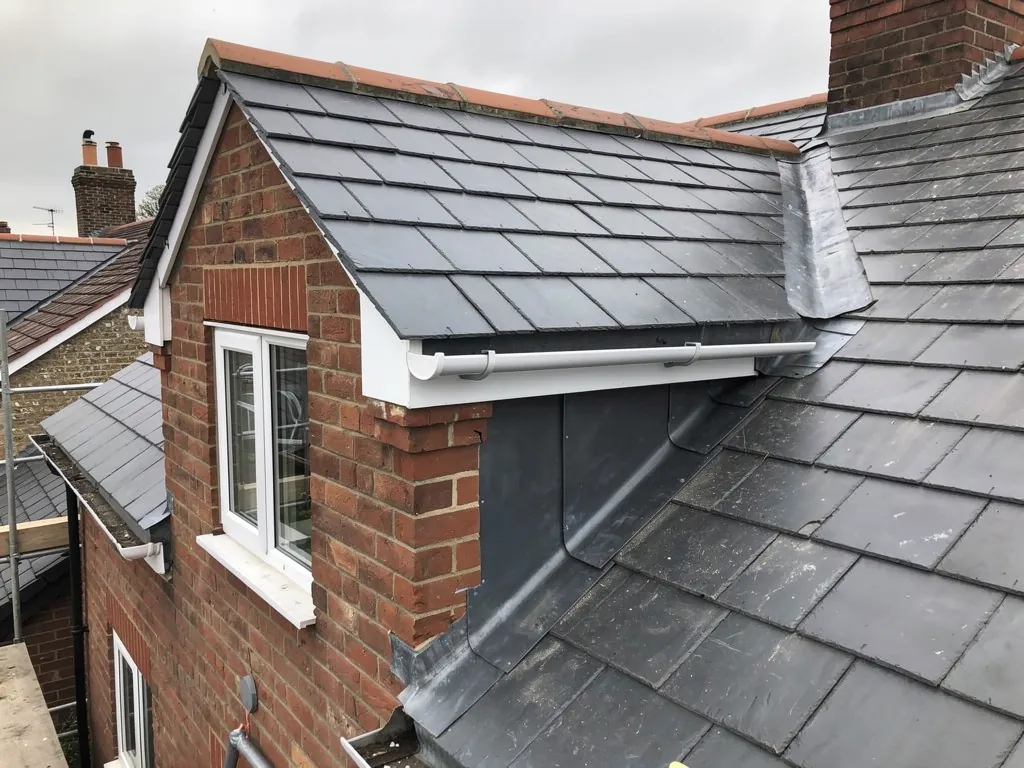
Where a church roof meets a wall or tower, sheet lead keeps the join watertight. Royston Lead's brochure sets code 5, at 2.24 mm thick, and code 6, at 2.65 mm, against flashings, gutters and parapets, and the heavier sheet suits the more exposed details. Our lead roofing and leadwork page explains how we form them.
Chapter 2: St Luke's and the age of a roof1891
Sheet 02 / 03The Church of St Luke was built between 1878 and 1880 to replace the old chapel as the parish church. It is also Grade II listed, first listed on 22 June 2001, forty-two years after Milland Old Church entered the list. A listing date and a building date are different things, and a roofer who confuses them will misjudge a roof. What we need from any Milland roof is its real condition, and that comes from the loft and the slope, not from a list entry or a postcode. Natural slate can last 100 years or more according to Checkatrade, and Marley gives clay tile a minimum of 60 years, a Building Research Establishment figure, but the actual figure for a particular roof depends on how it has been kept.
Typical UK prices for a new covering
- Hip roof replacement£9,250 to £18,000
- Gable roof replacement£7,000 to £16,250
- Flat roof replacement£2,800 to £7,500
- Garage roof re-felt£1,000 to £2,000
Guide figures like these describe the country at large, and the table adds VAT on top. A Milland price is settled only after our survey, as a single written total.
Source: Checkatrade roof replacement guide, updated October 2026
2.1 Four checks on any roof in the village
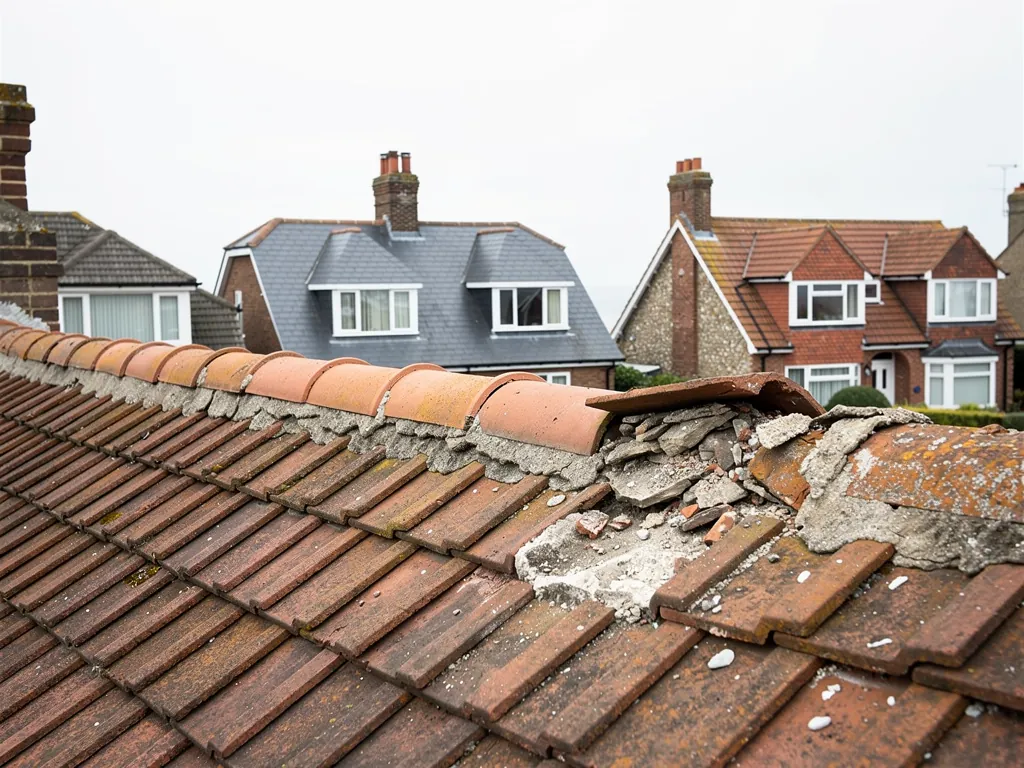
The same four checks apply whatever the age. Along the very top runs the ridge, and its bedding is checked for hairline cracks or shifting. Valleys and flashings are where two slopes, or a slope and a wall, meet, and they are the commonest place for a leak to start. The covering itself is checked for slipped, cracked or flaking pieces. The gutters, which carry the water away, fail more often than owners expect. Each is photographed so you can see the finding for yourself before the quote is written.
2.2 Flat roofs on extensions and outbuildings
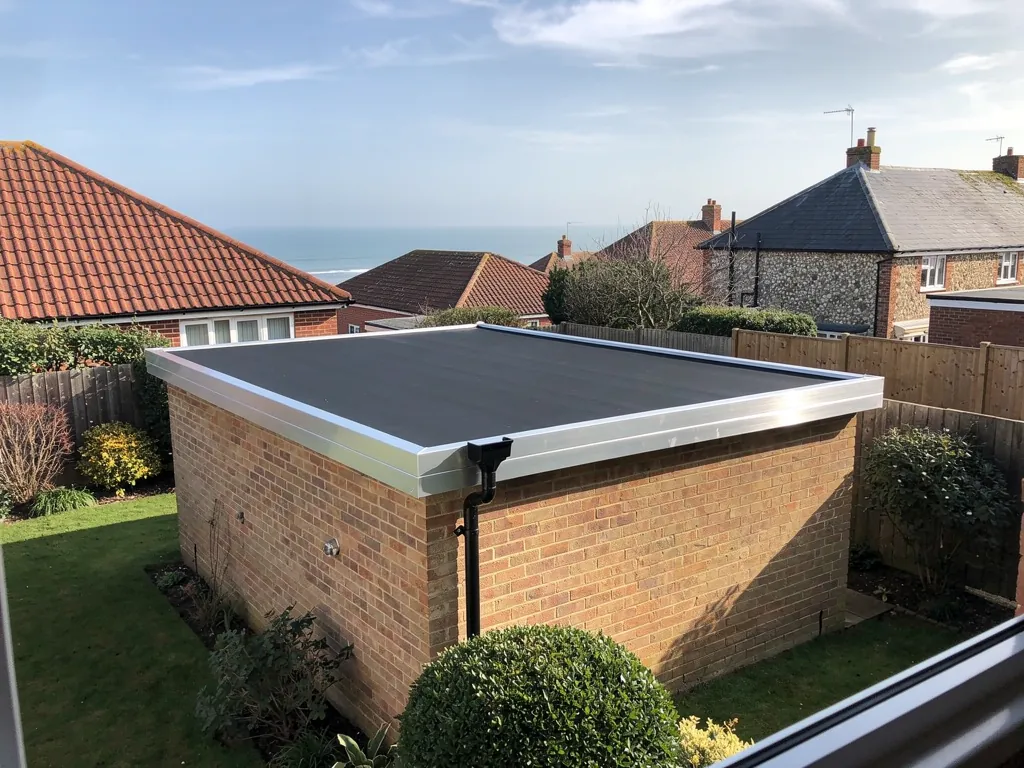
A flat-roofed extension or garage can turn up on a house of almost any age. BS 6229:2025 sets a minimum finished fall of 1:80, and roofers design steeper, around 1:40, so that water leaves the roof and does not pond. Typical lives are 20 to 30 years for EPDM according to GreenSpec, 25 to 40 for GRP according to Less, and 10 to 20 for torch-on felt, with a caution that a poorly laid felt can fail in under 10. Our flat roofing page sets out the coverings.
2.3 Asbestos in older garages and outbuildings
The HSE's rule of thumb is that a building constructed or refurbished before the year 2000 is presumed to contain asbestos. That covers garage roofs and outbuildings in Milland as it does anywhere. Asbestos cement carefully removed without breaking up is non-licensed work, but substantial breakage makes it notifiable, and the waste from a household job travels with a consignment note. We tell you what we find before touching anything.
Chapter 3: National Park rules and the desk in Chichester2806
Sheet 03 / 03Milland sits inside the South Downs National Park, and that decides where paperwork goes. Chichester District Council receives Milland's planning applications and decides them for the National Park Authority; it also keeps building control. Chichester District Council can confirm whether a house sits in a conservation area or under an Article 4 direction, so for any listed or older building the safe first call is to its planning team.
From first call to written quote
- 1Tell usDescribe the leak or damage and send any photographs you already have.
- 2We surveyA roofer climbs up, photographs every fault and checks the loft.
- 3Get a verdictRepair, patch or replace, with the reasons shown in the pictures.
- 4Written quoteOne written total follows, and any consents are explained.
3.1 Roof windows, Part L and weight
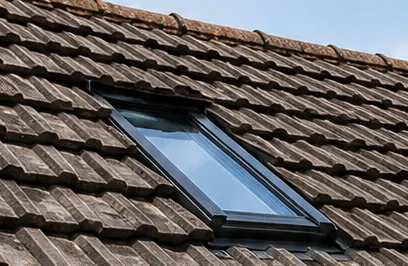
Fitting a roof window raises a planning question and a Building Regulations question. For planning, read our guide to skylight planning permission, which explains why National Park land is treated more strictly. For the Building Regulations side, Approved Document L (2021, Table 4.2) lets a roof window meet either 1.4 W/m²K or the Band B energy rating, while a rooflight is held to 2.2 W/m²K; the 2026 edition's Table 3.2 carries the same values from 24 March 2027.
Swapping a light covering for a heavy one changes the load on the timbers. The Planning Portal puts the line at a covering 15 per cent heavier or more, and suggests an engineer's or a surveyor's opinion ahead of the work. A re-roof touching less than 25 per cent of the total building envelope and less than 50 per cent of the roof usually needs no building control application, and our survey says which side of that line you are on.
3.2 Scaffold licences in West Sussex
Milland is in West Sussex, so a scaffold on the road is licensed by West Sussex County Council as highway authority. Its page asks for at least 10 working days from application through to erection, and gives £266 for a month of scaffolding on the highway, a figure that is worth allowing for. That lead time goes into our programme from the first day. Checkatrade's scaffolding guide, updated in February 2026, puts a month's hire for a two-storey semi at around £875, and for a detached bungalow at £1,000, which is why access is worth discussing before a quote and not after it.
3.3 After a gale
If wind or a fallen branch damages a roof, make it safe, tell your insurer first, take photographs of what has been damaged and keep every receipt for temporary repairs. Which? and the Institution of Structural Engineers both give that advice. When a roof is leaking after a storm we get to it ahead of routine work and make it safe first. A fault caused by age, not a storm, may fall outside a policy, so ask the insurer before assuming.
Services for Milland roofs
Frequently asked questions
Questions from Old Church to St Luke's
Does my house need consent just because Milland Old Church is listed?
No. A listing protects the building it names, not the houses around it. Your house needs listed building consent only if it is itself listed. It sits in the National Park, though, so planning questions still go to Chichester District Council, acting for the authority that runs the Park. Check with the council first if the roof's appearance will change, and pass us the answer so the quote reflects it.
Who deals with a roof application in Milland, the Park or Chichester?
Chichester District Council processes Milland's planning applications, acting for the National Park Authority, and building control stays with the district. The two are separate, so a job can need neither, one or both. We explain which applies when we survey and prepare any notification that building control needs, so you are not left to work it out.
Should a Milland garage built before 2000 be checked for asbestos?
Yes. The HSE advises presuming asbestos in anything built or refurbished before 2000 until a test says otherwise. A cement sheet roof that is carefully handled without breaking up is non-licensed work, but substantial breakage makes the work notifiable. Do not drill, sweep or pressure-wash the sheets yourself. We tell you what we find and what the safe route is.
Will a scaffold on a Milland lane need a licence?
If it stands on or over the highway, yes. West Sussex County Council issues the licence and wants at least 10 working days between application and erection, with a month of scaffolding listed at £266. Ask your roofer who makes the application. A scaffold kept entirely inside your own boundary needs no licence, and we say which situation applies to your roof.
Nearby areas
Get a quote
Tell us about your roof
Describe what's happening and we'll call you back.
Loading the enquiry form. You can also call 01243 252373.