
Roofers in Midhurst
Hand-made clay tile, Welsh slate, ironstone galleting
Most Midhurst roofs in the conservation area are hand-made clay tile, with Welsh slate on the shallower later roofs, in a river-bend town whose conservation area holds 108 statutory list entries.
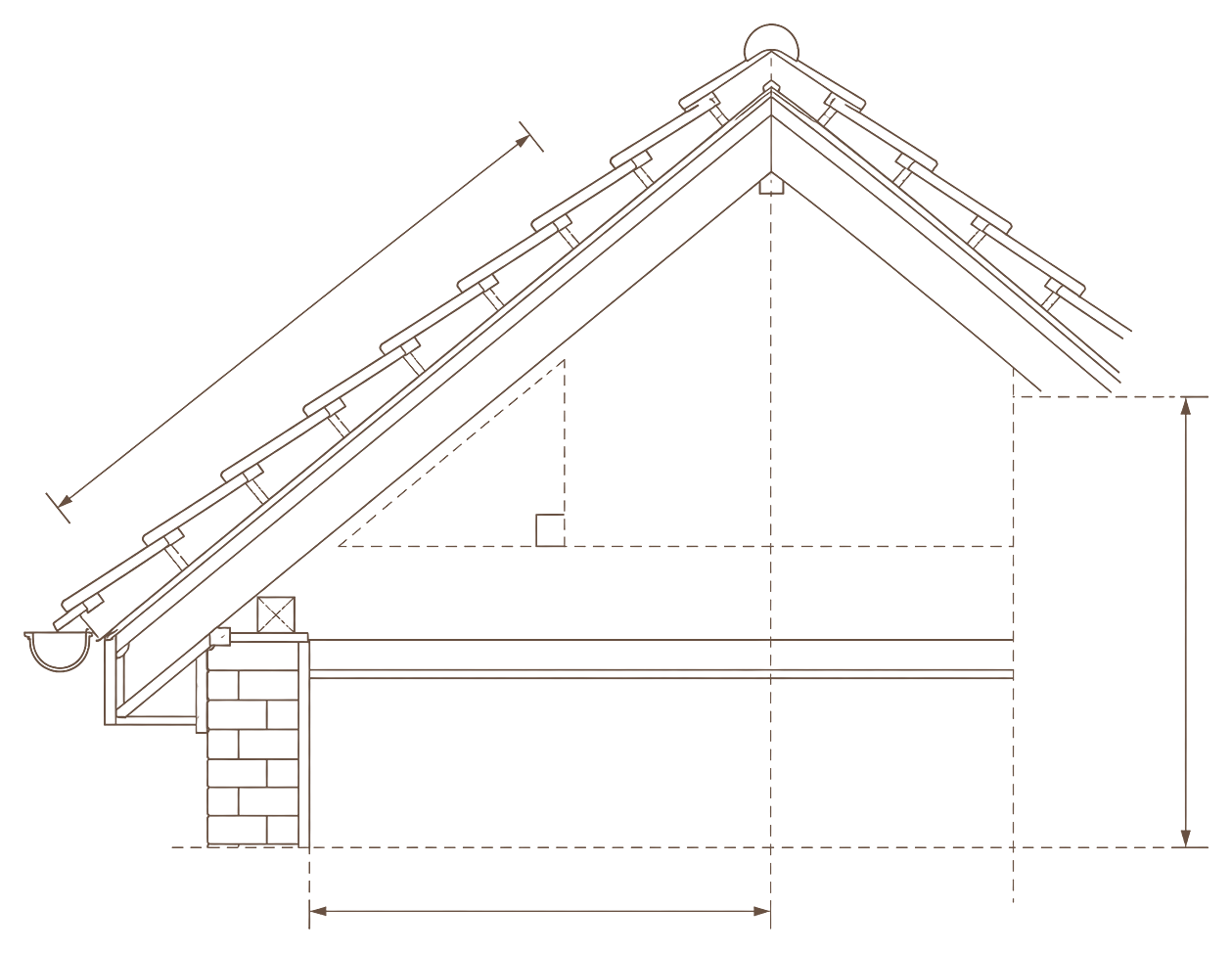
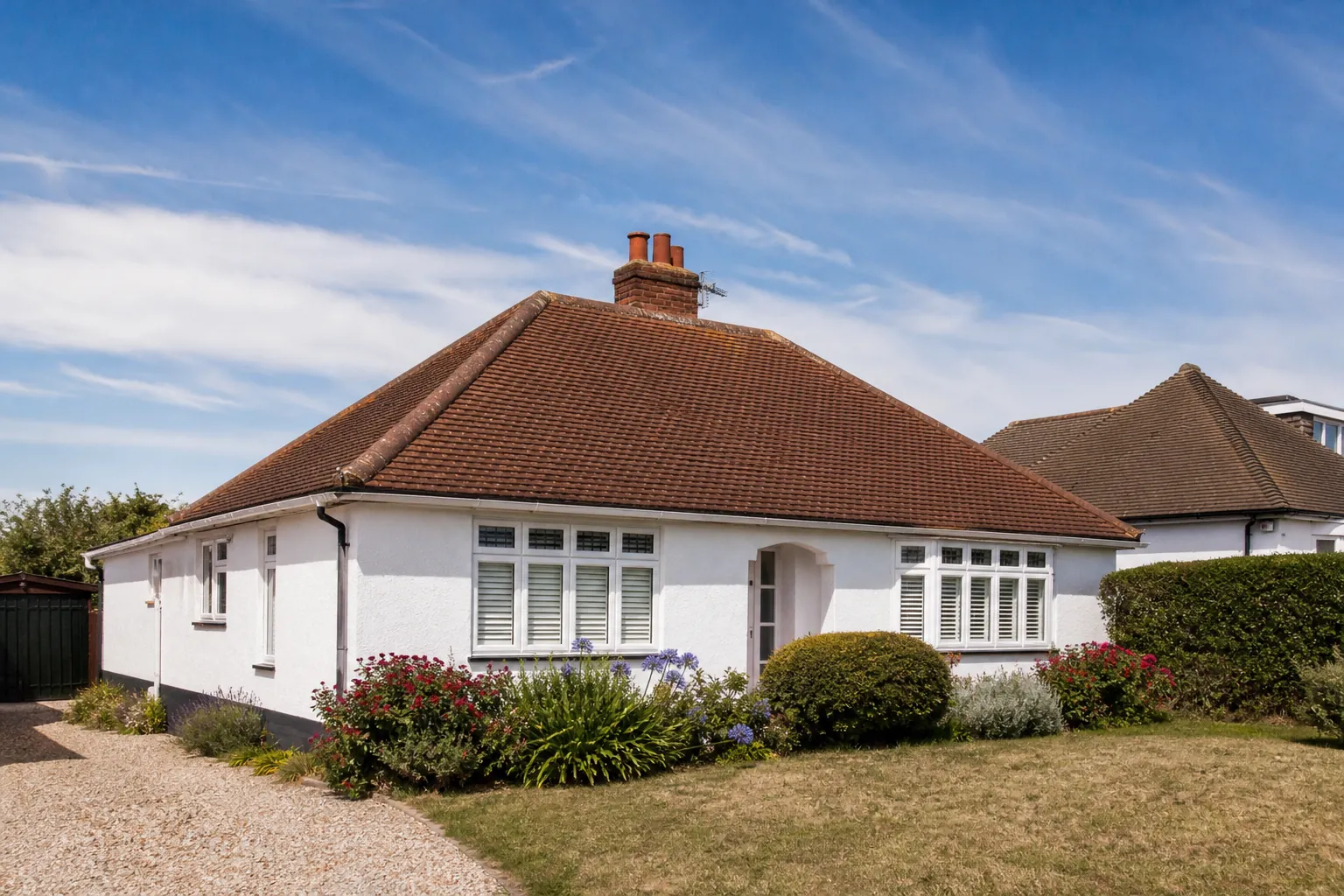
Midhurst roofs
Clay, slate and ironstone at the foot of the castle hill
-
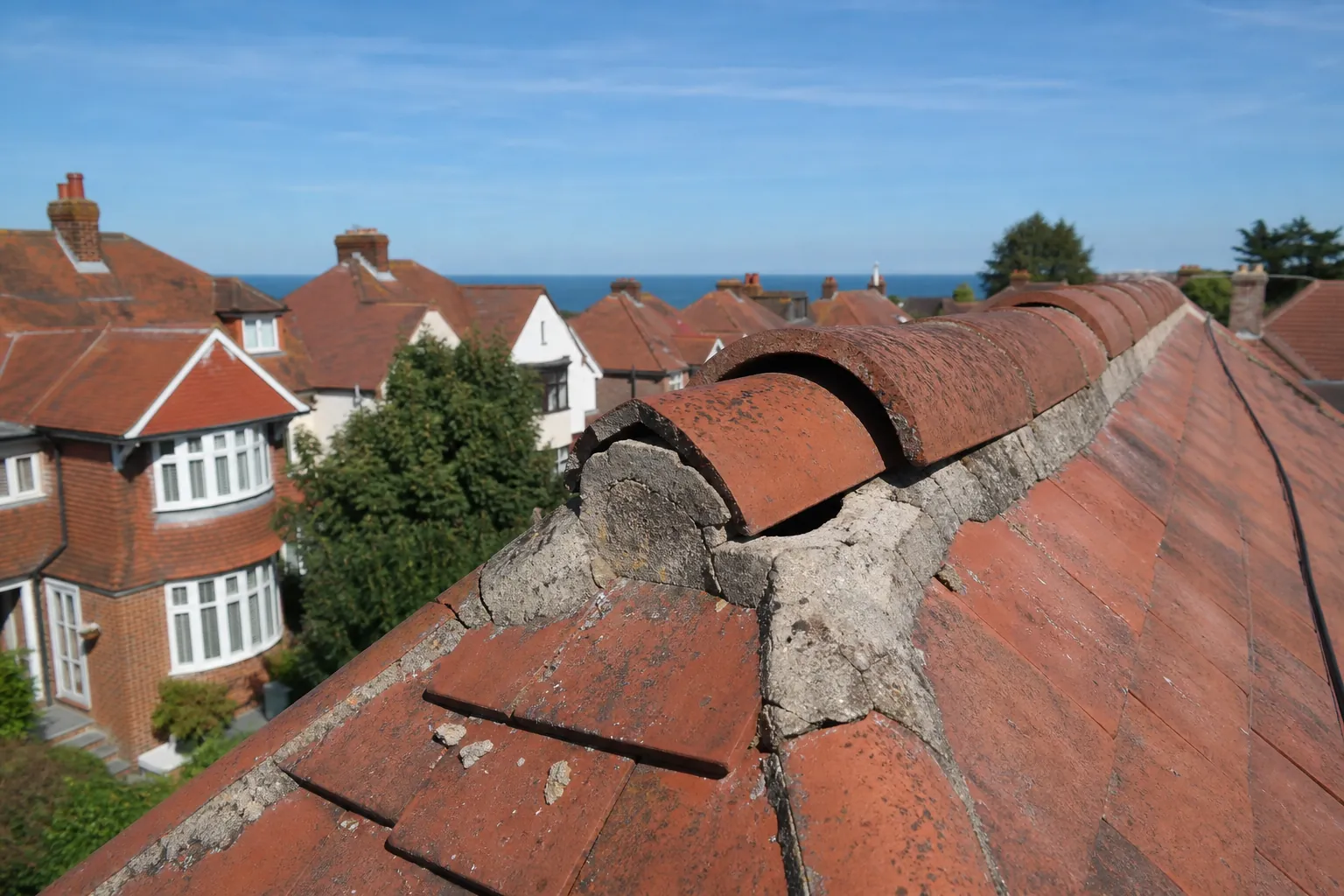
Hand-made clay tiles
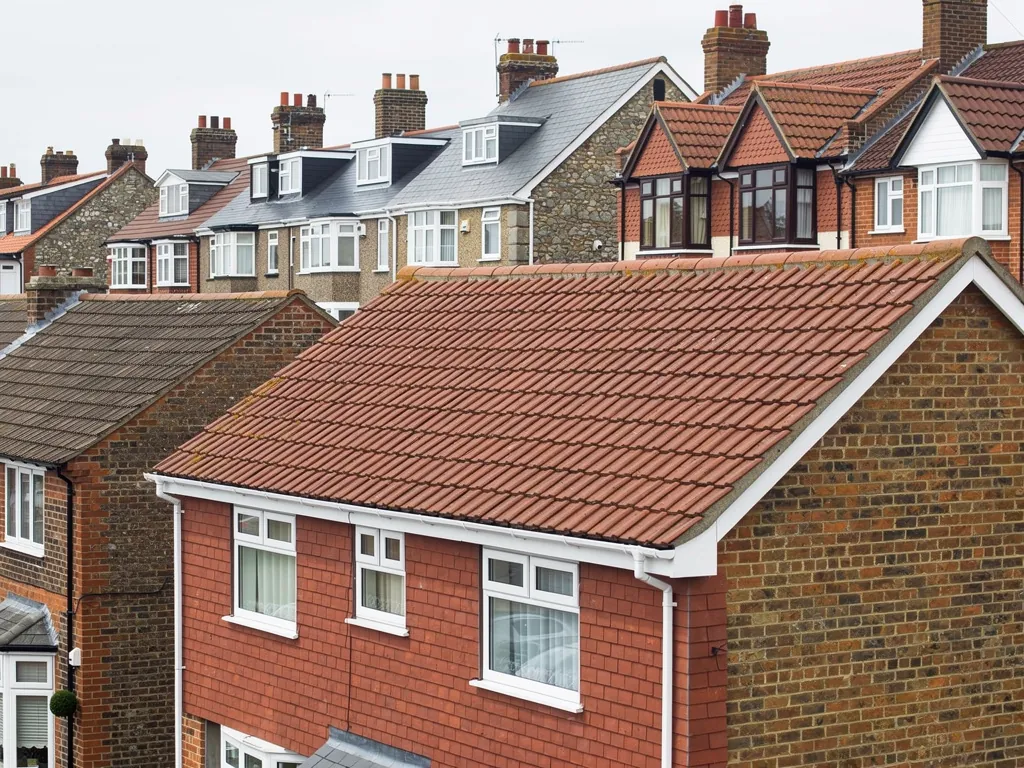
The conservation area appraisal says concrete tiles and pantiles are not characteristic and hand-made clay tiles are the usual covering, laid at about 40 degrees. Matching a tile by eye matters here more than on a modern estate.
-
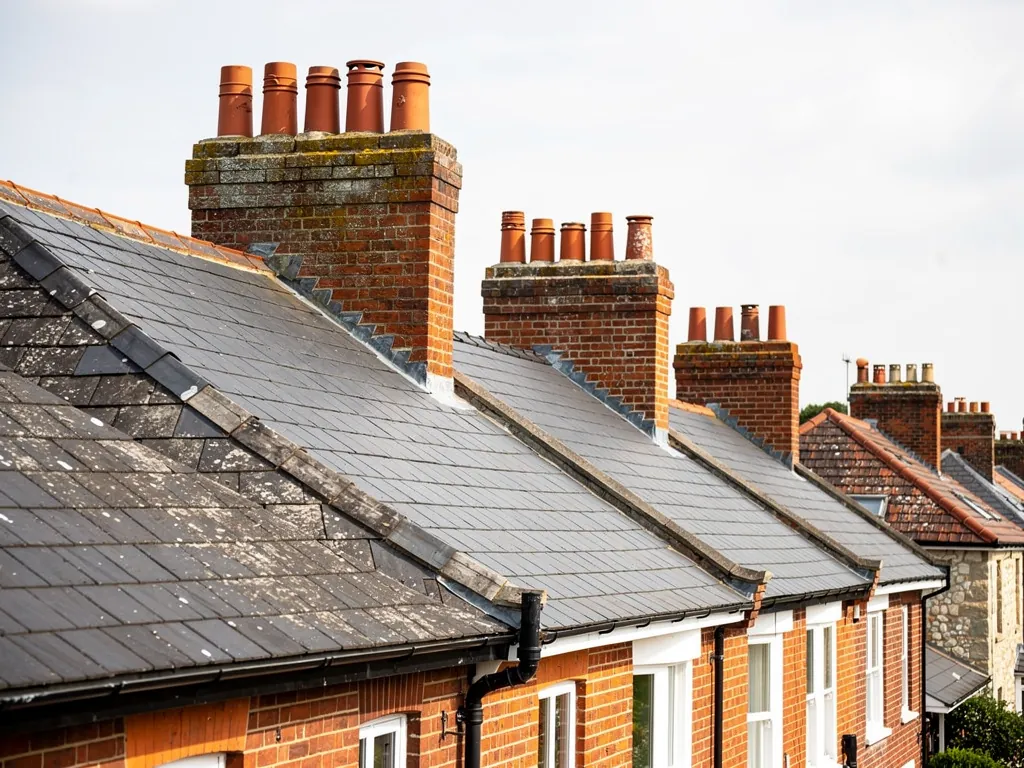
Welsh slate from the early 1800s
Shallower slate roofs arrived only with Welsh slate from the early 19th century. In Midhurst they sit beside the clay, and some clay roofs have since been replaced in slate, so a terrace can mix both.
-
Greensand walls and ironstone galleting
Local materials include clay for tiles and bricks, ironstone for galleting, and Lower Greensand stone for walling and paving. Galleting, small ironstone chips pressed into mortar joints, is a detail to protect when walls are repointed.
Map of Midhurst, 17.2 road miles north of Bognor Regis, with the nearest towns we also cover.
Midhurst's conservation area and its listed buildings
- Council
- Chichester District Council
- Planning
- South Downs National Park Authority
- County
- West Sussex County Council
- Conservation area
- Midhurst, designated 17 July 1974 and first extended 10 June 2008
- Listed buildings
- 108 statutory list entries in the area: one Grade I, two Grade II* and 105 Grade II
- Article 4
- None on the National Park Authority's list
- Distance
- 17.2 road miles north of Bognor Regis, about 29 minutes by car
Midhurst notes
Cowdray's ruins and Weald clay tile
How the Rother bend, the Weald's clay and the Welsh slate trade left Midhurst with roofs that reward a careful hand.
Chapter 1: Clay tiles at about forty degrees2013
Sheet 01 / 03Midhurst grew up in a bend of the River Rother at the foot of a castle hill. The appraisal of the Midhurst Conservation Area, written for the National Park Authority, describes the roofs as clay tile, as would be expected in the Weald, with some replacement in Welsh slate, and says concrete tiles and pantiles are not characteristic of the area. It calls hand-made clay tiles by far the favoured roofing material, usually laid at about 40 degrees. A roof pitched at 40 degrees is steep enough to shed rain briskly and strong enough in appearance to dominate a street, so a change of covering here changes the look of the lane as well as the house. Marley lists its clay plain tile models with minimum pitches from 30 to 40 degrees, so a roof at about 40 degrees meets even the strictest of those minimums.
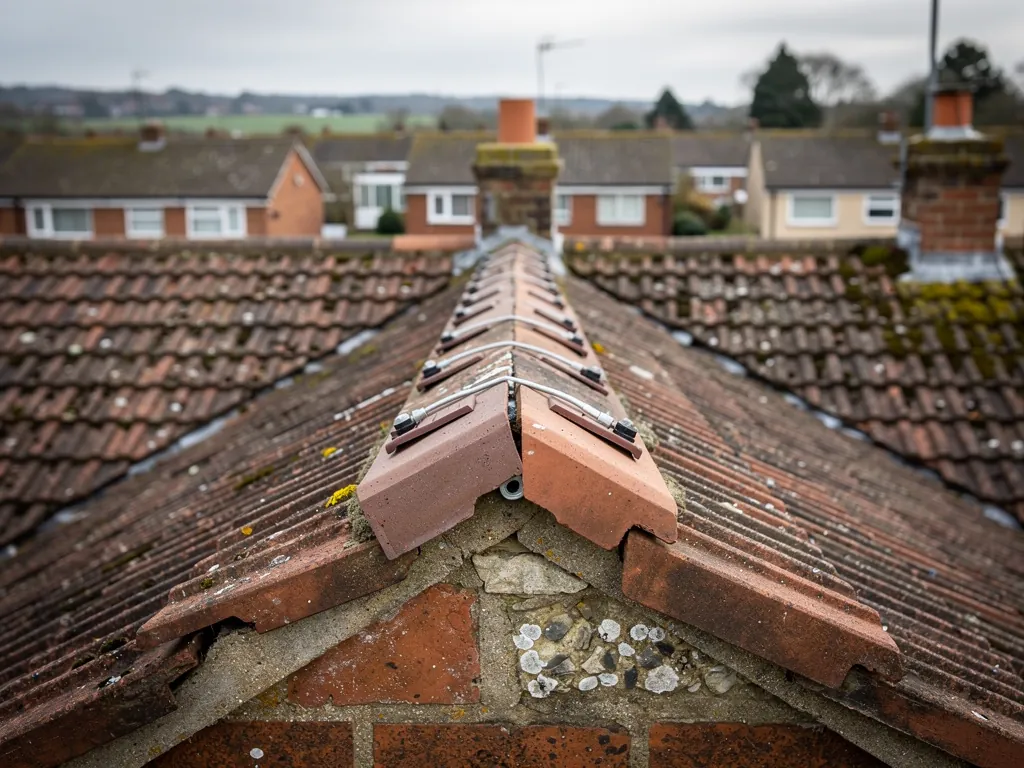
Choosing the job for a Midhurst clay roof
- RefixSlipped tiles and the capping on top fixed back to sound battens.
- BlendCracked tiles swapped for reclaimed or matched hand-made clay.
- RelayBattens and underlay renewed, with every sound tile kept for reuse.
1.1 Why a hand-made tile is hard to match
Hand-made tiles vary in camber, edge and colour from one tile to the next. Weather deepens the variation. A machine-made tile put into an old roof shows up at once as a flat, even patch. When a few are cracked or slipped, we look for reclaimed tiles or a close new match and mix them through the roof rather than clustering them in one corner. Where a whole slope is exhausted, the better course is to strip it, keep every sound tile for reuse and make up the shortfall with matching clay. Our guide to matching old roof tiles explains how that works in practice. A good match is judged from the street, in daylight and in rain, because wet clay darkens and exposes differences that a dry tile hides. We lay out a sample patch on the roof before committing a whole delivery, so you and the council can see it in place.
1.2 Mortar, ridges and what to expect on a survey
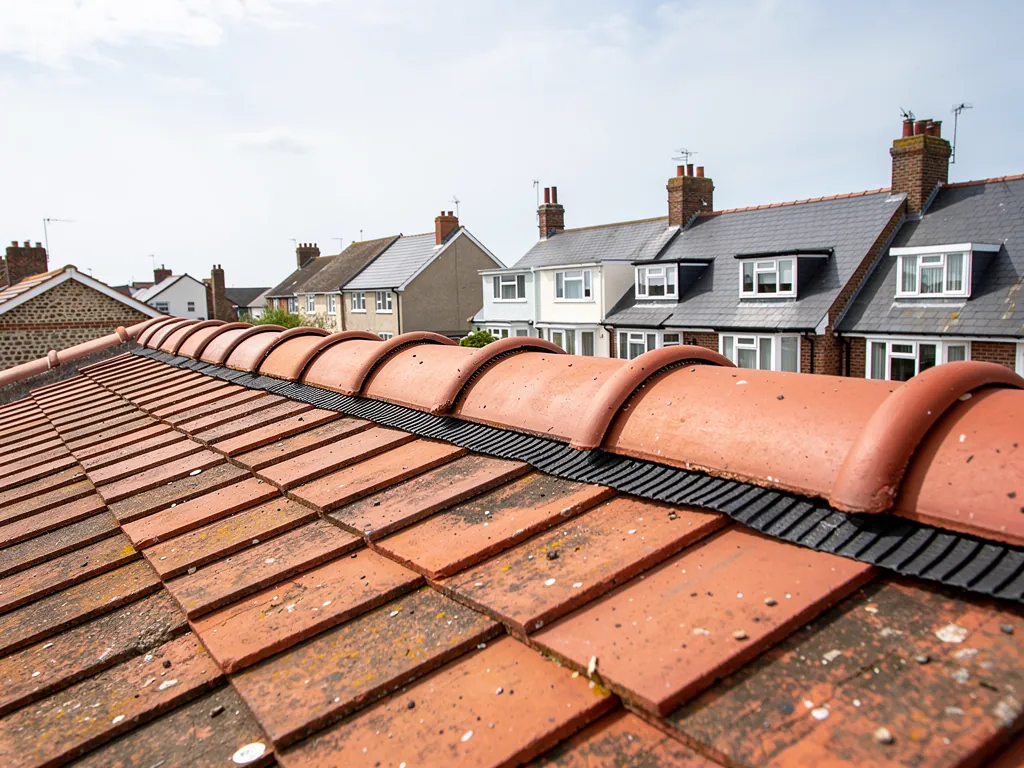
For clay tile, Marley quotes a Building Research Establishment minimum of 60 years, while a building conservation article warns that the figure misleads on old peg-tile roofs. Nails, battens and underlay frequently give out ahead of the tiles. On our survey we look at the ridge and hip capping, because the 2014 revision of BS 5534 treats mortar as not enough on its own, and an older ridge on a crumbling bed is easy to spot. Putting in mechanical fixings and bedding it again is a small job if done early. Our ridge tile repairs page explains the work.
Chapter 2: Welsh slate and the shallower roofs2135
Sheet 02 / 03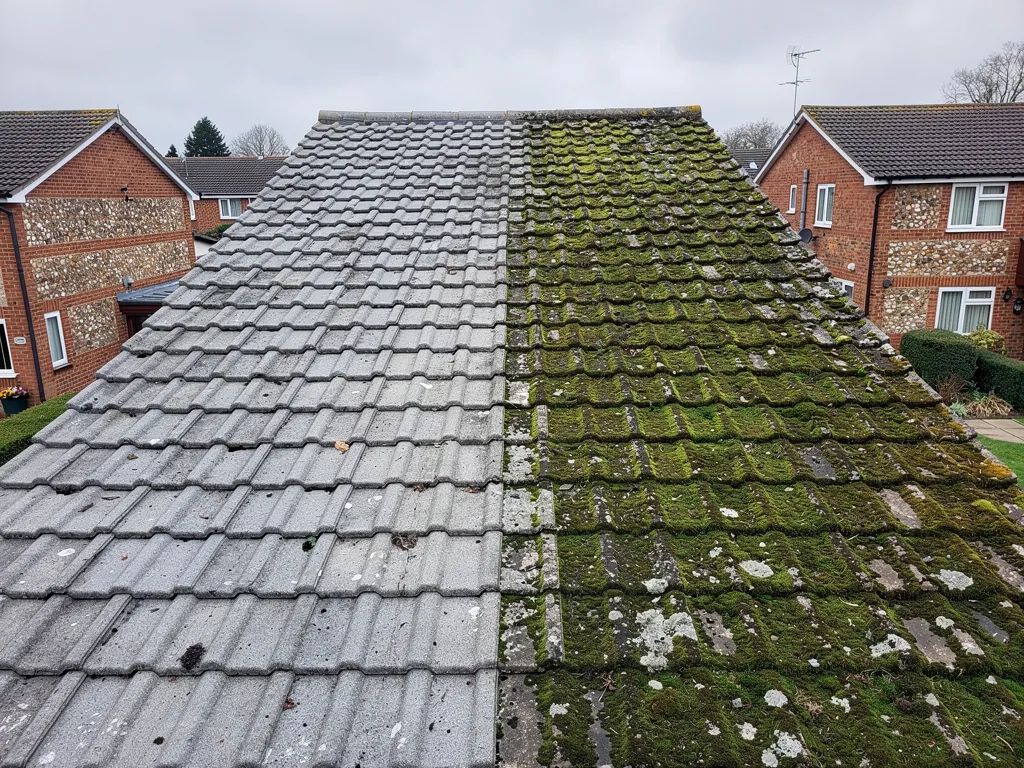
Not every Midhurst roof is clay. The appraisal records that shallower slate roofs appeared only with Welsh slate from the early 19th century, and that some roofs in the conservation area have been replaced in it. A slate roof is a different animal from a tiled one. It is lighter, its slopes can be lower, and it fails in its own ways, so a repair that suits a clay roof may be wrong for a slate one. On a terrace that mixes both coverings, the survey treats each roof on its own merits and the quote reflects that. Slate is long-lived, and Checkatrade puts a well-kept stone slate roof beyond a century. The slate itself rarely wears out, though. What usually goes is the fixing, as nails rust through and the slates slip. A slate roof that looks tired from the road may be fully repairable, with slipped slates refixed individually and the lead at stacks renewed. Where the slates are thin and soft, though, or the battens beneath them are rotten, the repair is only worth doing if the structure will carry it, and we check that from inside the loft before anything else.
Clay and slate on one Midhurst street
Hand-made clay
Steeper, heavier and varied in colour, and long-lived while its battens and fixings stay sound.
Welsh slate
Lighter and flatter-lying, long-lived, but dependent on its nails and headlap.
2.1 Pitch, headlap and why a low slope needs care
Slates must overlap enough that rain cannot be driven up beneath them, and the lower the pitch, the more overlap is needed. The slate producer Cupa Pizarras takes BS 5534 to mean a floor of 20 degrees for a 500 mm natural slate where exposure is moderate, with no hook fixings under 25 degrees. A 500 by 300 mm slate in a sheltered or moderate position needs a headlap of 115 mm at 20 degrees. These are published figures for one product, and every site is different, so we check the slate size and pitch together and do not repair by guesswork. Our slate roofing page describes the stripping, battening and relaying of a slate roof.
2.2 Tingles and when patching stops making sense
A tingle is a narrow strip of metal, hidden below the slate above, that holds a single slipped slate without disturbing its neighbours. For a handful of slipped slates it is quick and neat. Once the nails have gone right across a slope, though, patching only postpones the same job. In that case the straight answer is to strip the slope, keep the sound slates, fit new battens and underlay and relay. The written price comes after the survey, as one total, and it covers the whole job, including taking the old materials away. A roof that is only partly worn out gets a smaller job and a smaller price.
Chapter 3: One hundred and eight listed entries2196
Sheet 03 / 03The conservation area contains 108 statutory list entries: one Grade I, two Grade II* and 105 Grade II. The Midhurst Conservation Area was designated on 17 July 1974 and first extended on 10 June 2008. The ruins of Cowdray House are listed Grade I and are also a Scheduled Ancient Monument, and St Mary Magdalene's church carries a Grade II* listing. With that many protected buildings, a Midhurst address may be listed, in the conservation area, or both. The first job is to find out which, so our first call on any enquiry is to the list entry, not the ladder.
Before work on a Midhurst roof
- Search the list entry
- Open the conservation area map
- Match the clay or slate
- Ask the district planners
3.1 Listed building consent and like-for-like repair
Under the Planning (Listed Buildings and Conservation Areas) Act 1990, works that would affect the special character of a listed building are not allowed unless authorised. The National Park Authority's guidance treats routine upkeep and minor in-situ repairs as outside listed building consent. That draws a clear line. Refixing slipped clay tiles is maintenance. Changing clay to slate, or adding roof windows, is not. Neither is rebuilding a chimney in different brick, or changing the pitch of a slope to suit a loft conversion. For each of those, we explain the likely route in plain words and leave the application to the owner or the owner's agent, with our survey photographs attached as evidence. Here the district council takes the applications on the Authority's behalf, and it also keeps building control. If you need to alter how a listed roof looks, ask the council early.
3.2 Cowdray, churches and the scheduled ground
Scheduled ground has its own regime: works need scheduled monument consent from the Secretary of State, and the church exemption does not remove that. St Mary Magdalene and St Denys is an Anglican parish church, and its works follow the faculty route as long as worship continues there. Ordinary houses and shops in the lanes follow the council. None of this affects day-to-day tile repairs, but it explains why we ask for the address before talking about materials. It also explains why we keep every photograph from a survey: a clear record of the roof as found helps if the council or a heritage officer asks what was there before. Planning guidance for roof windows is in our skylights and roof windows section, and the Authority's list shows no Article 4 direction for Midhurst, though its management proposals say the planning authority will consider one for unlisted dwellings.
Midhurst roofing: what we cover
Frequently asked questions
Questions from the Rother bend to Cowdray
Can I put concrete tiles on a Midhurst house in the conservation area?
The appraisal says concrete tiles and pantiles are not characteristic of the area, so a change of that kind is a question for the planning team before any work begins. A heavier covering can also bring in building control. We can price a like-for-like repair in matching hand-made clay while you wait for the council's answer, and put the quote in writing as one total so you can compare it with any other you receive, checking whether each includes VAT and scaffold.
My Midhurst slate roof is shallow and leaks at the edges. Is it past repair?
Not necessarily. Shallow slate roofs depend on headlap and sound nails, and edges that leak are often a fixing or flashing fault rather than worn slate. We look at pitch, slate size and the metalwork before deciding. If the nails have failed across the slope, relaying with the sound slates is the better call than patching.
Do Midhurst's ironstone galleted walls change how a roof edge is repaired?
They can. Galleting is a decorative and protective detail set into mortar joints, so when a roof edge, chimney or gable abutment is repointed we aim to keep it. A mason or pointing specialist can match the ironstone chips if a short length has to be rebuilt, and we agree who does what before the scaffold goes up. Lead flashings are tucked into joints that follow the wall's own pattern, and we work with the existing coursing instead of cutting new lines through it.
Is there an Article 4 direction covering roofs in Midhurst?
None appears on the South Downs National Park Authority's list. The conservation area proposals say the planning authority will consider one for unlisted dwellings, which is a statement of intent and not a direction. A listed building still needs consent when a change touches its character, and rules move, so ask the district council's planners first.
Nearby areas
Get a quote
Tell us about your roof
Describe what's happening and we'll call you back.
Loading the enquiry form. You can also call 01243 252373.