
Roofers in Fernhurst
Sandstone walls, plain tiles, woodland edges
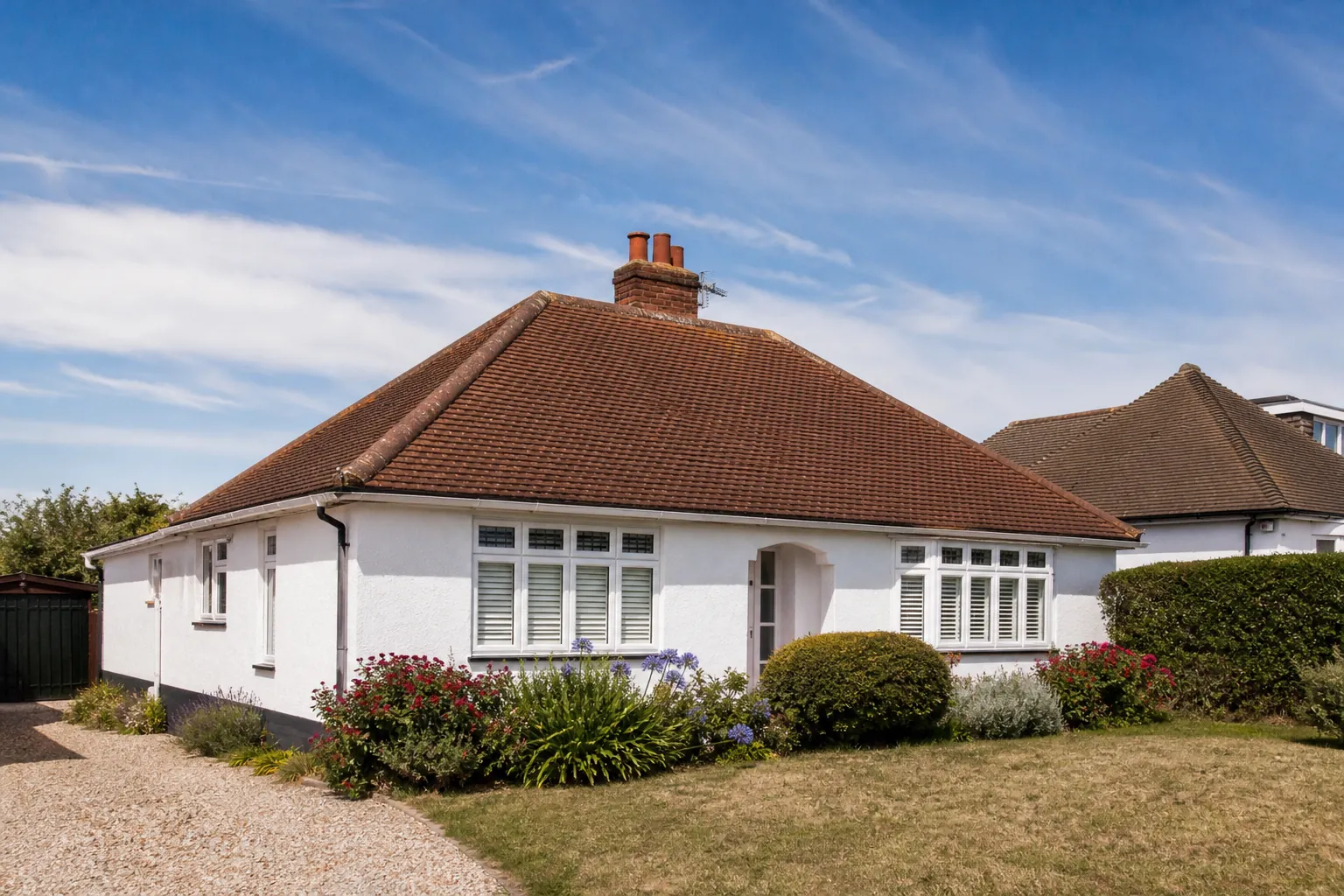
Fernhurst's older houses pair local sandstone and red brick with clay plain tiles, in wooded Greensand country north of Midhurst, around a conservation area first designated in 1984.
Fernhurst roofs
Sandstone walls, plain tiles and tile-hung gables
-
The White House and the Green
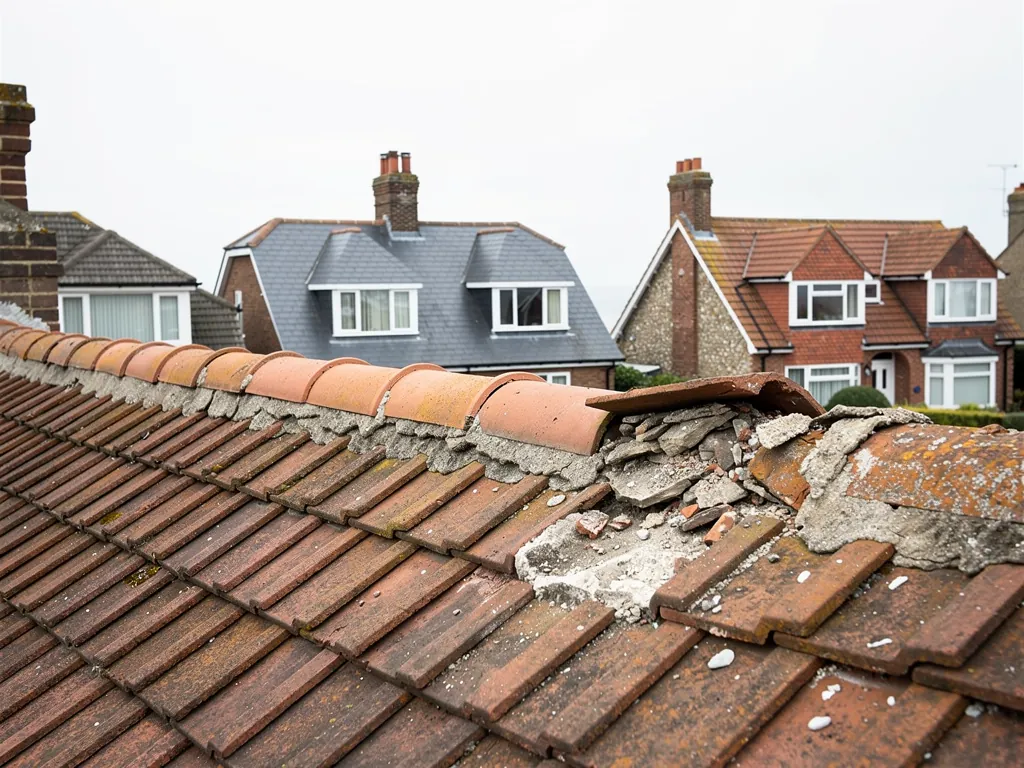
The White House faces the Green, a Georgian house in coursed, squared local sandstone, listed Grade II*. Around a village green, old chimneys, parapet joints and tile courses all need matching with care.
-
Clay plain tile and tile-hanging
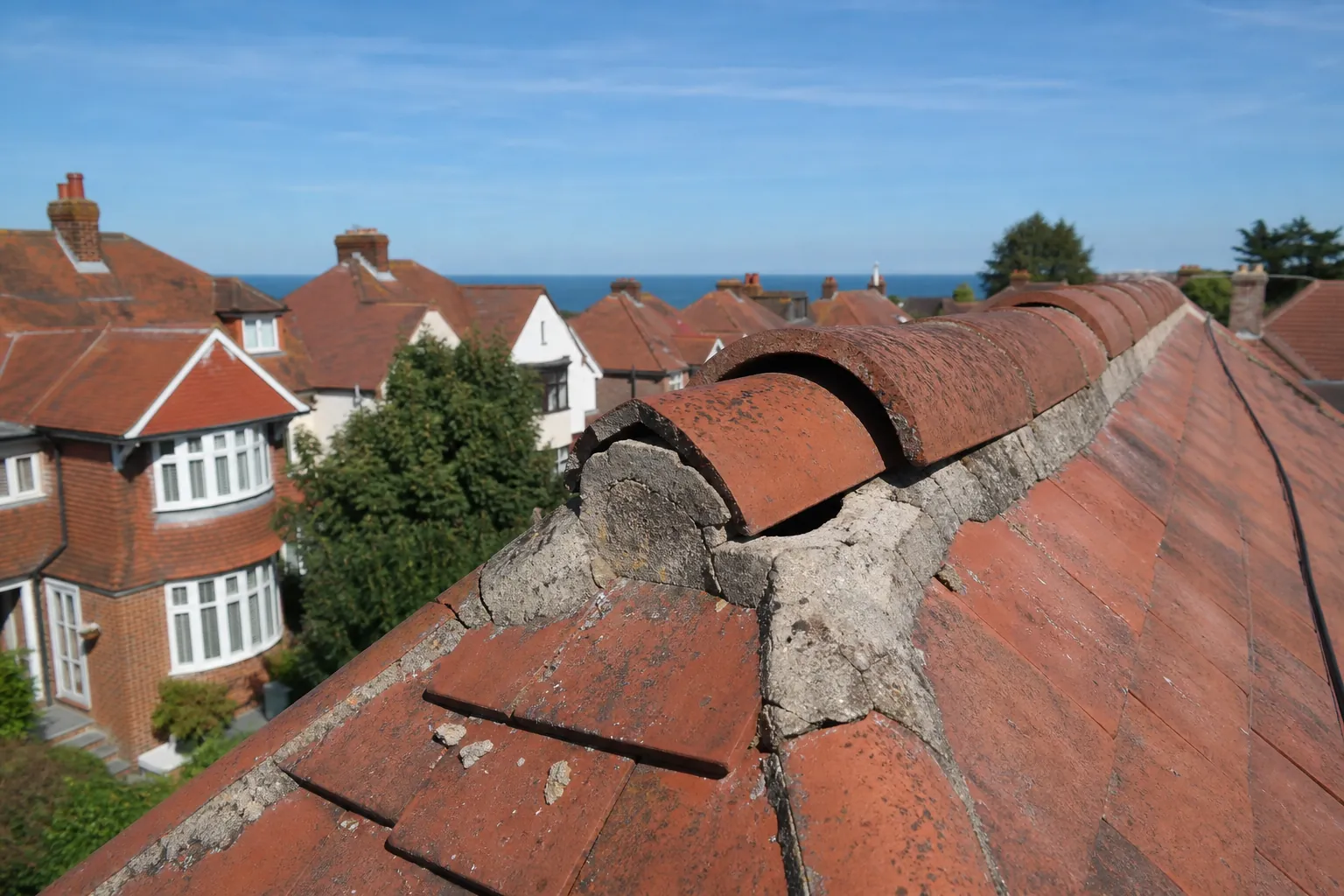
The conservation area appraisal calls clay plain tiles characteristic of Wealden buildings in the village, used on roofs and as cladding on walls. That means small tiles, many joints and tile-hung gables where roof and wall meet.
-
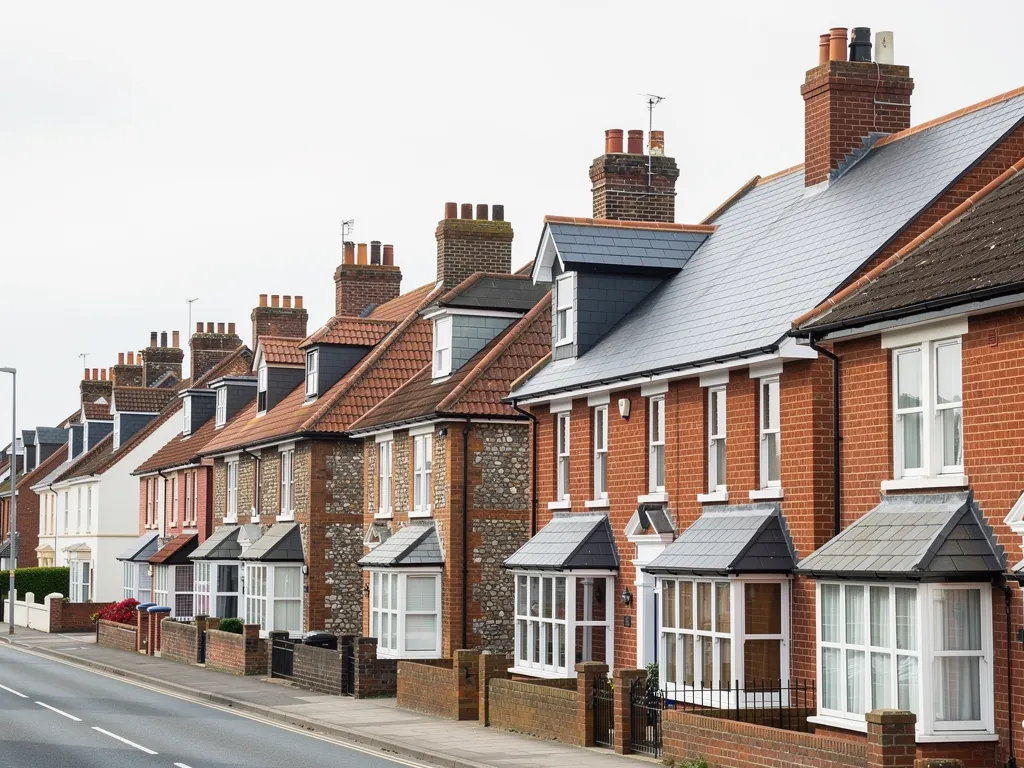
St Margaret's red tile roof
St Margaret's church has a roof of mellow red tiles over randomly coursed local sandstone, with a timber-clad spire. Roofs near it are judged against that red tile, so colour and texture matter in any repair.
Map of Fernhurst, 22.1 road miles north of Bognor Regis, with the nearest towns we also cover.
Fernhurst Conservation Area and its listings
- Council
- Chichester District Council
- Planning
- South Downs National Park Authority
- County
- West Sussex County Council
- Conservation area
- Fernhurst Conservation Area, first designated November 1984
- Article 4
- None recorded; the council's appraisal recommends an Article 4(2) direction
- Listed landmarks
- The White House, Grade II*; St Margaret's church, Grade II
- Distance
- 22.1 road miles north of Bognor Regis, about 38 minutes by car
Fernhurst notes
Greensand, red tile and the woods around
Three things shape a Fernhurst roof job: the village's tile tradition, its listed buildings and the trees that crowd the roofs.
Chapter 1: Plain tiles round the Green1647
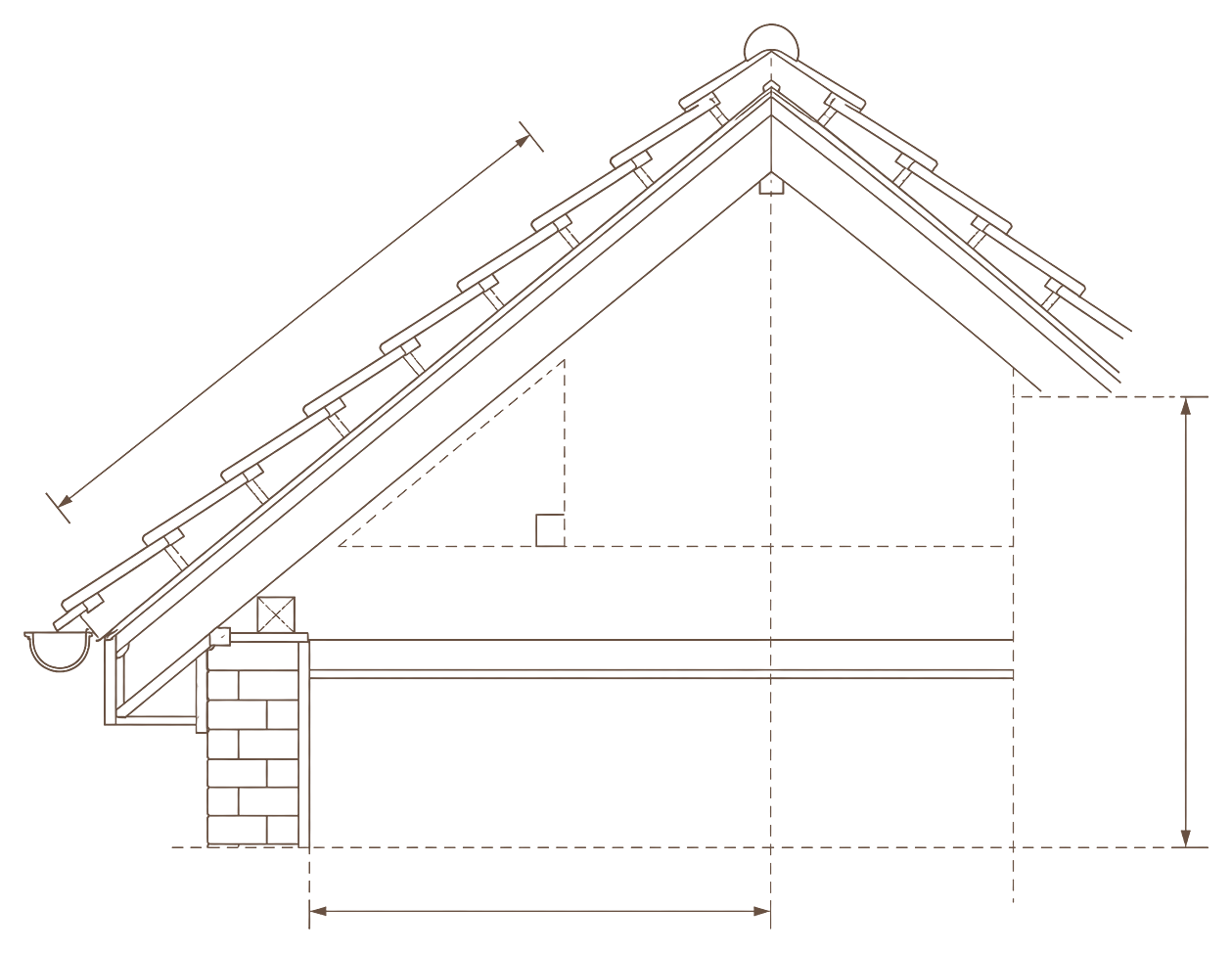
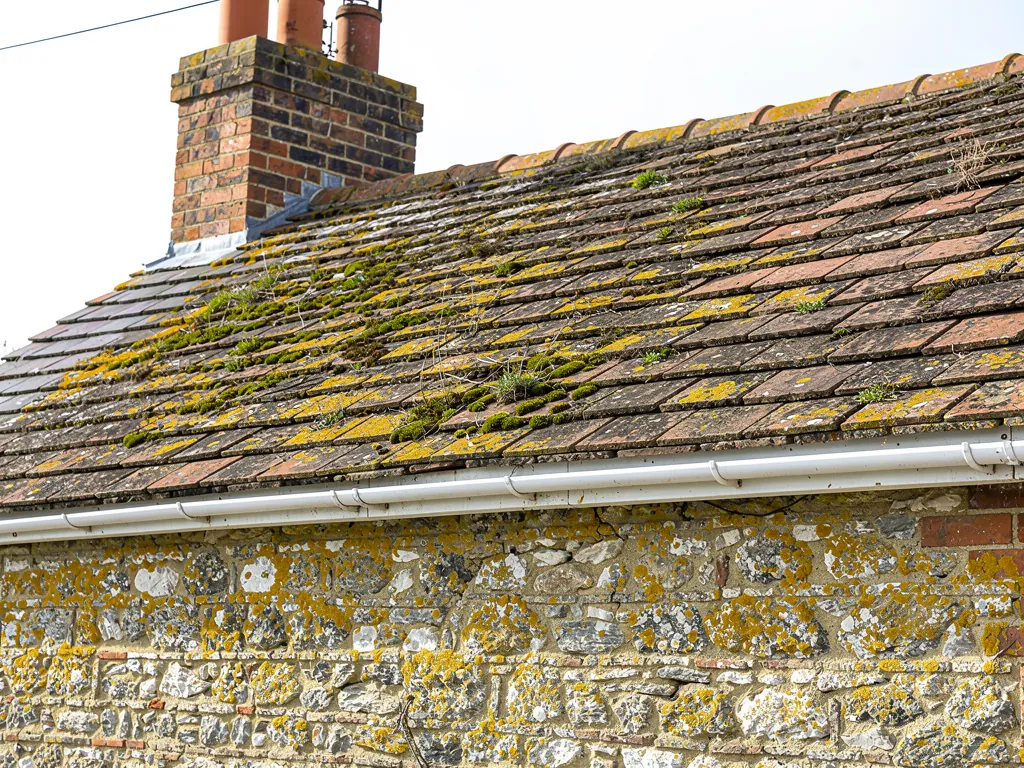
Sheet 01 / 03Fernhurst sits in wooded Greensand country north of Midhurst, and its older buildings use what the ground offered: local sandstone, red brick and clay tile. Chichester District Council first designated the conservation area in November 1984, and since the National Park came into being in April 2011 it is the South Downs National Park Authority that decides planning matters there. The Authority's appraisal calls clay plain tiles, used both for roofs and as cladding, characteristic of the Wealden buildings in the village. Each plain tile is small, flat and gently cambered, hung by a nib over a batten, and every point of the slope sits under two thicknesses of clay. The covering is long-lived and finicky. One slipped tile is often the first hint that the nail or lath behind it has worn through.
Three calls on a Fernhurst tiled slope
- RefixSlipped tiles back on sound battens, with missing ones matched in colour.
- Patch a slopeReuse good tiles on the front, replace failed fixings behind the ridge line.
- RelayStrip, re-batten and relay once the nails and laths have reached their end.
1.1 How old plain tiles fail
Clay tiles rarely give up all at once. Edges flake after hard frosts, nibs (the small lugs that hook each tile over its batten, the thin timber lath nailed across the rafters) snap off, and nails work loose or give out. The face of the roof can look respectable while the fixings behind it have gone. Moss does no harm to a sound tile by itself, but a thick mat keeps water against the clay and hides hairline cracks. Our survey includes lifting one or two tiles along the eaves and part way up each slope, to see the state of the laths and the underlay, the membrane that sits beneath them, and we photograph each fault so you can study it from the ground.
1.2 Matching a village roof, not only mending it
Beside the Green, a repair that keeps the rain out but looks wrong still counts as a poor job. New machine-made tiles are flatter and more even than old hand-moulded ones, so a patch in the wrong colour shows from the road. The usual answer is to take sound tiles from a less visible slope, set them back on the front elevation and fill the rear with a close match. That keeps the street view intact and spreads the new clay where nobody looks. Our pitched roofing page describes how a tiled slope is stripped, re-battened and relaid when patching has run its course.
Tile-hung walls add a second layer to the picture. Hung tiles are clay tiles fixed vertically to cover a wall, and where the roof slope finishes against one, the two must be kept apart by a flashing. The roof tiles and wall tiles may be from different batches and ages, so we deal with the junction first and the colour match second.
Chapter 2: Listed houses and St Margaret's consent2379
Sheet 02 / 03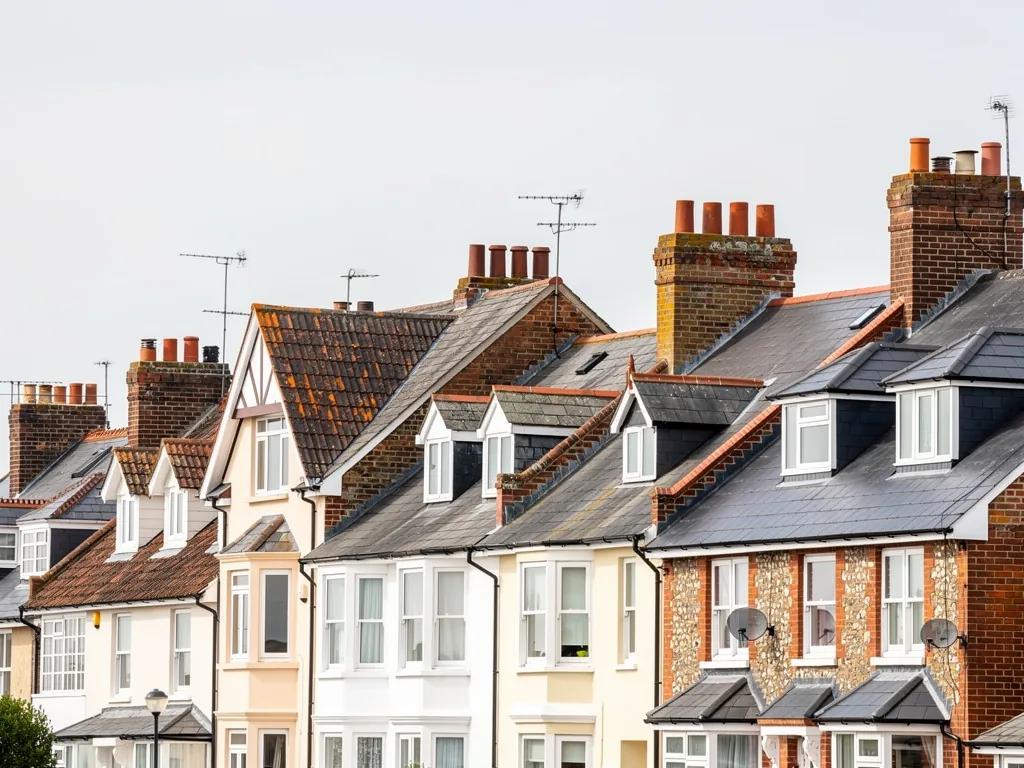
The village has listed buildings at both ends of the scale. The White House, facing the Green, is Grade II*, list entry 1354707, first listed on 18 June 1959. St Margaret's parish church is Grade II, list entry 1025991, with the same first-listing date. Listing is the reason a roof job here may begin with paperwork. Work that alters the special character of a listed building needs listed building consent. The Authority's own guidance places routine upkeep and small in-place repairs outside that net. Stripping a slope and covering it in a different material falls inside it, and so does anything that changes the roofline.
Before work on a listed Fernhurst roof
- Find the list entry
- Separate repair from replacement
- Ask Chichester DC's conservation team
- Photograph before and after
- Keep a matching tile sample
2.1 Whose desk the paperwork lands on
Fernhurst is inside the South Downs National Park, so the Authority is the planning authority on paper. For this corner of the Park, though, the practical contact is Chichester District Council: its planners process applications for the Authority, and its building control team deals with the Regulations. Re-covering usually stays outside building control while the work touches less than 25 per cent of the building envelope and less than 50 per cent of the roof. A much heavier covering, a changed structure or a new roof window can tip it the other way, so we confirm with Chichester's building control team when there is doubt. We tell you which side your job falls on when we write the quote, and handle the notification when it is needed.
2.2 The church and the houses beside it
St Margaret's is an Anglican church in regular use, which puts it under the ecclesiastical exemption: decisions about its roof run through the faculty jurisdiction, not the council. That is the parish's route and not ours. Homes and outbuildings near the church are a different matter. They are ordinary roofs, often with a sandstone stack, a tile-hung return and a lead valley or apron, and they follow the usual rules for listed and unlisted houses. The exemption never removed the need for planning permission where a change affects the outside of a listed church, so it pays to ask before touching anything close to it. Adding a roof window to a house inside the boundary is a separate question, covered in our guide to skylight planning permission, because both the conservation area and the National Park change the answer.
Chapter 3: Woodland, leaf fall and the old ironworks2501
Sheet 03 / 03A large part of Fernhurst parish is woodland. In the 17th and 18th centuries those woods furnished fuel for ironworks, and the works at North Park, on the Fernhurst and Linchmere border, were revived to cast cannon during the wars of 1762 to 1783. The furnaces are long gone, but the trees have stayed, and they shape what happens to a roof. A house backed by oak or beech takes leaf fall in autumn, shade that keeps a slope damp through winter and branches that scrape tiles in a gale. Few things on a roof are as often overlooked as a gutter packed with leaves.
A woodland-edge roof check
- 1ClearLeaves and moss lifted out of valleys, gutters and behind the chimney.
- 2LookOverhanging branches and tiles they have chafed are photographed.
- 3TestLead, joints and downpipe outlets are checked for movement and wear.
- 4ReportYou get the verdict and the written quote, with photographs of each fault.
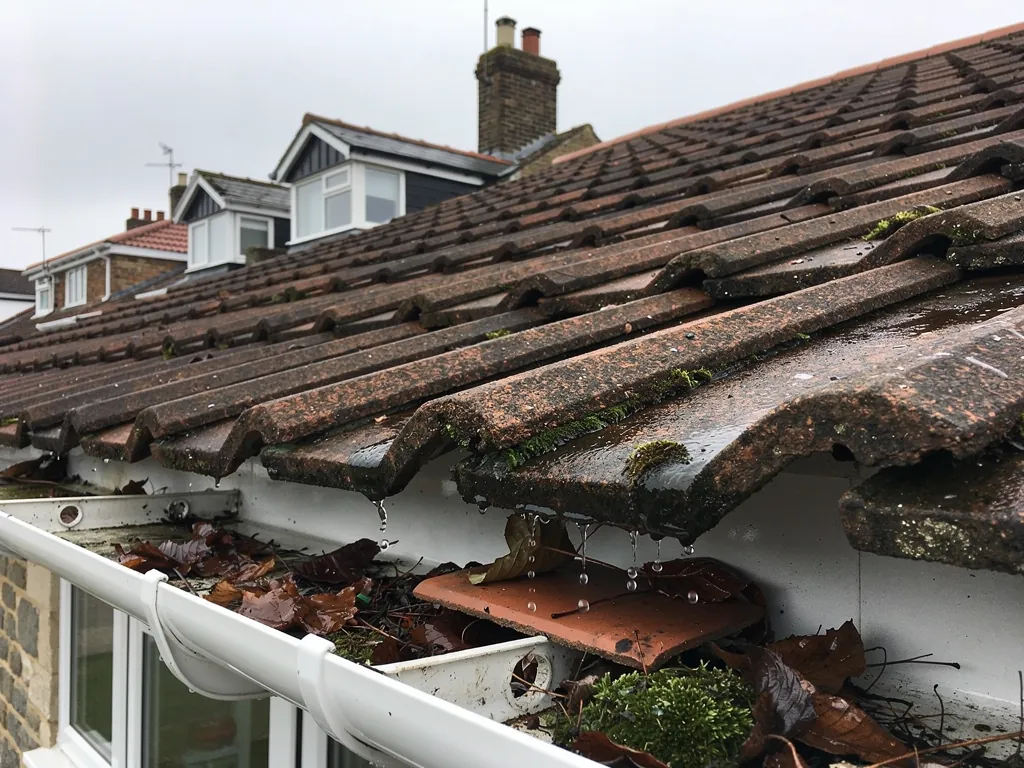
3.1 Valleys, gutters and the first places water finds
A valley is the internal angle at which two slopes drain into one channel, normally lined in lead. Leaves and moss bank up there first, and a blocked valley sends water sideways under the tiles on either edge. Gutters come next. When they overflow, water runs down the wall face and into the eaves, where the soffit (the board under the overhang) and the fascia (the board along its edge) can rot without anyone seeing. Clearing a gutter and checking its joints is a small job. Ignored, it grows into timber replacement. Our roof inspections and surveys page explains what a photographic survey covers.
3.2 Chimneys that outlast their flashings
Red brick and sandstone stacks tend to outlive the lead that seals them to the roof. Flashing, the strip of lead dressed over the joint between stack and tiles, can lift, split or pull out of its mortar joint, and the water it admits shows as a brown stain on a ceiling long before anyone sees the roof. Our visit takes in the pointing, the flaunching (the mortar bed beneath the pots) and every flashing as one package, because a sound stack with a failed flashing leaks as badly as a cracked one. Pots that lean or crack are noted at the same time, since they are easiest to reset while the stack is open. Our chimney repairs page lists the jobs that usually go together.
Where a woodland house also has a long drive, a narrow lane or no room for a scaffold on the road side, access decides how the work is planned. We look at that on the survey, not on the morning the lorry turns up, because deliveries, skips and the scaffold all need a place to stand. Lopping a branch that brushes the tiles is a tree surgeon's job, and we tell you which limbs to ask about.
Roofs we look after in Fernhurst
Frequently asked questions
Questions from the Green to St Margaret's
Can I match the clay plain tiles on a Fernhurst house if some have failed?
Usually, yes. Sound old tiles are lifted and set back on the elevation people see from the road, and the gaps behind the ridge line are filled with new clay tiles chosen for colour and texture. A whole slope of failed fixings is a different job, and relaying may be the better repair. We photograph the laths and nails before recommending either, and the quote reaches you in writing as one total price after the survey, so you can compare the two honestly.
Do tile-hung walls on a Fernhurst cottage affect the roof repair?
They do, at the junction. Where a roof slope finishes against a tile-hung wall, a lead apron or a row of soakers (folded lead pieces tucked under the courses) normally seals the joint, and that is where water gets in when the lead lifts or splits. We examine the hung tiles above, the lead and the first roof courses together, then rebuild the junction itself instead of smearing sealant over it, which fails the first time the roof moves.
Does the White House's listing mean neighbouring roofs are restricted?
Not by itself. A listing applies to the building named in the list entry, so your roof is restricted only if it is listed too, or if the conservation area or another direction applies to it. Look up the list entry for your address through Historic England, then put the question to the district council's planners, who process Fernhurst applications for the National Park Authority, before changing a covering or adding a roof window.
Is there an Article 4 direction on Fernhurst roofs?
None is recorded. The National Park Authority's conservation area appraisal recommends creating an Article 4(2) direction, which suggests none had been made when it was written. An Article 4 direction withdraws chosen permitted development rights across a set area, which can bear on chimneys, front roof slopes and roof windows. Rules change, so check with the district council's planners before altering a roof or stack inside the boundary, and file their answer with your paperwork.
Nearby areas
Get a quote
Tell us about your roof
Describe what's happening and we'll call you back.
Loading the enquiry form. You can also call 01243 252373.