
Roofers in Rogate
Sandstone, clay tile, Rother valley woods
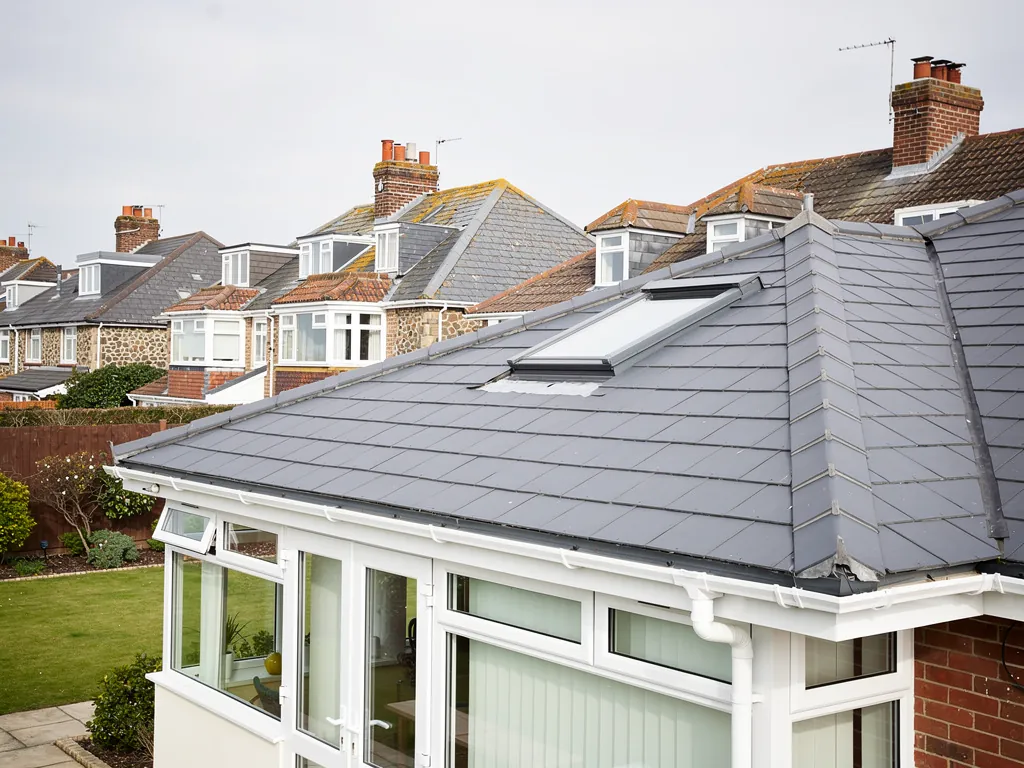
Rogate's roofs sit in the Rother valley on the Hampshire border, from St Bartholomew's tiled church at the crossroads to outlying farms and houses in a parish of nearly five thousand acres.

Rogate roofs
Crossroads church, valley farms and woodland edges
-
St Bartholomew's at the crossroads
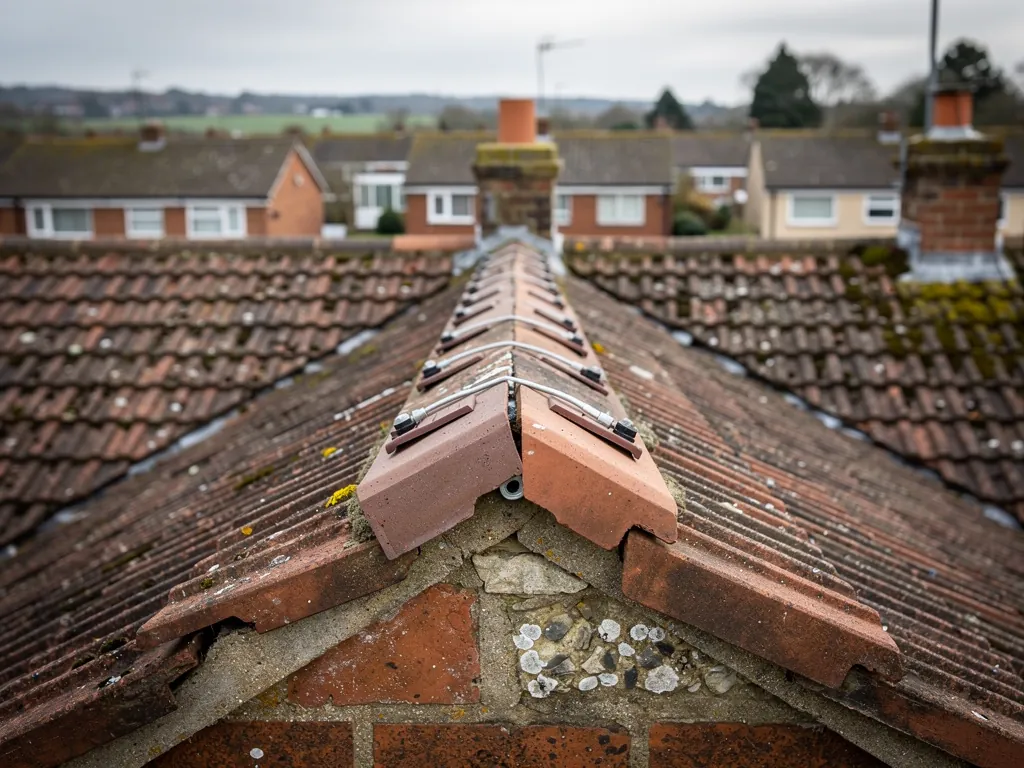
St Bartholomew's church stands at the village crossroads, its local sandstone ashlar walls topped by a tiled roof. It is listed Grade I, so its roof is the parish's affair, but houses around it take their visual cue from it.
-
Fyning House and its outbuildings
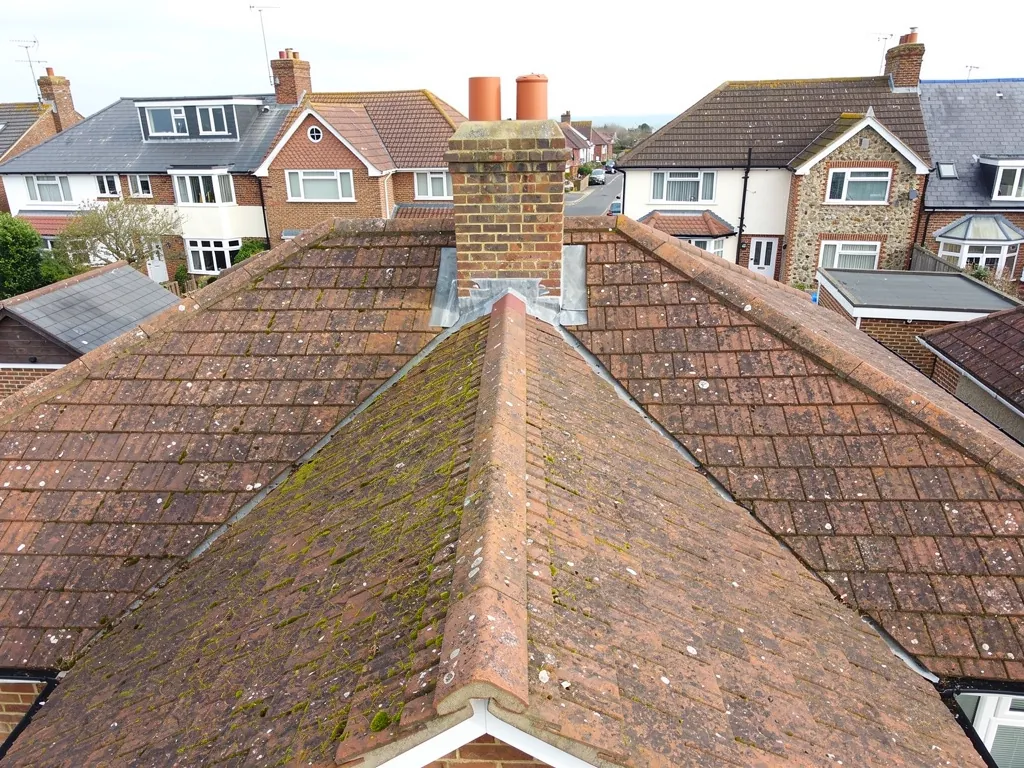
Fyning House, Old Fyning House and The Bothy are listed together at Grade II*. Large houses with outbuildings mean long runs of roof, several chimneys and lead in valleys and abutments that nobody sees from the ground.
-
A parish of scattered farms
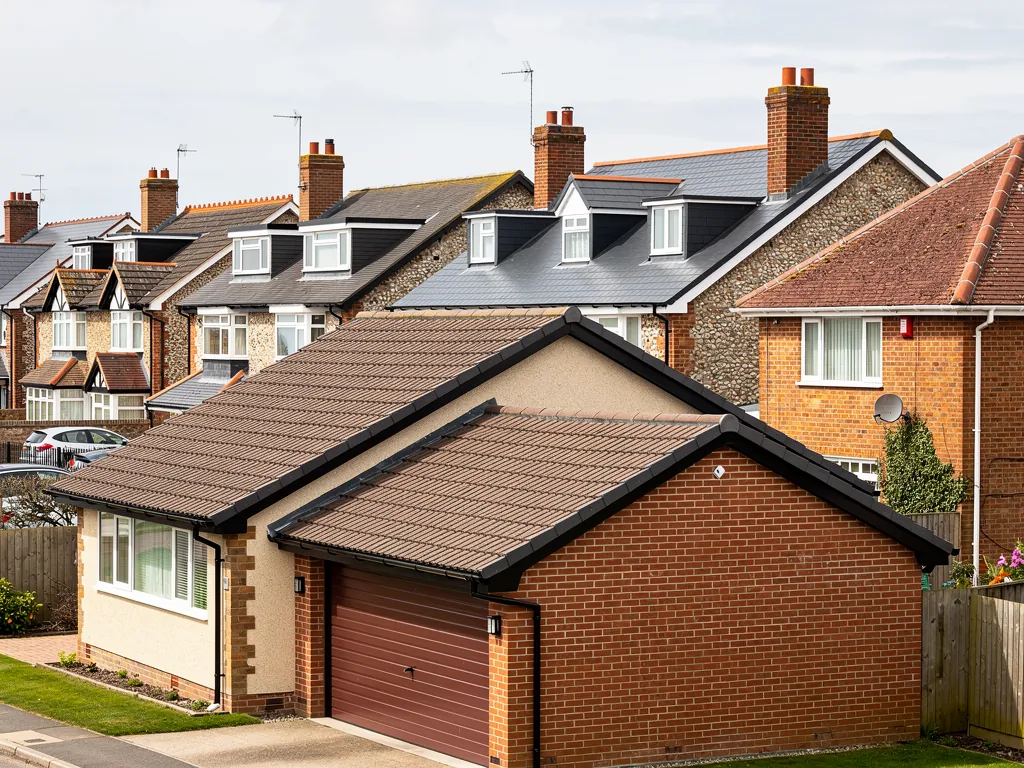
Rogate is a large parish of 4,873 acres, and the Rother divides it from Harting to the south. Houses and farm buildings spread across it, so access and scaffold position vary from one roof to the next.
Map of Rogate, 22.5 road miles north-west of Bognor Regis, with the nearest towns we also cover.
Rogate on the Rother and the Hampshire line
- Council
- Chichester District Council
- Planning
- South Downs National Park Authority
- County
- West Sussex County Council
- Conservation area
- Rogate Conservation Area, inside the South Downs National Park
- Listed landmarks
- St Bartholomew's church, Grade I; Fyning House, Grade II*
- Article 4
- Ask the district council whether a direction affects your address
- Distance
- 22.5 road miles north-west of Bognor Regis, about 38 minutes by car
Rogate notes
Crossroads, Fyning and the wooded north
A big parish with a Grade I church, a Grade II* house and woodland on its northern side, each pulling the roof job in a different direction.
Chapter 1: The crossroads church and village roofs2379
Sheet 01 / 03Rogate's village centre is a crossroads, and St Bartholomew's church stands in the middle of it. Its walls are local sandstone laid as ashlar, meaning squared, finely dressed blocks, under a tiled roof. The church is listed Grade I (list entry 1275547, first listed 18 June 1959). The Anglican exemption from listed building control, which applies while a church is in regular use, sends its roof through the faculty jurisdiction, while any outward change still needs planning permission. None of that touches a private house, but it shows how carefully old roofs in the middle of the village are treated, and homes beside the church deserve a thorough survey before anything is altered.
Roads, walls and lead at a crossroads house
- Scaffold licence lead time
- Lead at stack and wall joints
- Tile courses beside sandstone
- Gutter outlets onto the road
1.1 Tile roofs beside sandstone walls
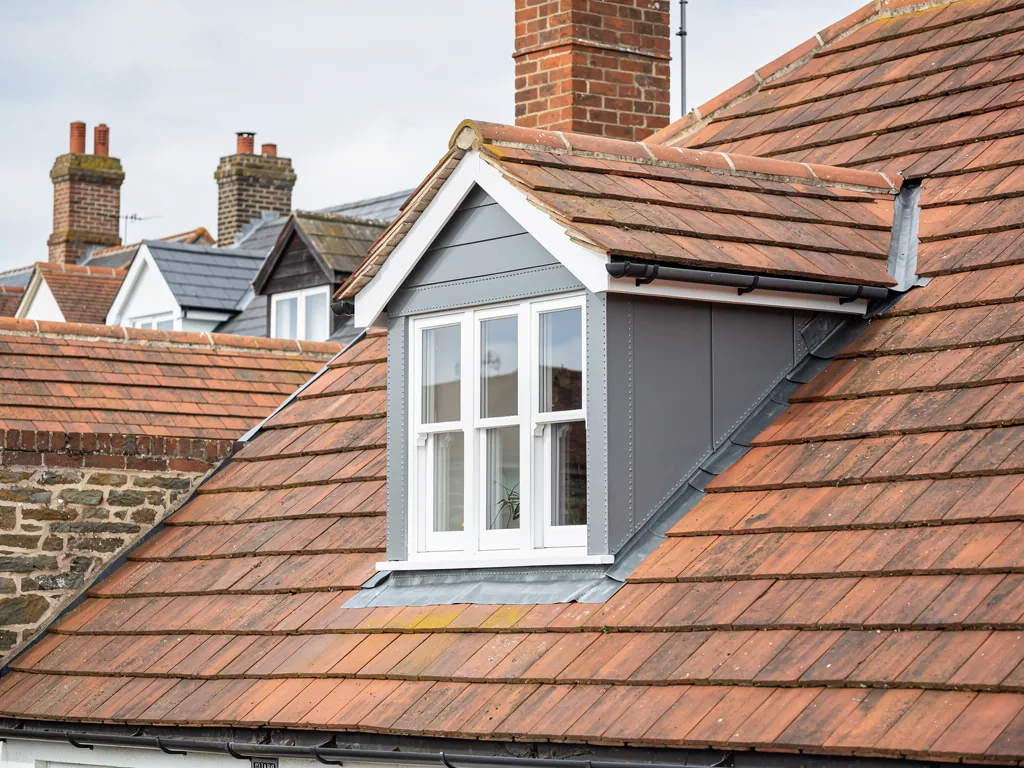
Where tile meets a sandstone wall or stack, the joint is the weak point. Flashing is a lead strip set into a cut joint in the stonework and lapped down over the tile, and a soaker is a small folded piece of lead that sits under each course of tiles next to a stack or wall. If either is lifted, split or missing, water finds its way down inside the wall. Mortar fillets and sealant are not a lasting substitute. New lead goes into freshly raked joints, is held with wedges and is pointed in a mortar suited to the stone. Our lead roofing and leadwork page lists the lead details we form on site.
1.2 What a roadside roof asks for
A house at a crossroads usually needs scaffolding on or beside a public road. Under the Highways Act that calls for a scaffold licence, which is issued by the county highways team at West Sussex County Council. West Sussex County Council covers Rogate, and its published guidance asks for a minimum of 10 working days from application to erection. A start date is therefore never instant, and the timing is explained when the quote is written, so the start you are given is one that holds. Parked cars, bins and passing lorries are all part of planning such a job, and neighbours deserve warning before the poles go up.
Gutters at a roadside house deserve a look too. An outlet that discharges over a footway or a shared wall can soak a passer-by or a neighbour's masonry, and the downpipe path is worth checking before the scaffold comes down. With the scaffold up, the fascia, soffit and gutter brackets can all be examined at arm's length, which is often the best time to decide whether the roofline needs more than a clean-out. A hairline crack in a fascia joint that looks trivial from the pavement can hide a board that has been wet for years.
Chapter 2: Fyning House and long runs of roof2074
Sheet 02 / 03Fyning House, Old Fyning House and The Bothy are listed together at Grade II* (list entry 1217049, first listed 18 June 1959). Grade II* marks a building as particularly important, a step above the ordinary Grade II, so roof works are weighed with particular care. Under the Planning (Listed Buildings and Conservation Areas) Act, work that alters a listed building so as to affect its special interest must be authorised before it begins. The South Downs National Park Authority treats upkeep and small in-place repairs as outside that rule, yet replacing a covering, or cutting a new opening in the roof, would be inside it.
What a listed outbuilding roof needs
- MaintainGutters cleared, loose tiles refixed, flashings dressed back, no change of covering.
- Ask firstNew covering, pitch or openings need the council's view before work.
- RelaySlope stripped and relaid with sound tiles reused where the nails have failed.
2.1 Chimneys by the dozen
Large old houses have several stacks, often with extra flues from rooms no longer heated. A stack that is not used is still exposed to weather, and a capped, unventilated flue can hold damp that stains the wall below. Each stack is inspected from the roof, with pots, flaunching, pointing and flashings photographed one by one. Our chimney repairs page explains the usual repairs, and the survey tells you which stacks need doing now and which can wait.
2.2 Long slopes, outbuildings and the quiet fault
An outbuilding such as a bothy or barn often has a patchwork history of repair, with different materials added over the years. The fault on these roofs is usually quiet: a slipped tile, a split gutter joint or a flashing that has lifted, letting water into one purlin end for years. By the time a stain shows inside, a rafter or wall plate may be damp. A walk along the whole length, taking in gutters and the verge at each gable, finds those faults early, which is when they cost least to put right. Where the survey turns up nothing, you are told that too, and no work is proposed. A roof that checks out clean this year is still worth a second look after the next hard winter.
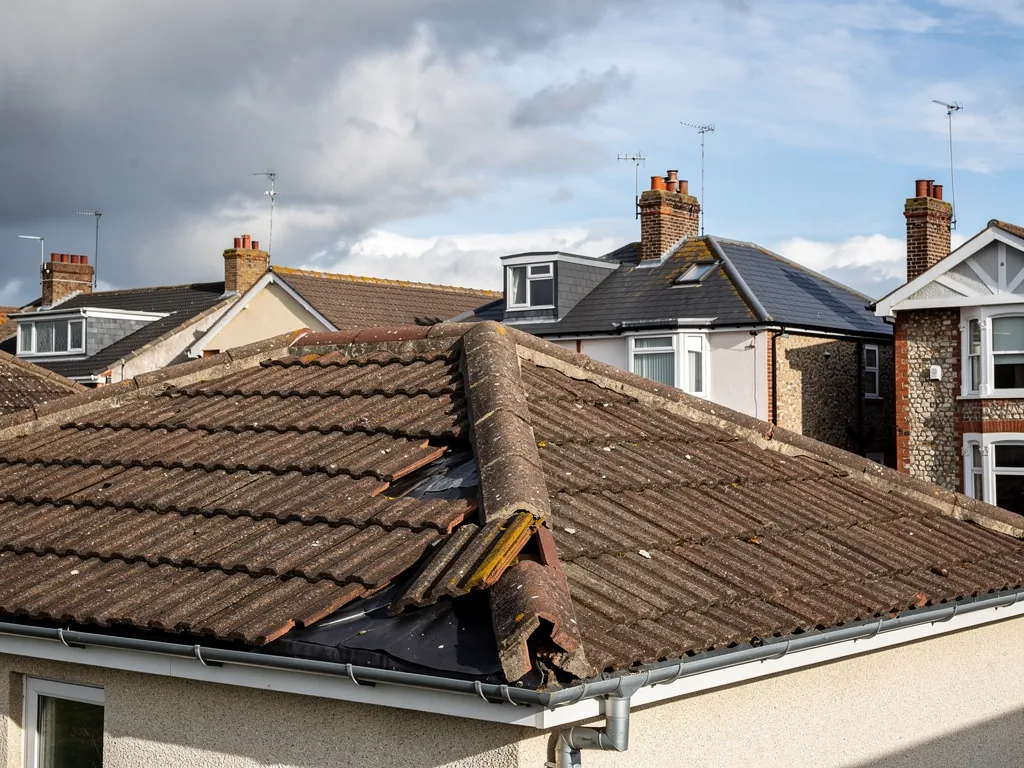
Large houses also mean large gutters, with the longest runs hardest to reach from a ladder. A long run of cast iron or aluminium guttering with a single failed joint can drip into a wall for years, and the downpipes behind climbers and shrubs are rarely looked at. Walking the full length is the only way to find the one open joint.
Chapter 3: Harting Combe, Langley Wood and the wooded north2928
Sheet 03 / 03The north of Rogate parish is chiefly woodland, including Langley and Coldharbor Woods and Harting Combe. In 1590 there was an iron hammer-mill at Haben and an iron furnace in Harting Combe. Today the woods are the part of that landscape that matters most to a roof, because tree cover shapes how any slope near it wears. Branches overhang tiles, leaves and needles drop into valleys and gutters, and shaded slopes stay wet for longer after rain.
A woodland-edge roof visit
- 1WalkThe roof is viewed from the ground and from the ridge, with photographs of each slope.
- 2ClearDebris is lifted out of valleys and gutters before faults are traced.
- 3TraceStains inside are followed back to the flashing, tile or joint responsible.
- 4AdviseYou get a verdict on mending, patching or renewing, then the written quote.
3.1 Trees, gutters and slow rot
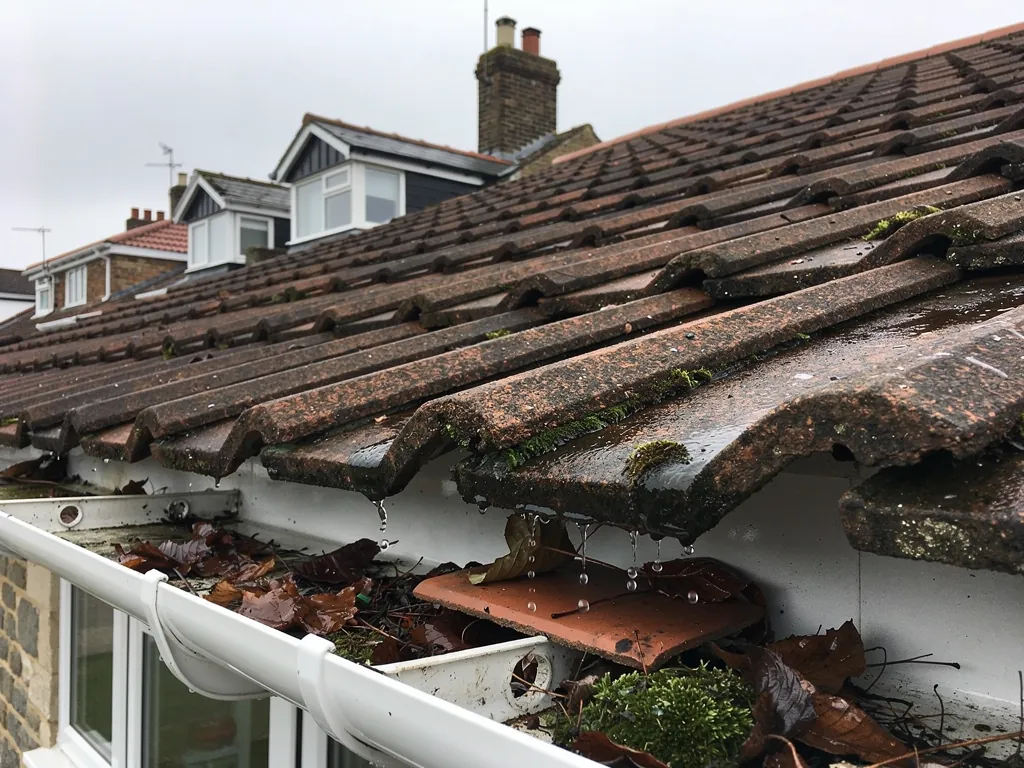
The damage rarely arrives in a single storm. A gutter blocked by leaves overflows against the wall, a fascia board takes water along its top edge, and rot starts where nobody looks. Moss grows thicker on the shaded side and holds moisture against tiles, and a stiff brush or careful wash-down by hand is gentler on old clay than a pressure lance. Where moss has lifted the edges of tiles, the fixings underneath are checked before anything is cleaned off. A tree close to the house can also drop a limb in a gale onto the ridge, and a ridge hit that way should be inspected from the top, not just from a window, before the next rain arrives. Leaf litter on a flat porch or lean-to roof deserves the same attention, since a small pool behind a blocked outlet goes through a covering faster than most owners expect. Felling and pruning are tree surgeons' work, so you are told where branches need cutting back before the roof itself can be dealt with. Our roof repairs page covers the repairs that follow.
3.2 Planning in the National Park
Rogate is inside the South Downs National Park, whose Authority is the planning authority; district planners at Chichester process the applications for it, and the district keeps building control. Rogate has a conservation area, so check with the district council before changing anything visible from the road, and ask at the same time whether any Article 4 direction affects your address. Bats and nesting birds have legal protection, and woodland edges suit both, so work is planned with that in mind and a find is dealt with before a tile is lifted.
Being inland does not change what we look for on the roof, only how we plan the day: access along narrow lanes, where materials can be dropped and where the skip can stand all get settled at the survey.
A roofer for Rogate
Frequently asked questions
Questions from the crossroads to Harting Combe
How do you deal with lead where a Rogate tile roof meets sandstone?
We rake out the joint in the stone, let a lead flashing into it and dress it over the tiles, with soakers (small folded lead pieces) under the courses beside a stack. Wedges hold the lead in the joint and pointing finishes it. Sealant alone does not last, so it is not used as the repair. You see photographs of the old lead before the quote reaches you.
Do Fyning House's Grade II* listing and the conservation area limit nearby roof work?
The listing covers the buildings named in the entry, not the whole neighbourhood. Your own roof is affected by any listing of its own, the conservation area if you are inside it, and the National Park. Search the national list for your address, then ask the district council's planners, who handle Rogate applications for the National Park Authority, before you change a covering or add a roof window. If the answer comes back as a surprise, we would rather hear it before the quote than after.
How long before a scaffold can go up on a Rogate road?
Allow time. Poles that stand on or reach over the road need a licence from West Sussex County Council, which West Sussex County Council issues, and the council wants at least 10 working days between application and erection. The likely start is given at the quote stage so you can plan around it, and access stays clear for neighbours, deliveries and the bin lorry.
Can trees along the Rother valley damage a roof in Rogate?
They can, though usually through slow wear rather than one big failure. Leaves block gutters and valleys, shade keeps moss alive on the tiles, and a fallen branch can crack a ridge. A survey checks all three. Cutting back trees is a job for a tree surgeon, and you are told when branches are the cause so you can arrange it before the roof is touched.
Nearby areas
Get a quote
Tell us about your roof
Describe what's happening and we'll call you back.
Loading the enquiry form. You can also call 01243 252373.