
Roofers in South Harting
Tile, flint and sandstone under the Downs
South Harting lies beneath the Downs, and its parish church shows the local palette well: sandstone, flint rubble, clay tile, a tile-hung tower face and a copper-sheeted spire.

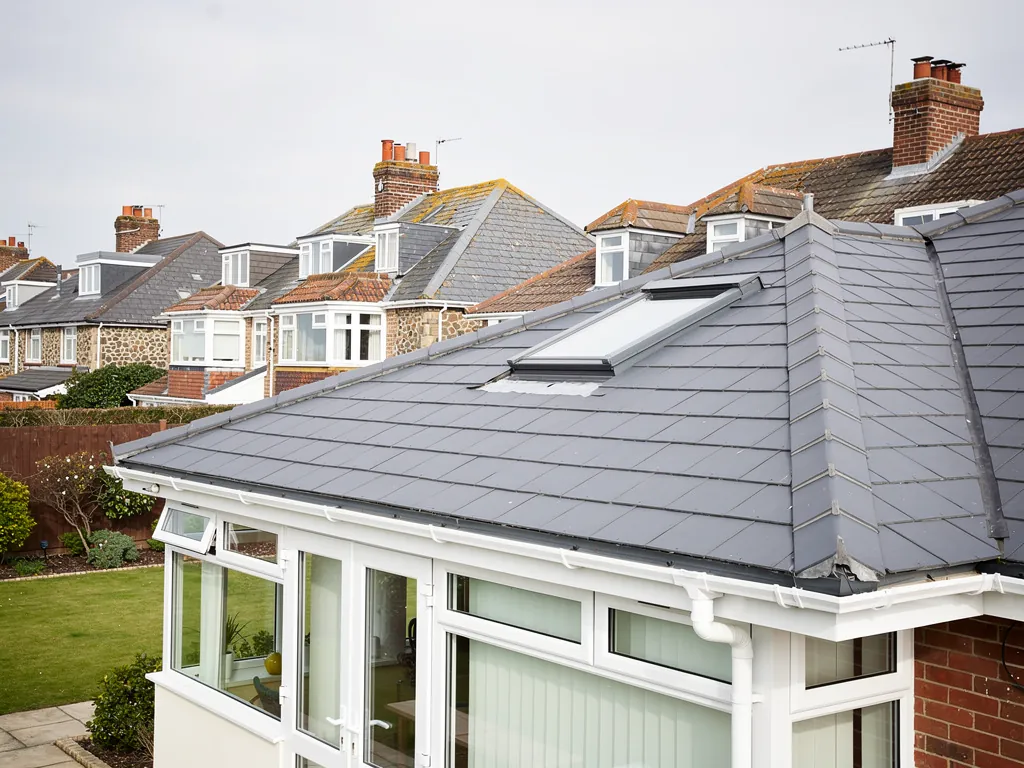
South Harting roofs
Clay tile, hung tile and flint beneath the Downs
-
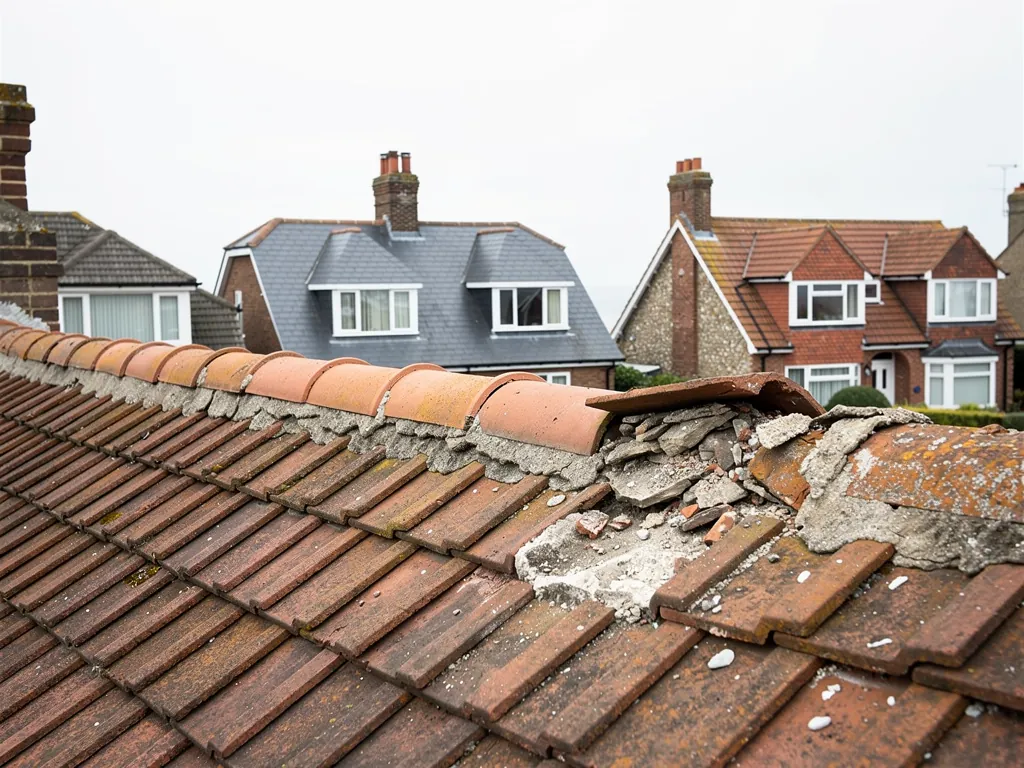
Clay tile on the church roof
St Mary's church is roofed with tile and built of local sandstone ashlar and flint rubble. Its tower is tile-hung on the south face and the spire is sheeted with copper, so one building carries three roofing skills.
-
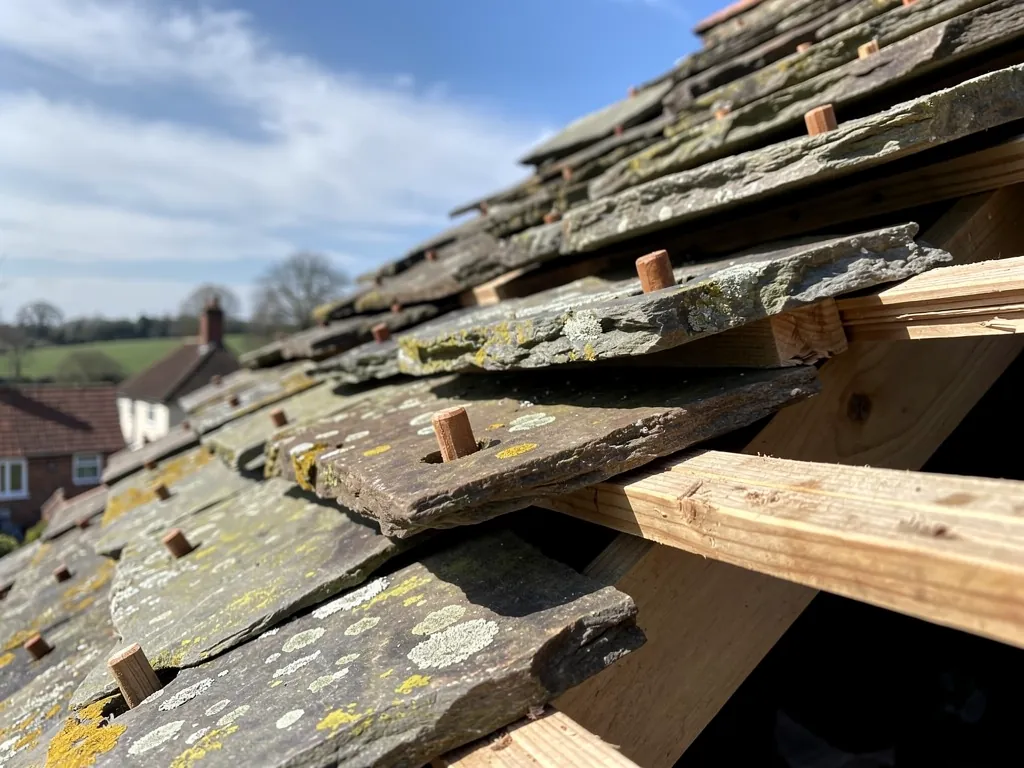
Tile-hanging on walls
Tile-hanging means small tiles hung in overlapping rows on a wall, as on the church tower's south face. Where a hung wall rises above a roof slope, the lead flashing at the junction is the first thing we check.
-
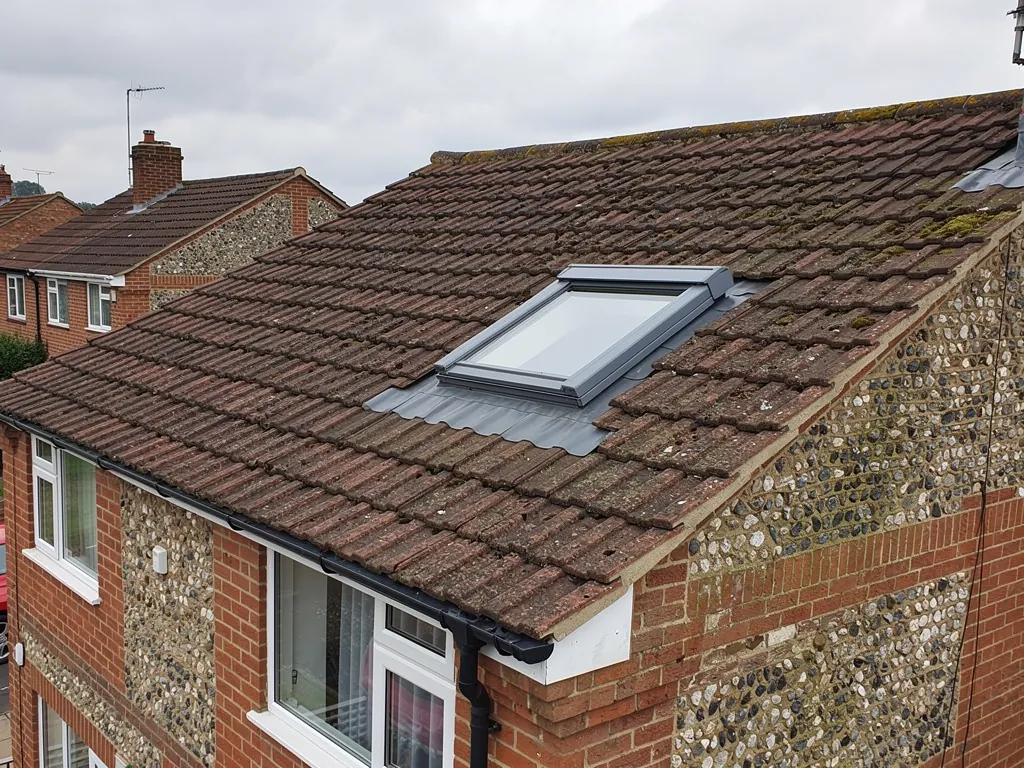
Flint and sandstone walls
Local sandstone and flint are the walls recorded at the church. A roof that meets masonry like that needs flashings let into the joints, so a sound repair covers the pointing as well as the lead.
Map of South Harting, 18.9 road miles north-west of Bognor Regis, with the nearest towns we also cover.
South Harting under the Downs
- Council
- Chichester District Council
- Planning
- South Downs National Park Authority
- County
- West Sussex County Council
- Conservation area
- South Harting, separate from the East Harting and West Harting conservation areas
- National Park
- Inside the South Downs National Park
- Listed landmarks
- Church of St Mary, Grade I; Harting War Memorial, Grade II*
- Distance
- 18.9 road miles north-west of Bognor Regis, about 33 minutes by car
South Harting notes
Church tile, Park rules and woodland edges
Three strands of Harting life, each with its own consequences once you look up at the roofline.
Chapter 1: Tile, flint and a copper spire at St Mary's2623
Sheet 01 / 03The parish church of St Mary stands at South Harting under the Downs, and it is the clearest record of how local buildings go together. The walls are local sandstone ashlar (cut and squared blocks) and flint rubble (rough flints set in mortar). The roof is tile. The south face of the tower is tile-hung, and the spire is sheeted with copper. Three different coverings meet in one building, and every covering ages at its own pace. Houses that borrow part of that palette also borrow some of those weak spots, which is why a roof inspection in a village like this begins at the joints and edges, not out in the middle of a slope. A junction is where we expect to find the fault first.
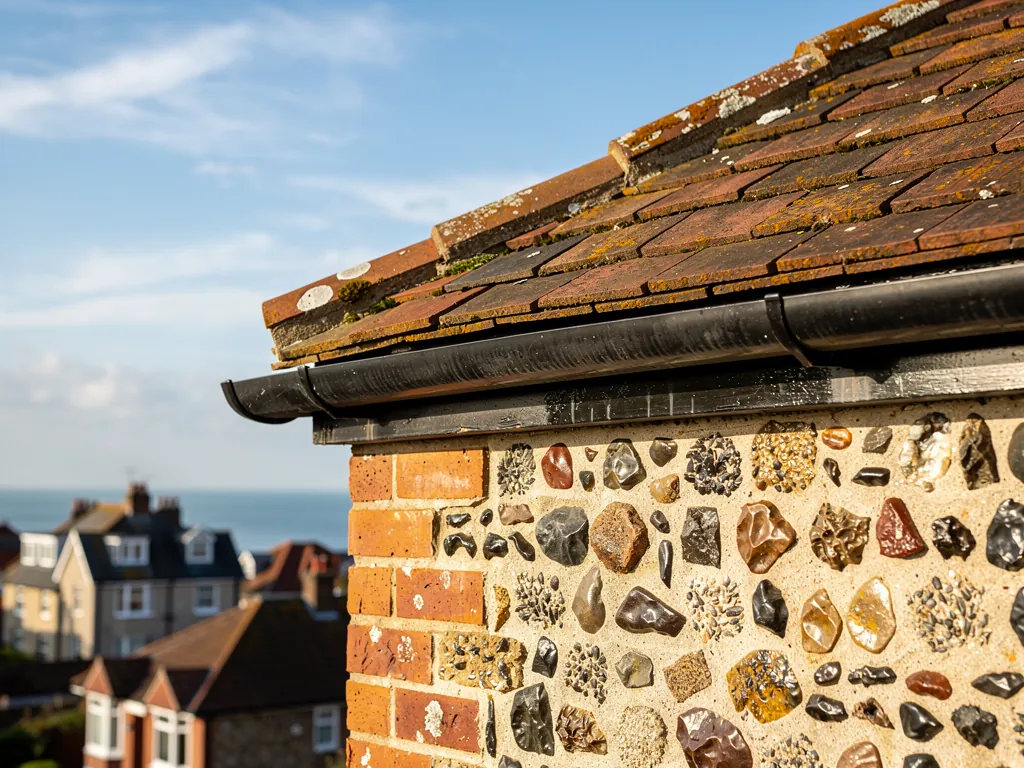
Checked at a tile and flint junction
- Mortar joints behind the flashing
- Lead lifting at the edges
- Cracked or slipped hung tiles
- Timber behind the tiling
1.1 Where clay tile meets old masonry
A clay tile covering ages slowly. The details around it age faster. Lead flashing is the folded sheet that keeps water out wherever a slope butts a wall or a chimney stack, and it is let into the joints of the masonry. When the mortar behind it crumbles, the lead lifts at the edge and rain finds the gap. Flint joints run uneven, so each flashing has to be dressed to follow the wall instead of a ruled line, and the pointing and the lead belong in one visit rather than two. Our lead roofing and leadwork page shows how we form flashings, soakers (the small folded pieces that tuck under each tile beside a wall) and valleys (the channel where two slopes meet). Doing that work neatly keeps a junction dry for years to come.
1.2 Tile-hanging below the roof line
Tile-hanging is small tiles hung in overlapping rows on battens (thin timber laths) fixed to a wall. It is the surface on the church tower, and it complicates a roof junction, because the roof covering, the hung tiles and the lead must all lap in the right order so that water always runs outwards. A cracked hung tile looks minor from the road. Behind it, damp can reach the timber of the wall for a long time before any stain appears indoors. Our guide to tile-hanging repairs explains how a failed area is stripped back and rehung, and when single tiles can be swapped instead, which is the cheaper route whenever the battens behind are sound.
Chapter 2: Up Park, Lady Holt and a parish of woodland2623
Sheet 02 / 03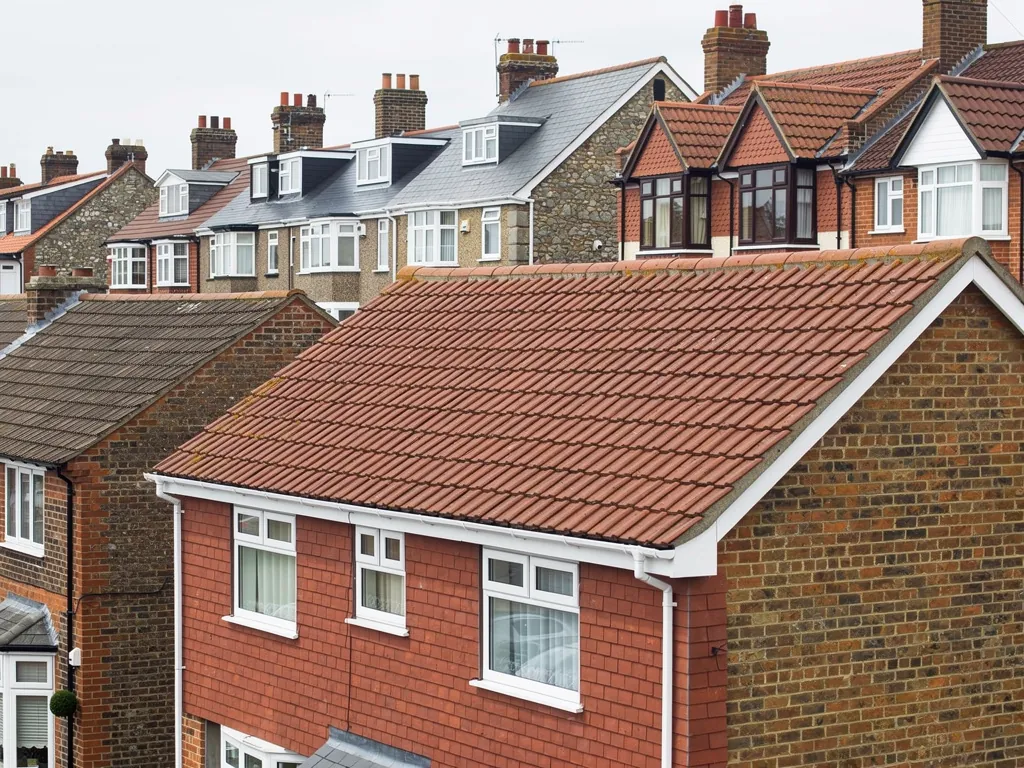
South Harting's parish is a big one: 7,946 acres on the Hampshire border, down and woodland for the most part, with the South Downs along its southern edge. Up Park and Lady Holt are the two parks on the Downs behind the church. A parish of that kind sets plenty of roofs close to trees, and trees are among the biggest influences on how any roof ages. Leaves pack into valleys and gutters, moss spreads over slopes that stay shaded, and a branch that falls in a gale can crack a tile or kink a flashing. None of that is dramatic. It just adds up quietly over the seasons until a damp patch shows on a ceiling. Where trees hide a slope from the lane, a fault can run for a long time unnoticed.
A visit to a roof under trees
- 1Walk roundWe look for branch damage, moss and blocked gutters from the ground first.
- 2Climb and checkValleys, flashings and the tiles nearest the trees are photographed close up.
- 3Give the verdictYou get a clear verdict: mend it, patch it for now, or renew it.
- 4Price itOne total price arrives in writing after the survey.
2.1 Roofs that live under the canopy
Shade keeps a roof damp for longer after rain, and a damp tile grows moss more readily. Moss alone does not mean a roof has failed, but a deep mat of it keeps water sitting on the tile surface and can push up the edge of the course above. On a shaded slope the first question is whether the tiles beneath are sound. The second is the gutter line, because a clogged gutter spills water behind the fascia and back under the first row of tiles. Where leaves have settled in a valley, we clear it and check the lead or valley tiles for pinholes before deciding anything. Our guttering, soffits and fascias page covers the rainwater side of the same problem.
2.2 Outbuildings, long drives and where the ladder goes
Rural plots often come with barns, stables and garages whose roofs get less attention than the house, and those are frequently where a slow leak does its damage. Mention them when you ring and we will look at them on the same visit. Access matters nearly as much as the roof itself. A long drive or a narrow lane changes where the scaffold, the skip and the delivery of tiles can stand. If the scaffold has to occupy part of the road or pavement, the licence comes from the county highway authority, West Sussex County Council, and it needs a minimum of 10 working days' notice. We build the delay into your start date at the outset. Tell us early if the only way in is down a track, and we will plan the day around it, including where the tiles can be stacked safely. We clear the site when we finish and carry the waste away.
Chapter 3: Park rules, a Grade I church, the village area2806
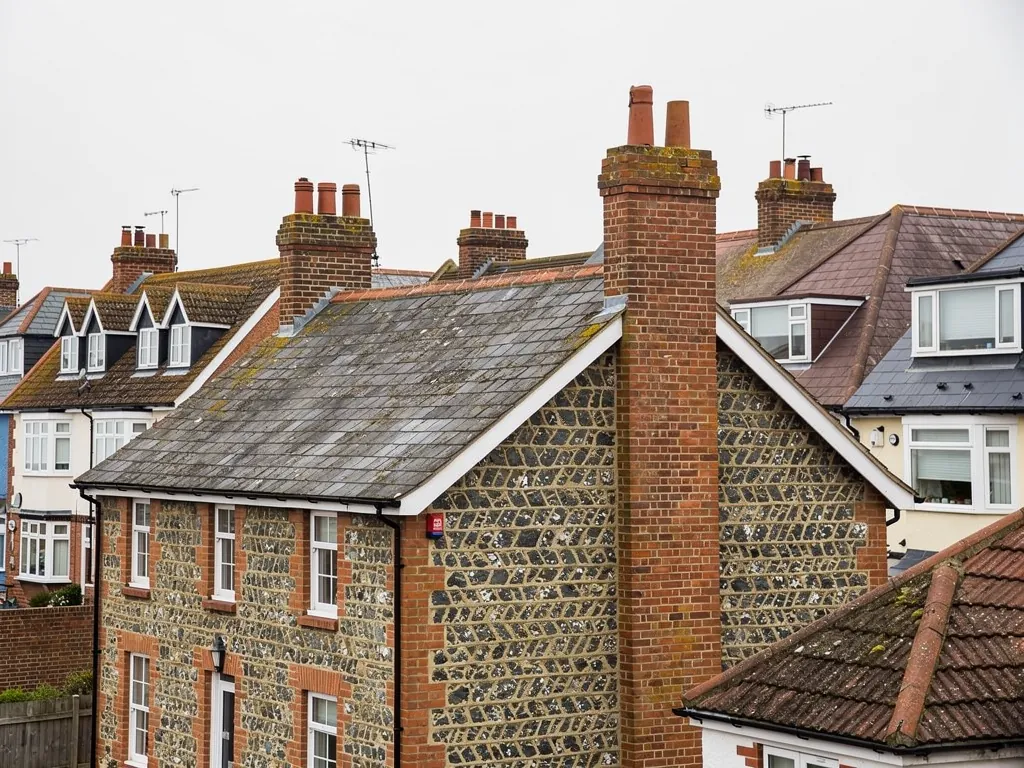
Sheet 03 / 03South Harting lies inside the South Downs National Park, and that changes who you ask before you alter a roof. Putting back the same covering generally sits outside planning control, since the house looks unchanged once the work is done. Listed buildings and any Article 4 direction are the exceptions, and a new covering that looks different may be treated as a change. Planning applications here are handled by Chichester District Council on the National Park Authority's behalf, so check with the council's planning team before you assume. The same goes for a roof window, since the National Park limits what is allowed. Tell us if you are thinking of one, and we will steer you to the correct guidance well before any window is ordered, because a wrong guess there is expensive to undo.
Three consent questions before a roof job
- Listed?Works that affect character need consent; matching repairs usually do not.
- Area map?Confirm your house against the South Harting conservation area before changing the look.
- Size of jobCheck the 25 per cent and 50 per cent limits before stripping a slope.
3.1 Listing, the church and the war memorial
As a parish church still used for worship, St Mary's answers to the Church of England's faculty system rather than to listed building consent, although a change to its exterior can still be a planning matter. Harting War Memorial gained its Grade II* listing on 11 October 2016, a sign that the list keeps growing. For a listed house, anything altering its character calls for listed building consent, whereas ordinary upkeep and like-for-like patching does not. We open the list entry before pricing any larger work and note what it records about the roof, so nobody is surprised halfway through a job. A listed roof often has its own history of patching, and knowing where earlier repairs were made tells us where the next problem is likely to appear.
3.2 The village conservation area and Building Regulations
South Harting has its own conservation area, separate from those of East Harting and West Harting, so check which map your house sits on. For the roof itself, Building Regulations enter the picture when a job is large. Building control approval is normally unnecessary while under 25 per cent of the building envelope and under 50 per cent of the roof is involved. A heavier new covering, 15 per cent or more, brings building control and a structural check. Inside the Park, building control remains with the district council. After the survey we tell you which of these limits your job comes near, and where the work does need notifying we deal with that for you, so the paperwork never holds up the start date or the finish.
Roofing work from the church tower to the woodland edge
Frequently asked questions
Questions from St Mary's tower to the woodland edge
Can a tile-hung wall beside a roof be repaired without taking the whole wall down?
Frequently. Cracked or slipped hung tiles can be lifted out and replaced singly, and a failed lead flashing can be renewed without stripping the area around it. When the battens behind have rotted, or the wall has been wet for a long time, the affected section comes off and is hung again. Our photographs show which of the two jobs it is, and the price reaches you as one total in writing.
Does a roof near the woods behind South Harting need extra attention?
Usually the gutters and valleys need clearing more often, because leaves and moss gather where branches overhang, and shaded slopes dry out slowly. We check that the tiles beneath moss are sound before suggesting any cleaning, and we look for impact marks after a gale. The smallest fix that will hold is the one we recommend, and a worn-out slope gets described as exactly that.
Is the South Harting conservation area the same as the East Harting and West Harting ones?
No. They are three separate areas, and South Harting's is the one that takes in the village around the church. The South Downs National Park Authority publishes conservation area maps for the Chichester district, so look your address up there or ask Chichester District Council's planning team. We do not guess at boundaries, and we check the map before pricing any roof close to an edge.
Is permission needed to renew the roof of a house inside the Park at South Harting?
A like-for-like covering rarely needs a planning application, but listed status or an Article 4 direction can change that, and a different-looking covering may count as a change. Larger jobs can also need a building control application, depending on the 25 per cent and 50 per cent limits. Ask Chichester District Council's planning team, which handles applications here for the Park Authority, then we can explain the rest.
Nearby areas
Get a quote
Tell us about your roof
Describe what's happening and we'll call you back.
Loading the enquiry form. You can also call 01243 252373.