
Roofers in Sompting
Rhenish helm, flint walls, clay tile and slate
Sompting runs from the Downs dip slope down to the coastal plain, and its old village combines a rare Rhenish helm church roof with flint walls, clay tiles and slates.


Sompting roofs
From the helm roof to the walled gardens
-
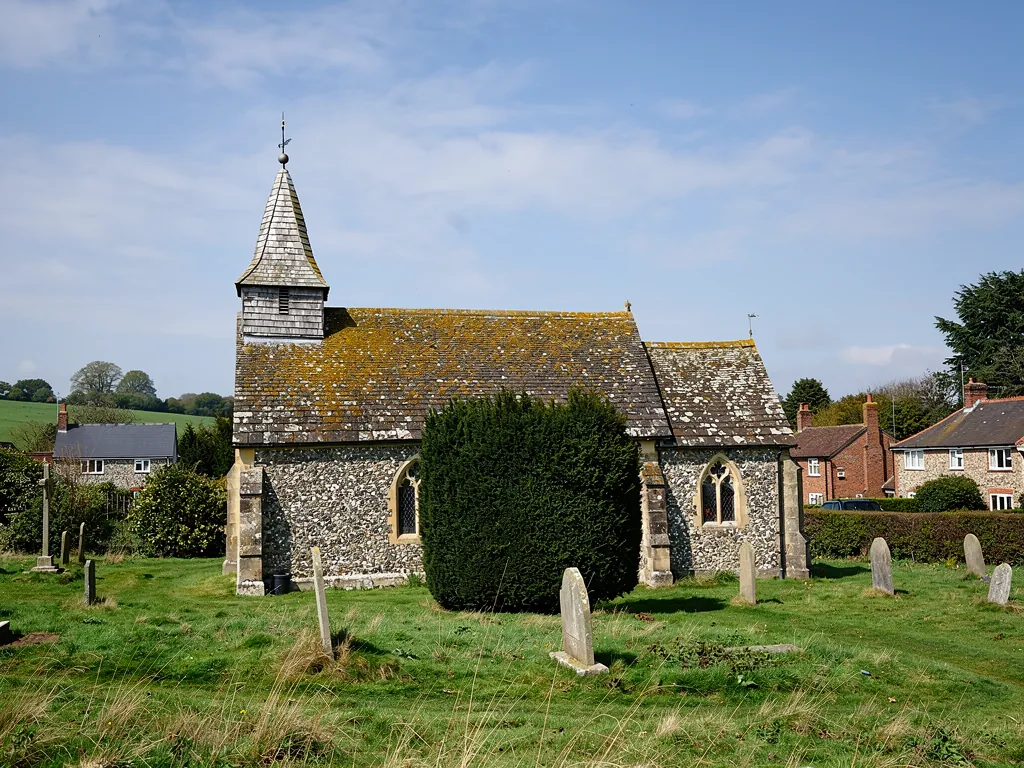
St Mary's Rhenish helm roof
The 11th-century parish church of St Mary has a Rhenish helm, a pyramidal roof form largely found in the Rhineland and very rare in Britain. The church is faced with flint and has Caen stone dressings.
-
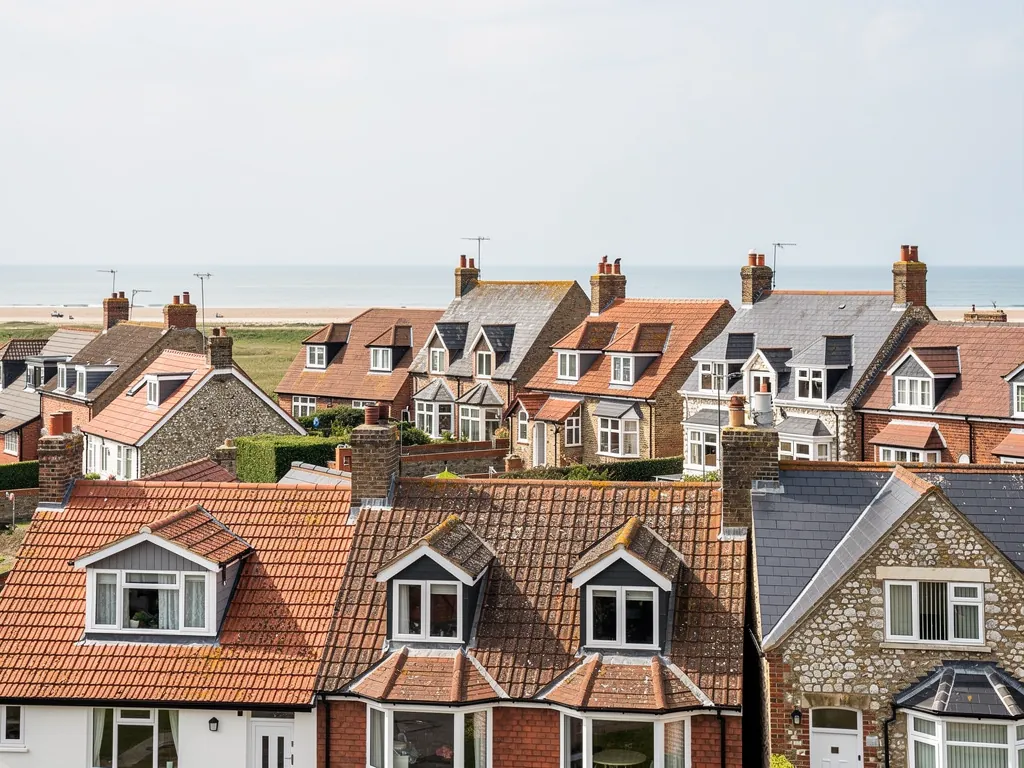
Flint walls, clay tile and slate
Inside the conservation area, flint is used extensively in buildings and boundary walls, and the roofing materials include both clay tiles and slates. Matching what is already on a roof matters more here than elsewhere.
-
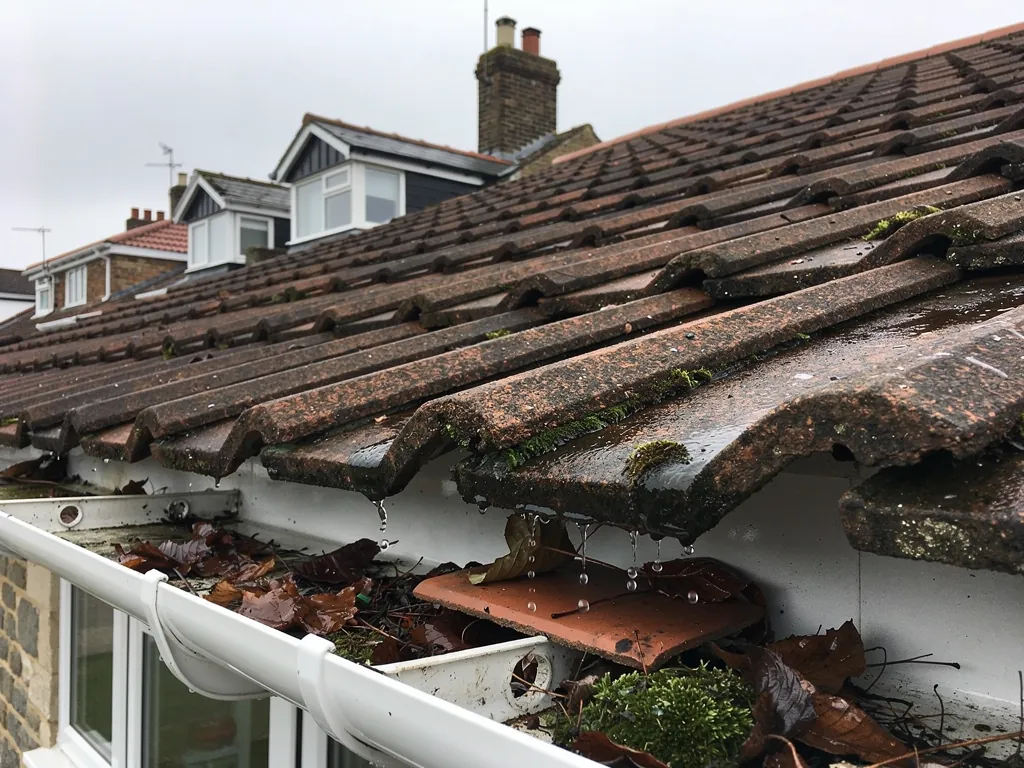
Market gardens and Sompting Abbotts
A market garden and glasshouse industry grew up here from the early 19th century, and very high flint walls north of West Street enclosed the nurseries. Sompting Abbotts was rebuilt in 1856 in gothic style and is Grade II listed.
Map of Sompting, 18.7 road miles east of Bognor Regis, with the nearest towns we also cover.
Sompting's boundary and its listings
- Council
- Adur District Council
- County
- West Sussex County Council
- Conservation area
- Sompting Conservation Area, first designated March 1976; appraisal adopted 7 August 2024
- Article 4
- None in the council's confirmed list; the 2024 appraisal recommends considering one south of the A27
- Listed landmark
- Grade I listed St Mary's, crowned by its Rhenish helm
- Distance
- 18.7 road miles east of Bognor Regis, about 30 minutes by car
Sompting notes
Helm roof, flint walls, the A27 split
Three parts of Sompting that shape a roofing job: the church with its rare roof form, the walled gardens and lean-tos, and the two planning authorities.
Chapter 1: A Rhenish helm over flint and Caen stone2440
Sheet 01 / 03Sompting's parish church of St Mary dates from the 11th century, and its tower carries a Rhenish helm, a pyramidal roof form found mainly in the Rhineland and very rare in Britain. Adur District Council's conservation area appraisal says so, and the Victoria County History adds that the church is faced with flint, with Caen stone dressings and a west tower topped by a short helm spire. The building is listed Grade I. Few villages of this size have a roof like it, and anyone who works on the village roofs works in its shadow. It also sets a standard. A roof form that rare survives only because generations of carers kept the weather out of it, and our own work is judged against that.
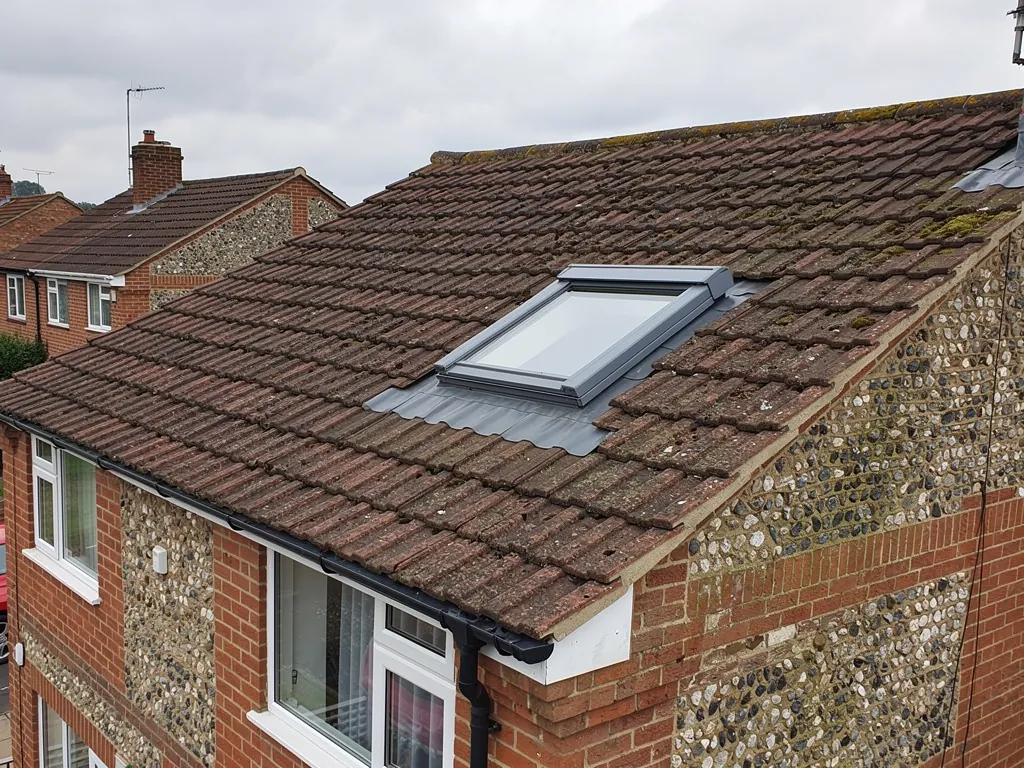
Before work near the helm roof
- Look up the list entry
- Check which consent route applies
- Plan access around the roof form
- Photograph every flint junction
1.1 A roof shape that is not on the usual list
A pyramidal roof is not an ordinary pitched roof. Four faces rise to a single point, there are four hips instead of one ridge, and every junction is small, steep and hard to reach. The same rules of good roofing still apply: the lap of each course, the fixings that hold it, the lead at the junctions. What changes is access, because a ladder is rarely enough and the scaffold has to be designed around the form. On a village roof the equivalent is a turret, a tower cap or a pyramid-roofed porch, and we survey such features with the same slow patience, working from the lowest safe point upwards and photographing each hip and junction as we go.
1.2 Flint faces, stone dressings and lead
Flint walls offer no straight line for a flashing to follow, so the junction with a roof is worked by hand. Lead is trimmed along the face of the flint and tucked into a joint opened up for the purpose, then the pointing is made good over it. Stone dressings need care too, because a drip that falls on soft stone leaves a stain and, in time, a loss of face. We look for open joints, lifted lead and splashes down the wall, and we report each one with a photograph. Our lead roofing and leadwork page explains how sheets and thicknesses are chosen for each position.
1.3 Churches and the consent route
A listed church needs the right consent route before roof work starts, and which route applies depends on the church and its denomination. A church in regular worship use may come under its own denomination's process, whereas one that has closed generally returns to the ordinary listed building controls. Anyone responsible for a church or parish hall roof here should begin with the people who care for the building. We then supply the survey photographs and a written description of the work, which is usually what an adviser or committee needs to see first.
Chapter 2: Walled gardens, lean-tos and gothic gables2562
Sheet 02 / 03The appraisal records that a market garden and glasshouse industry grew up in Sompting from the early 19th century, and that very high flint walls north of West Street enclosed those nurseries. The glass has largely gone from many such sites around the country, but the walls often outlast it, and they leave a particular roofing legacy: outbuildings, sheds and lean-to extensions built hard against tall flint. Each one is a roof that ends not in an eaves overhang but in a wall, and that junction is where the trouble starts.
Three calls for a roof beside a flint wall
- RepointThe wall joint above the flashing is failing but the lead below it is sound.
- Re-dressThe lead has lifted or split and is dressed back into a fresh joint.
- RecoverNails and battens are spent, so the slope is stripped and covered afresh.
2.1 Lean-tos against tall flint
A lean-to roof slopes one way and rests its top edge on an existing wall. The top edge needs an upstand, which is a turned-up lip of covering, and a flashing dressed over it into the flint. Flint walls are uneven and often soft in the joints, so the groove for the flashing has to be opened carefully and pointed after. If the wall is damp, the roof gets blamed. On the survey we check which of the two is really leaking, because the cheaper repair may be pointing and not a new covering. A bucket under the drip shows where the water lands, which is rarely where it entered, so we trace it back along the timbers. Our roof repairs page explains how we weigh a patch against something bigger.
2.2 Gothic rebuilds and Grade II roofs
Sompting Abbotts was rebuilt in 1856 in the gothic style to designs by P. C. Hardwick and is listed Grade II. Houses of that period often have steep pitches, several gables and a lot of valleys, which means a lot of lead and a lot of places for leaves to collect. We cannot say what any one house contains until we are on it, but a roof with many valleys deserves an annual look at the gutters and the lead. On a listed building, a like-for-like repair and a change of covering are different questions, so the list entry gets studied first and only then does a figure go on the work.
2.3 Clay tile and slate repairs
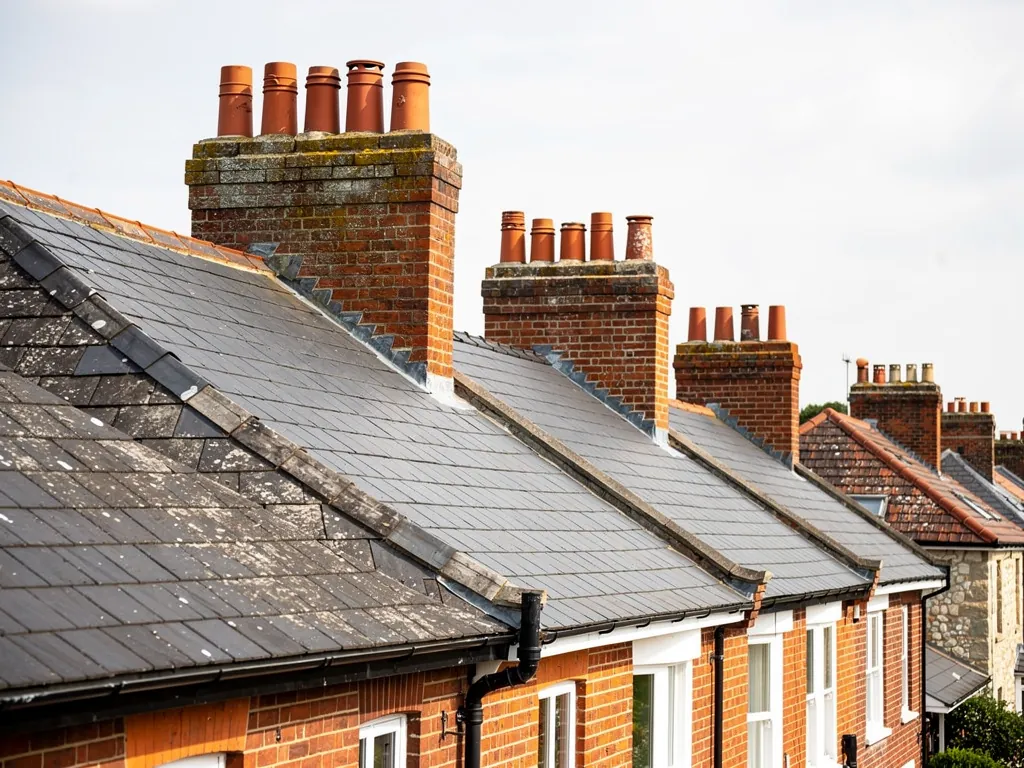
A slipped slate can go back on a tingle, a thin metal strap bent to grip its tail so the courses above are left undisturbed. Cracked clay tiles can be swapped one at a time if the replacement matches in colour and size. Once nails or clips have failed over a full slope, the sensible job is a relay: sound slates and tiles go back, and new ones make up the shortfall. Our slate roofing page sets out how that works.
Chapter 3: Adur, the A27 and two planning authorities2562
Sheet 03 / 03Sompting is unusual in sitting across a planning boundary. The appraisal says that since April 2011 the South Downs National Park Authority has been the local planning authority for the part of the conservation area north of the A27, while Adur District Council remains the planning authority for the village south of it. Building control is a separate matter and stays with Adur District Council. Before any application for a roof change, work out which side of the A27 your house is on, and ask the right authority.
Typical UK re-roof bands before a Sompting survey
- Flat roof replacement£2,800 to £7,500
- Gable roof replacement£7,000 to £16,250
- Hip roof replacement£9,250 to £18,000
These are typical UK ranges, with VAT to be added on top. Your own single price on paper follows once we have surveyed your roof.
Source: Checkatrade roof replacement cost guide, table last updated October 2026
3.1 The conservation area and Article 4
Adur District Council first designated the Sompting Conservation Area in March 1976, with minor boundary amendments in 1992, and adopted a fresh appraisal and management plan on 7 August 2024. The council's list of Article 4 Directions does not include a confirmed direction for the conservation area. The 2024 appraisal does recommend that the council consider one south of the A27 covering roof alterations, including coverings, rooflights and solar panels. A recommendation falls short of a direction, so nothing binding exists today, yet it is good reason to ask Adur District Council before changing a roof covering in the village.
3.2 Roof windows, dormers and re-covering
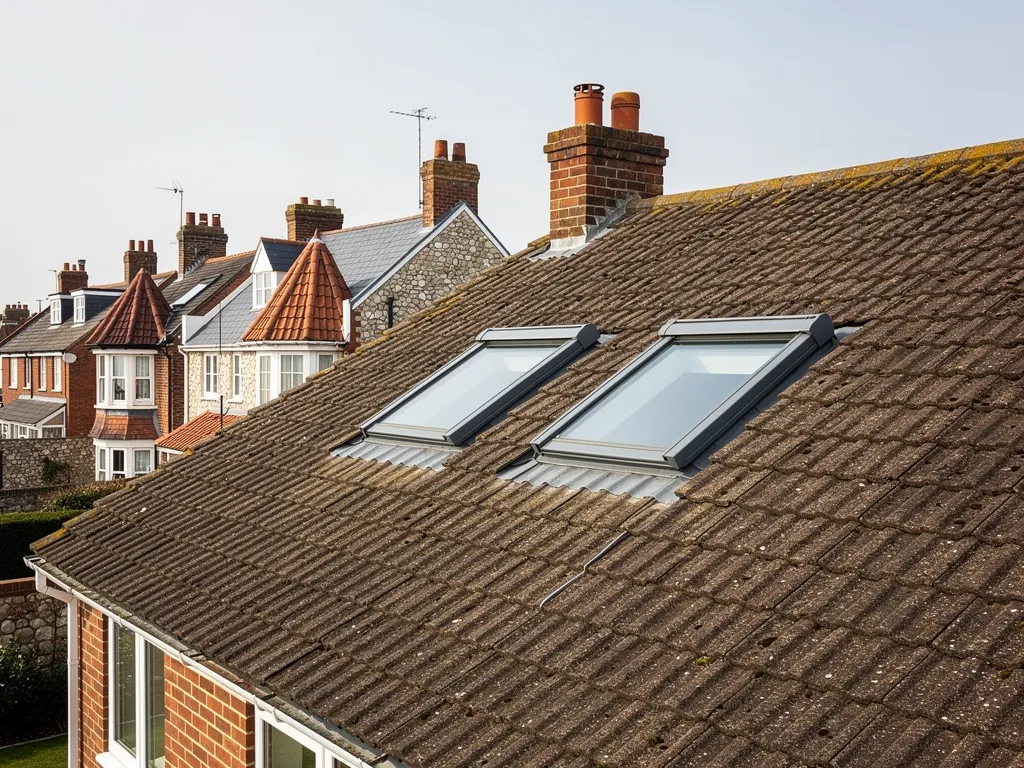
A conservation area, or the National Park, takes some roof changes outside the usual rules, and dormers are the clearest case. A homeowner north of the A27 who wants a loft room may find the answer is different from the neighbour's south of it, so it pays to confirm which side of the line you are on. Our guide to skylight planning permission explains it. For a plain re-covering, think about weight as well as appearance. Pick a tile that weighs 15 per cent or more above what it replaces, and the Planning Portal says building control approval is needed. A concrete tile laid over what was a plain clay roof is the classic way to get there, so the weight question is asked at the survey.
3.3 Scaffold licences and cost
West Sussex County Council licenses scaffolding on the highway. The council wants at least 10 working days' notice, so a village job is planned a fortnight ahead. The survey comes first, and after it you receive a single total price on paper. The ranges below are national typical figures to give a sense of scale, not our price, and the figures behind them are set out in the source line.
The roof work we do in Sompting
Frequently asked questions
Sompting roof questions, from the helm roof to the A27
Can a clay tile or slate roof in Sompting's conservation area be repaired with matching materials?
Often, yes. Clay tiles and slates are what the appraisal lists for roofs across the Sompting conservation area, which makes matching tile or slate the sensible repair. Individual slates can be refixed with tingles and cracked tiles swapped one at a time, provided the replacement matches in colour and size. Where fixings have failed across a full slope, a relay with the sound pieces reused is the better answer.
Is there an Article 4 direction on roofs in Sompting village?
Adur and Worthing Councils' list of confirmed Article 4 Directions does not include one for the Sompting Conservation Area. The 2024 appraisal recommends that the council consider a direction south of the A27 covering roof alterations, but a recommendation is not a direction. Rules can change, so ask Adur District Council before altering a roof covering in the village.
Do I deal with Adur District Council or the National Park Authority for a Sompting roof?
It depends on where your house stands. North of the A27, it is the South Downs National Park Authority that decides planning for that part of the conservation area. South of the A27, Adur District Council is. Building control stays with Adur District Council either way. If your house is near the line, ask both before you commit.
How are lean-to roofs against Sompting's high flint walls kept watertight?
The top edge of the lean-to gets an upstand and a lead flashing tucked into a joint opened in the flint, then pointed. Flint is uneven, so each piece of lead is trimmed to suit the wall as it stands. Before any of that, we check whether the damp comes from the roof or from the wall itself, because pointing the wall is sometimes the only repair that is needed.
Nearby areas
Get a quote
Tell us about your roof
Describe what's happening and we'll call you back.
Loading the enquiry form. You can also call 01243 252373.