
Roofers in Shoreham-by-Sea
Flemish tile, Welsh slate, harbour town
Shoreham-by-Sea's roofs run from rare Flemish tiles on North Street to railway-age Welsh slate and the interlocking concrete tiles that now cover the conservation area, beside the Adur and its harbour.

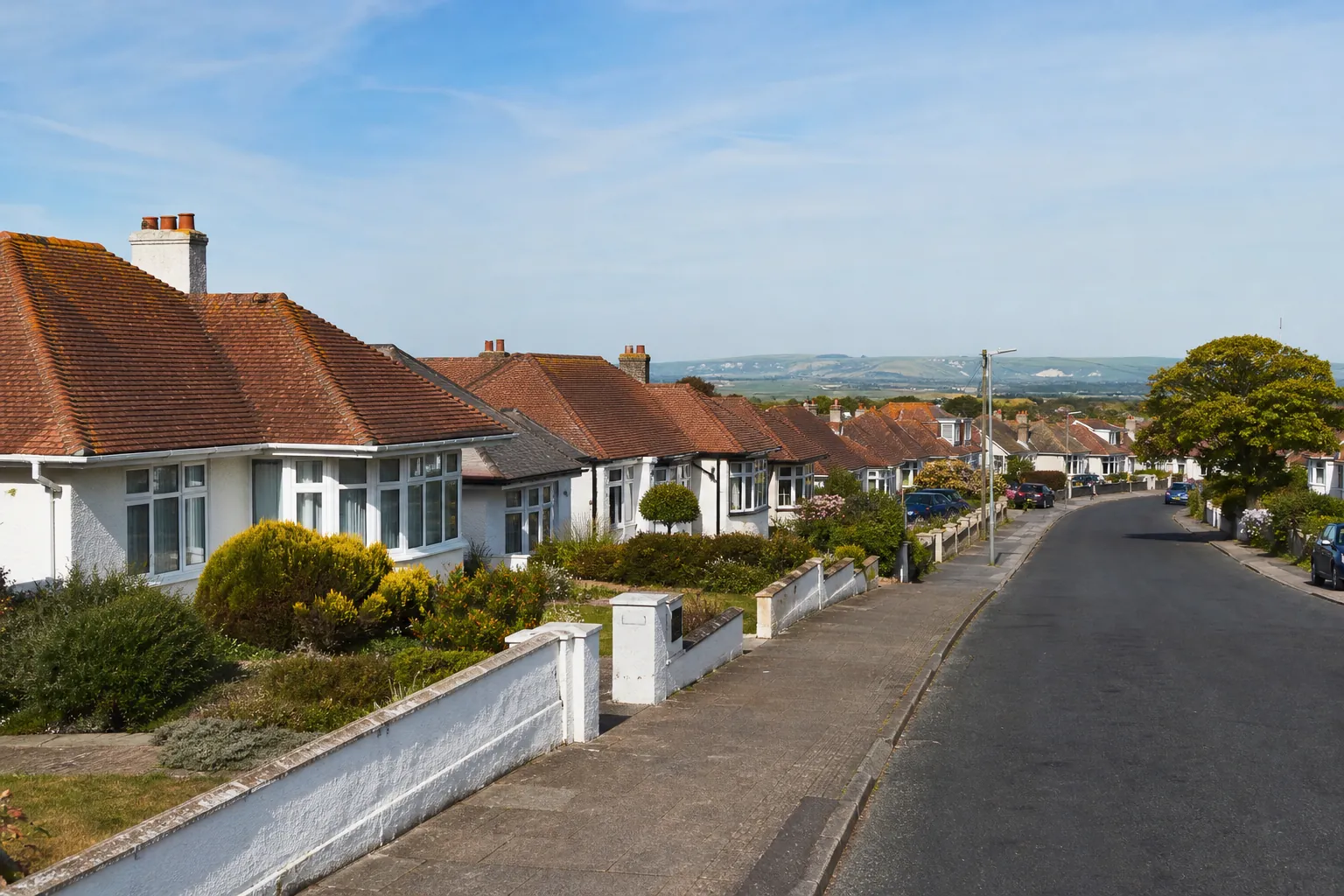
Shoreham-by-Sea roofs
From North Cottage's Flemish tiles to the railway slate
-
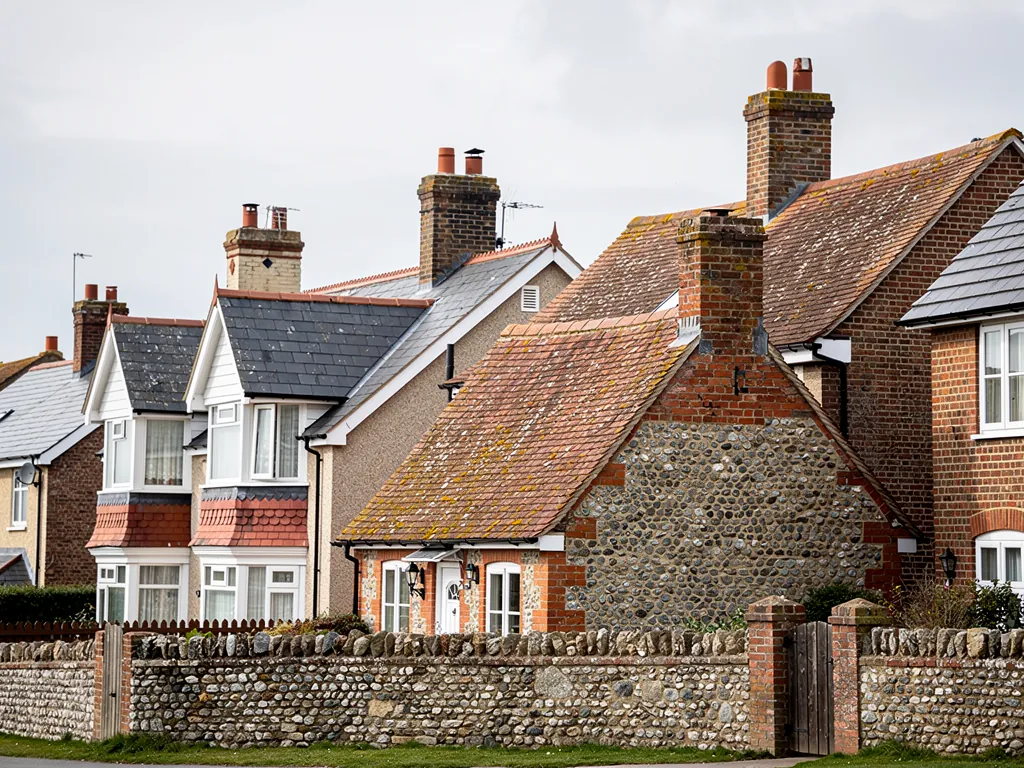
Flemish tile on North Street
The town's earliest roofing tiles came from Holland through its port, and North Cottage on North Street, listed Grade II, is the council's example of a survivor. Old tile like that is lifted, sorted and reused where it can be.
-
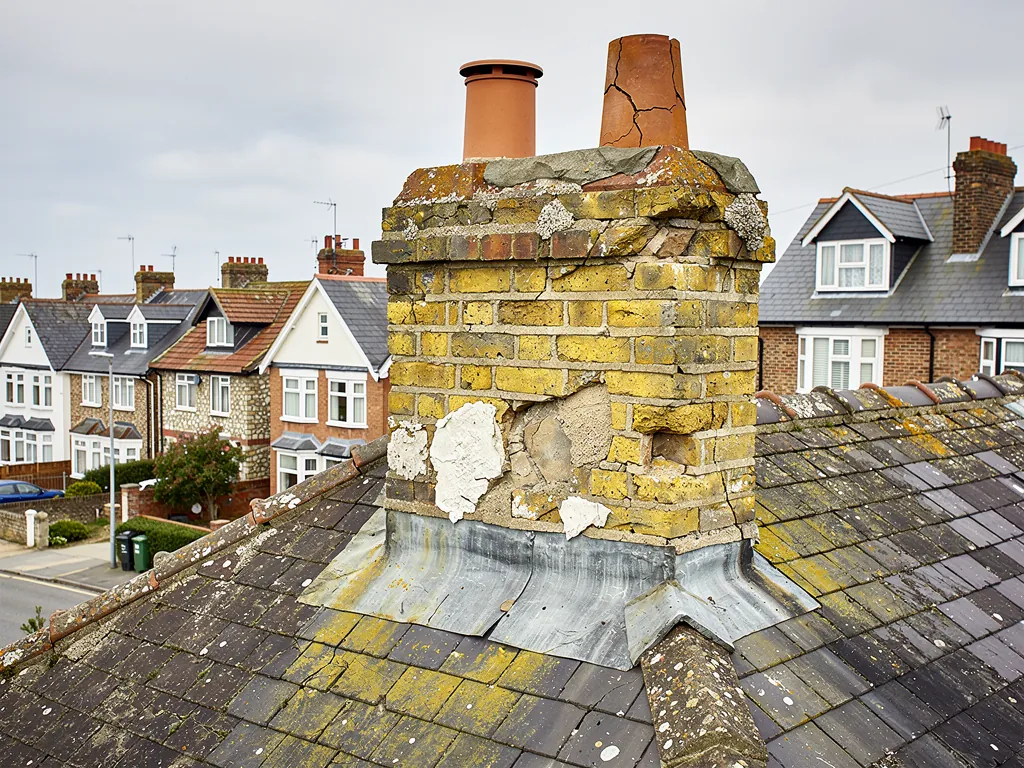
Welsh slate beside the railway
Slate roofs became common near the railway, because slate came by train from Wales, and many buildings still keep their original slate. Slipped slates, tired fixings and worn lead at the stacks are the faults we check first on them.
-
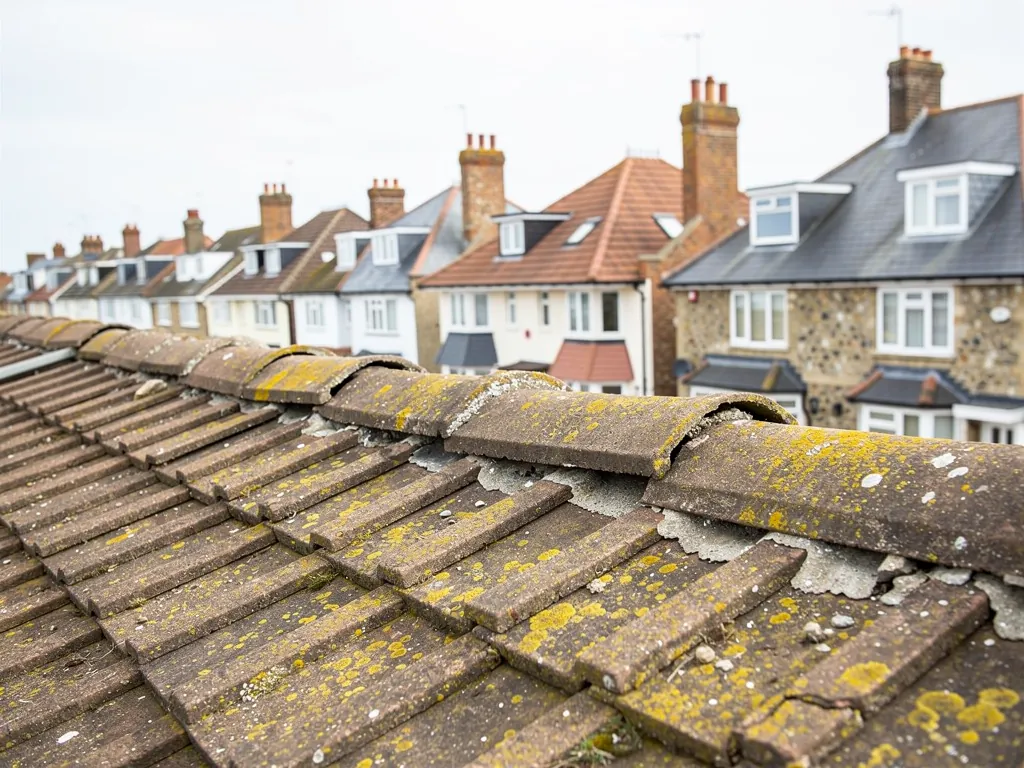
Concrete tiles across the old town
The council's appraisal says interlocking Redland 49 concrete tiles are now the most typical covering across the conservation area. Their weak points are the ridge, hips and verges, which need mechanical fixing as well as mortar.
Map of Shoreham-by-Sea, 23.5 road miles east of Bognor Regis, with the nearest towns we also cover.
Shoreham's old core and its two directions
- Council
- Adur District Council
- County
- West Sussex County Council
- Conservation area
- Shoreham-by-Sea Conservation Area, first designated in May 1971 and extended in 1993
- Article 4
- Church Street directions on roof slopes and chimneys; Old Shoreham direction in force 20 January 2023
- Listed landmark
- Church of St Mary de Haura, Grade I
- Distance
- 23.5 road miles east of Bognor Regis, about 38 minutes by car
Shoreham notes
Church Street tile to Old Shoreham's direction
Three layers of a harbour town on the Adur, and how each one shapes the work on a roof.
Chapter 1: Church Street, St Mary de Haura and old tile2684
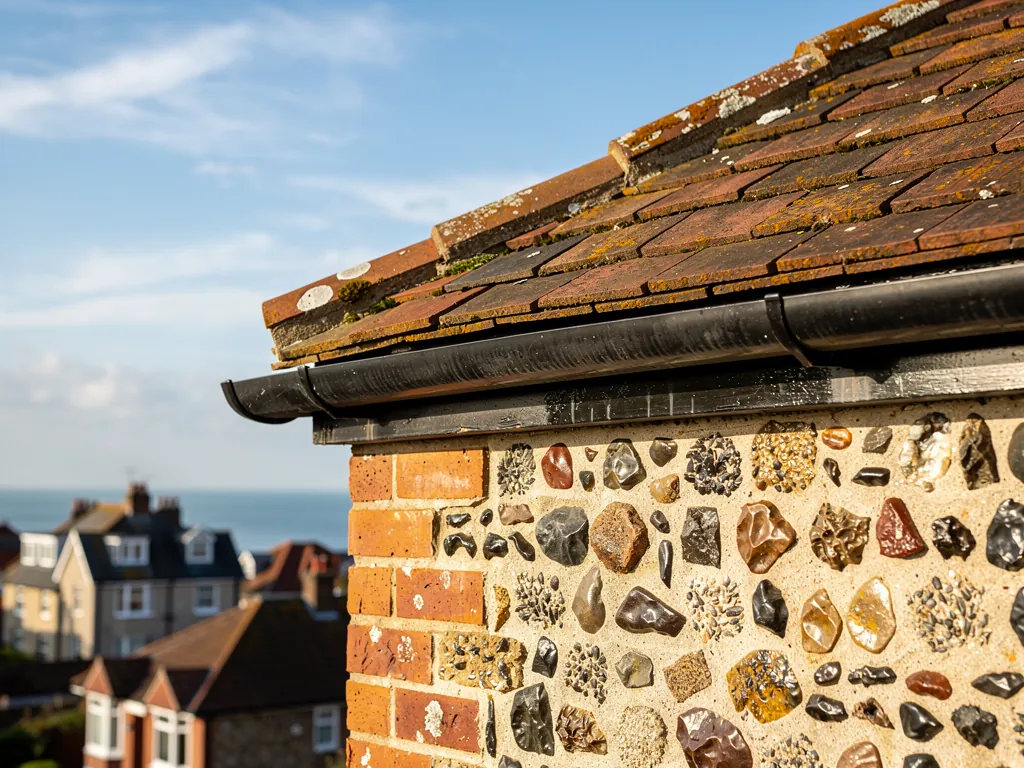
Sheet 01 / 03The old town of Shoreham-by-Sea grew around the church of St Mary de Haura, built in the decade around 1103 and listed Grade I. Adur District Council's character appraisal says the Shoreham-by-Sea Conservation Area was originally designated in May 1971 and extended in 1993. It describes cobblestones, pebbles and flint with brick quoins in the earlier buildings, painted render or stucco on the terraces, and clay tile, Welsh slate and later concrete tiles on the roofs. That mix on a single street is the first thing to grasp before anyone prices a repair, because a patch in the wrong material shows from the pavement and, inside a conservation area, can become a matter for the council.
Before work near Church Street
- Ask Adur's planning team
- Check the Article 4 area
- Look up any list entry
- Keep sound old tile
1.1 Flemish tiles and the oldest roofs
The appraisal says the earliest roofing tiles in the town were Flemish tiles brought from Holland through the port, and it names North Cottage on North Street, listed Grade II, as an excellent survivor. A roof like that is a poor candidate for a standard replacement. Handmade clay varies in thickness and curve, so a gap left by a missing tile is rarely filled by a modern one without a visible difference. The sensible job is to lift, sort and reuse what is sound and renew only the cracked pieces. Where a stack or a wall meets the slope, a lead flashing is tucked into the mortar joint and folded down over the tiles to carry water away. Our chimney repairs page shows how that junction is rebuilt.
1.2 Church Street and its Article 4 direction
The appraisal calls Church Street the most intact street for original roof coverings in the conservation area, and it carries an Article 4 direction. Householders have national allowances, called permitted development rights, for certain jobs without applying to the council; a direction takes some of those allowances away for a defined area. This one removes the rights for alterations to roof slopes and for erecting, altering or removing a chimney, where the work fronts a highway, waterway or open space. A repair that leaves the roof looking as it did is a different matter from changing the slope or the covering on a frontage. Ask Adur District Council's planning team what applies to your address before you order a single tile.
1.3 Reading an old roof before touching it
On a roof this old we climb up and look at the battens (the narrow timber strips under the covering that carry every tile), the nails, the ridge and the lead where it meets the walls. Every fault gets a photograph, taken so you can follow the reasoning on your own roof: repair, patch or replace, and why. Where a patch is enough, we tell you that and stop there.
Chapter 2: Welsh slate, railway lines and Redland 492501
Sheet 02 / 03Beyond the old core, Shoreham's roofs show how materials travelled. The appraisal says slate roofs became common in the areas near the railway, because slate could be brought by train from Wales, and many buildings still keep their original slate roofs. Natural slate is a durable covering on a pitched roof, and CORC puts well-maintained slate at 100 years or more. That is a general figure, not a forecast for one house. The part that fails first tends to be the fixing behind the slate, or the lead around it, and rarely the slate itself. Slate can also crack with age, so a roofer looks for hairline splits as well as for slides.
Two covering types, two repair habits
Welsh slate
Refix single slates with tingles; relay the slope if the nails have failed throughout.
Interlocking concrete
Swap cracked tiles singly; refix the ridge, hips and verges mechanically.
2.1 When a slate slips
Each slate hangs on nails, and once the nails weaken the slate slides down the slope. One slipped slate is held in place by a tingle, a thin metal clip hidden under the course above, which grips the lower edge and leaves the neighbours untouched. When slipping spreads across a whole slope, patching becomes a yearly chore. At that point relaying the slope on new fixings, reusing every sound slate, costs less in the long run. Our slate roofing page lays out both routes.
2.2 Redland 49 and the tiles that followed
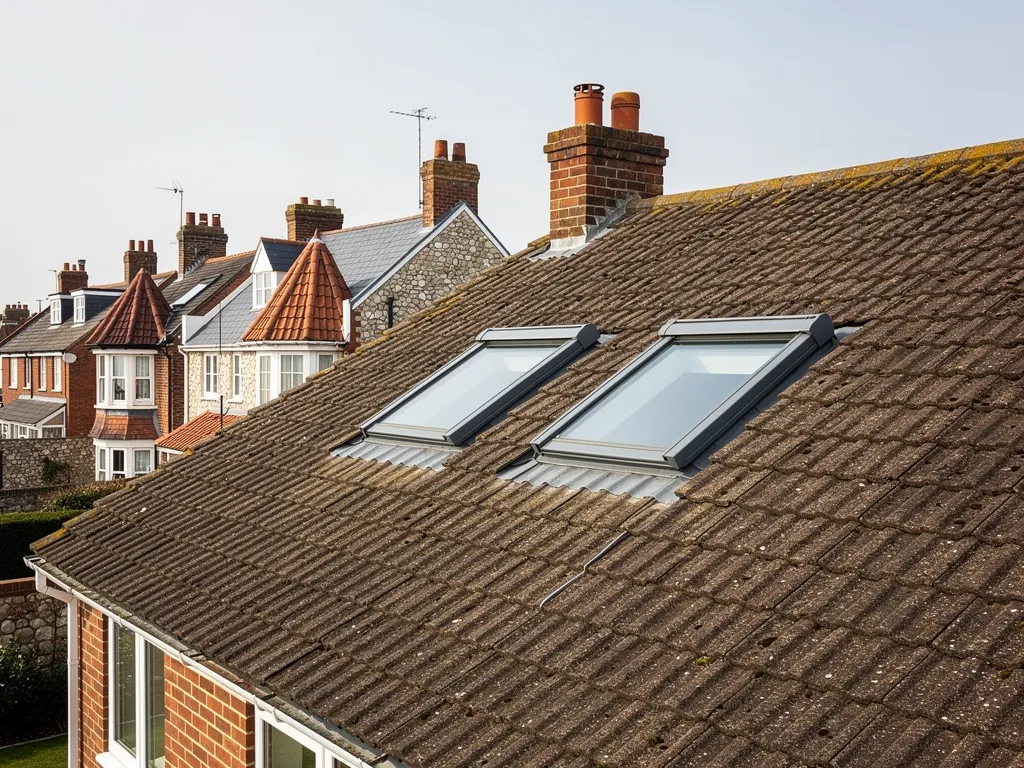
The same appraisal says interlocking concrete tiles, the Redland 49 pattern, are now the most typical roof covering across the conservation area. Marley gives concrete tile a typical life of around 60 years and says plainly that this is no guarantee. Tiles lock into one another, so a cracked tile can be swapped without disturbing a wide area. The trim is where trouble starts: ridge, hips and the verge, which is the finished edge along a gable end. Since BS 5534 was revised in 2014, the ridge and hip tiles need a screw or clip in addition to their mortar bed. An older ridge held by mortar alone deserves refixing before a winter gale tests it.
2.3 Why a lookalike tile is not a safe swap
Concrete tile patterns carry different minimum pitches. Marley lists them from 12.5 degrees for one pattern to 25 degrees for another, so a tile that looks right from the pavement can still be wrong for the slope. A substitute should be checked against the maker's data sheet before anyone agrees to it, and we do that at the survey, measuring the pitch on site instead of guessing it from the ground.
Chapter 3: Shipyard heritage, the Adur and Old Shoreham2684
Sheet 03 / 03Shoreham looks outward as much as inward. In the early 17th century it became the chief centre in Sussex for shipbuilding, according to the Victoria County History, and the town still sits on the River Adur with the harbour to the south and the river to the west. A roof beside the harbour or the river takes the sea weather directly, from gales and driving rain to the salt in the air close to the shore. Instead of guessing, we read what the weather has already done: lifted ridge tiles, loose verge edges, tired flashings, gutters that have lost their slope.
How a Shoreham survey runs
- 1Check the areaWe look up whether your address sits inside either conservation area or direction.
- 2Photograph the faultsRidge, verge, lead and slipped tiles are shown to you on your own roof.
- 3Give the verdictWe explain whether the roof needs mending, patching or replacing, with reasons.
- 4Send the quoteYour price arrives in writing as a single total.
3.1 Old Shoreham and the 2023 direction
Upriver, Old Shoreham has its own conservation area and its own Article 4 direction, in force from 20 January 2023. Where work fronts a highway or public right of way, it withdraws the allowances for other alterations to a house roof, covering roof coverings, rooflights and solar panels. Chimneys, flues and soil and vent pipes are caught wherever they stand, road frontage or not. That is a wide direction, and it catches more jobs than most owners expect. Replacing a covering with a different one, adding a rooflight or putting panels on a front slope all mean talking to the council first. Our skylight planning permission guide covers the roof window side.
3.2 Shoreham Airport and other listed buildings
Founded in 1910, Shoreham Airport is the oldest airport in the UK, and its terminal building is listed grade II*. The council's appraisal for Old Shoreham records both facts. Protected buildings in Shoreham are not confined to the old core, and each has its own entry on the national list. For a listed house or outbuilding, anything beyond a repair in matching materials may need listed building consent, and we look the entry up before pricing, because the grade tells us how much freedom the roof allows. Mending in matching tile or slate sits very differently from swapping a covering.
3.3 Flat roofs and their fall
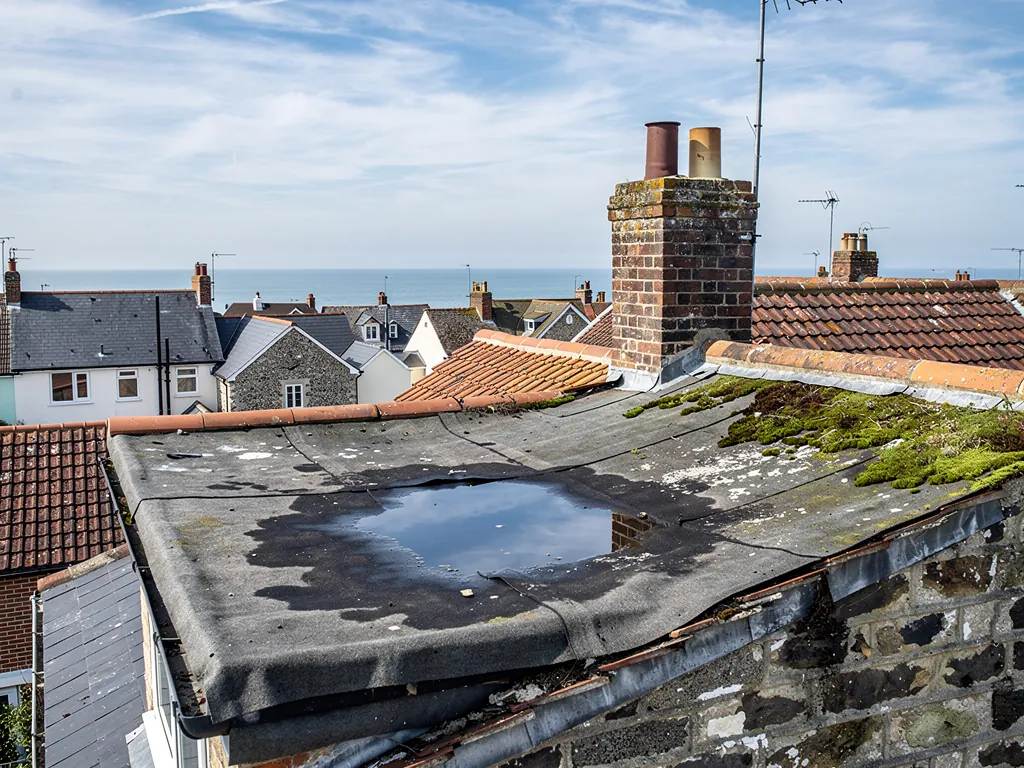
Any flat roof, whether on an extension, a garage or a commercial unit, lives or dies by its fall. BS 6229:2025, which replaced the 2018 edition in December 2025, sets a minimum finished fall of 1:80, and a designer aims steeper, around 1:40, so the surface drains after settlement. Pools that linger a day after rain are the warning sign, and so is a membrane that has started to blister or split at the edges. Our flat roofing hub explains when a repair is worth doing and when the covering has had its day.
Our roofing work in Shoreham-by-Sea
Frequently asked questions
Shoreham questions, from North Street to the Adur
Can the old Flemish-style clay tiles near St Mary de Haura be reused when a roof is repaired?
Often, yes. Handmade clay that is sound can be lifted, sorted and relaid, and only the cracked or frost-split pieces need a match. We photograph the sorted tiles so you can see which are staying. On a listed cottage such as North Cottage, the list entry is the first thing we open, and the conservation officer may want to see the plan before any covering is changed.
Does the Church Street Article 4 direction stop me replacing a chimney stack?
It withdraws the permitted development rights for erecting, altering or removing a chimney where the work fronts a highway, waterway or open space, so a planning application may be needed. Mending a stack as it stands differs from altering it. Adur District Council's planning team can say which side of the line your plan falls on, because the boundary depends on your address.
Can I put solar panels on the front slope of an Old Shoreham house?
The 2023 direction for Old Shoreham withdraws the allowance for roof coverings, rooflights and solar panels where the work fronts a highway or public right of way. That points to a planning application, not a quick installation. A rear slope may be treated differently, so put your own house to Adur District Council's planning team before ordering panels.
Is a slipped Welsh slate beside the railway a repair or a sign the whole slope is going?
One or two slipped slates with sound neighbours is a repair. If slates keep dropping across the slope, the nails have usually failed, and relaying with the good slates reused is the better job. We photograph the underside and the fixings, so the price you receive, as one written total, reflects what is actually there, and nothing is guessed from the pavement.
Nearby areas
Get a quote
Tell us about your roof
Describe what's happening and we'll call you back.
Loading the enquiry form. You can also call 01243 252373.