
Roofers in Southsea
Owen's terraces, villas, Solent-facing roofs
Southsea's roofs sit in four conservation areas, from the terraces and villas Thomas Ellis Owen began in the 1830s to a seafront that is almost entirely open space.

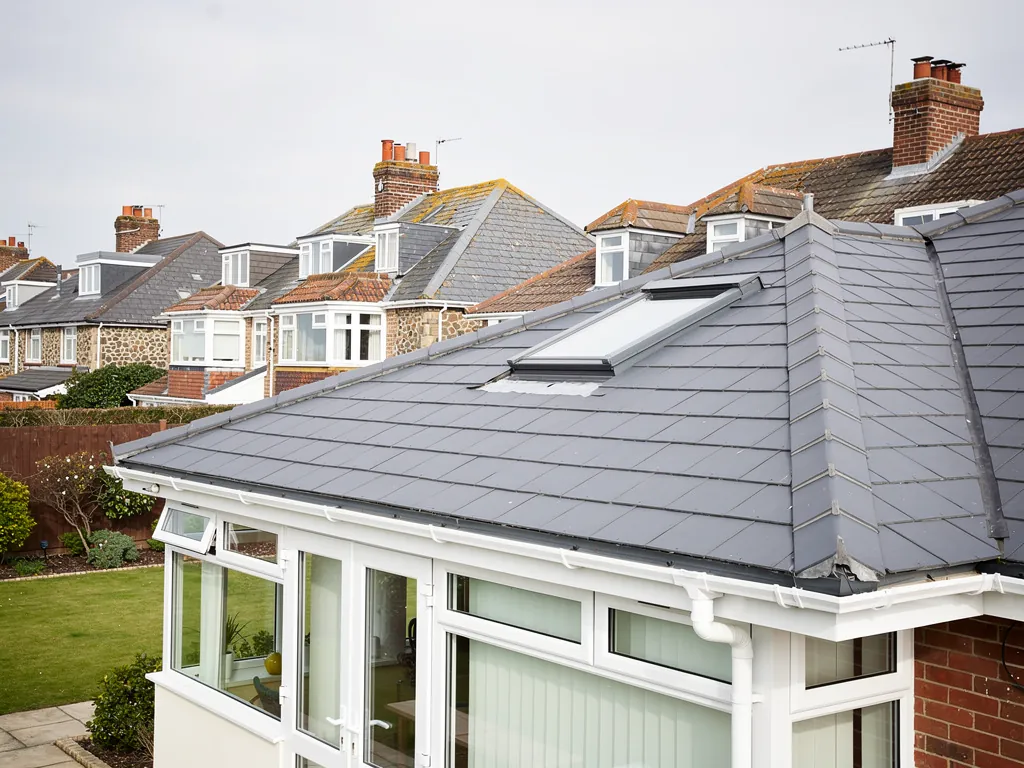
Southsea roofs
From Owen's terraces to the Solent front
-
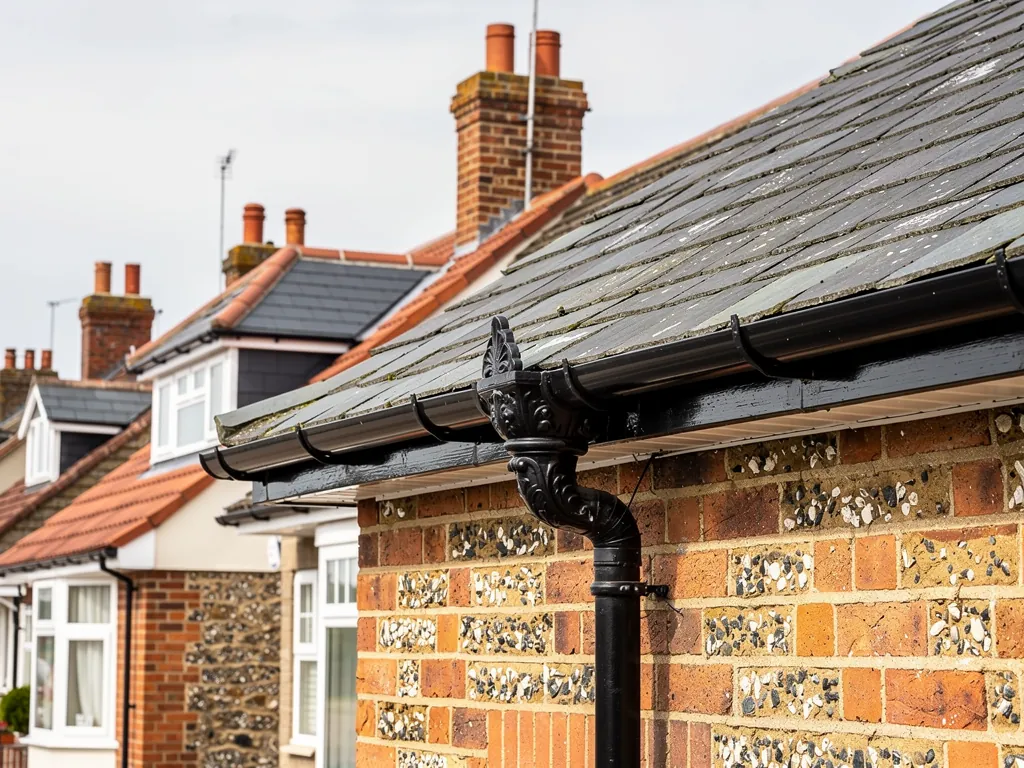
Owen's terraces and villas
Owen's Southsea covers terraces and villas around the Southsea shopping centre, developed from the 1830s by Thomas Ellis Owen and others. Chimney stacks and the slope facing the street are what passers-by see first.
-
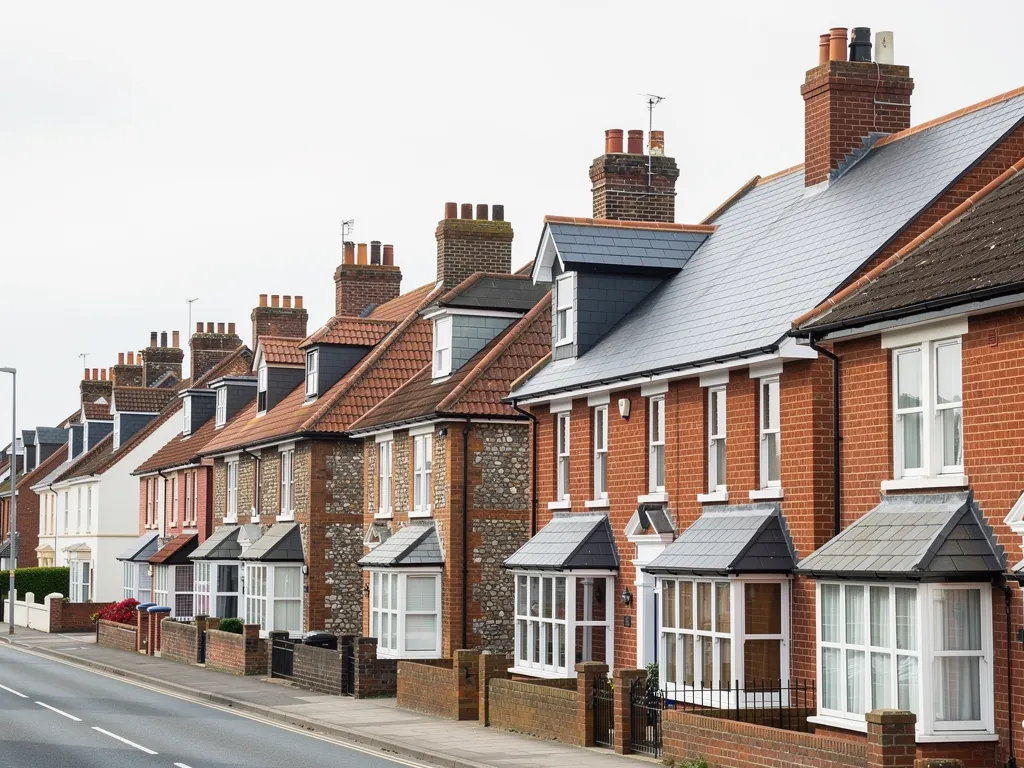
Streets with their own rules
Several streets in Owen's Southsea, among them Sussex Road and Stanley Street, sit under Article 4(2) directions, and the Castle Road direction of 1998 adds more. Check your own street before you plan roof work.
-
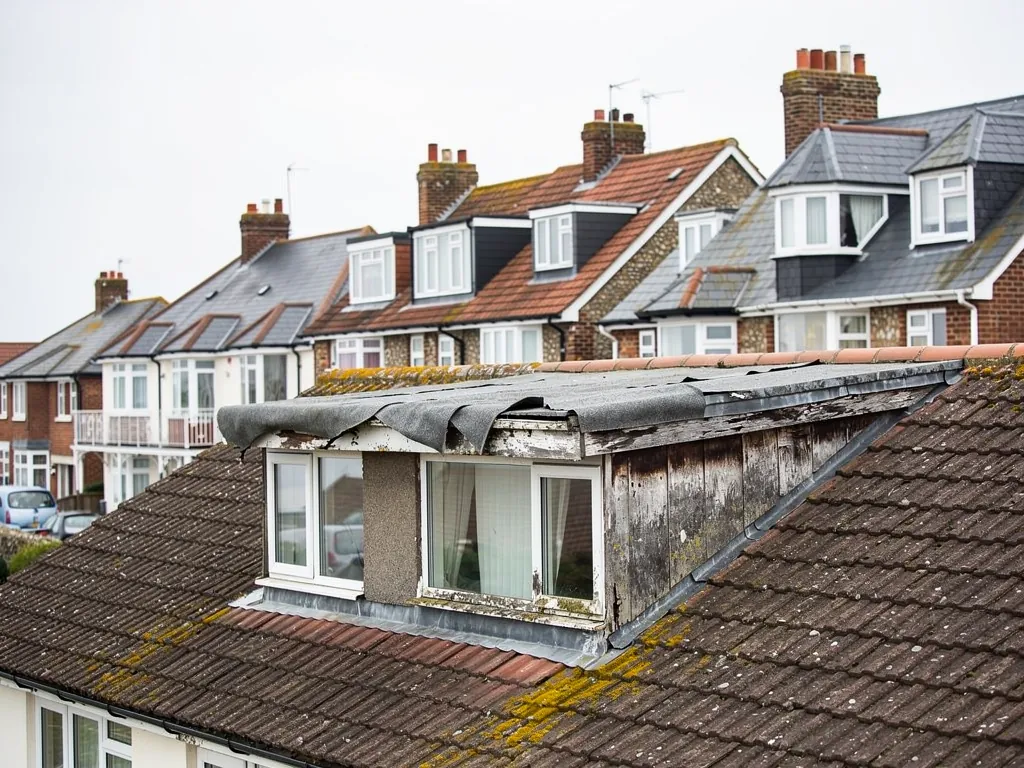
The seafront and St Jude
The Seafront conservation area takes in some seafront-facing buildings but is almost entirely open space, and the largest in the city. The Church of St Jude is listed Grade II.
Map of Southsea, 25.1 road miles west of Bognor Regis, with the nearest towns we also cover.
Southsea's four conservation areas
- Council
- Portsmouth City Council
- County
- Hampshire
- Conservation areas
- Owen's Southsea (CA2), The Seafront (CA10), Castle Road (CA12) and East Southsea (CA19)
- Article 4
- Article 4(2) directions in CA2 and CA12 cover chimney stacks and roof cladding on the street-facing elevation
- Listed landmark
- Church of St Jude, Grade II
- Distance
- 25.1 road miles west of Bognor Regis, about 36 minutes by car
Southsea notes
Terraces, Article 4 streets and the sea front
Three things that decide a roof job in Southsea: the street you are on, the stack above it and the sea beyond.
Chapter 1: Owen's Southsea: terraces, villas and their stacks3050
Sheet 01 / 03Portsmouth City Council describes Owen's Southsea as the terraces and villas that surround the Southsea shopping centre, developed from the 1830s by Thomas Ellis Owen and others. The words "and others" matter, because no single hand drew every house, and roofs on neighbouring plots can differ in age, covering and condition. The area carries several Article 4(2) directions, with Freestone Road, Lennox Road North, Stanley Street, Sussex Road and Sussex Place among the streets named. Anyone living on one of them, or on a street nearby, should read the direction before reading a roofer's estimate, because the wording decides who needs to be asked first.
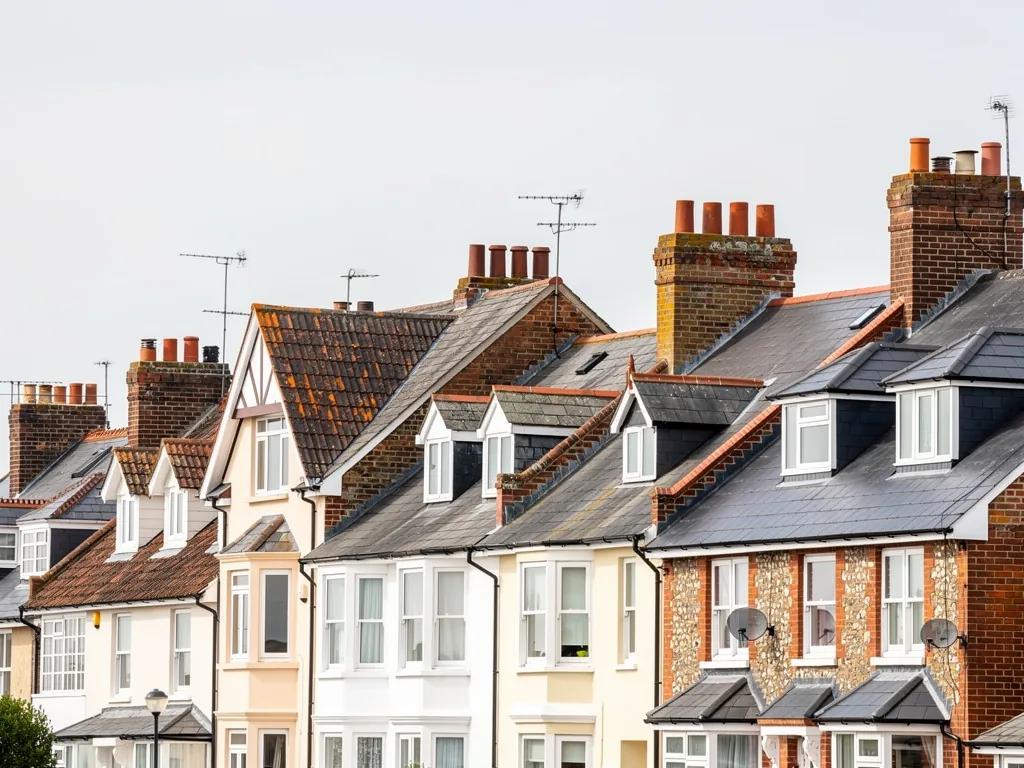
Before roof work on an Owen's terrace
- Find your street's direction
- Photograph the front slope
- Separate repair from alteration
- Ask Portsmouth's planners
1.1 Chimney stacks inside the direction
Directions of this kind in Owen's Southsea and Castle Road bring two things under council control: taking away or altering chimney stacks, and the swapping of the covering on the main roof slope that faces a highway. A terrace is full of stacks, and every one is a fair cause for worry: lead that has lifted, pots that have cracked, joints that have opened to the weather. Mending a stack so that it looks the same afterwards is one question. Taking it down or changing its shape is another, and that second case is the one the direction targets. Before pricing stack work in these streets we photograph the stack and tell you which side of that line the job falls on, so you know whether the council needs a call first. Our chimney repairs page sets out the usual jobs, and our answer on chimney removal and planning covers the rules when a stack is coming down.
1.2 The slope that faces the street
Roof cladding is simply the covering a slope carries, whether slate, tile or something else. A direction that names the street-facing slope puts the front of a terrace or villa under closer watch than the back, and we note in every photograph which elevation we are looking at. A fault at the rear is one conversation and a fault at the front is another. Portsmouth City Council points out that many changes to roofs and chimneys remain permitted development in conservation areas and that special controls called Article 4 Directions have been brought in for some of them. Ask the council which applies to your address, and keep its reply with your papers. A written answer from the planning team is worth having if you later sell, because a buyer's solicitor may ask what consents the roof had.
Chapter 2: The Castle Road direction of 19982013
Sheet 02 / 03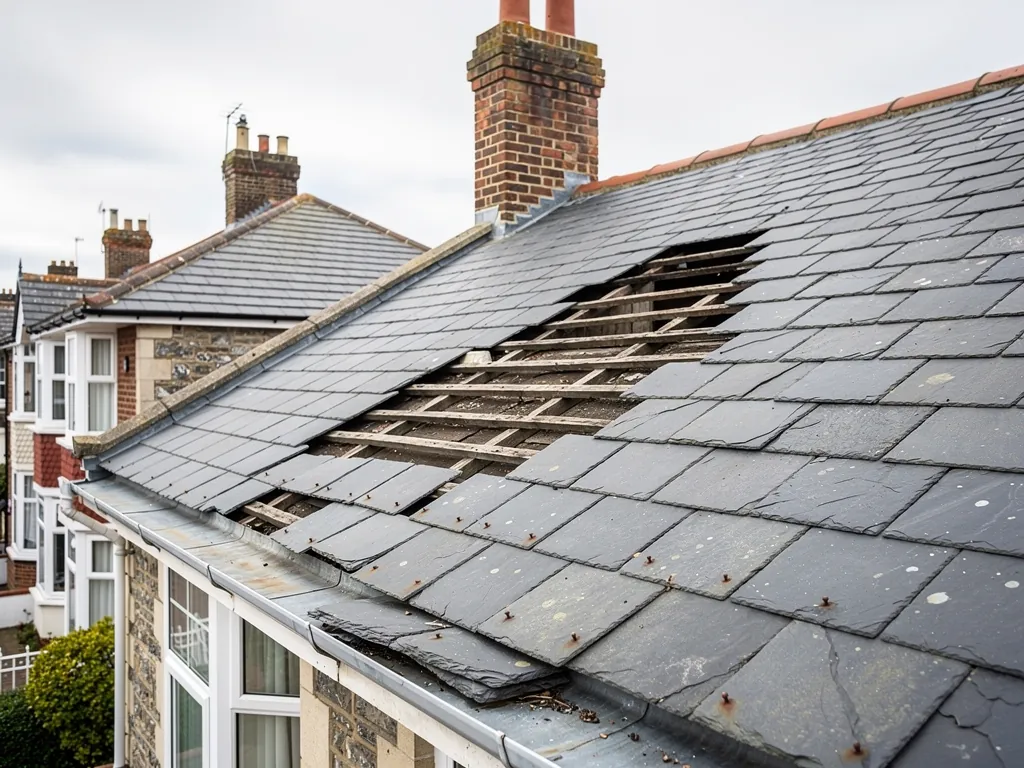
Castle Road conservation area has a direction of its own, made on 3 September 1998 and confirmed on 28 October 1998. It reaches the streets round Castle Road itself, taking in Southsea Terrace, Kent Road, Regent Place and a few lanes between them. If your house is on one of those streets, it affects chimney stacks and the covering of the front slope. An owner who learns that only when a quote lands for work that turns out to need permission faces a wait that asking first would have avoided.
Roof work on a Castle Road street
- 1Check the streetConfirm your address sits inside the 1998 direction before anything else.
- 2Mark the frontIdentify which slope fronts the highway and photograph it.
- 3Scope the jobSeparate watertight repairs from changes that need the council.
- 4Plan the accessAgree where the scaffold stands and who deals with its licence.
2.1 What to settle before you book a roofer
Begin by confirming that your street is covered, then identify which elevation fronts the highway, then decide whether the job is a repair in the same material or a change. Work that keeps a roof watertight can usually be kept apart from work that changes its look, so we scope the first and let the second wait for the council's answer. If the council agrees to a change, the approved material and detail go into the written quote as one total price. If it declines, you still have a roof that has been made sound, and a repair that matches what was there is rarely wasted. Matching matters in a street where every roofline is on show, since a patch in the wrong tone or size stands out for years. The survey photographs come with the quote, which lets you show the planners exactly what is there today.
2.2 Scaffolding on a terrace street
Many Southsea roofs are reached from the footway, and any scaffold standing on the road or footway must have a licence under section 169 of the Highways Act 1980 from the city council as highway authority. The city council does not say who applies, so we ask at the start and confirm the lead time. Terraces complicate the practical side, since a long row of houses means parked cars, bin days and narrow pavements. At the survey we plan the access and tell you what needs to move and when, down to the car that has to be parked elsewhere for a few days. Our roof repairs page shows how we size up a small job, and some repairs, such as a handful of slipped tiles or a loose cap, can be done from a roof ladder without scaffolding at all.
Chapter 3: Solent weather, St Jude's and the flat roofs2684
Sheet 03 / 03Southsea faces the Solent, and the Seafront conservation area, the largest in the city, is almost entirely open space with a few seafront-facing buildings. East Southsea has a conservation area of its own. By 1908 Southsea formed practically one town with Portsmouth, Portsea, Landport, Milton and Eastney, so the roofs here come from more eras than a suburb built in one go, and a single street can hold several coverings, with flat-roofed extensions tucked behind. Near the sea the weather is a matter of gales and driving rain with salt on the wind, and the roofs that feel it first are those with the least shelter.
Two Southsea flat roofs
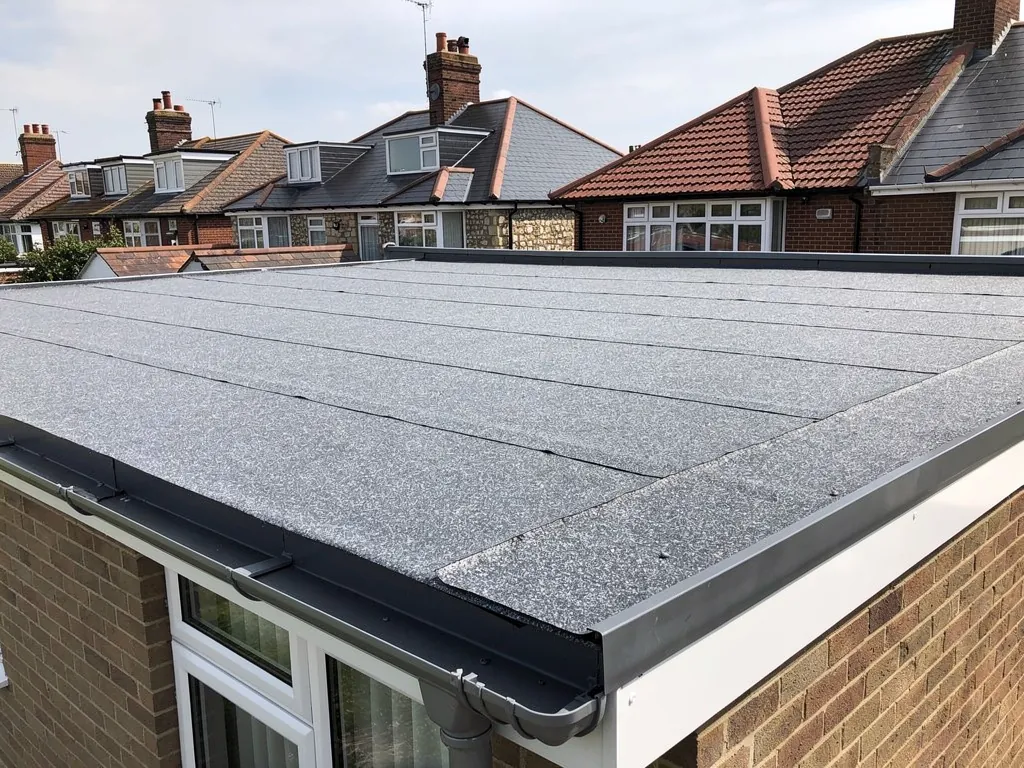
Extension roof
Small, easily reached, and usually repaired or recovered in a day or two.
Block of flats
Larger, shared and often exposed; falls, edges and outlets get checked first.
3.1 Flat roofs on blocks and extensions
Flat roofs turn up on extensions, bay tops and blocks of flats along a seafront. Their success rests on the falls, which means the slight incline that sends water towards an outlet, and on how well the edges are finished. When we lift a corner of the covering we look at the deck beneath: if it is sound and only the surface has worn, recovering may be all that is needed, while soft boards come up too. The upstand, the short upturn of covering where a flat roof butts up against a wall or door frame, is a frequent way in for water, and a pool of standing water in one corner tells you where the next leak will come from. BS 6229:2025 sets a minimum finished fall of 1:80, and the design aims for more than that so the finished surface keeps draining. Edges and trims are where trouble starts near the sea. After repeated patching, replacing the deck and covering to a proper fall is often the sounder move. Flats also sit differently in planning law, because a building containing flats does not count as a dwellinghouse for permitted development, so ask the council before assuming a householder right. Our flat roofing page describes the coverings we lay and when we would repair instead.
3.2 St Jude's and the consent question
The Church of St Jude is listed Grade II. Which consent route a church roof follows turns on its denomination and on current worship use, so the first step is to ask whoever looks after it. A neighbouring house, listed or not, follows the usual rules of its own: planning where it applies, listed building consent for a listed house, and building control where the work is notifiable. We say which at the survey, and we write it down so the answer stays with the quote. After a gale lifts tiles or opens a flat roof, the order is simple: stay clear, let your insurer hear first, take photographs, and hold on to the receipts for anything done as a stopgap. We deal with a leak before anything bigger.
Roof work we do across Owen's Southsea and beyond
Frequently asked questions
Questions from Castle Road to the Solent
Can I take down or rebuild the chimney stack on my Owen's Southsea terrace?
Ask Portsmouth City Council first. Article 4(2) directions in Owen's Southsea put council control over taking down or altering chimney stacks. Mending a stack so that it stays as it is, with new lead or repointing, is a different job from taking it down. We photograph the stack, say which kind of job you have, and the written quote you receive is one total price.
Does the Castle Road direction mean I need permission to re-tile my front slope?
It can, if your street is inside it. The 1998 direction covers the covering on the slope facing the highway, and it applies to Castle Road, Southsea Terrace, Kent Road and the streets around them. Ask Portsmouth City Council before you book. We can scope the watertight repairs on their own so the roof stays dry while you wait for an answer.
Is a flat roof on a seafront Southsea block built differently from an inland one?
The build is much the same. By the sea a roof takes sea weather head on, so edge trims, cappings and outlets deserve a closer look. The covering must also drain, and BS 6229:2025 sets a minimum finished fall of 1:80. We check the deck, the falls and the upstands, then give you our verdict with photographs.
A gale has lifted tiles on my Southsea house. What should I do first?
Stay clear of the damage and let your insurer know before any repair goes ahead. Which? advises keeping the receipts for emergency repairs you arrange yourself, and photographs help a claim. A leak is made safe first, then we explain whether the fault is a few tiles, a ridge or something bigger, and what a lasting repair involves. Nothing is promised about what an insurer will pay.
Nearby areas
Get a quote
Tell us about your roof
Describe what's happening and we'll call you back.
Loading the enquiry form. You can also call 01243 252373.