
Roofers in Tangmere
Church tile, airfield housing, large flat roofs
Tangmere's roofs run from the tiled flint church of St Andrew to the houses that spread around the old airfield after 1983, with big commercial roofs beside the fields.


Tangmere roofs
From St Andrew's tiles to the old airfield estates
-
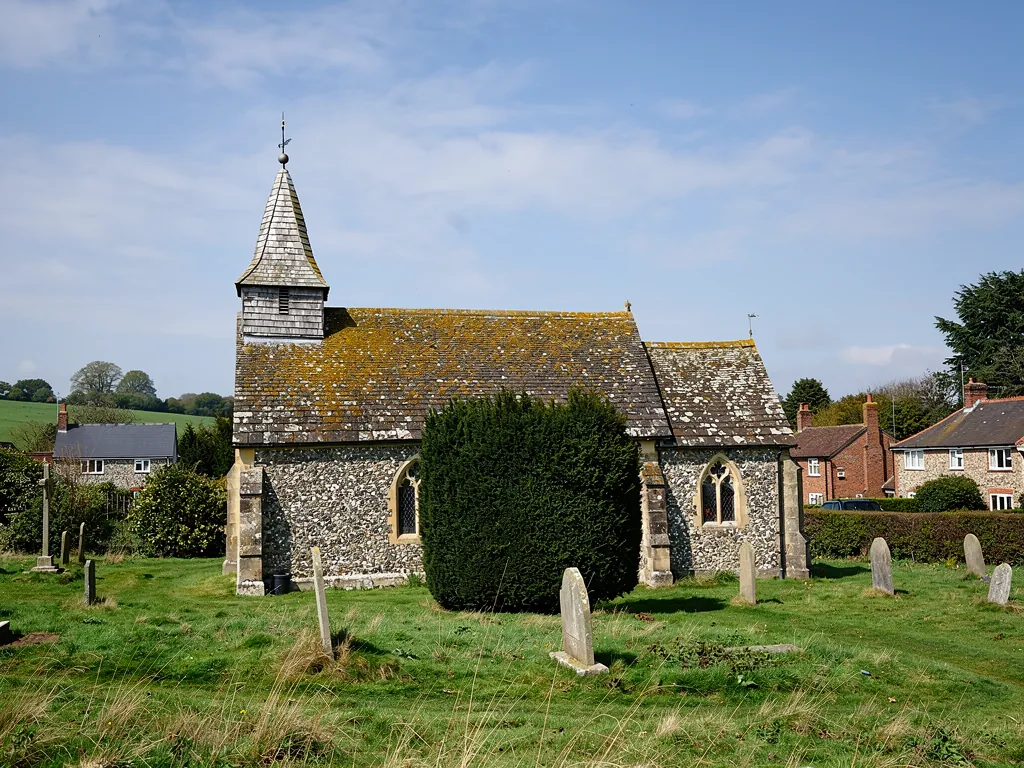
A flint church under tile
St Andrew's is plastered flint rubble with a few reused Roman bricks showing, roofed in tile, with a small timber-clad bell-cote on top. Old walls like these are never quite straight, so lead and mortar work is shaped by hand.
-
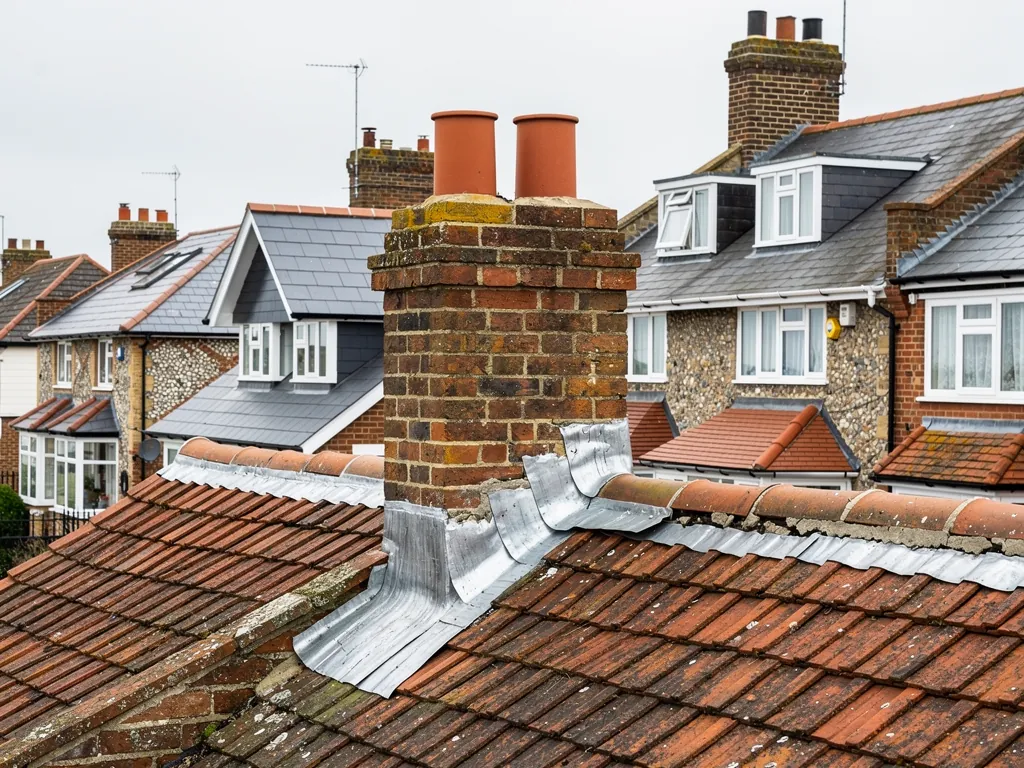
Housing around the old airfield
The derelict airfield buildings stood unused until 1983, when Seawards Properties bought them and housing spread around the airfield. Homes from the first years after that are now around forty years old, so original coverings and fixings are ageing.
-
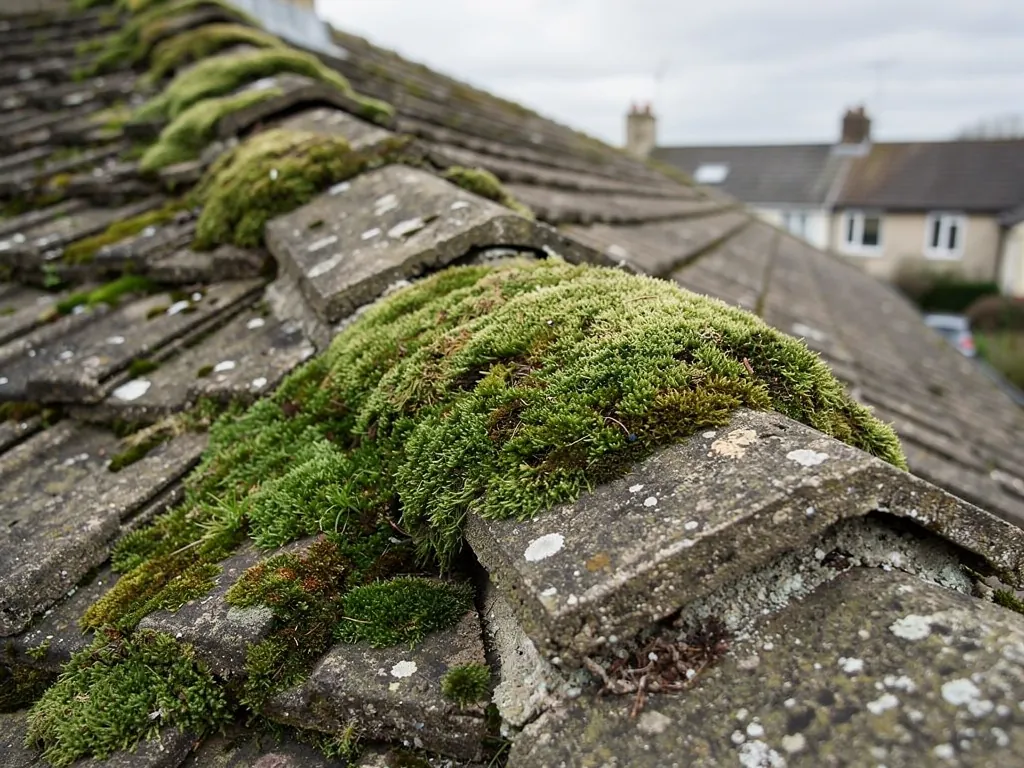
Big roofs for growing crops
Tangmere Airfield Nurseries built large glasshouses on former airfield land to grow peppers and aubergines. Wide-span buildings in this setting often carry a mix of glazing, sheeting and flat sections that need different repairs.
Map of Tangmere, 6.9 road miles north of Bognor Regis, with the nearest towns we also cover.
Fields, a village core and a former airfield
- Council
- Chichester District Council
- County
- West Sussex County Council
- Village designation
- A conservation area is recorded for Tangmere; confirm its boundary with Chichester District Council
- Parish
- 775 acres of light soil, suited to corn and sugar beet
- Airfield
- Royal Air Force Tangmere closed on 16 October 1970
- Distance
- 6.9 road miles north of Bognor Regis, about 14 minutes by car
Tangmere notes
Flint church, airfield estates, wide roofs
Three parts of Tangmere, each built in a different period, and the demands each makes on its roof.
Chapter 1: The flint church and the village core2257
Sheet 01 / 03Tangmere is a small parish of 775 acres of light soil, suitable for corn and sugar beet, and it sits on the coastal plain south of the Chichester to Arundel road. At the heart of the old village is the church of St Andrew, built of flint rubble that has been plastered over, with a few reused Roman bricks still visible in the walls. Its roofs are of tile, and its little bell-cote is clad in timber. Churches like this show how a village was roofed before the days of factory-made tile: the cover is clay, the walls are flint, and the two meet at lead flashings that have to follow an uneven line. A conservation area is recorded for Tangmere, and Chichester District Council can confirm whether its boundary takes in your house.
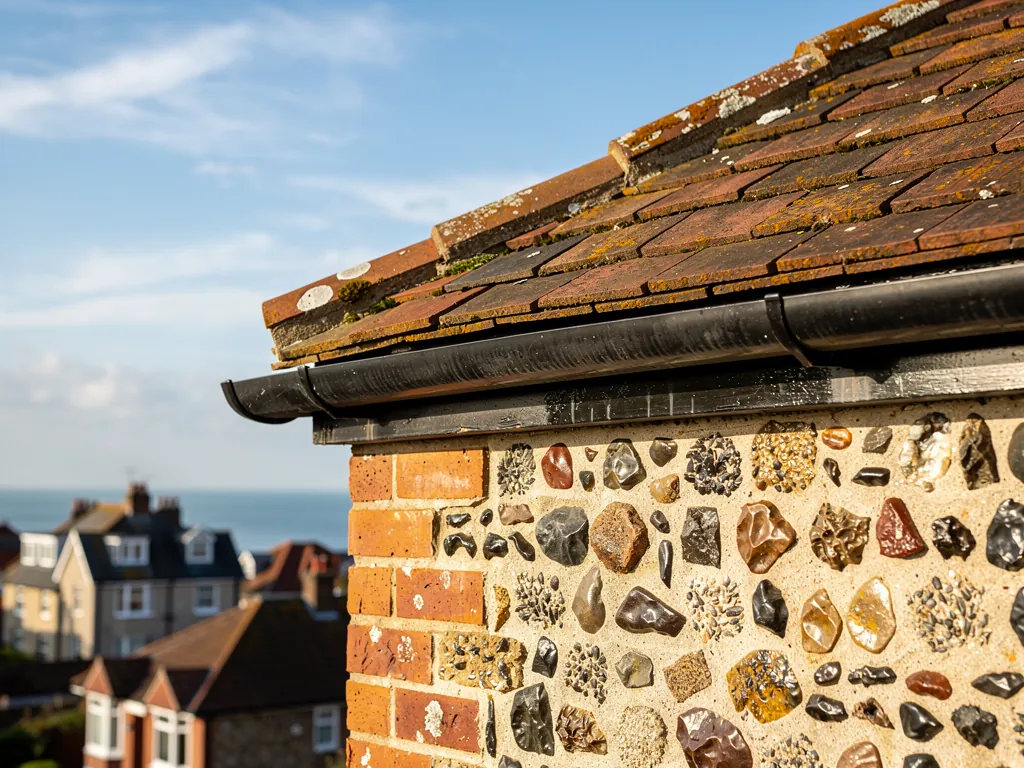
Three calls for a flint-and-tile roof
- Re-dressLead lifted at a flint wall is re-dressed and the joint re-pointed.
- RefixSlipped tiles are put back and the nails behind them checked.
- RelayThe slope is taken back to the rafters and re-covered on new battens with new underlay.
1.1 What a tile roof beside flint needs
Flint is a hard, irregular stone set in lime or cement mortar. Where a tiled roof runs against a flint wall, the top edge of the lead is turned into a mortar joint and wedged with lead wedges. Over the years the joint cracks and the lead lifts, and rain gets behind it. Re-pointing the joint and re-dressing the lead is a small, precise job, usually done from a single scaffold lift or a roof ladder, and it can cure a damp patch that was blamed on the tiles. Clay tiles themselves can last a long time. For clay, Marley passes on the Building Research Establishment's minimum of 60 years, while a building conservation writer cautions that on an old peg-tiled roof that number says little. What fails first is usually the batten nails, so a survey lifts a few tiles and looks underneath. Our roof repairs page explains what a small repair involves.
1.2 Listed buildings and church roofs
Where a house or outbuilding is listed, listed building consent from the council covers any work that would alter its character. A place of worship still in use can sit under the ecclesiastical exemption instead, with its own denomination's approval process in place of that consent, so the church authorities are the people to ask before anything is planned. We read any list entry before we recommend a material, and we check with the district council where there is doubt. A like-for-like repair using the same tile is a very different matter from a change of covering, and we explain which one your roof needs.
Chapter 2: Houses that grew around the airfield2196
Sheet 02 / 03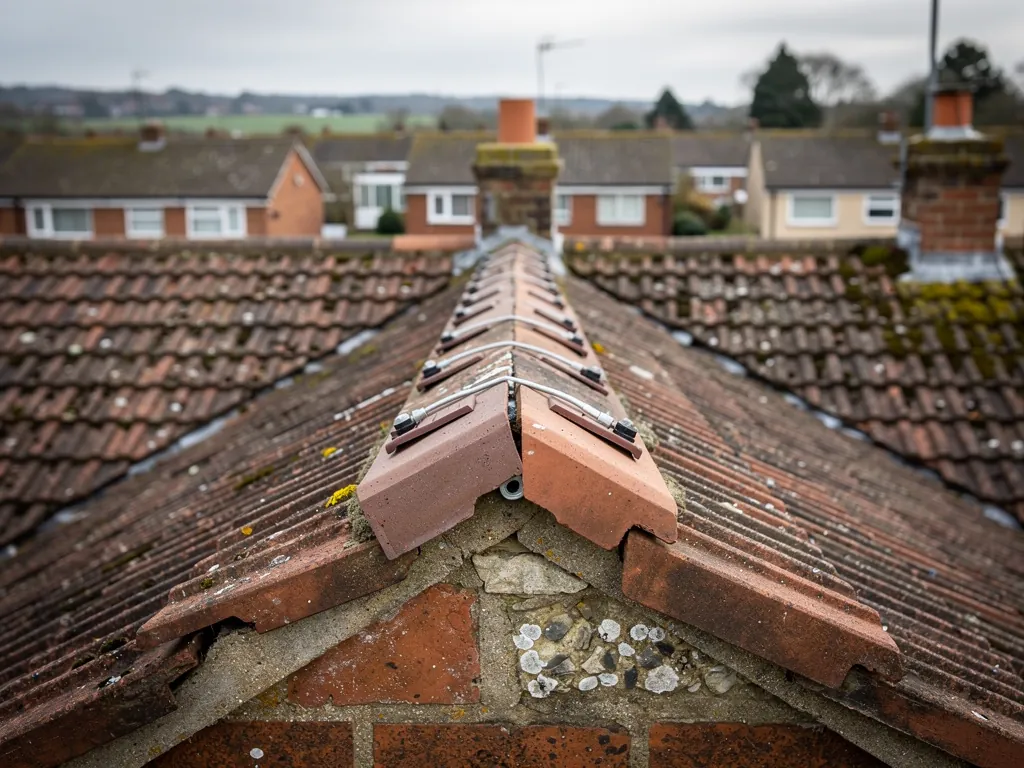
The name Tangmere is tied to flying. The airfield was founded in 1917 as a Royal Flying Corps training aerodrome, and Royal Air Force Tangmere finally closed on 16 October 1970. The derelict airfield buildings then stood unused until 1983, when Seawards Properties Ltd bought them and housing spread around the old airfield. For a roofer, that date is useful. A house from the first years after 1983 is now around forty years old, and the first roofs from that period are reaching the age at which a re-roof starts to be discussed. Marley expects concrete tiles to last around 60 years without promising it, and other guides put the range at 30 to 60 years. Both agree on the point that matters: the tile may be sound, while the fixings, battens and underlay beneath have aged faster.
A forty-year-old roof, two approaches
Repair and monitor
Sound tiles and battens stay, with loose ridge and slipped tiles refixed.
Relay or renew
Battens and underlay have aged, so the covering comes up and goes down again.
2.1 Ridges, hips and verges on estate roofs
An estate roof from the 1980s may well have a ridge and hips bedded in mortar, with verges finished the same way, and the gable ends are where wind finds a loose edge first. Ridge and hip tiles set in mortar alone fall short of BS 5534 as revised in 2014, which asks for mechanical fixings too, so a modern repair adds screws, clips or a dry-fix ridge kit. Dry-fix is a set of mechanical ridge, hip and verge fittings, covered by BS 8612:2018. If a gale has loosened a few ridge tiles on your estate roof, it is worth having the whole length looked at, not just the loose ones. The ridge is the capping line where two slopes meet, and the hips are the rafter lines at the sloping corners. Rebuilding either one properly takes care over the bedding, the clips and the tile joints.
2.2 When a modern roof should be repaired and when replaced
A roof that has lasted forty years may still have plenty of life left, especially if the tiles are in good order and the loft stays dry, or it may have reached the point where each repair invites another. What decides it is the condition of the battens, whether the underlay has perished, and how many tiles are cracked or slipping. Photographs of your own roof come with the quote, and the verdict comes before any price: a small fix, a larger repair or a full replacement. Where the work involves a new covering over more of the roof than the Planning Portal's thresholds allow, Building Regulations approval may apply, and we talk you through it and deal with the notification ourselves. Our pitched roofing page sets out what a full replacement looks like day by day.
Chapter 3: Large roofs on former airfield land2135
Sheet 03 / 03Beside the housing lie the commercial sites, and in a parish of this size a field is never far from a roofline. Tangmere Airfield Nurseries built large glasshouses on former airfield land to grow peppers and aubergines, and the derelict airfield buildings that stood empty until 1983 show how much roof area one site can hold. Large roofs do not behave like house roofs. The pitch is shallow, the sheets are long, and a single leak can travel a long way along a purlin before it drips. The long gutters between spans collect leaf litter and silt, and a blocked valley gutter is behind many a leak in a big building. Glasshouse glazing is a specialist trade of its own, but the sheeted, felted and flat roofs of the buildings around it are the kind of work covered on our commercial roofing page.
Before work on a large old roof
- Identify the sheet material
- Plan safe access boards
- Check falls and ponding
- Confirm who owns the roof
- Agree waste handling
3.1 Asbestos cement on older sheds
The HSE's guidance is blunt: if the structure dates from before 2000, whether built then or refurbished then, treat asbestos as present until someone has checked. If an older shed or outbuilding here is roofed in cement sheet, that advice applies to it. Taking weathered asbestos cement away with care, in whole sheets, is non-licensed work. Once the sheets break up or suffer heavy damage, the job turns into notifiable non-licensed work, and household or farm asbestos waste still needs the proper paperwork, a consignment note. Asbestos cement roofs are also fragile, so nobody should climb onto one without crawling boards, edge protection and a safe plan. If you are unsure what the sheets are, do not drill, cut or break them, and book a survey first. Moss and lichen on cement sheet are no proof either way, and pressure-washing a sheet roof throws fibres into the air, so cleaning is a question to settle at the survey and not on a Saturday morning with a hire machine. A roof that is a mix of old sheet and newer metal profiles needs each part identified separately.
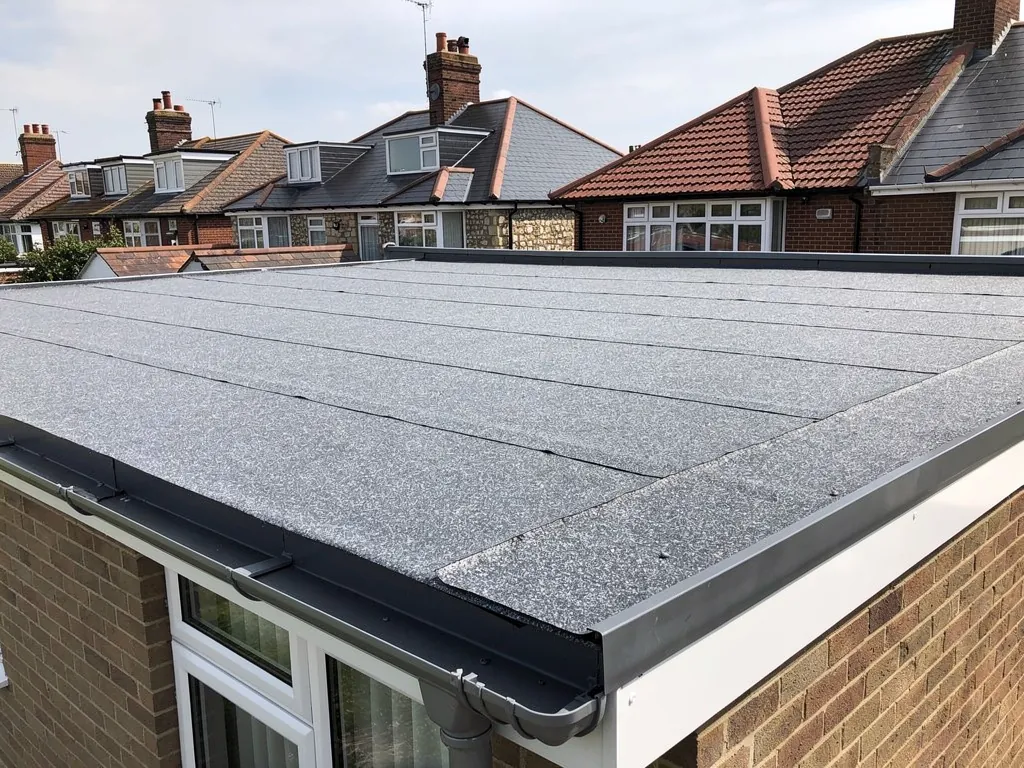
3.2 Flat sections and the question of falls
Flat sections on a large building are laid to a finished fall of at least 1:80 under BS 6229:2025, and designed steeper so that ponding does not set in. Where water sits for days after rain, the covering ages faster and the deck beneath can soften. Chichester District Council handles planning and building control for Tangmere. Where scaffold stands over a public highway, the county council, West Sussex, must license it first, and it asks for a minimum of 10 working days' notice.
Roof jobs we handle in Tangmere
Frequently asked questions
Questions from St Andrew's to the airfield estates
Is a roof on a house begun after the airfield buildings were sold in 1983 due for replacement?
Not automatically. A roof of that age may need nothing more than refixed ridge tiles and a few replacements, or it may have battens and underlay at the end of their life. We lift tiles, photograph the nails and timbers, and tell you what we found before a price is mentioned. A repair that will hold is always the first option we put forward, and a replacement is only recommended when the survey shows the repair would not last.
How do you repair lead where a tile roof meets the flint walls of St Andrew's type buildings?
The lead is lifted, the joint behind it is cleaned and re-pointed, and new lead is turned in and wedged, then dressed down over the tiles. No flint wall runs straight, so each length of lead is shaped to its own wall by hand. That junction is a common starting point for leaks on an old building, so it is checked on every survey.
Can an asbestos cement shed roof near the old airfield land be repaired?
Often it can be, provided the sheets are carefully handled and not broken up. Assume that anything put up before 2000 contains asbestos until a test says otherwise. Weathered sheets that are not otherwise damaged count as non-licensed work, while damaged ones are notifiable, and the waste needs a consignment note. Nobody should walk on the sheets without proper boards.
Does Tangmere's conservation area affect a re-roof on my cottage?
It can. A conservation area is recorded for Tangmere, but the boundary and any extra rules are a matter for Chichester District Council, so please send your address to the planning team before changing the appearance of a roof. A matching covering is rarely a planning matter, whereas a listed home needs consent before its character is touched.
Nearby areas
Get a quote
Tell us about your roof
Describe what's happening and we'll call you back.
Loading the enquiry form. You can also call 01243 252373.