
Roof insurance claims · 9 min read
Making a roof insurance claim: storms, wear and tear and what insurers ask for
How a home insurer separates storm damage from wear and tear, what to do in the first hours after a roof is hurt, and what paperwork from a roofer helps you put your side clearly.
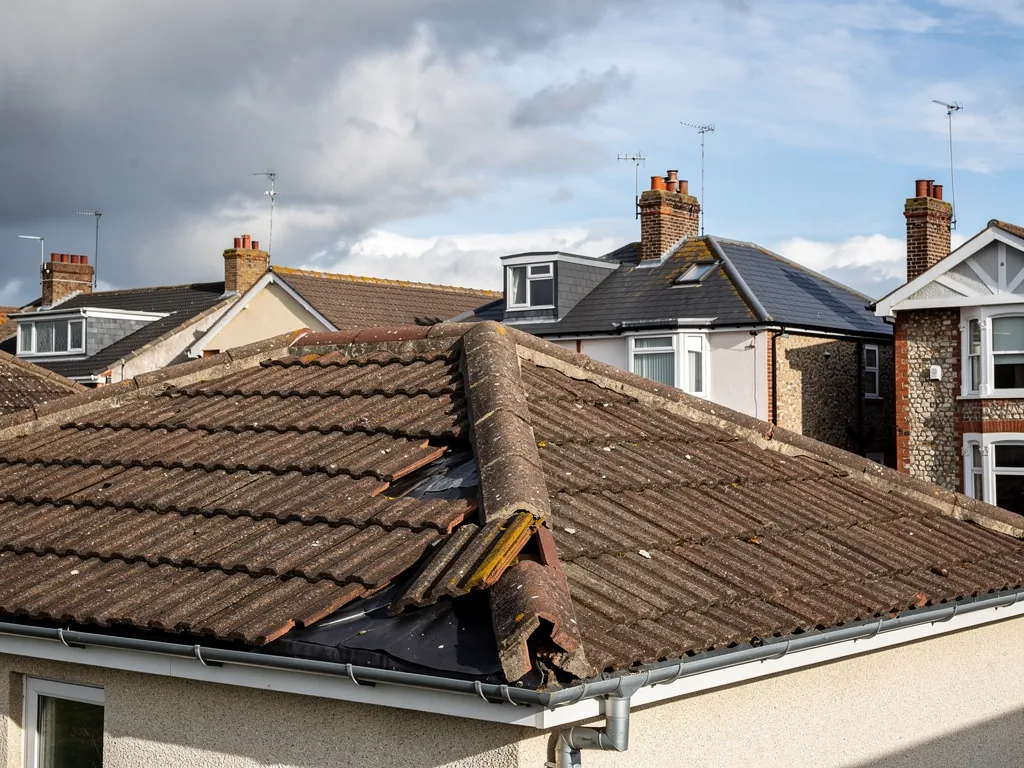
A gale takes a run of ridge tiles off at two in the morning, and by breakfast there is a wet patch spreading across the landing ceiling. Two questions arrive together: how do I stop the water, and will my insurance pay for any of this? The order you do things in can affect the second answer.
This guide covers the sequence that consumer groups and structural engineers recommend: make the home safe, tell the insurer, photograph the damage, arrange a temporary repair if you must, and keep every receipt. It then looks at the line insurers draw between a storm and a roof that was already tired, and what a roofer's paperwork can and cannot do for you.
One point first. The claim is between you and your insurer, and nobody outside that contract can promise how it ends. What a roofer can do is inspect the roof, state clearly what went wrong, and set that down in writing with photographs. The rest of this guide is about making that paperwork useful.
Storm damage and wear and tear: where insurers draw the line
Home insurance is built to pay for sudden events, not for a roof that has slowly given up. Which? offers a clear example of the second kind: rain coming in through a badly kept roof is the sort of fault an insurer may class as wear and tear rather than as damage the policy covers. The same gale can therefore produce two very different outcomes on two roofs.
The numbers show why this matters. Which?, citing Financial Conduct Authority figures, reported that only 32% of storm-related claims made in 2024 resulted in a payout. That figure covers every kind of storm claim, not just roofs, and it tells you nothing about your own, but it is a reason to read the policy wording before you assume anything.
What the evidence of a storm looks like
Fresh damage has a pattern. A run of tiles missing along one edge, a ridge lifted, a chimney pot on the ground or debris from a neighbour's fence in the gutter points to a single event. Slow failure looks different: crumbling slate edges, tiles that have slid one by one as the nails corroded, or a stain that has grown over months. A roofer who can tell the two apart on site, and photograph the evidence, gives you something concrete to show the insurer.
If you are unsure which category your roof falls into, our guide to home insurance and roof repairs sets out how the line is usually drawn, and the guide to nail sickness shows what slow failure looks like up close.
The first steps: safety, then the insurer
Safety comes before paperwork. Keep people out of rooms under a damaged roof, move valuables and switch off the electrics in any room where water is coming through light fittings. Do not climb up to look. A wet slope in a gale is dangerous, and a fall is a worse outcome than any roof.
The Institution of Structural Engineers advises that a building which looks unsafe can be reported to the building control team at your council, and that the insurer should hear about the damage promptly. Which? makes the same point and adds that most insurers provide an emergency line. Ring early, because the insurer may tell you what it wants done before any repair, who to use and what it will accept.
What to say on the first call
Keep it factual. Describe what you saw, when it happened and what you have done to limit the damage. Ask what the insurer needs from you, whether it wants to send an assessor before permanent work, and how it wants receipts presented. Write down the date, who you spoke with and any reference number.
Do not agree a full re-roof with anybody before the insurer has seen the evidence. A good roofer will tell you what is urgent and what can wait, and a doorstep caller who says the whole roof must come off today is not giving you that. For the emergency side, see our guide to storm damage insurance claims.
Photographs, receipts and the damaged parts themselves
The Institution of Structural Engineers puts it bluntly: photographs are vital for a claim because they provide visual evidence of the damage. Take them before anything is moved, and keep taking them as the work goes on. Shoot wide first, so the roof, the street and the house number appear, then close up on each fault. Stay on the ground, or work from inside the loft, rather than going up for a better angle.
Indoors, photograph the stain, the wet insulation, any buckets and the date on a phone screen if you can. Hold on to damaged belongings as well, unless they pose a health risk. Which? gives that advice for household goods, and the same sense applies to a broken tile or a bent length of gutter: it shows how the damage happened and may be needed if the insurer wants to inspect.
Temporary repairs and receipts
Where you must book an emergency repair yourself, Which? tells you to inform the insurer and hold on to the receipts, and the receipts count towards what you claim. The Institution of Structural Engineers lists urgent repairs such as temporary coverings to prevent water coming in among the things to report. A tarpaulin properly battened, or a temporary weather-tight cover over exposed boards, is what that means in practice.
A temporary repair is not a permanent one, and the insurer needs to know the difference. Our guide to temporary roof repairs explains what we do to make a leaking roof safe first, and how the follow-up repair is planned.
What an insurer may ask a roofer to supply
Insurers commonly want to understand what went wrong, what it will take to put right and whether the damage was caused by a specific event. A roofer's paperwork can answer those questions without taking sides in the claim. The useful pieces are survey photographs of the faults, a plain description of what you can see and a written quote.
Our survey photographs come with the quote, and the quote is written with one total price. You pass them to your insurer yourself, and the claim stays between the two of you. Our verdict names one of three routes for the roof, and we suggest only the work that cures the fault, which is often the most useful thing an assessor can read.
When a separate report helps
Sometimes a written condition report is worth having, especially where the cause is disputed. Checkatrade, in a table updated September 2026, puts a roof inspection at about £260 and a drone survey near £210, plus VAT. Ask whether the insurer is willing to meet any part of that, and get the answer before you book. Our guide to a roof inspection for an insurance claim explains what such a report contains.
Check VAT and scaffolding on any quote
When you send a quote to an insurer, check that it says whether VAT is included and whether scaffolding is part of the price. The standard rate of VAT is 20%, and a quote that omits either leaves a gap you may have to fill yourself. Ask each roofer the same questions, and compare the totals on that basis.
Choosing what to repair and what to replace
A claim rarely settles the bigger question about the roof itself. If your roof is well into the later years of its useful life, a storm may expose the problem rather than cause it, and the insurer will look at the age and condition of what was damaged. Typical lifespans are a guide only. Marley's figure for concrete tiles is about 60 years, which it stresses is no warranty, and CORC describes well-kept slate as lasting 100 years and more.
That matters in two directions. A young roof with storm damage is usually a repair job. An old roof with the same damage might be a repair that holds for a few winters, or the moment to plan a replacement. Our plain verdict covers both possibilities, with photographs showing the sound areas as well as the faults.
Questions to put to the insurer
Ask what your excess is, whether it pays for the repair or reimburses you afterwards, and how the insurer treats work beyond the damaged area. Ask whether a repair using matching tiles is expected, since matching can be hard on older roofs. Ask whether the insurer will accept your own roofer's quote or wants a second price.
None of these questions are tricks. They help you plan the order of work and the money, and they avoid surprises when the final payment arrives. If a repair cannot wait, say so on the first call and keep photographs showing the interim cover in place.
If the insurer says no, or offers less
A refusal is not always the end. Which? advises taking an unhappy outcome to the insurer as a complaint and, if that fails, to the Financial Ombudsman Service, which is free to use. Put the complaint in writing, quote the policy wording, and attach your photographs and the roofer's description of the cause.
Insurers can turn a roof claim down as wear and tear, so evidence of a sudden event is what moves the argument. Dated photographs, a note of the weather that day, damage to neighbouring properties and a roofer's written account of what they found on site all help. Evidence that the roof was already failing can work against you, so give the roofer the facts as they are rather than the story you would like.
Do not let a refusal rush you into the wrong job
If the claim is refused, the roof still needs attention. Ask for a repair that fixes the fault and nothing more, and keep the written quote. Where the roof has several weak points, the sensible route may be a staged repair, with the worst section first and the rest planned. A plain verdict and photographs of the whole slope help you make that plan.
Be careful with callers who turn up after a storm offering to deal with the insurer for you. Take the claim yourself, and use the written quote and photographs as your own evidence. Our guide to telling a dodgy roofer lists the warning signs. For a leak that cannot wait, our emergency roof repairs page describes what happens when water is already coming in, and the homepage shows the rest of our work around Bognor Regis.
Questions
Roof claim questions
Should I wait for the insurer before getting a temporary repair done?
Not if water is coming in. Which? advises telling the insurer when you have to book an emergency fix yourself, and saving every receipt because it supports the claim. Photograph the damage first, ring the insurer, and keep the cover simple. Hold off on permanent work until the insurer tells you what it requires.
Can I claim for a roof that has leaked for months?
It is harder. A leak that has built up slowly looks like wear and tear, and Which? cites a badly kept roof letting rain in as a case where an insurer may decline. If you spotted a stain only after a storm, say so, and show the dated photographs. The wording of your policy decides, so read it before you ring.
What changes if the damaged roof is on a listed building?
The repair still has to respect the listing. Listed building consent covers work that changes the building's special character, while small repairs that match what exists usually need none, according to the South Downs National Park Authority. Tell the insurer the building is listed at the first call, and ask the council before agreeing any change of material.