
Roofers in Billingshurst
Horsham slabs, clay tile, Stane Street
Billingshurst strings along Stane Street in the Low Weald, and its conservation area's roofscape of Horsham slabs, plain clay tiles and brick chimneys sits beside a great deal of newer building.

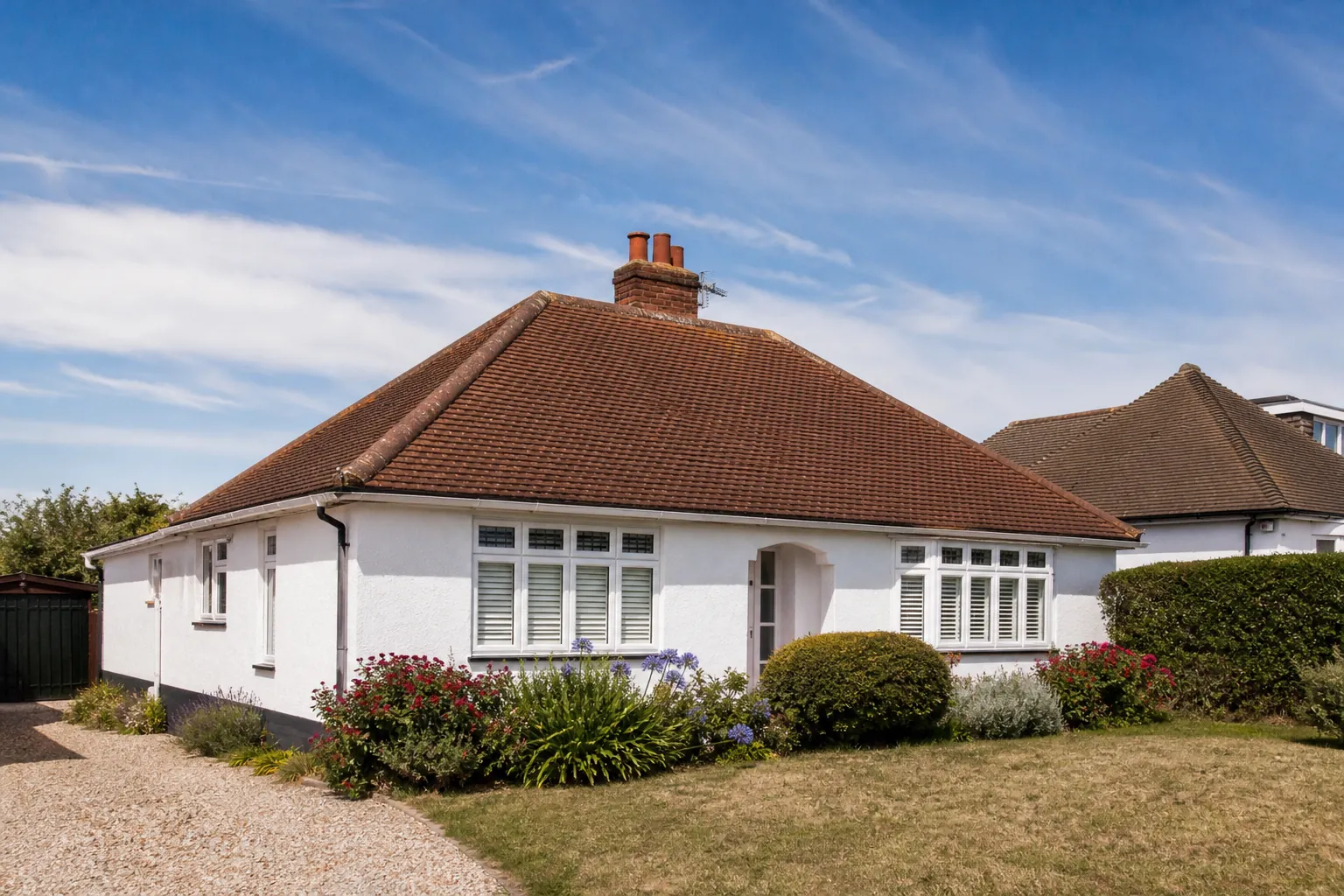
Billingshurst roofs
Stone slabs and clay tile on Stane Street
-
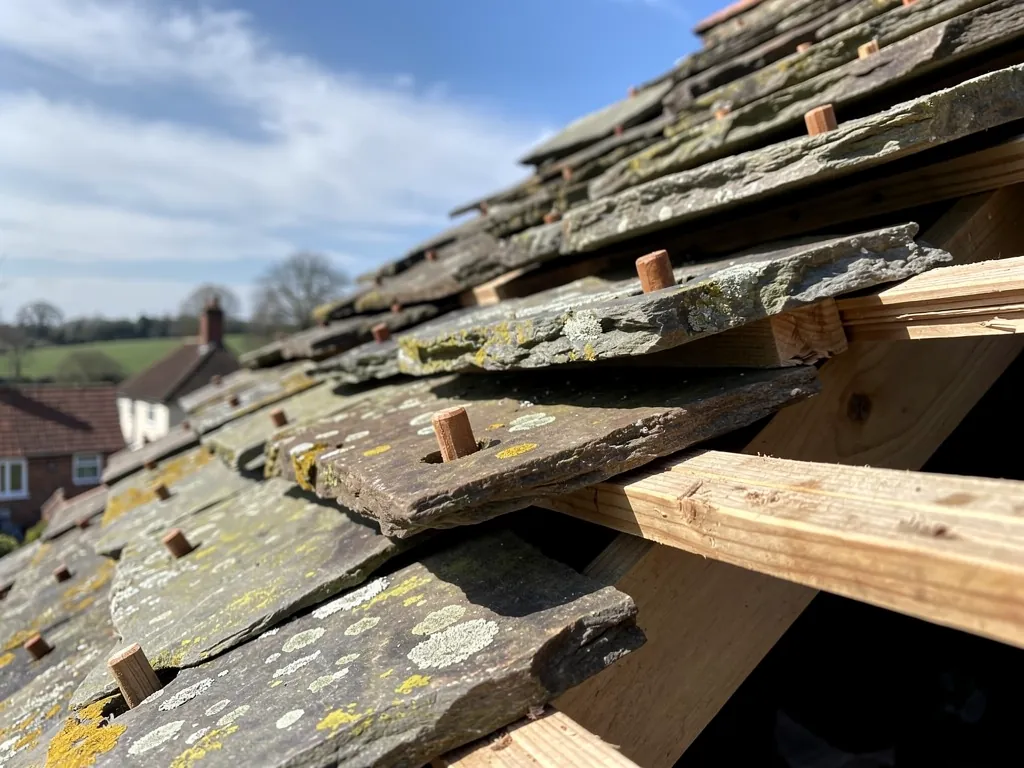
Horsham stone slab roofs
Horsham District Council's appraisal calls the village roofscape distinctive and extensive, with Horsham slab roofs and brick chimneys in it. On the grander early buildings, stone slates were the covering of choice.
-
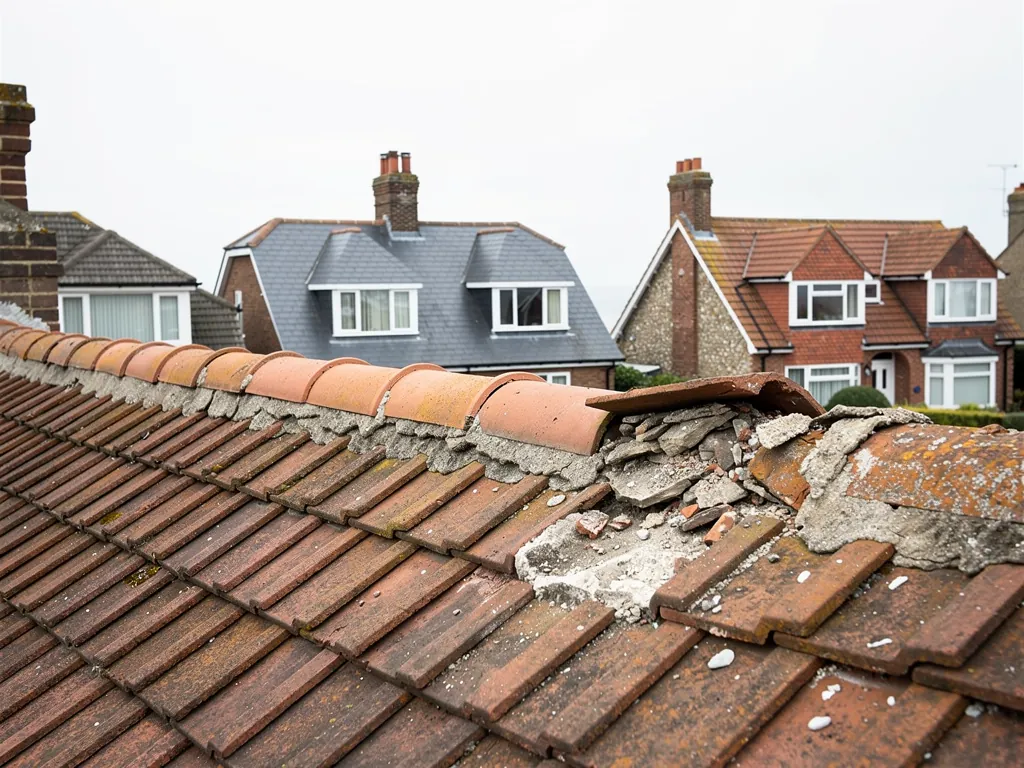
Plain clay tile and tile-hanging
The same appraisal says plain clay tiles became the common roofing material from the mid 17th century. Tile-hanging, clay tiles fixed to walls, and local Billingshurst sandstone complete the traditional palette.
-
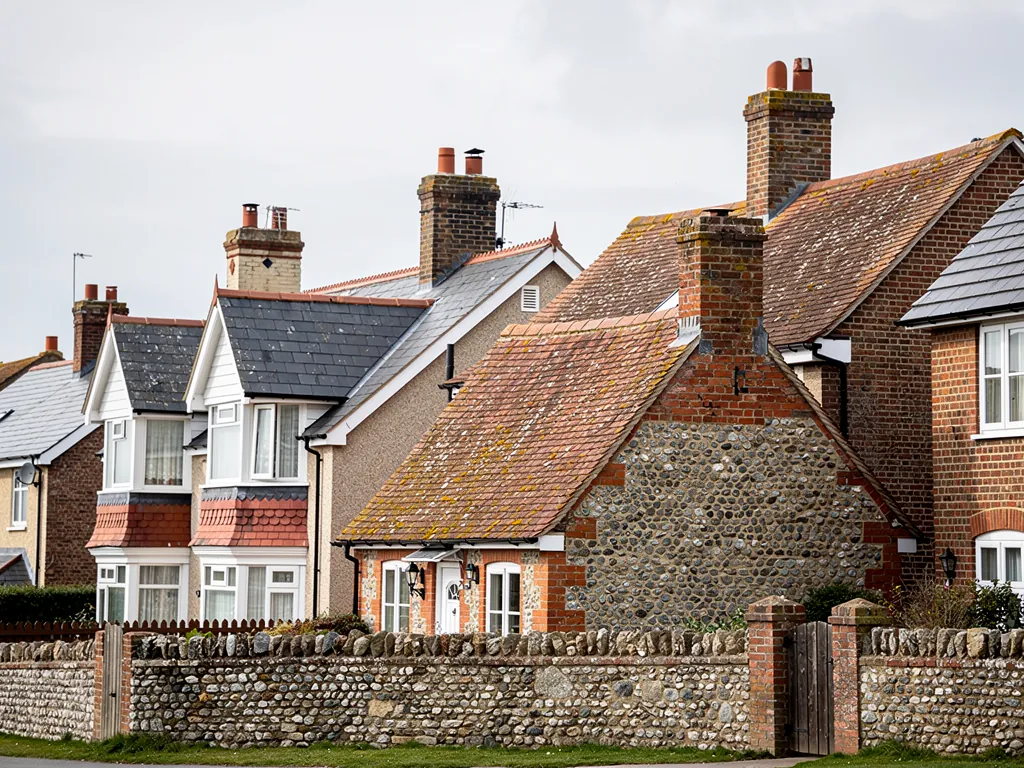
A village that grew fourfold
From about 2,000 people after the Second World War, Billingshurst grew to 8,232 by 2011, with the expansion speeding up from the 1970s. A railway station opened outside the village in 1859.
Map of Billingshurst, 21.4 road miles north-east of Bognor Regis, with the nearest towns we also cover.
Billingshurst Conservation Area and its appraisal
- Council
- Horsham District Council
- County
- West Sussex County Council
- Conservation area
- Billingshurst Conservation Area, with an appraisal and management plan published by Horsham District Council
- Landmark
- The rare broach spire of St Mary's parish church, visible from many points in the village
- Setting
- Low Weald, on Stane Street (the A29), just east of the River Arun
- Distance
- 21.4 road miles north-east of Bognor Regis, about 36 minutes by car
Billingshurst notes
Slabs, spire and a village that grew
Stone, clay and newer coverings share one long street, and each one asks for a different kind of care from the person on the roof.
Chapter 1: Horsham slabs and brick stacks on Stane Street2806
Sheet 01 / 03Billingshurst is a large village in the Low Weald that grew in a line along Stane Street, the Roman road from London to Chichester that is now the A29. Horsham District Council's conservation area appraisal describes a distinctive and extensive roofscape, which includes Horsham slab roofs and brick chimneys. Early roofs here would have been thatched or, on more prestigious properties, covered in Horsham stone slates. A slab roof is not an ordinary tiled roof, and anyone who owns one should know what makes it different before a roofer sets foot on it.
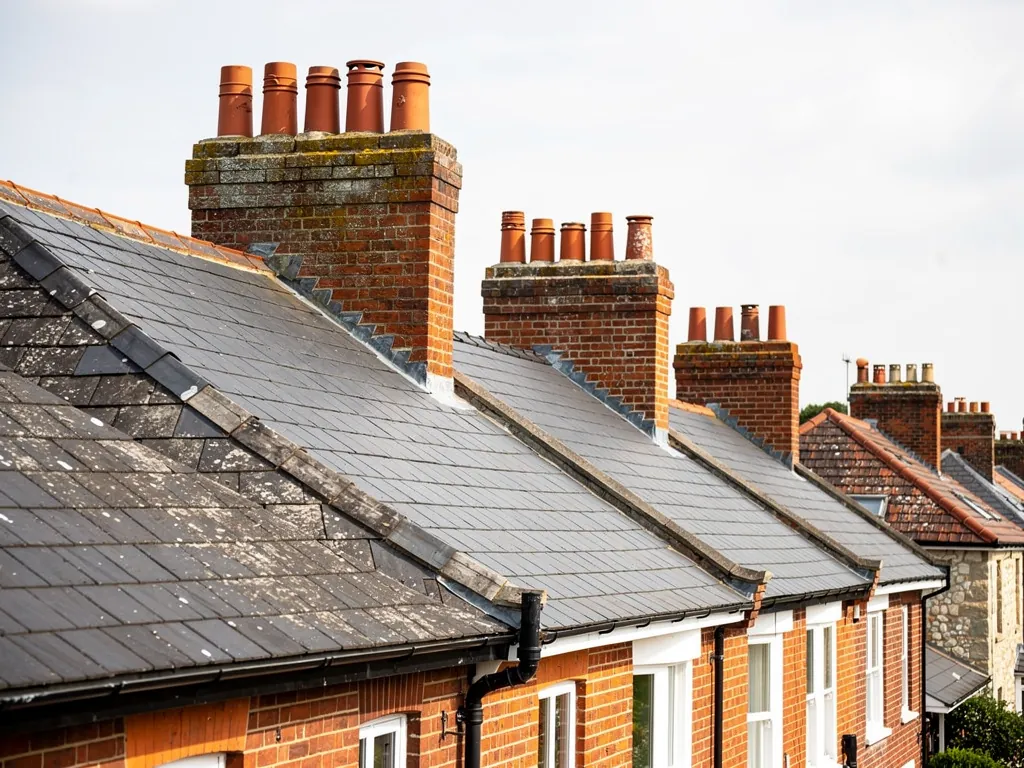
Slab roof and tiled roof, side by side
Horsham slab
Heavy stone in diminishing courses, so a repair copies the pattern and the weight.
Clay or concrete tile
Lighter units laid in even courses, so single tiles swap out with little fuss.
1.1 What a Horsham slab roof asks of its owner
Horsham slabs are thick, rough-hewn pieces of stone, and a slope of them is a heavy thing. The timber underneath is built to carry that load, so a roofer who clambers about carelessly, or who loads a new covering on without checking, can do real harm. The slabs are laid in diminishing courses, which means the biggest sit down at the eaves and they shrink in stages towards the ridge. That pattern is part of the roof's character and must be copied when anything is relaid. A slipped or cracked slab can be replaced singly, provided the timber beneath it is sound and the replacement matches the course it joins. A slope that has failed across its width is a decision to take slowly, with the whole picture in front of you. Our Horsham stone roofing page covers repair, relaying and the stone itself in detail.
1.2 Brick chimneys that carry the skyline
The appraisal names brick chimneys as part of the roofscape, and a chimney on a stone roof earns its place. Where slabs meet a stack, the junction is stepped, and each step needs its own piece of lead. After years of weather those pieces lift, the mortar around them crumbles and water finds a way into the loft. We reopen the junction, renew the lead and repoint with a mortar that suits the old brick, never one that is harder than the bricks. Our chimney repairs page sets out what each fault looks like as seen from below and up close.
1.3 Thatch in the story
Thatch belongs to this village's past rather than to a repair job for us, and the appraisal mentions it as an early covering. If you own a thatched building, call a thatcher. If a thatched house shares a wall with a tiled or slated neighbour, we can take care of the lead and the junctions between them. Where the two roofs meet, the party wall and the shared gutter are the places to check first, because each owner's roof drains onto the other's.
Chapter 2: Plain clay tiles, tile-hanging and the conservation area3416
Sheet 02 / 03Plain clay tiles took over from thatch and stone as the common roofing material from the mid 17th century, according to the council's appraisal. Walls, too, were dressed in clay: tile-hanging, the practice of hooking small tiles onto battens fixed to the wall face, is part of the village's traditional building language. Add local Billingshurst sandstone and Horsham slabs and you have the full palette the appraisal records. Billingshurst Conservation Area is covered by Horsham District Council, which is also the planning authority and the building control body for the village.
Before changing a Billingshurst roof covering
- Ask Horsham's planning team
- Check for a list entry
- Match the tile size and colour
- Weigh the new covering
- Plan for the lead
2.1 Matching clay when a few tiles go
Clay tiles weather to a mottled colour that new ones cannot copy overnight. When we replace the odd cracked tile we try to use sound reclaimed tiles of the same size and finish, so the repair does not show from Stane Street. Marley quotes a minimum life of 60 years for clay tile, though a building conservation article calls that figure a poor yardstick for old peg-tile roofs. A hand-made roof of that kind can last far longer when the fixings and the battens beneath are sound. Plain tiles hang from the batten by nibs, small lugs on the back, or by pegs through holes, so the mix on your roof decides what we can use as a replacement, and we check before we order anything. Our tile-hanging repairs page explains what happens when the hung tiles on a wall start to slip.
2.2 Inside the conservation area
Inside a conservation area, phone Horsham's planning team ahead of any change to a covering or the look of a roof. The planning team can tell you whether an Article 4 direction touches your road, and it is better to ask than to assume. If your house is listed, consent is needed for anything touching its special character. Weight matters too: the Planning Portal names a covering that adds 15 per cent or more to the weight of the roof, or one that would perform differently in a fire, as a trigger for approval, and a much lighter covering is worth a structural check as well. Swapping stone for something else is rarely a casual decision.
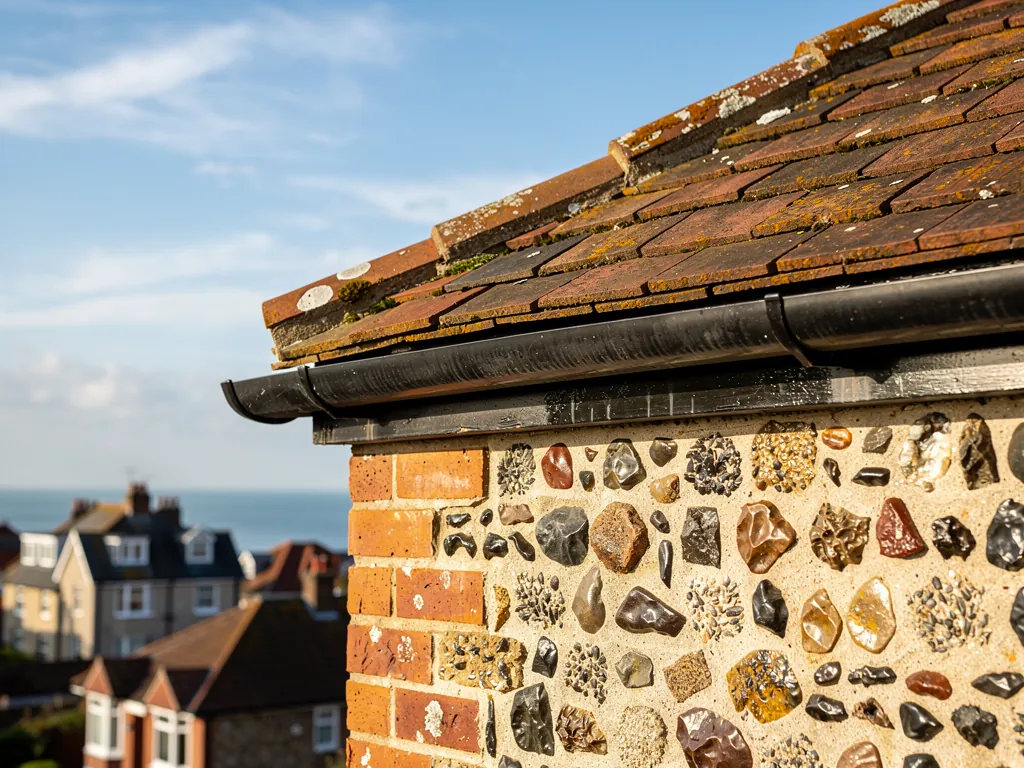
2.3 Sandstone and the base of a wall
Local sandstone appears in the village palette, and where it meets a roof it behaves like any soft stone: it holds water and sheds grains. A wall that stays wet beneath a flashing may need the lead raised and a new drip detail, not just a bead of mortar. We would rather show you a damp sandstone course on the survey photographs than hide it under a fresh line of sealant that fails in a year.
Chapter 3: A village that grew from 2,000 to 8,2322379
Sheet 03 / 03Billingshurst grew from about 2,000 people after the Second World War to 8,232 in 2011, and the council's appraisal says the expansion accelerated from the 1970s. A railway station opened outside the village in 1859 on the line from Horsham to Petworth, which was extended south to the coast four years later. So alongside the old slab and clay roofs on Stane Street there is a large body of newer housing, with newer roofs on it. They need a different kind of attention.
Three outcomes for a roof from the growth years
- PatchIsolated slipped tiles or a failed flashing, with the rest sound.
- OverhaulRidge, verges and lead renewed while the main covering stays.
- Re-roofCovering, battens and underlay have reached the end of their life.
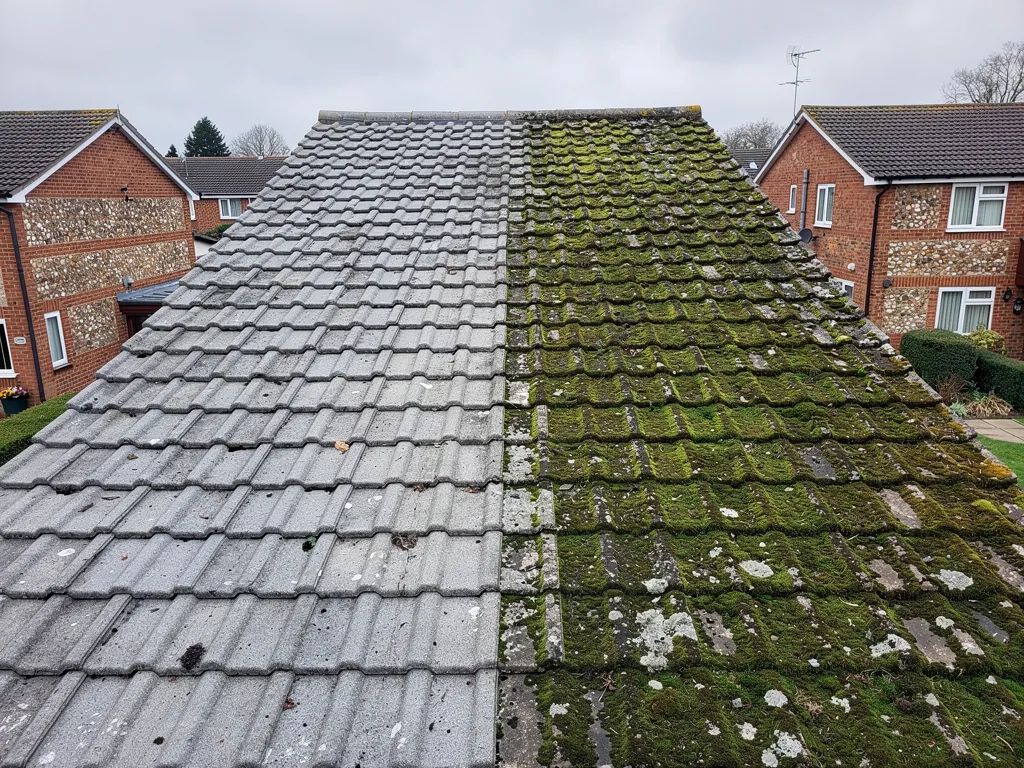
3.1 Roofs from the 1970s onwards
A house built in 1976 is now about fifty years old. We cannot tell you from the road what covering it has. If it is concrete tile, Marley says to expect around 60 years, though it stresses that figure is no guarantee. The felt underlay beneath the tiles can have gone brittle by then, which only shows when a few tiles come off. The parts that give way first on a roof of that age are usually not the tiles. They are the ridge bedding, the verge pointing, the felt underlay beneath and the small lead pieces at stacks. Our survey photographs show each one, so you can judge whether a repair, an overhaul or a new roof makes sense. Our roof repairs page covers what a typical repair involves.
3.2 Garages and extensions
Many houses of this age also have a flat-roofed garage or a rear extension. BS 6229:2025 sets a minimum finished fall of 1:80 for a flat roof, and roofers design steeper so the water still drains. GreenSpec puts single-ply EPDM at 20 to 30 years of service life, so a flat roof laid in the 1990s is worth a proper look rather than another coat of paint. The HSE's rule of thumb is that anything built or refurbished before 2000 should be assumed to contain asbestos until checked, garage roofs included. Careful removal of asbestos cement sheet that is weathered but not badly broken is non-licensed work, and we say before any lifting begins whether a sheet needs testing.
3.3 Access and scaffold
Where scaffolding has to stand on a public pavement or road, West Sussex County Council grants that licence in its role as highway authority. The council asks for at least 10 working days' notice, and charges £266 for a month. Ask any roofer who quotes whether scaffold and VAT are in the figure.
From ridge to gutter in Billingshurst
Frequently asked questions
Questions from Stane Street to the broach spire
Can a cracked Horsham slab near Stane Street be replaced without relaying the whole roof?
Often, yes. A single cracked or slipped slab can be swapped for a sound reclaimed one of matching size and thickness, as long as the timber and fixings around it are good. The size has to fit its course, because the slabs shrink in diminishing courses towards the ridge. If a whole slope is failing, we tell you, and talk through relaying with the sound slabs reused.
Can tile-hanging on a Billingshurst house be repaired without touching the roof?
Yes. Tile-hanging is fixed to battens on the wall, so slipped or cracked hung tiles can be replaced without disturbing the roof above. The junction where the hung tiles meet the roof, though, needs a lead flashing or soaker. If that has failed, water runs behind the tiles. We check the junction first and report with photographs before suggesting any other work.
Does the Billingshurst Conservation Area stop me changing a clay tile roof to a different covering?
It means you should ask first. Horsham District Council is the planning authority, and a change of covering can alter the look of the street. Replacing like for like is a lighter question than switching material. A listed house needs consent for changes that touch its special interest. Contact Horsham's planning team before you commit to anything.
Does a roof on a house built in the 1970s growth need different checks from a Stane Street cottage?
The order of checks is different. On an older cottage we start with the stone or clay, the lead and the chimney. On a later house we look first at ridge bedding, verge pointing, underlay and any flat roof or garage. Either way you get photographs of each fault, a plain verdict on repair, overhaul or replacement, and a written quote.
Nearby areas
Get a quote
Tell us about your roof
Describe what's happening and we'll call you back.
Loading the enquiry form. You can also call 01243 252373.