
Roofers in Bury
Stone, flint, thatch and clay tile
Bury's older roofs are plain clay tile and reed thatch over stone and flint along The Street and Church Lane, in a village where the South Downs meet the Arun valley.
Bury roofs
From The Street's clay tiles to the church spire
-
Stone and flint under clay tile
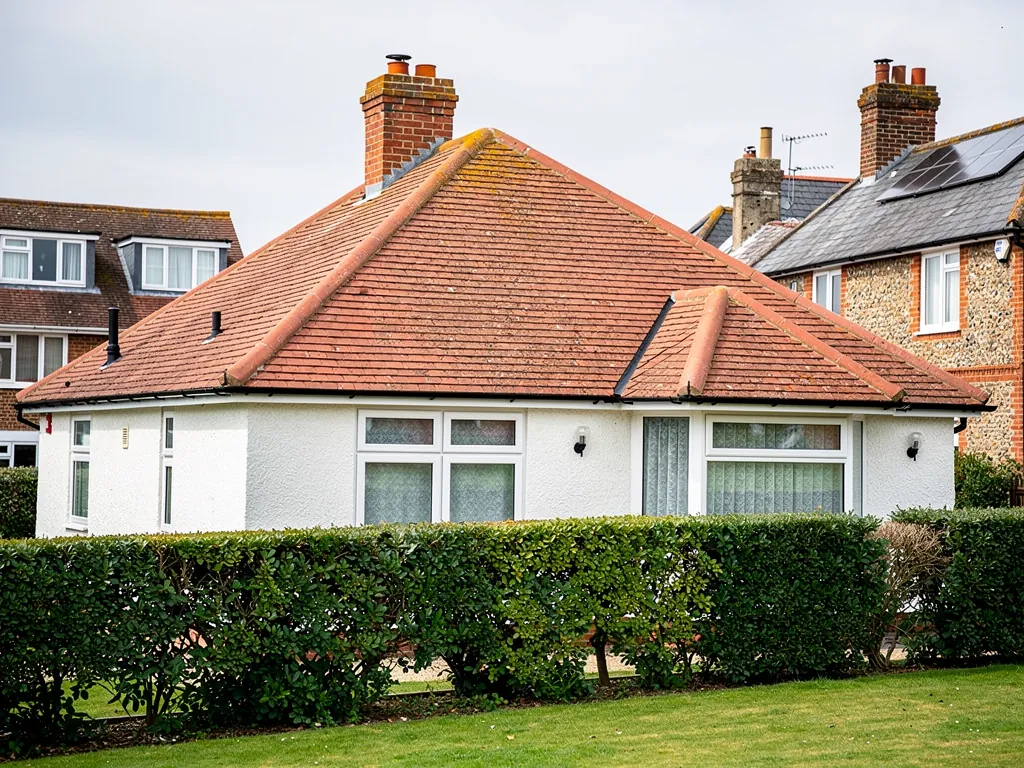
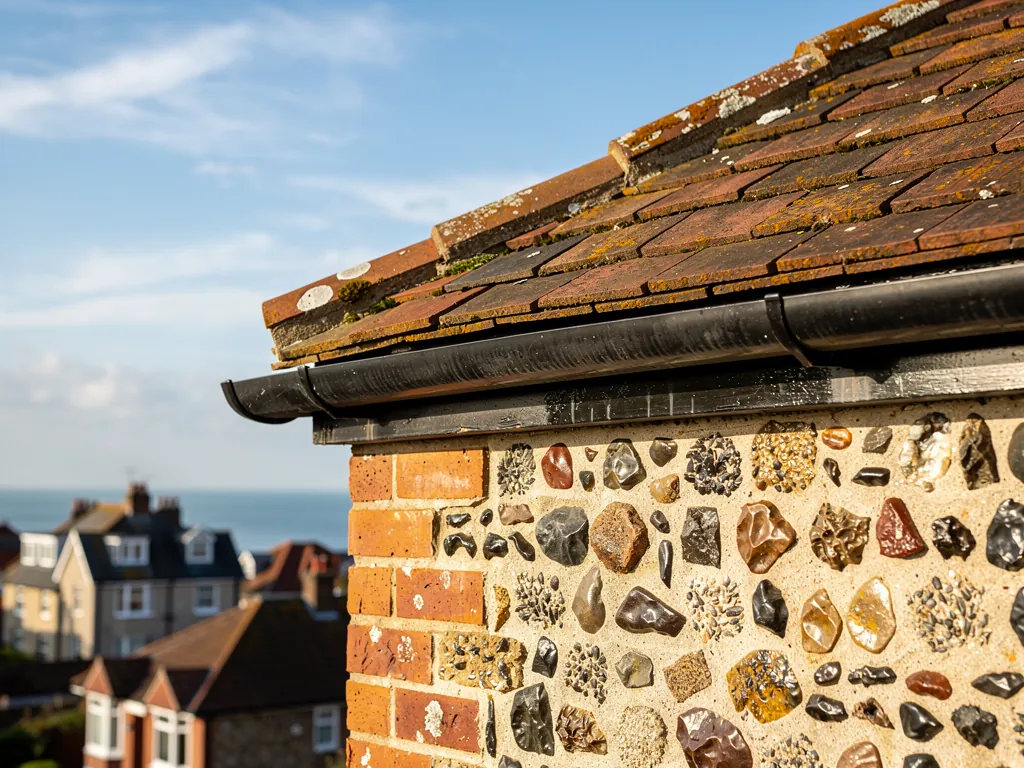
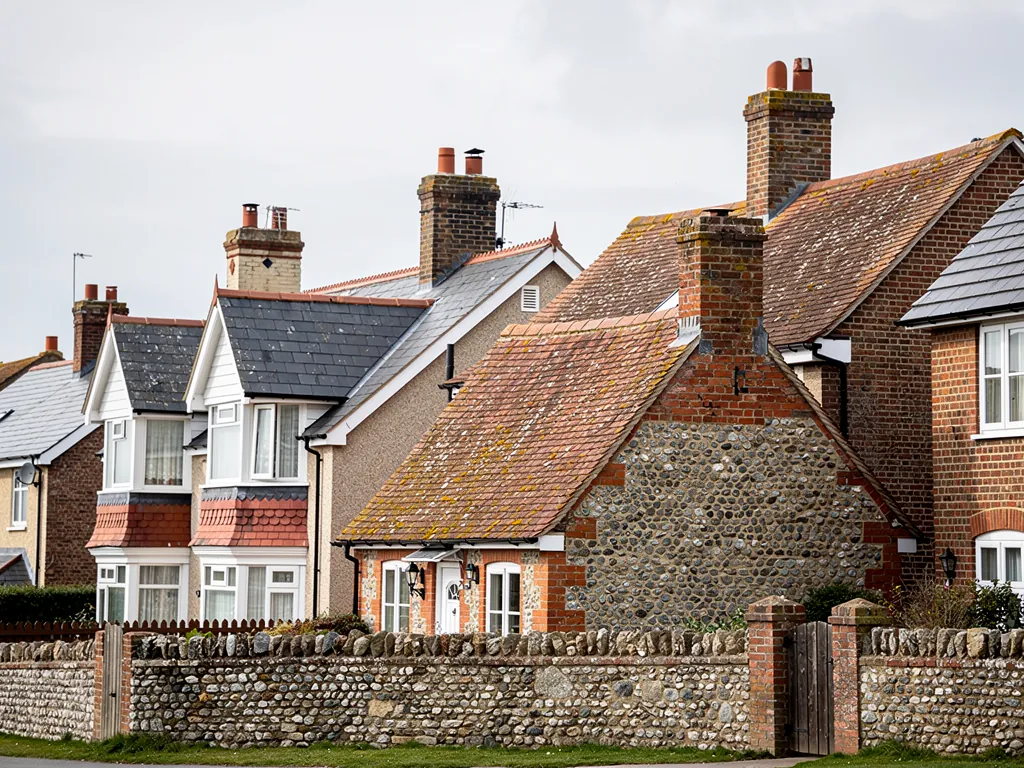
The Bury Neighbourhood Plan study says most older properties in The Street and Church Lane are stone and flint under plain clay-tiled pitched roofs. Plain tiles are small, so one slope holds hundreds of joints.
-
Reed thatch beside the clay
Reed taken from the river banks has thatched Bury's cottages for hundreds of years and still does. Hand-made clay tiles from Wealden clay replaced thatch on some houses, and slate replaced it on others.
-
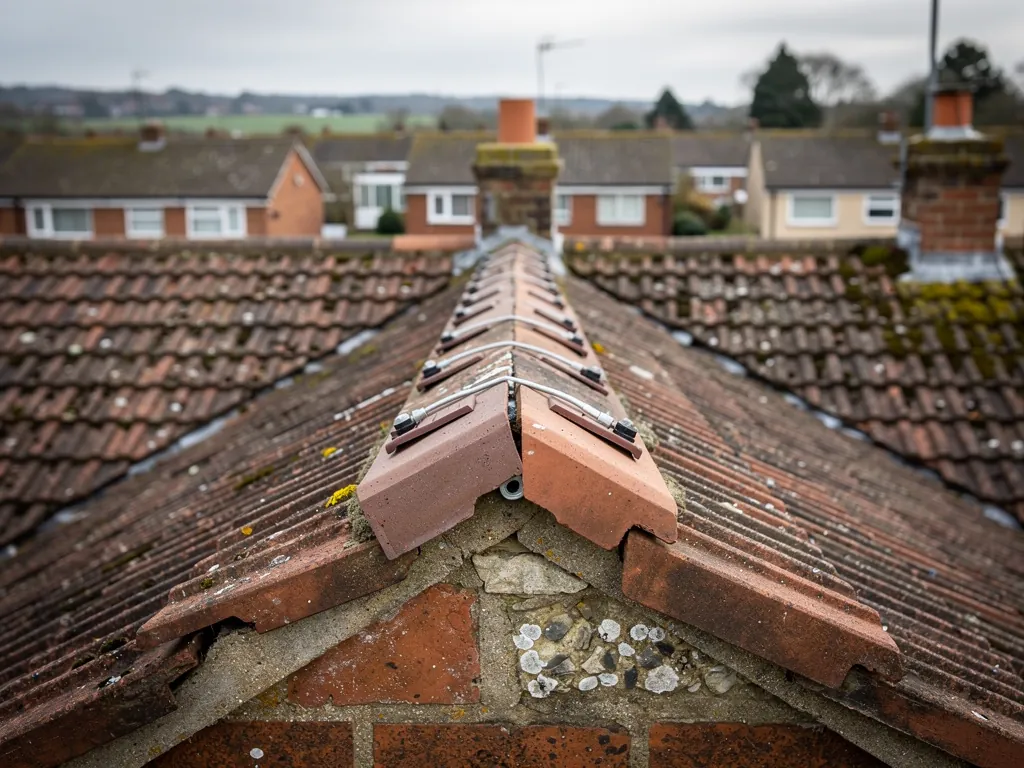
A cedar-covered spire at St John's
The parish church of St John the Evangelist is listed Grade I, with a 12th-century tower and nave under a broad spire covered in cedar. A church roof follows a consent route of its own, not the one a house follows.
Map of Bury, 11.9 road miles north-east of Bognor Regis, with the nearest towns we also cover.
Two conservation areas in the Downs
- Council
- Chichester District Council
- Planning
- South Downs National Park Authority
- County
- West Sussex County Council
- Conservation area
- Two in the parish: Bury village, and West Burton
- Article 4
- None listed for Bury on the South Downs National Park Authority's Article 4 page
- Grade I church
- Parish church of St John the Evangelist, Grade I
- Distance
- 11.9 road miles north-east of Bognor Regis, about 22 minutes by car
Bury notes
Thatch, clay tile and the Arun wharf
Three sides of Bury, from hand-made tiles in the lanes to the river wharf and the National Park rules, and what each means overhead.
Chapter 1: Plain clay tile along The Street and Church Lane2928
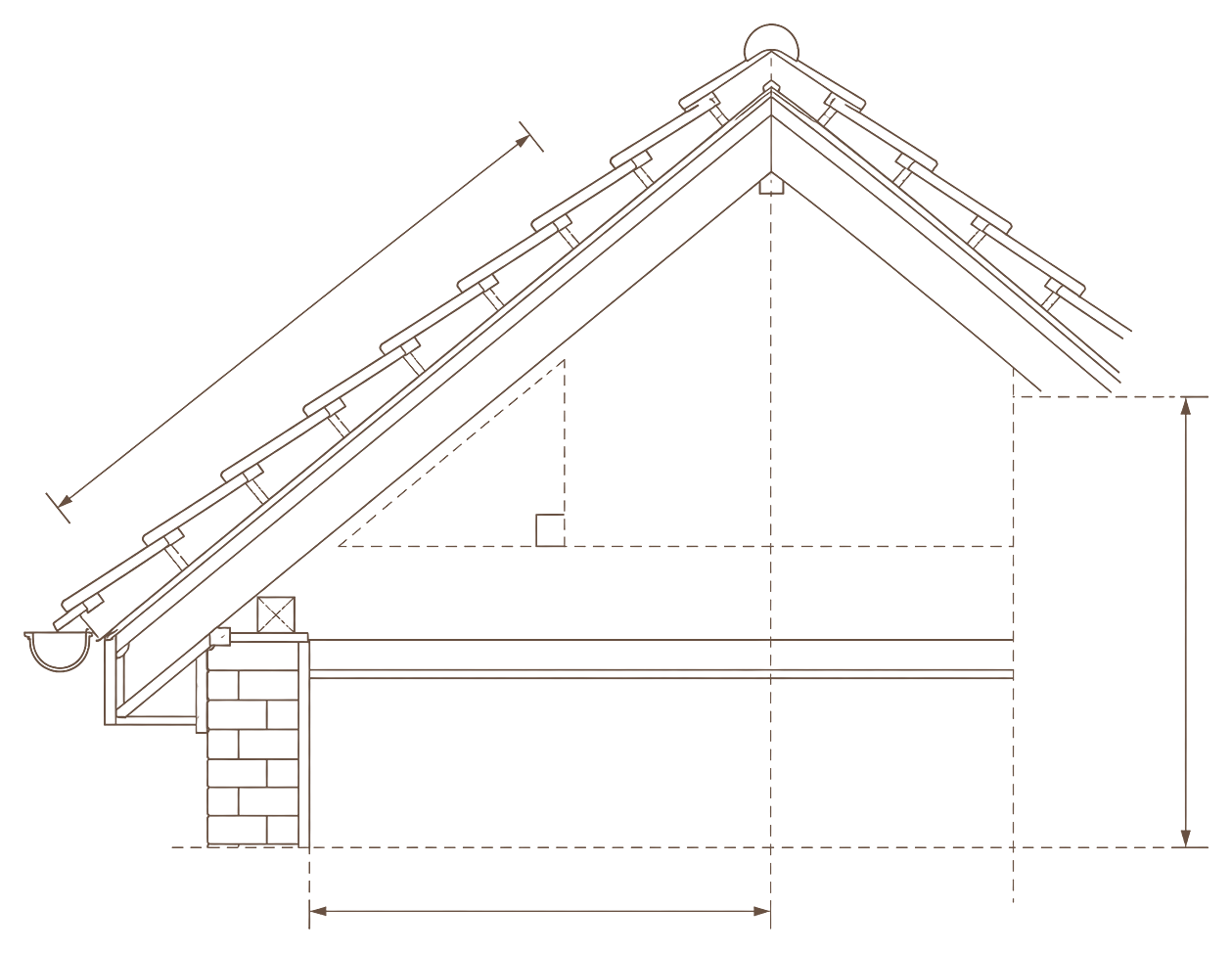
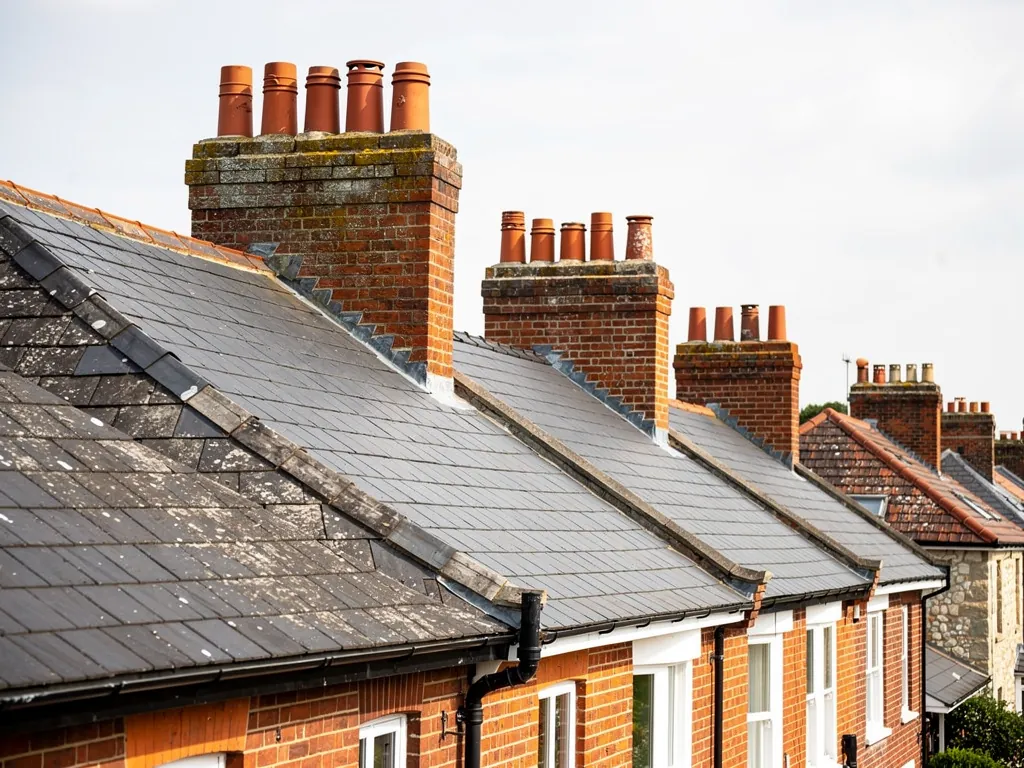
Sheet 01 / 03The Bury Neighbourhood Plan's study of character and heritage (March 2017, hosted by the South Downs National Park Authority) says most older properties in The Street and Church Lane are built of stone and flint under plain clay-tiled pitched roofs, and that many are thatched. A plain tile is small and flat, hung from the batten by its nibs and usually held with a nail, and one slope can carry hundreds of them. That is why these roofs look soft and uneven, and why they want a different eye from a modern roof of large concrete tiles. A tiler reads the roof course by course, looking for slipped tiles, cracked edges, and the damp mossy patches that show where water has stopped running off.
Tiles that match the village
Hand-made clay tile
Varied colour and a slight curve, so a repair blends in with the old roof.
Machine-made plain tile
Flat and uniform, so a patch can show against weathered neighbours.
1.1 Hand-made tiles from Wealden clay
The same study records that hand-made clay tiles, made locally from Wealden clay, took over from thatch on some houses. Hand-made tiles vary in colour and carry a slight curve, and that variety is much of the look. When a handful fail, the repair is to find proper matches, from reclaimed stock or a maker whose colours sit alongside the old ones, instead of patching with bright machine-made tiles that stand out from the lane. For clay tile, Marley quotes a minimum life of 60 years from the Building Research Establishment, yet an article on buildingconservation.com warns that the figure should not be relied on for old hand-made roofs. A roof like this is read tile by tile, then judged on how it looks and feels today, with its age only one clue. Tapping a tile with a knuckle, checking the nibs, and looking for flaking at the edges all tell us more than a date does.
1.2 Old tiles and modern fixing standards
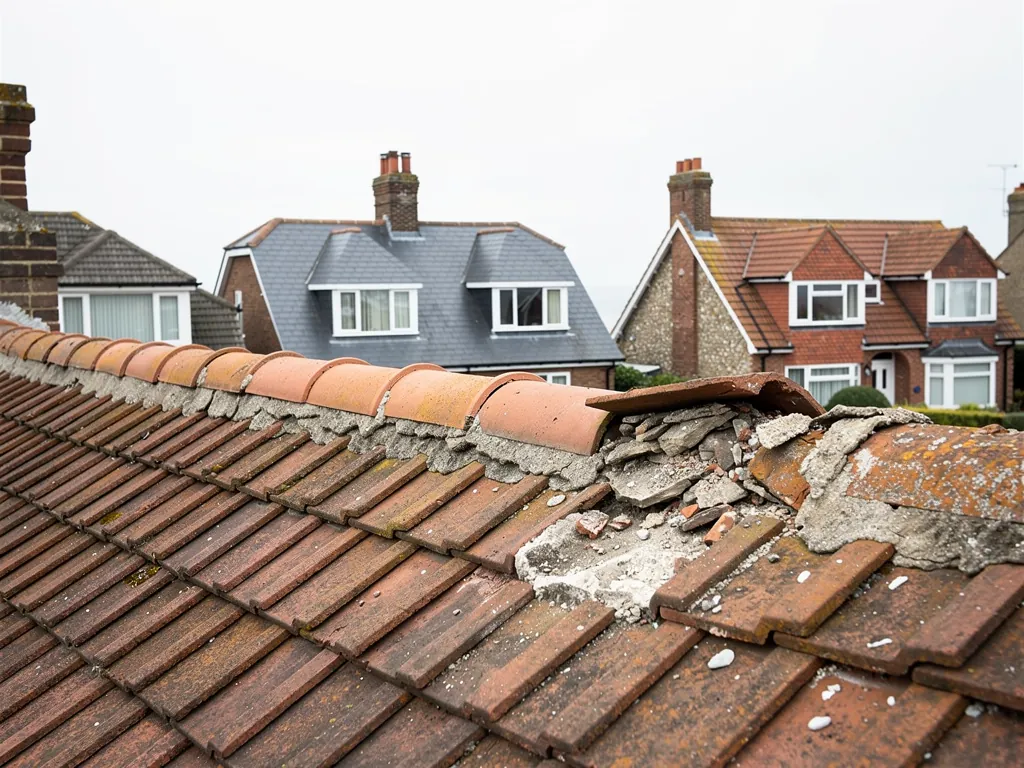
BS 5534:2014+A2:2018 covers slating and tiling, and BSI itself warns that the recommendations may not suit the re-tiling of certain old roofs, especially those built with reclaimed or traditional tiles. So the fixing schedule is drawn up for your particular tiles and battens. Ridge and hip tiles on any roof we touch are held with mechanical fixings as well as bedding, because the 2014 revision of the standard no longer relies on mortar alone to hold them. Where a roof meets a flint gable or boundary wall, the lead flashing, the folded strip of metal that seals the joint, is chased into the mortar course by course, which suits uneven flint better than a straight cut. Our pitched roofing page explains relaying in more detail, and our roof repairs page covers the smaller jobs.
Chapter 2: Reed thatch, slate and the cedar-covered spire2806
Sheet 02 / 03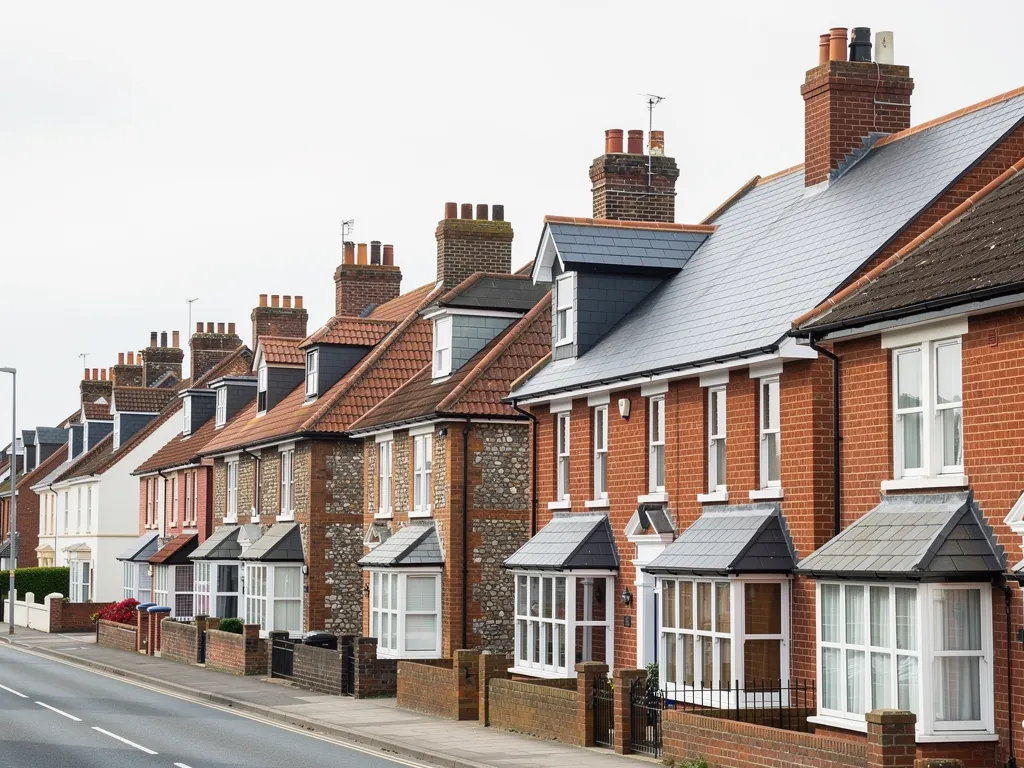
Thatch in Bury is not a museum piece. The study says reed, originally taken from the river banks, has been used in the village for hundreds of years and is still used on its thatched cottages. A thatched cottage and a tiled one can stand cheek by jowl, and the roofs around the thatch still need to be kept weathertight. Reed work belongs to the thatcher. Our job runs alongside it: chimneys and their lead, gutters, and the tiled and slated roofs of the neighbouring houses and outbuildings.
Before work near thatch or a listed wall
- Check whether the house is listed
- Photograph the abutting wall
- Match slate or clay tile
- Plan the scaffold on the lane
2.1 Slate where thatch gave way
On other Bury houses slate took the place of thatch. Slate is long-lived: a roofing materials guide from the Cornish Original Roofing Company puts well-looked-after slate at 100 years and more, and Checkatrade gives a similar picture for stone slate. What fails first is usually the fixing and not the slate itself. Old nails give out and slates slip, so a roof that looks tired from the lane may only need the slipped slates clipped back with tingles, small metal straps that grip a slate from below, and the lead at the stack renewed. Our survey pictures show which slates are sound, and they back up whichever of repair or relay we advise. From the ladder we also check the pointing under the verge, the soakers where a roof meets a wall, and the valley, the internal fold where two slopes meet and send water into the gutter, because those joints leak long before the field of the roof does.
2.2 A Church of England roof follows its own rules
St John the Evangelist is listed Grade I, with a 12th-century tower and nave and a broad spire covered in cedar. Because this is a Church of England building still used for worship, it sits outside the normal listed building consent system, and repairs go through the church's faculty process instead. Government guidance adds that this exemption does not cover planning permission for development affecting the outside of a listed place of worship. The parish and its advisers run that process, so the useful thing a roofer can offer is a clear written report with photographs of the problem. Houses around the churchyard follow ordinary listed building rules when they are on the list in their own right, and a quick look at the entry settles which applies.
Chapter 3: The wharf, the river and the Downs rules2440
Sheet 03 / 03Bury sits where the South Downs meet the Arun valley, on the west side of the river. A ferry ran from The Wharf across to Amberley until 1955, and in the 1800s the wharf was used to load boats with raw materials. The neighbourhood study also records that the novelist John Galsworthy lived at Bury House, a Grade II building, from 1926 to 1933. All of that tells you the village was a working place, with plots, outbuildings and barns whose roofs have been patched and re-covered many times. On those older outbuildings, the Health and Safety Executive says to presume asbestos in any structure built or refurbished before 2000 until a check proves otherwise. Taking off asbestos cement sheeting gently, without breaking it, is non-licensed work, and any waste needs a consignment note to go with it. We raise this at survey, before a corrugated garage or barn roof is touched, and a sheet that is cracked or crumbling changes the plan for the whole job. Each sheet is carried down rather than thrown, and the roof counts as fragile from the first step.
Three answers for an old tiled roof
- Patch inCracked tiles swapped for matching ones, with sound tiles left alone.
- Relay a slopeSound tiles lifted, battens and underlay renewed, the same tiles laid back.
- Re-coverA new covering on a renewed structure once the old one is beyond repair.
3.1 Who decides in a National Park village
Bury is inside the South Downs National Park. Under the Authority's delegation for this part of the Park, Chichester District Council deals with applications on its behalf, and the district council keeps building control as well. The parish has two conservation areas, one for Bury village and one centred on West Burton. Thinking about roof windows or a loft room? Start with our guide to skylight planning permission before drawing anything up, because the rules in a conservation area and the National Park differ from those on an ordinary street.
3.2 Repairs on a listed house
The Authority's guidance on listed buildings says routine maintenance and small repairs made in the same material and in the same place need no consent. That covers a slipped tile or a patch of lead. A change to the covering, the pitch or the look of the roof is a different question, so the list entry is read first and the council is asked. Photographs of your own roof come first, with a plain verdict on whether a repair will hold, and the written quote that follows gives one total price. At the end the waste is taken away and the site left clear. Our slate roofing page covers the slate side of that work.
The work we take on in Bury
Frequently asked questions
Questions from The Street to The Wharf
Can a few failed hand-made clay tiles be replaced without relaying a Bury roof?
Usually, if the battens and underlay beneath are in good order and the tiles around the gap are sound. The work is finding matches in colour and curve, from reclaimed stock or a maker whose tiles sit alongside the old ones, then fixing them so they stay put. Where the nibs or nails have let go over a wide area, lifting the good tiles and relaying them on new battens is the stronger answer, and the photographs show which case you have.
Who decides a roof application in Bury, now that it lies inside the National Park?
For this corner of the South Downs National Park, the Authority has delegated applications to Chichester District Council, and building control stays with the district council as well. Replacing a covering with the same kind rarely counts as development, though listed building and conservation area caveats apply, so ask Chichester District Council's planning team prior to agreeing any change in appearance.
Do the two conservation areas, Bury and West Burton, change how a roof is repaired?
Both are conservation areas, so matching the existing look matters more than it would on an ordinary estate. That points to clay tile or slate that suits the neighbours, lead dressed neatly, and chimneys left as they stand. If the house is also listed, the list entry decides what needs consent. We check the entry and photograph the roof before quoting, and a new covering that changes the look is raised with the council first.
Does lead work differently where a roof meets a stone and flint wall in Church Lane?
The principle is the same, but the fitting is slower. Flint walls are uneven, so the lead is tucked into a chase cut along a mortar course and sealed, stepping with the wall instead of running in a straight line. That keeps rain out without scarring the stone. We look at the masonry first, and where an old chase can be reused we reuse it, because the less old stonework we cut the better.
Nearby areas
Get a quote
Tell us about your roof
Describe what's happening and we'll call you back.
Loading the enquiry form. You can also call 01243 252373.