
Roofers in Pulborough
Sandstone, flint and timber-framed tile
Pulborough looks south over the Arun floodplain to the Downs from rising ground on Stane Street, and its older roofs sit over Pulborough Sandstone, Carstone, brick and flint walls.

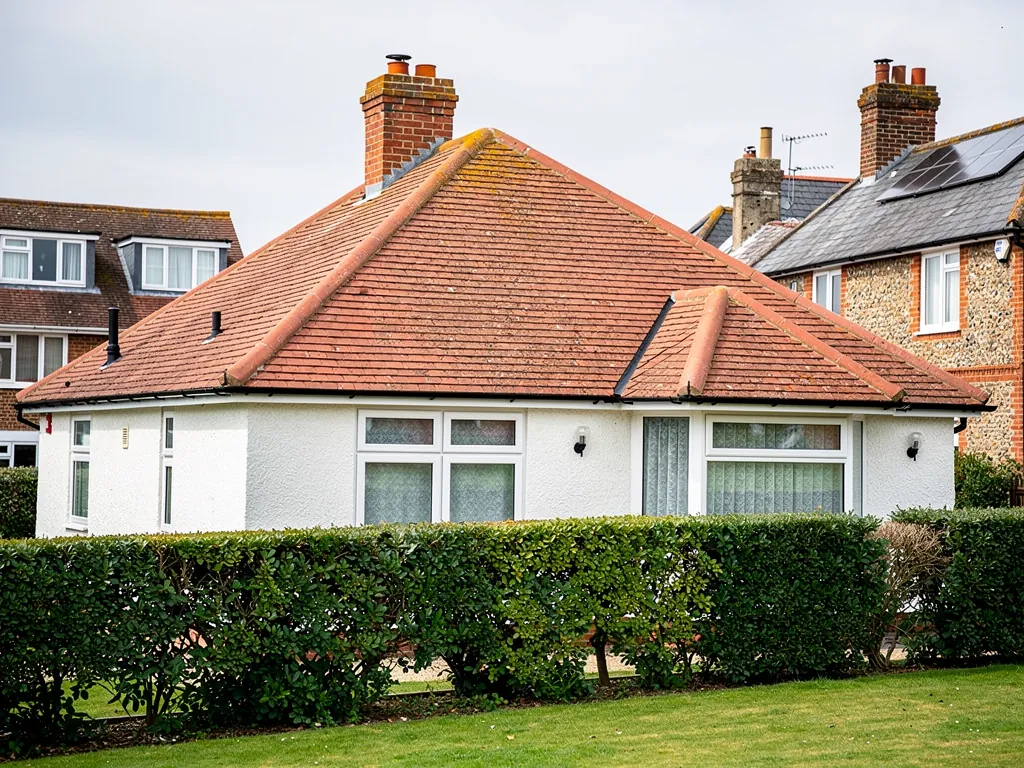
Pulborough roofs
From Church Hill to the Stane Street frontage
-
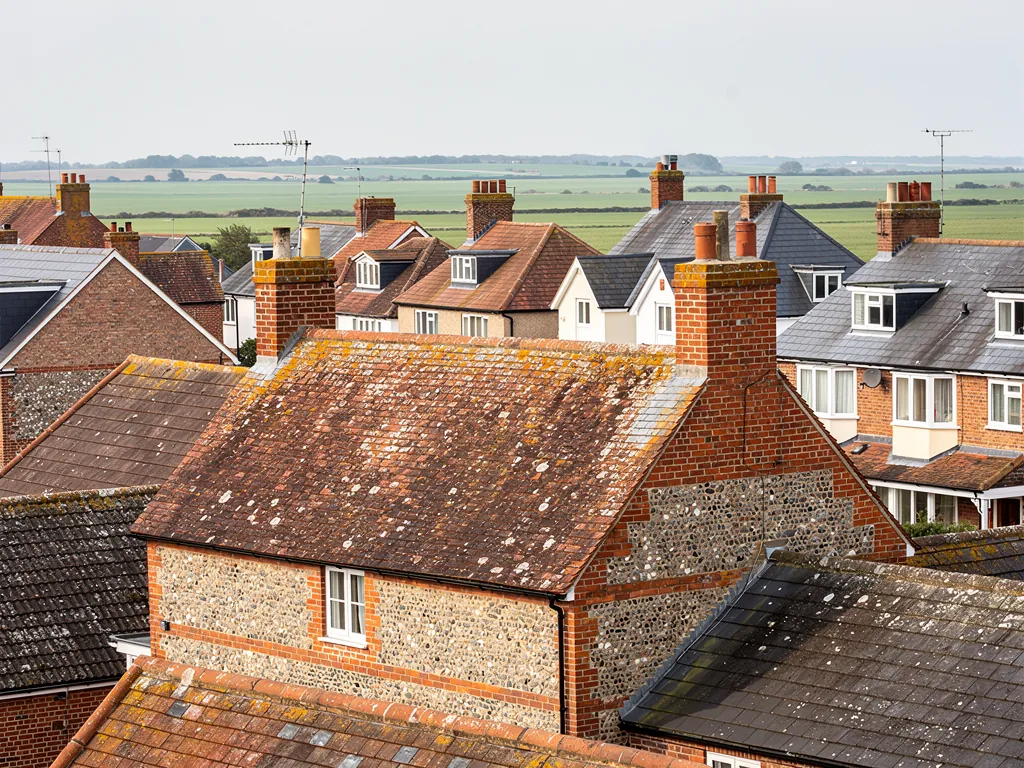
The Old House on Church Hill
Timber-framed, 17th century or earlier, and under a tiled roof, the Old House is listed Grade II*. A roof on a frame this old moves, so tiles, battens and the lead around it need flexible, careful repair.
-
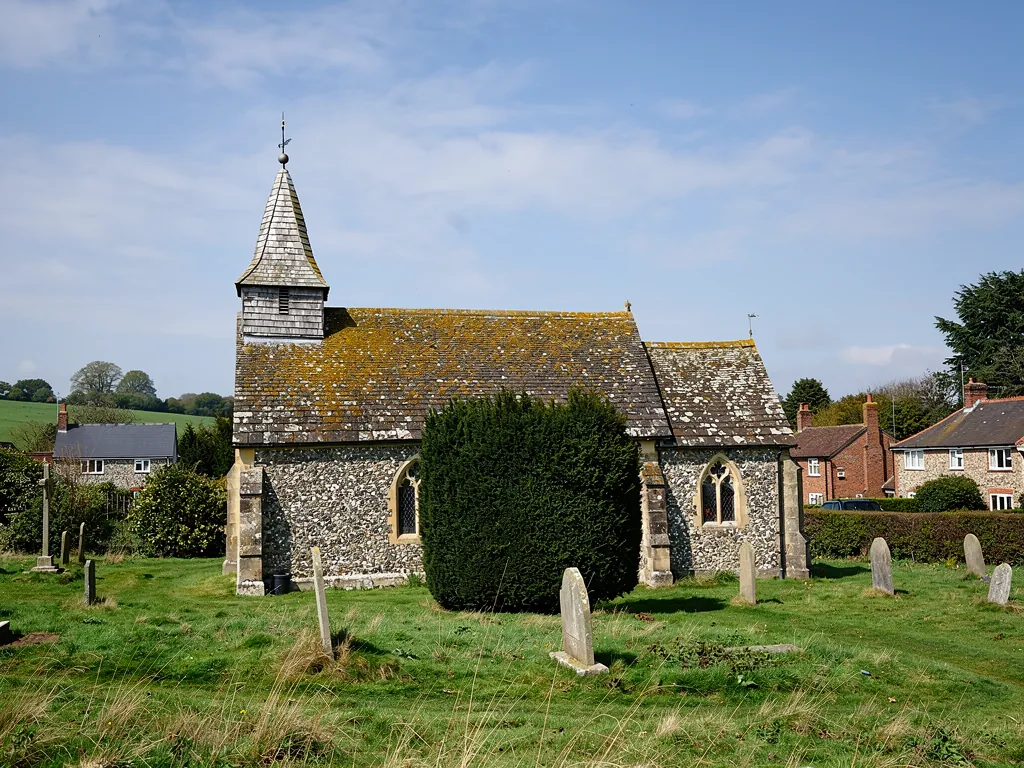
Sandstone, ironstone and flint
The council's appraisal names a local stone, Pulborough Sandstone, beside Carstone or ironstone and traditional Sussex brick and flint. Roofs on these walls finish against rough stone, where flashings and verges need a good bed.
-
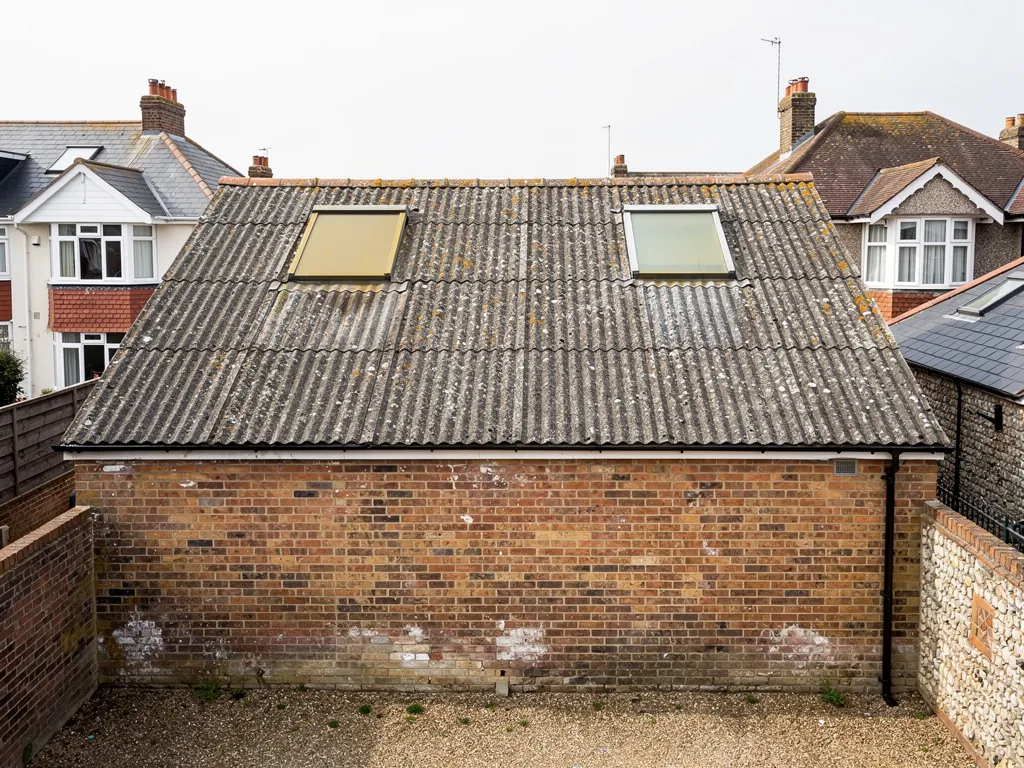
A church with two building periods
The chancel of St Mary's was built in the 13th century, and the nave and tower date from a major rebuilding in the 15th. Two periods of roof timbers and wall heads meet under one church.
Map of Pulborough, 16.2 road miles north-east of Bognor Regis, with the nearest towns we also cover.
Two conservation areas on the hill and the street
- Council
- Horsham District Council
- County
- West Sussex County Council
- Conservation areas
- Pulborough Church Place and Pulborough Lower Street, designated 1973
- Listed landmark
- The Old House, Church Hill, Grade II*
- Setting
- Rising ground north of the River Arun floodplain, facing the South Downs
- Distance
- 16.2 road miles north-east of Bognor Regis, about 27 minutes by car
Pulborough notes
Stane Street, sandstone and a hilltop church
Three strands of Pulborough's history, and the part each plays in the roof over your head, from the hilltop church to the road that built the village.
Chapter 1: Church Hill and the timber-framed roofs2379
Sheet 01 / 03Pulborough stands on rising ground north of the River Arun floodplain, and Horsham District Council's appraisal sets it along Stane Street, the old Roman route linking London with Chichester. The church of St Mary crowns the hill. Its chancel was built in the 13th century, and a major 15th-century rebuilding gave it the nave and tower we see today. Two conservation areas protect the setting, Church Place and Lower Street, and the appraisal records them as designated in 1973. Beside the church, on Church Hill, stands the Old House: timber-framed, 17th century or earlier, with a tiled roof, and listed Grade II*. Between them, these three buildings show the range a roofer meets here: stone, timber and tile, and every one wears out in its own manner.
On a listed house
Like-for-like repairs to a listed roof are usually routine, but anything that changes its character needs listed building consent. We read the list entry first.
1.1 Why a frame this old changes the repair
A timber-framed building was never built stiff. Over centuries the frame has settled and the roof plane has gone out of true, so a modern, perfectly flat sheet of anything will not sit on it. Tiles on a roof like this are hand-sized and the battens, the thin strips that carry each course, follow the dips. When a few tiles slip, the sensible fix is to refit or swap them like for like. If the roof must come off, the battens are renewed to follow the line of the rafters beneath rather than forcing a straight line over a wavy frame. That gives a finished roof that looks right from the road, with courses that follow the building instead of fighting it, and no new stress put on joints that have held for centuries. Where a roof is listed, the choice of tile and the method both go through the list entry first.
1.2 Chimneys, valleys and the lead that ties them in
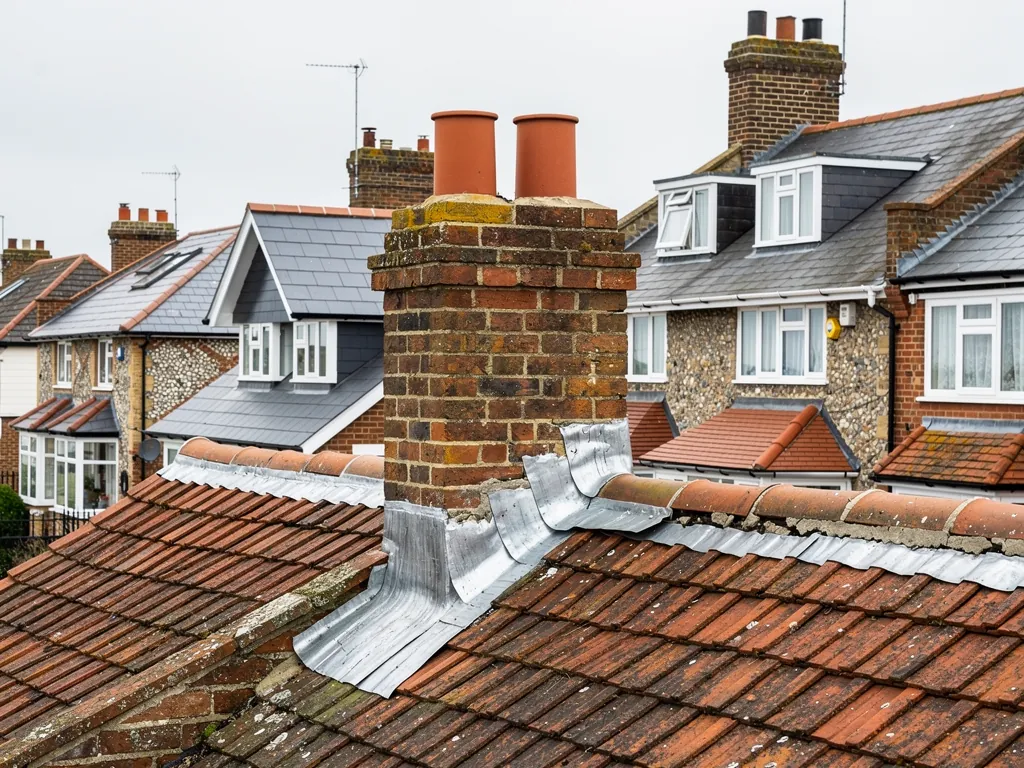
Older houses around the church tend to have a stack, a valley where two slopes meet, or a hip. Each needs lead or a good mortar bed to stay watertight. A soaker is a little square of lead bent to lie under the end of a tile course. A flashing is the longer strip that seals the roof to a wall or stack. Both age quicker than tile. When we survey a Pulborough roof we look at the lead first, because a leak on an otherwise sound roof usually starts there. Mortar around a stack can crumble, a valley can silt up with leaves and moss, and a flashing can lift in a gale. All three are repairs rather than reasons to replace anything, and each one is photographed, so you can judge the fault for yourself. Our lead roofing and leadwork page shows the work in more detail.
Chapter 2: Lower Street, the turnpike and the railway2562
Sheet 02 / 03Stane Street was turnpiked in 1757, and a bridge across the Arun at Pulborough was finally built in 1785, according to the same appraisal. The station opened in 1859, though the document says it did not at first bring growth to the village. For a roofer that history is useful in one respect: it explains why Pulborough did not arrive all at once. Buildings along and around Lower Street went up in different centuries, and neighbouring houses can have roofs a hundred years apart, so no single answer fits the whole street. The same repair can be right for one house and wrong for the one next door. Each roof here is the sum of many small decisions made by many owners over the years, and a survey reads those decisions one at a time.
What the survey decides
- RepairSlipped tiles or a single lifted flashing, mended without disturbing the rest.
- PatchA short-term fix while a better one is planned and priced.
- ReplaceBattens or fixings across the slope have failed, so it comes off.
2.1 Clues you can read from the street
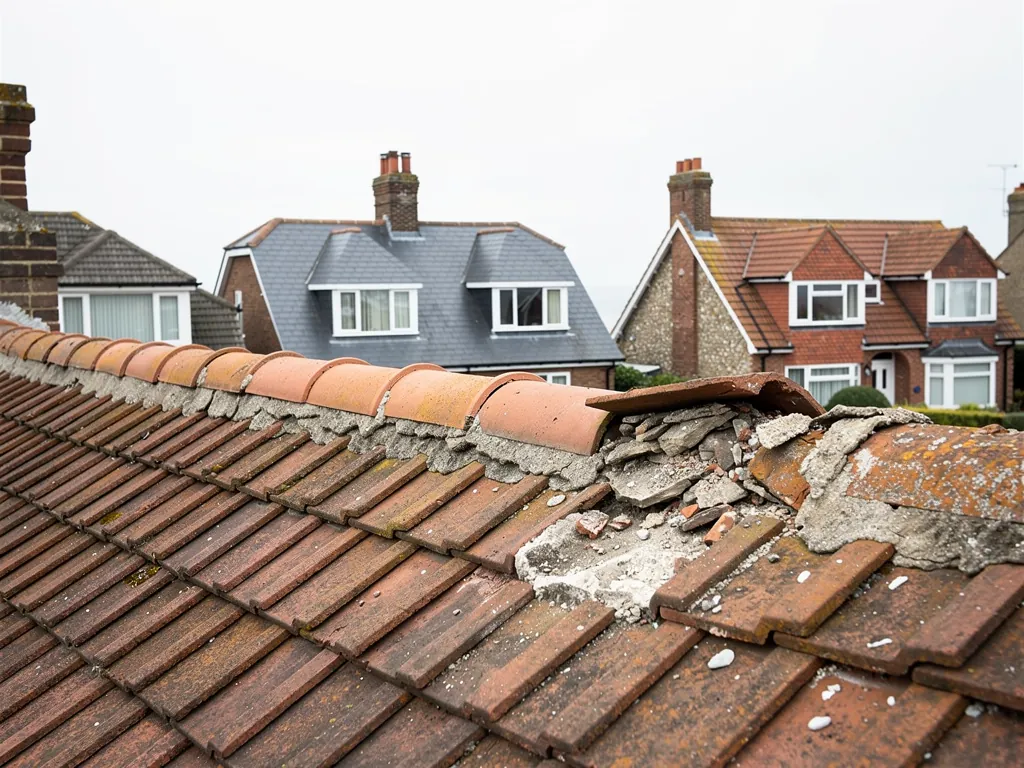
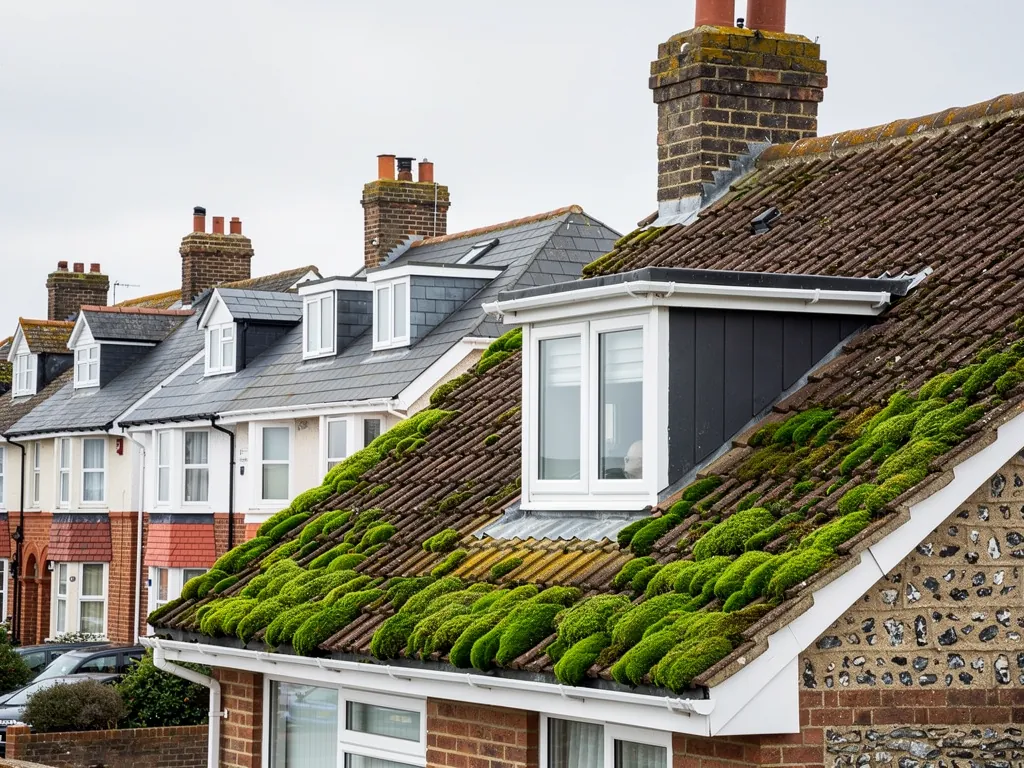
A few clues help before anyone climbs a ladder. A roof that has gone wavy along its length suggests battens or rafters that have given way. A ridge that has dropped or cracked bedding mortar along the top points to fixings that were never mechanical. Patches of green or black growth are usually only surface moss and algae, and our roof repairs page explains when they matter and when they do not. Gutters matter too: an overflowing gutter soaks the fascia and eaves below it, so clearing and checking them is cheap protection. Dark stains on a ceiling are the sign that deserves the quickest attention, because water has already got past the underlay, the membrane lying under the tiles. If you see one, put a bucket under it, move anything valuable, and send us a photograph or ring the office.
2.2 Repair, patch or replace
On any roof here our first job is a verdict, given before a price and backed by pictures of your own roof. A handful of slipped tiles is a repair. One flashing that keeps letting water in is a patch while a proper fix is arranged. A slope whose battens crumble when touched is a replacement, and we show the photographs that prove it. If a repair will last, we recommend it, and if it will not, the photographs show you the reason.
Once the survey is done, the quote comes in writing as one total. What moves it is access, the size of the slope, the covering you choose and anything found when old tiles come off. When you compare any quotes, ask whether scaffolding and VAT are included in each.
Chapter 3: Consent in two conservation areas2013
Sheet 03 / 03Pulborough falls under Horsham, and the district council there handles both planning and building control. The council's appraisal names the two conservation areas and records that both were designated in 1973. It mentions no Article 4 direction in its text, so roof rights in these areas have not been shown to be removed, but that is a reason to ask rather than assume. An address-specific question belongs with the council's planning team, and our team will supply photographs of the roof to go with it. Asking early costs nothing and avoids a stop-start job later on. If your house is one of the older ones near the church, mention that when you ring, since it affects how we plan the survey.
Before roof work near Church Place
- Ask Horsham about your address
- Look up any list entry
- Match tile size and colour
- Photograph before and after
3.1 What a repair needs, and what it does not
Putting back matching tiles in the same pattern rarely needs planning permission. A new type of tile is different, because it changes how the street looks, and the council will want to hear about it. Where you are swapping, say, concrete for clay or the reverse, discuss the choice with the planning team before ordering. Re-roofing can also fall under the Building Regulations. The Planning Portal puts the line at under 25 per cent of the building envelope and under 50 per cent of the roof, with exceptions for structural change and heavier coverings. If you are considering roof windows, perhaps in a loft above a Lower Street terrace, read our guide to skylight planning permission first.
3.2 St Mary's and other consents
St Mary's is a working Anglican church, which places it under the ecclesiastical exemption: works are authorised by faculty, though anything that alters its outward look also needs a planning application. For houses, the Old House shows what a listing means in practice: routine like-for-like repairs are fine, but changes that alter the building's character require consent first, and the safest course is to ask the council before ordering a single tile.
Where scaffolding has to occupy a public highway, West Sussex County Council, as highway authority, grants that licence and asks for at least 10 working days. Roof work can disturb bats and nesting birds, which are both protected, so we inspect the eaves and roof space before stripping. When the job ends the roof is left tidy and every bag of waste goes with us. Where work is notifiable, we explain the Building Regulations process and handle the notification.
Roofs we look after in Pulborough
Frequently asked questions
Questions from Church Hill to Lower Street
Can the tiled roof of a timber-framed Pulborough house be repaired without a full strip?
Usually, yes, if the tiles and battens are sound. A frame that has moved over the centuries means the roof is rarely flat, so we replace single tiles to follow its line and renew failed lead at chimneys and valleys without lifting the whole slope. If battens are rotten across a section, that section is stripped and rebattened to follow the rafters, then the good tiles go back. The aim is the leanest job that deals with the fault properly.
Do both Pulborough conservation areas count when I am changing a roof?
Both were designated in 1973, one around Church Place and one along Lower Street, so ask Horsham District Council which covers your address. Matching repairs rarely need planning permission, but a different covering can. The appraisal mentions no Article 4 direction. Rules can change, so confirm with the planning team before ordering materials, and tell us what you find so the quote reflects it. A short email to the council, with a photograph of the roof and the address, usually gets a clear reply.
Does living near the Arun floodplain change how a roof should be built?
The floodplain affects the ground, not the roof, which stands on rising ground north of it. What matters for the roof is the age of the structure, the covering and whether water is getting through at flashings, valleys and gutters. We check each of those in the survey, and we suggest gutter clearing and a look at the downpipes, because overflow often rots fascias and eaves in time. A blocked outlet is a small job; a rotted fascia board is a bigger one.
Who must approve roof work on St Mary's church in Pulborough?
St Mary's is Anglican and in use, so the ecclesiastical exemption applies and the route is a faculty, not a listed building consent application. Exterior work may still call for planning permission. Start with the churchwardens, ahead of any contractor. We can look over the tiles and lead and send them a written set of photographs of what we find, so the faculty request rests on evidence rather than a guess.
Nearby areas
Get a quote
Tell us about your roof
Describe what's happening and we'll call you back.
Loading the enquiry form. You can also call 01243 252373.