
Roofers in Fittleworth
Sandstone, timber frames and estates by the Rother
Fittleworth's roofs range from timber-framed and sandstone cottages in Lower Street, by the Rother, to the Tripp Hill housing that followed the railway and the estates built from the 1930s onward.

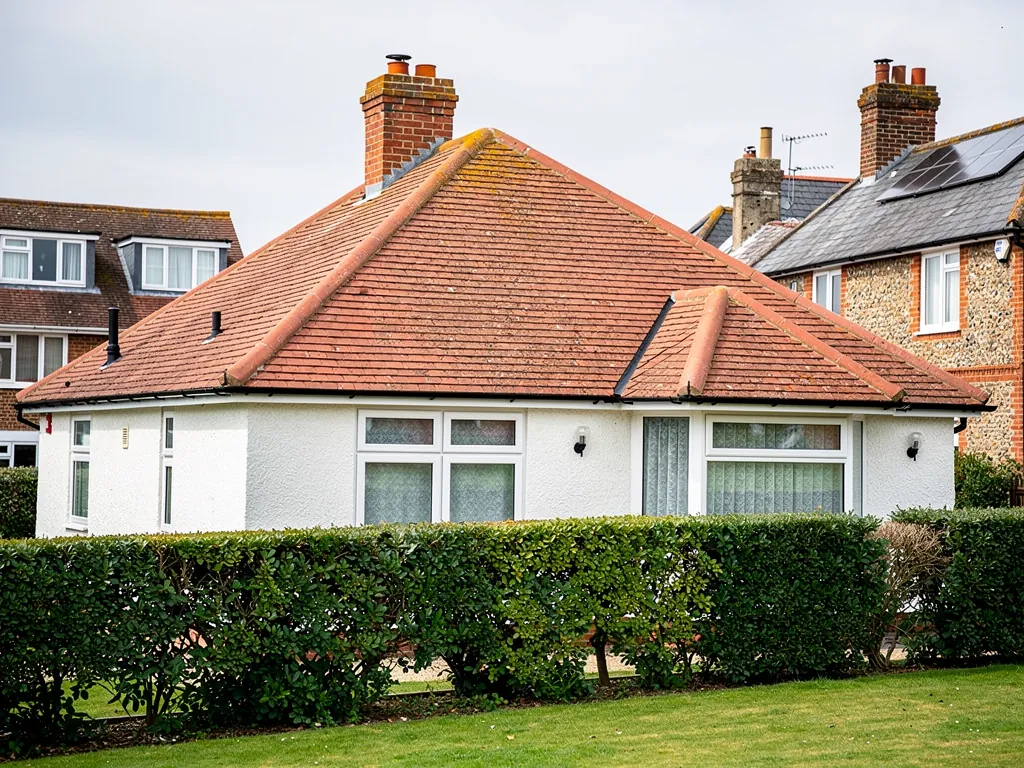
Fittleworth roofs
Lower Street sandstone, Tripp Hill and Greatpin Croft
-
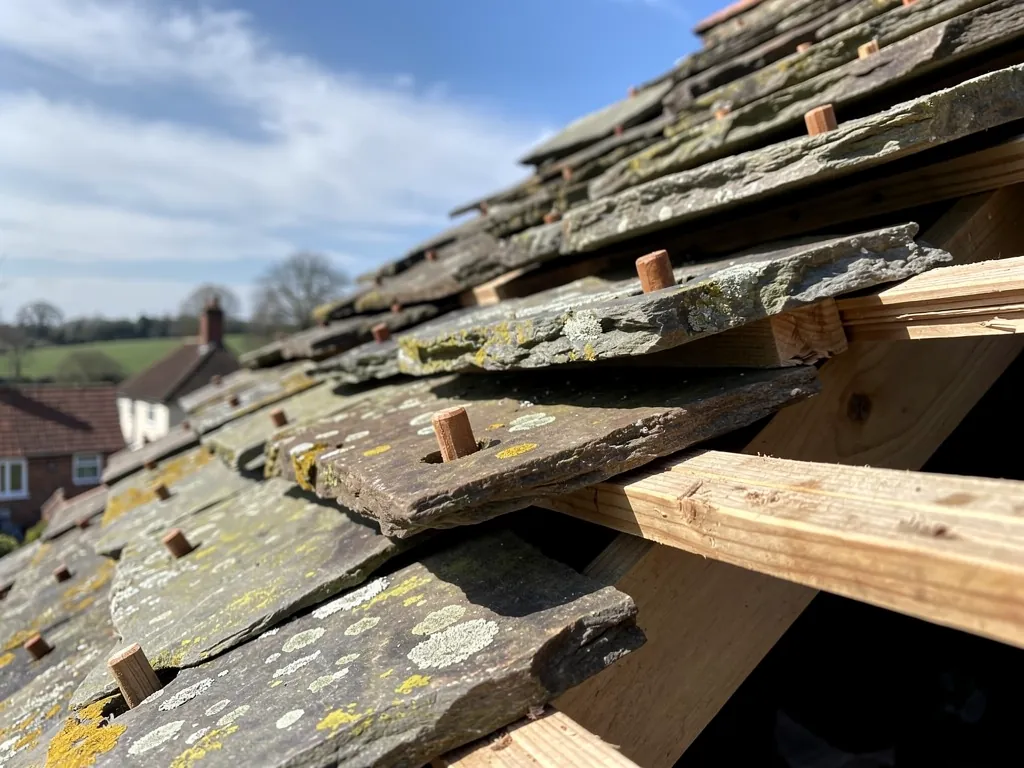
Sandstone and ironstone cottages
Some Fittleworth homes are built from sandstone and ironstone quarried in the parish and nearby. The parish has 89 listed buildings, so many roofs here come with a consent question before any re-covering begins.
-
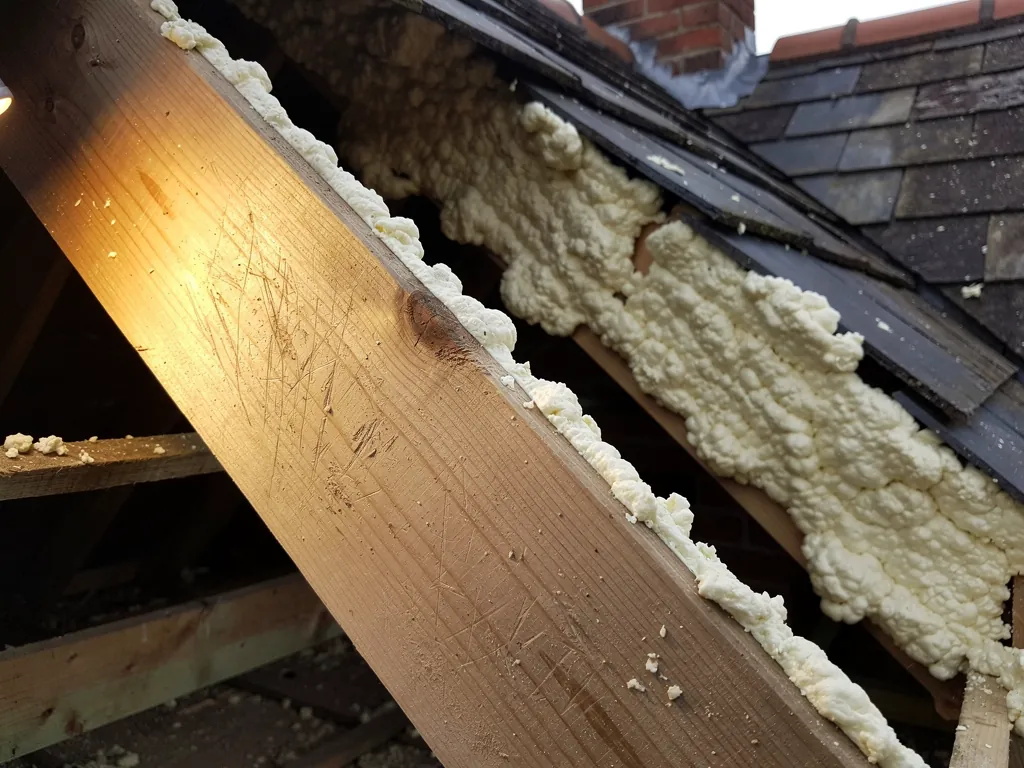
Timber-framed village buildings
Local wood supplied the many timber-framed buildings of the village, and a frame is rarely straight. Sagging slopes and thick walls mean tiles and lead are cut to fit the building, never forced onto it.
-
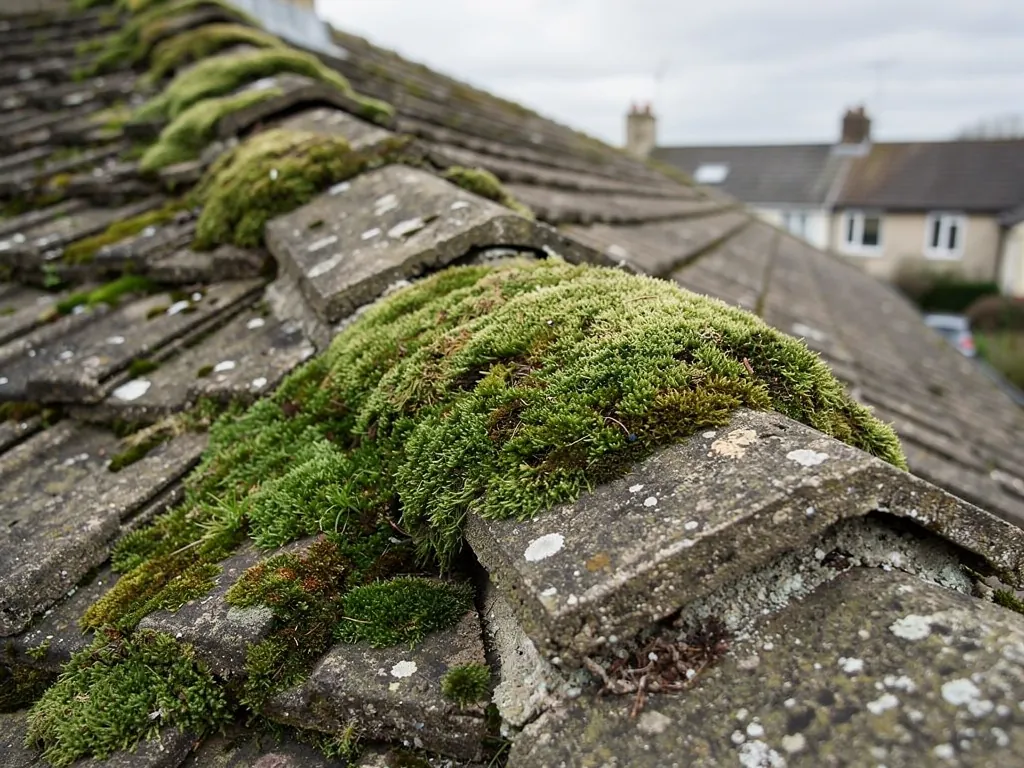
Railway and estate housing
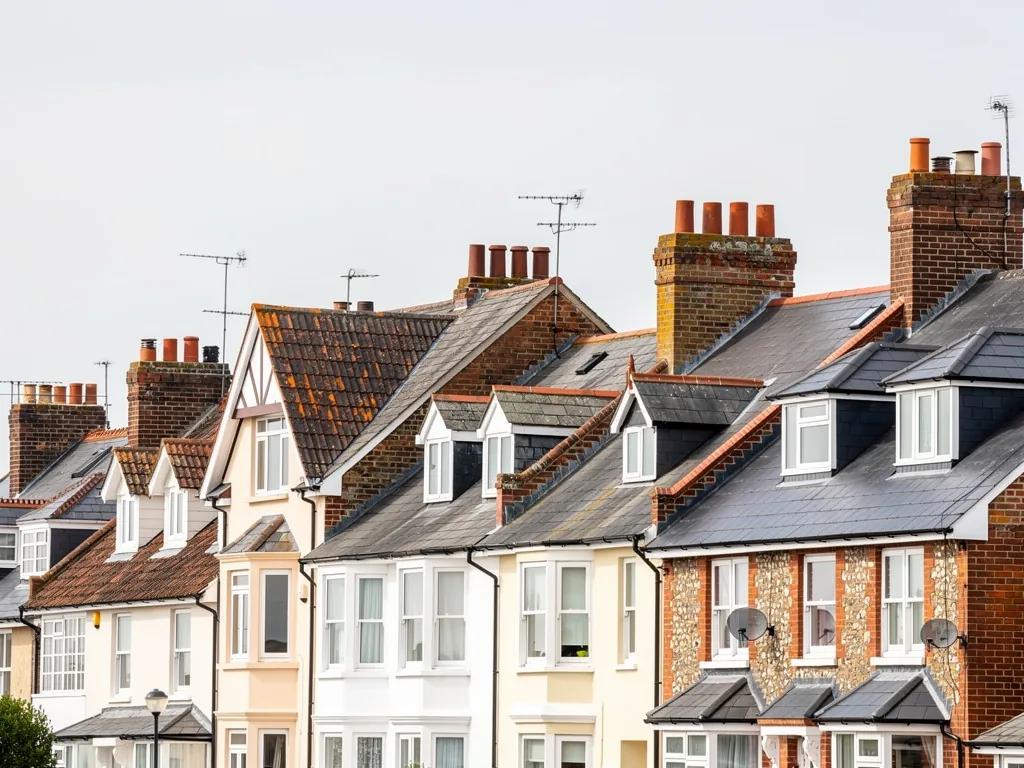
The station, open by 1889 and closed to passengers in 1955, led to housing around Tripp Hill. Greatpin Croft followed between the 1930s and 1950s, then The Gardens, School Close, Wyncombe Close and High Trees.
Map of Fittleworth, 15.8 road miles north-east of Bognor Regis, with the nearest towns we also cover.
Fittleworth's three conservation areas
- Council
- Chichester District Council
- Planning
- South Downs National Park Authority
- County
- West Sussex County Council
- Conservation area
- Fittleworth Village, with Coates and Little Bognor, designated in 1984
- Article 4
- The Park Authority lists a direction for land at Coates, Fittleworth
- Listed landmarks
- St Mary the Virgin, Fittleworth, and St Agatha at Coates, both Grade I
- Distance
- 15.8 road miles north-east of Bognor Regis, about 28 minutes by car
Fittleworth notes
Lower Street, Tripp Hill and Greatpin Croft
Fittleworth's roofs split into three: stone and timber cottages by the river, the railway-era streets, and the estates laid out from the 1930s.
Chapter 1: Sandstone, ironstone and timber in Lower Street2867
Sheet 01 / 03The older parts of Fittleworth, part of Bedham Lane and most of Lower Street down to the river lie inside a conservation area, and the parish has two more at Coates and Little Bognor. The village sits on the River Rother among the sandstone hills of its valley, and the Neighbourhood Plan records that some homes are built from sandstone and ironstone quarried in the parish and nearby, while local wood supplied the timber-framed village buildings. The composer Sir Edward Elgar rented Brinkwells, a cottage in Bedham Lane, in 1917 and wrote most of his Cello Concerto there. Lanes like that one are the setting for most of the roof questions we get in this part of the Rother valley, because old walls and old roofs meet at awkward angles. A roof that looked fine in summer can show its faults after the first long wet spell, and a stain on a ceiling is usually the end of a journey that began on the slope or at the chimney. We follow that journey back from the ceiling to the roof before we recommend anything.
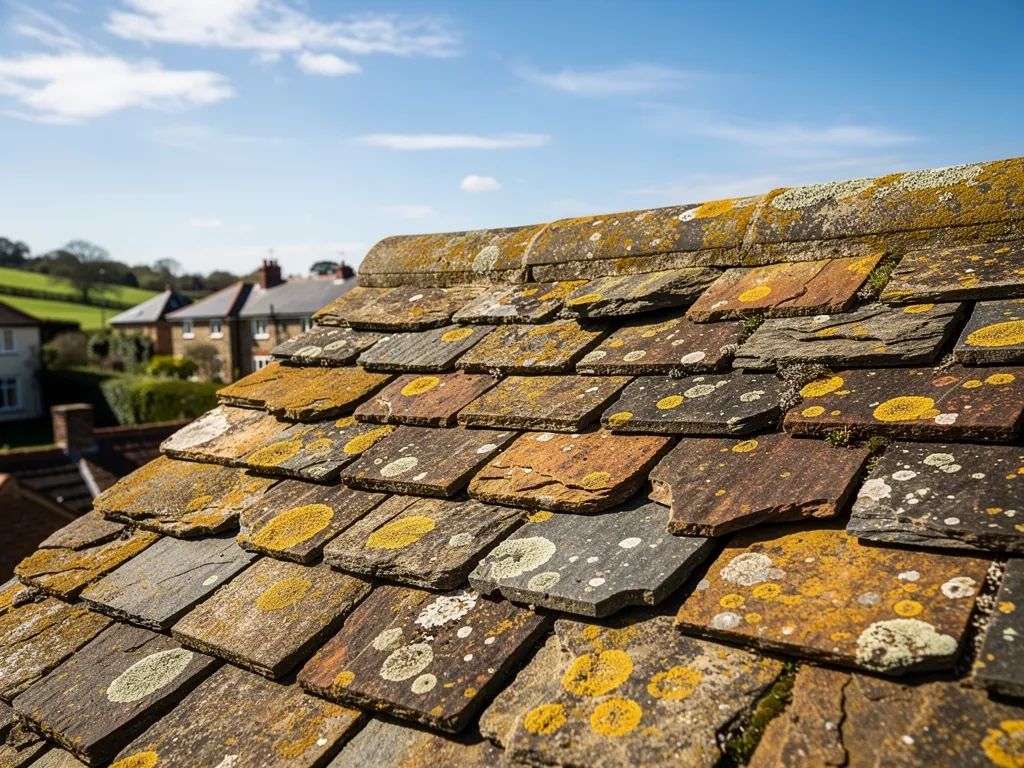
Before re-covering a Lower Street roof
- Photograph the ripples and dips
- Test the battens by hand
- Read the list entry
- Confirm which conservation area
1.1 Stone walls and lead where they meet the tiles
A stone wall is thick, irregular and often soft at the joints. Where a roof slope ends against one, the water has to be carried out over the tiles by a flashing, which is a ribbon of lead tucked into the stonework and bent down across the top edge of the covering. A flashing that has pulled out of a worn joint is among the most frequent causes of a damp patch beside a chimney or on an upper wall. We rake out the joint (cut a groove in the mortar), fit new lead, wedge it and re-point it. Our lead roofing and leadwork page explains the lead weights and laps behind that job.
1.2 Timber frames and roofs that have moved
An old timber frame moves with the seasons and settles over the centuries, so the roof above it picks up every dip and lean. A tiled slope that ripples is not always failing. Sometimes the rafters have simply taken their set. What matters is whether the battens (the thin timber laths that each tile hooks onto) are sound and whether the tiles still lap each other properly. We photograph both, and say which of three outcomes fits: a repair that holds, a patch that buys a winter or two, or a replacement that is due. Seeing the same defect on a neighbour's roof proves nothing about yours, so each house gets its own photographs. Our pitched roofing page describes how an old slope is stripped, re-battened and recovered with the sound tiles reused where we can.
Chapter 2: Tripp Hill, the old station and Greatpin Croft2806
Sheet 02 / 03Fittleworth's railway station was open by 1889 and closed to passengers in 1955. It brought housing around Tripp Hill, and the village grew again in the 1930s, when Greatpin Croft, a large social-housing area, began to be built. It was completed over the next two decades. Estates such as The Gardens, School Close, Wyncombe Close and High Trees followed between 1950 and the early 2000s. Put those dates side by side and a street gives you a rough date for the roof before you reach the door: the street where a house stands tells us roughly which generation of felt, batten and fixing is likely to be underneath.
Three calls on a mid-century estate roof
- RefixFallen tiles and rocking ridge pieces refitted and clipped down where needed.
- OverhaulVerges, ridges and the roofline redone while the main covering stays put.
- Re-roofNew covering, battens and underlay once the originals can no longer be trusted.
2.1 Greatpin Croft and mid-century roofs
A roof laid between the 1930s and 1950s and left alone since is now seventy years old or more, and the covering may still be good while everything underneath it has aged. The underlay (the sheet that lies under the tiles) can have split or perished, the battens can have gone soft at the eaves, and the verge (the tile edge that finishes a gable wall) may still be held by mortar alone. We find out by lifting a few tiles and looking, then photograph what we see. Our verdict is repair, patch or replace, and we only recommend a new roof when the structure underneath has reached its end. Where a repair will do, a repair is what we quote, and the photographs show you why. Our guttering, soffits and fascias page covers the roofline work that estate houses often need at the same time.
2.2 The later estates and what is under the soffit
The Gardens, High Trees and the other later estates are younger, but the HSE says anything built or refurbished before 2000 may contain asbestos and needs checking first. The HSE lists external soffits among the places asbestos insulating board turned up, and notes that it is hard to tell AIB from a modern equivalent by eye. So we never saw, drill or strip a soffit of uncertain age on the strength of looking at it; we get it identified, and the answer decides who does the removal. A positive result does not stop the roof job; it changes the order of work, and it is far cheaper to know before a scaffold goes up than after. Most removal of asbestos insulating board is licensed work, so if a sample comes back positive you will need a specialist asbestos contractor for that part, and we plan the roof job around their visit.
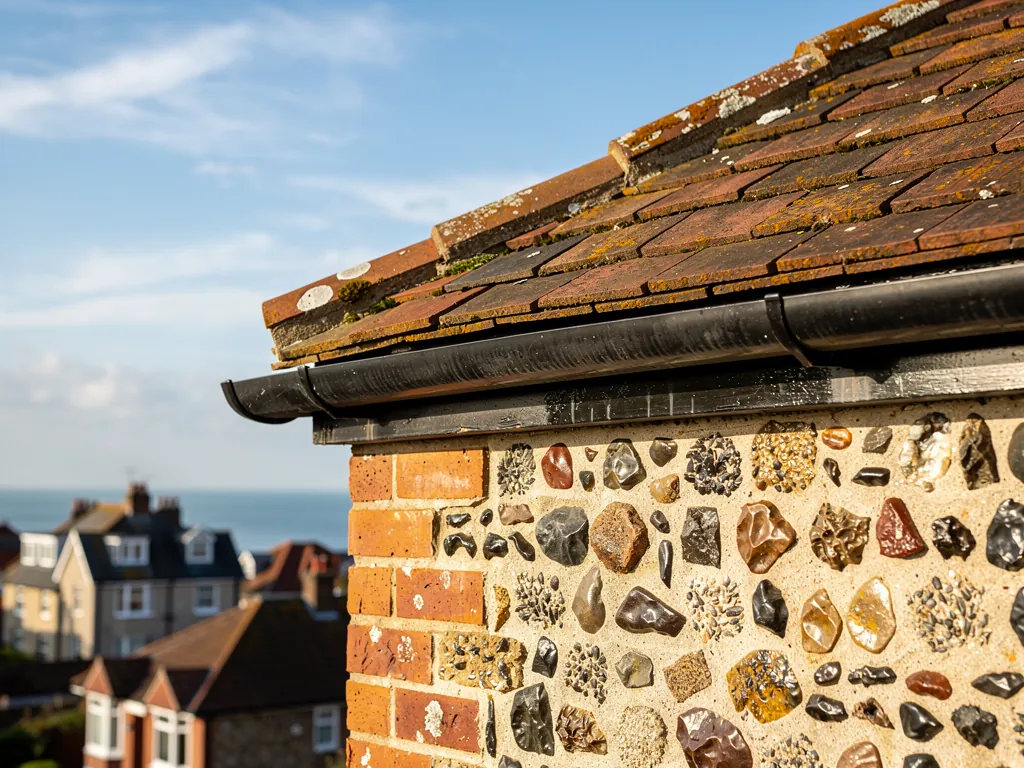
Chapter 3: Three conservation areas, 89 listed buildings and a bridge3538
Sheet 03 / 03Fittleworth's parish has 89 listed buildings, two of them Grade I: St Mary the Virgin in the village itself and St Agatha at Coates. Fittleworth Bridge is a Scheduled Ancient Monument. That is a heavy concentration of protected buildings for a village of this size, and it means a roof question here often starts with a document rather than a ladder. That is not an obstacle to repairs. It is a reason to be organised about them, with photographs, a note of what each tile and slate is made of, and a clear idea of which work is repair and which is alteration. We read the list entry, find out which of the three conservation areas the house sits in, and work out who decides, before a price is written.
Checking consent before we quote
- 1List entryWe look up whether the house or its neighbour is listed.
- 2BoundaryWe check which of the three conservation areas applies.
- 3Planning teamYou or we ask Chichester whether a like-for-like repair needs anything.
- 4QuoteThe written quote follows with a single total.
3.1 Who decides, and the Coates direction
Fittleworth lies inside the South Downs National Park. Planning here is handled by Chichester District Council on the Park Authority's behalf, and building control stays with the district council. The Park Authority's list includes an Article 4 direction for land at Coates, Fittleworth. Before any work at Coates, ask the planning team what it covers, because an Article 4 direction can withdraw rights that would normally apply. It is specific to that land and not a village-wide rule. Our guide to skylight planning permission is the place to start if you are thinking about a roof window in any of the three areas.
3.2 Listed houses, churches and the bridge
A listed house can have its roof maintained without consent when the repair is minor and like for like, as the Park Authority puts it, but an alteration that changes how the building looks or what it is made of needs listed building consent. St Mary the Virgin is a Church of England church, so its roof works go through the faculty system, with planning permission still needed for exterior development. A scheduled monument such as the bridge has its own consent from the Secretary of State. None of this is for us to decide on your behalf, but we keep the photographs and the written record a planning officer would ask for, so your application starts from clear evidence. If the answer is that the house needs nothing more than a like-for-like repair, you will have that in writing, and the job can be booked without waiting on anyone else.
Roofing services for Fittleworth and the Rother valley
Frequently asked questions
Questions from Lower Street to Greatpin Croft
Can a timber-framed cottage in Lower Street keep its old tiles when the roof is repaired?
Often, yes. Where the tiles are still good and it is the battens or the underlay that have failed, we lift the tiles, renew what is underneath and relay the originals, topping up with matching reclaimed ones. The slope is photographed before and after, so you can compare. Should the tiles themselves be flaking or crumbling, we tell you and discuss matching replacements, because a listed house or a conservation area may need approval first.
Do the Greatpin Croft houses from the 1930s to 1950s need their roofs replaced?
Not automatically. Age matters, but condition decides. A roof of that era may have had ridges refixed, tiles replaced or the underlay renewed. We lift a few tiles, check battens and verges, and photograph the faults. If the covering and structure are good, we repair or overhaul the ridges and verges. We advise a full re-roof only when the layers underneath are worn out.
Does the Article 4 direction at Coates affect roofs elsewhere in Fittleworth?
The Park Authority's list shows the direction as covering land at Coates, so it is site-specific and not a village-wide rule. What it removes is not something to guess at. If your house is in or near Coates, put the question to Chichester District Council's planning team ahead of any materials order, and pass us their answer so the written quote matches what you may do.
Could the soffits on a 1950s Fittleworth estate house contain asbestos?
It is possible. The HSE tells owners to treat anything built or refurbished before 2000 as a possible source and lists external soffits among the places asbestos insulating board was used. Do not drill, scrape or break one. Get it identified first. If it proves positive, most removal is specialist work, and we tell you plainly where our part stops and theirs starts.
Nearby areas
Get a quote
Tell us about your roof
Describe what's happening and we'll call you back.
Loading the enquiry form. You can also call 01243 252373.