
Roofers in Chiddingfold
Timber frames, Horsham slabs, Wealden clay
Chiddingfold's roofs range from the king-post timbers of the Crown Inn to the Horsham slab edging at St Mary's, on deep Wealden clay in well-wooded country south of Godalming.

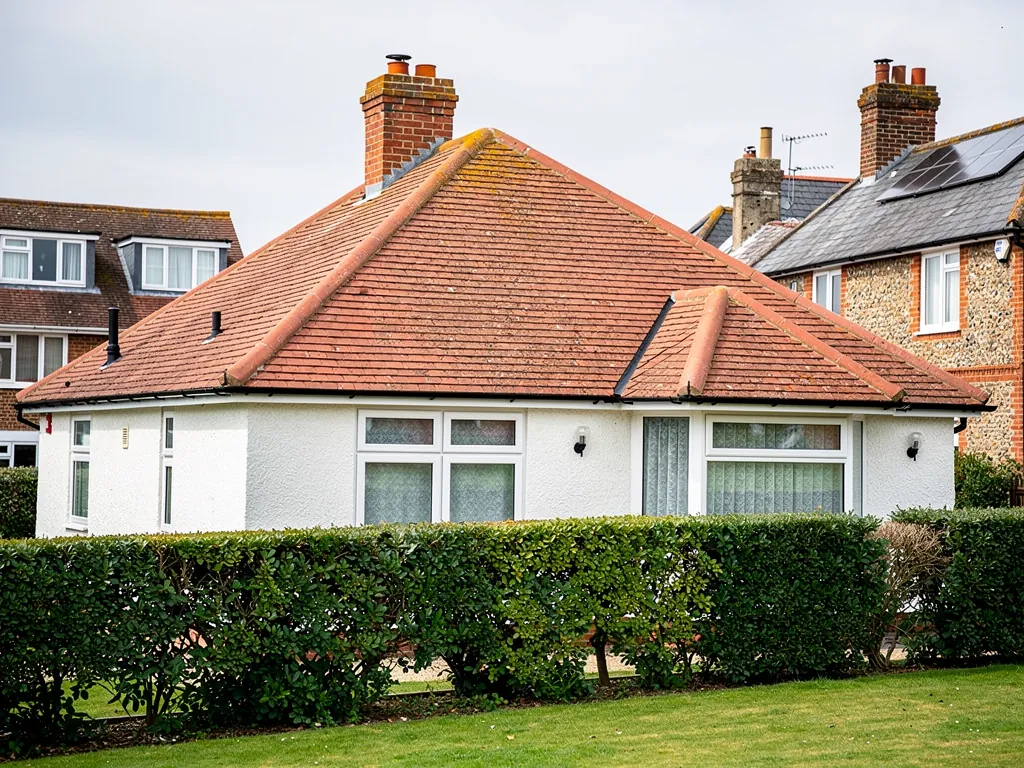
Chiddingfold roofs
From the Crown Inn's open hall to the church eaves
-
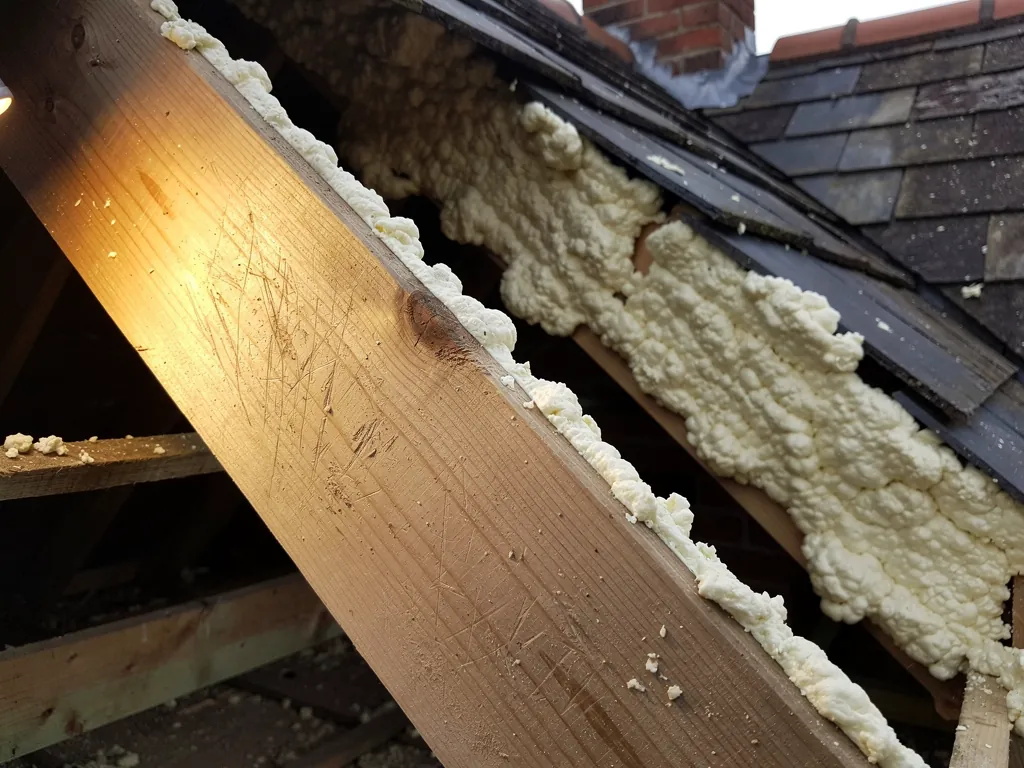
A 14th-century roof at the Crown
The Crown Inn, opposite the church, keeps a 14th-century king-post roof over what was originally its open hall, with massive timber framing that has outlasted most of what stood around it.
-
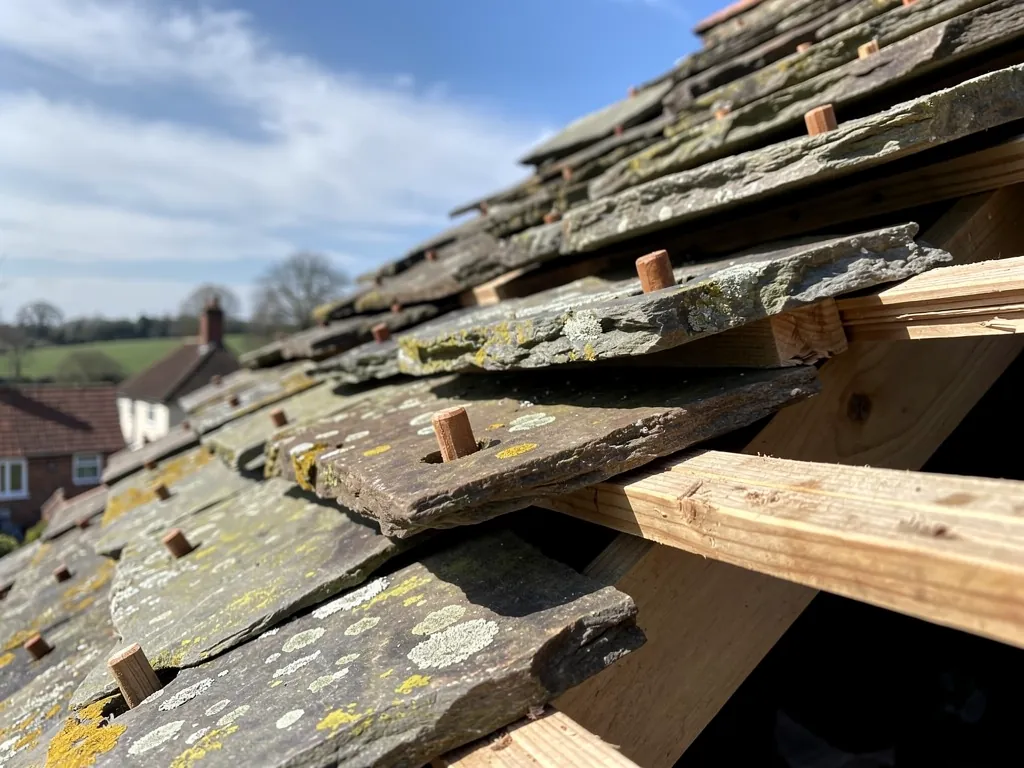
Horsham slabs at St Mary's
St Mary's is built of Bargate stone rubble, with a chancel from about 1230. Horsham slabs once covered most of its roofs, but most were removed, leaving a slab edging at the eaves.
-
Farms, tile works and glass
Lythe Hill Farm and Hallands are named among the village's timber-framed buildings. The county history also records tile and brick works in the parish, and glass-making here in earlier centuries.
Map of Chiddingfold, 26.3 road miles north of Bognor Regis, with the nearest towns we also cover.
The merged conservation area of 2007
- Council
- Waverley Borough Council
- County
- Surrey County Council
- Conservation area
- Chiddingfold Conservation Area, designated 2007, when Waverley merged the Chiddingfold and Northbridge areas
- Article 4
- Waverley Borough Council's planners can confirm for your address
- Church
- St Mary's, Bargate stone rubble, chancel from about 1230
- Distance
- 26.3 road miles north of Bognor Regis, about 44 minutes by car
Chiddingfold notes
Open halls, stone slabs and Wealden clay
Chiddingfold's recorded roofs belong to an inn, a church and a landscape of clay and woodland, and each teaches something about repairing roofs today.
Chapter 1: The Crown Inn and the king-post roof2196
Sheet 01 / 03Chiddingfold's best-documented roof is not a house at all. The Crown Inn stands opposite the church, and the county history of 1911 records that it keeps a 14th-century king-post roof over what was originally its open hall, within massive timber framing. A king-post is a short vertical timber that rises from a cross-beam to the ridge, taking weight from the rafters and passing it down to the frame. That roof is not just old. It is a working structure, and it shows how buildings here were once put together: heavy frames first, with the covering hung from them afterwards. The inn's roof also reminds an owner of something simple. A building that has stood for six centuries has usually been repaired many times, and the repairs that lasted were the ones that respected the frame instead of fighting it. Today, a leak in a house of that kind deserves the same patience, a careful look at where the water enters and where it travels before it shows itself indoors.
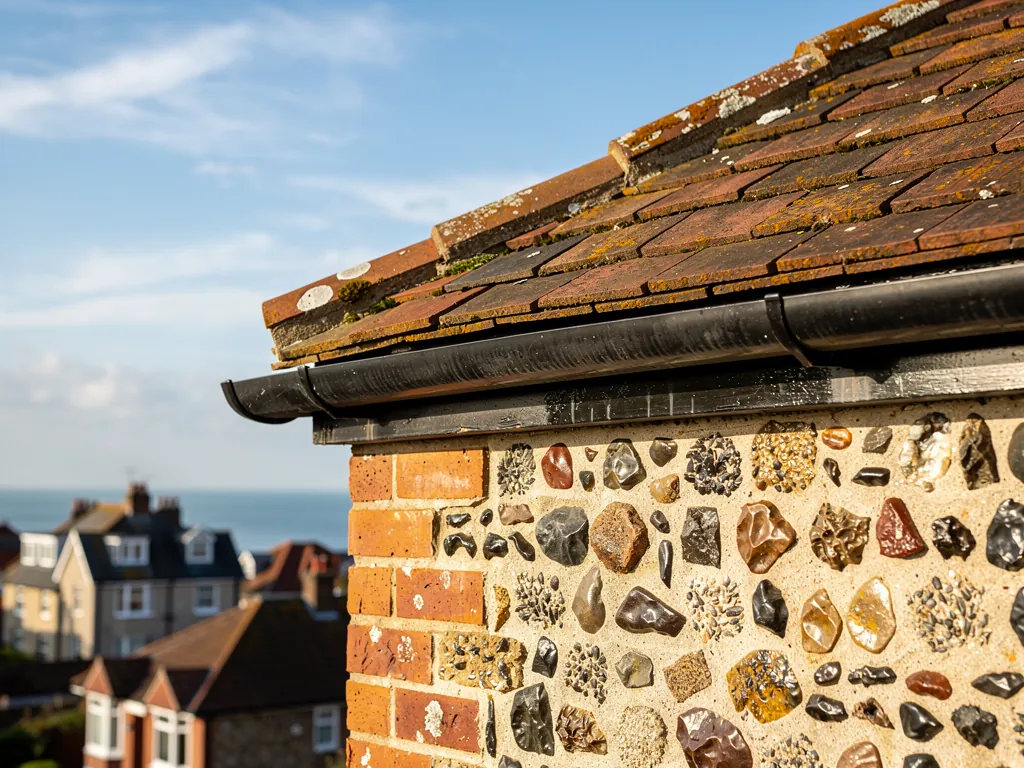
Looking at an old frame before the roof
- Check rafter feet for rot
- Look for daylight at the laps
- Inspect valleys and abutments
- Photograph the ridge line
1.1 Why the frame comes before the covering
On a timber-framed building, the roof covering is the visible layer and the frame is the thing that matters. A lifting tile or a tired ridge can be put right in a day, but a rafter foot that has rotted where a gutter overflowed is a different order of problem. Before any repair, we look from inside the loft as well as outside: for daylight at the laps, for stains on the timbers, for fresh sawdust that suggests beetle and for rafters that have dropped. When the evidence points to the frame, the first call is to a carpenter or a structural engineer, and you hear that before any quote is written.
1.2 Old farms and the clay under them
Lythe Hill Farm and Hallands are both named in the county history among the village's timber-framed buildings. Farms like these grew by additions, a wing here, a lean-to there, so their roofs often have awkward valleys, abutments and changes of pitch where one phase meets the next. Those junctions are where lead earns its place. A lead-lined valley (the gutter formed where two slopes run together) or a soaker (a small bent sheet of lead tucked under each course beside a wall) wears out sooner than the covering around it, and a patch of damp on an inside wall at a join in the building is often where that has happened. Our roof repairs service shows how we deal with the small failures before they turn into a big one.
Chapter 2: Horsham slabs, Bargate stone and St Mary's2562
Sheet 02 / 03St Mary's church is of Bargate stone rubble. The chancel dates from about 1230. The county history adds a detail that matters to anyone who looks after an old roof: Horsham slabs once covered most of the church's roofs, but most were removed, leaving only an edging of them at the eaves. Horsham slabs are thin sandstone flags, hung in diminishing courses, with the biggest and heaviest at the bottom edge and smaller ones working up towards the ridge. What survives at St Mary's is a few courses of the original, the part that a modern replacement could not copy.
Two ways to treat an old roof
Repair and keep
Sound slabs or tiles are rehung and gaps filled with reclaimed matches, keeping what makes the roof special.
Strip and renew
Everything comes off and a new covering goes on; right when the battens and fixings have failed throughout.
2.1 A restoration that went too far
The aisle and chapel roofs were renewed in 1870, in a restoration the county history calls "of an exceptionally destructive character". The lesson for a householder is a practical one. Roof work that treats age as a fault and strips everything out can destroy what made the building worth keeping. A roof with a few sound old slabs or tiles on it is often better repaired than replaced, the sound pieces rehung, the damaged ones swapped for reclaimed matches, and the honest limits of the repair explained in advance. When the survey finds a roof is beyond saving, the verdict says so too, backed by the photographs that justify it.
2.2 Consent for a church, and the stone slab specialists
St Mary's belongs to the Church of England. Where such a church is listed and in use, the Church's own faculty process takes the place of the council's listed building consent, although planning permission may still be needed for work on the exterior. Houses do not share that route. The owner of a listed house deals with Waverley Borough Council whenever a job would touch what makes it special. Stone-slab roofs have their own craft, and our Horsham stone roofing service explains where we fit in, from rehanging slipped slabs to the lead details around them.
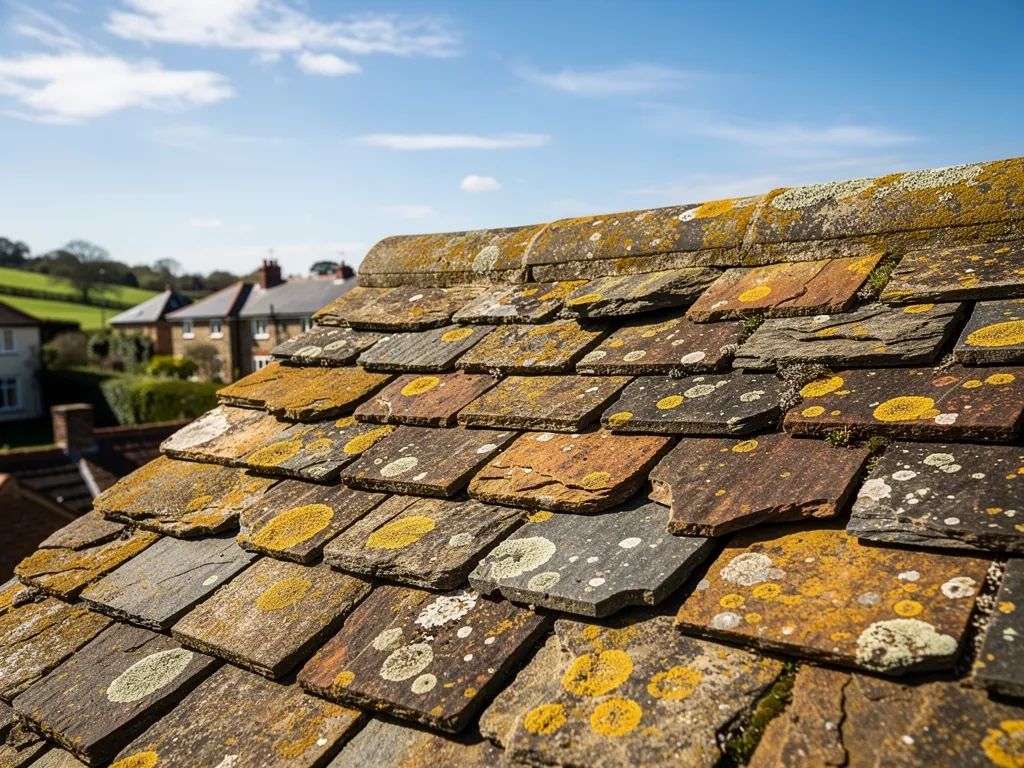
2.3 Edgings, eaves and the first course
An eaves course of heavy slabs works as the base of the whole roof, and if it slips, everything above can follow. We look at the bottom three or four courses, the fascia or wall plate behind them and the gutter line, because water spilling behind a gutter rots the timber that carries the load. If the edging at your own eaves is original, it is worth knowing before anyone touches it, since it may be the last of an older covering and the sensible repair is to keep it in place and work around it. We photograph each course before lifting anything so that it can go back in the same order, and the photographs stay with your quote as a record of how the roof looked at the start.
Chapter 3: Wealden clay, woods and the 2007 boundary2501
Sheet 03 / 03Chiddingfold lies on deep Wealden Clay, about seven miles south of Godalming, and the 1911 county history describes the soil as very deep and tenacious in wet weather, the parish as well wooded and the village as home to tile and brick works. Glass was made here too. Around 1225 to 1230, Simon de Stokas granted land at Dyer's Cross to Laurence the Glassmaker. Those trades tell you what a roofer in Chiddingfold works with: clay under the foot, trees over the roof, and a long habit of local brick and tile. In 2007 Waverley merged the Chiddingfold and Northbridge areas into a single Chiddingfold Conservation Area, adopting its appraisal on 16 October that year.
A Chiddingfold roof job, step by step
- 1SurveyRoof, loft and gutter line are photographed so you see the faults in your own roof.
- 2VerdictRepair, patch or replace is stated plainly, and the job proposed is the smallest one that cures the fault.
- 3Written priceA single total arrives once the survey is complete, noting any consent your house needs.
- 4FinishThe work is completed, rubbish is carted off and the garden and drive are left tidy.
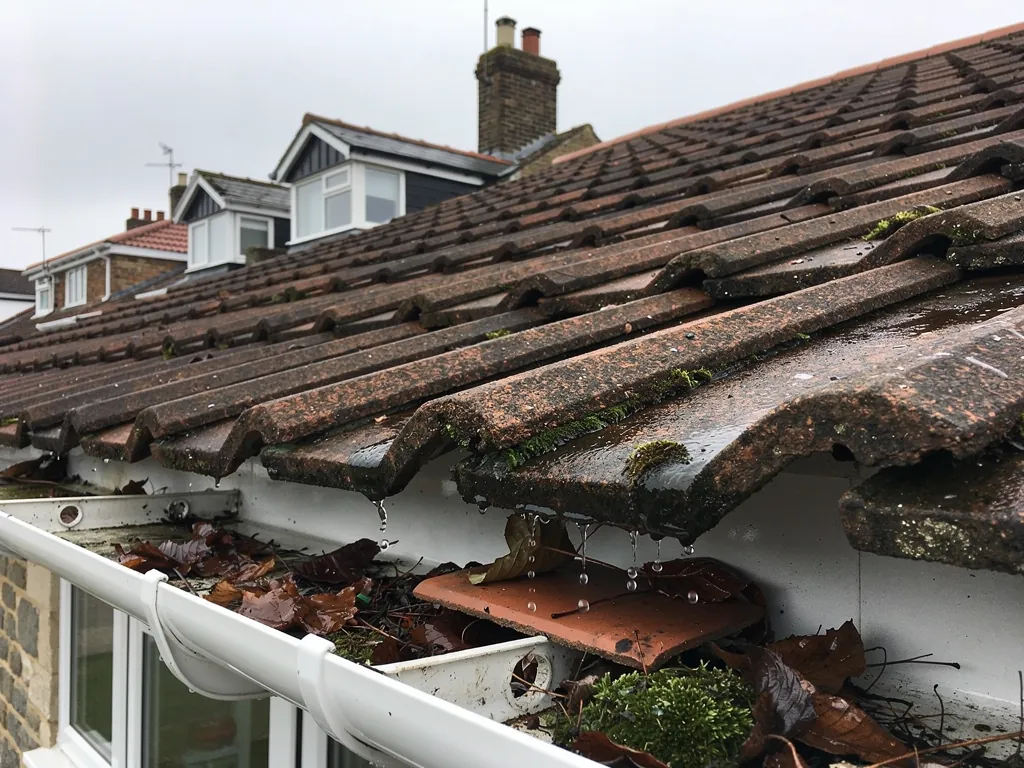
3.1 Trees, leaves and moss over the roof
A well-wooded parish drops a lot of leaf, and leaf is the commonest cause of a blocked gutter or valley. A choked valley spills sideways and can soak the battens under it, and moss holds water against a tile and keeps it wet. We clear the channels, treat the moss by hand or with a careful wash that stops short of damaging the surface, and note any branches close enough to rub the roof. Our roof cleaning and moss removal service explains what each approach involves.
3.2 Soft ground, scaffolds and wet clay
Clay that turns tenacious in wet weather is awkward for a scaffold base and a heavy delivery. Scaffold feet are spread on boards and positioned with care, and a lorry that cannot get onto a soft verge is better planned for than rescued. Where scaffolding will stand on or over the road or pavement, the scaffolders must hold a highways licence before they start, so we ask early about the start date and plan the job around the notice period. Check that any quote you are given says whether the scaffold and VAT are included.
3.3 What the conservation area asks of a roof
Re-covering in a similar material is the ordinary case, and ordinary cases rarely call for planning permission. Changes to the look are different, and in a conservation area the planning team at Waverley Borough Council is the place to ask, particularly if you are thinking of a roof window. Our conservation roof windows guide explains the points to raise. The merger of 2007 matters mainly for one reason: Chiddingfold and Northbridge are now judged as one place, so an address near the old boundary should be checked against the single map and appraisal Waverley holds, not against what a neighbour remembers.
Deep clay holds water, and a soakaway or drain that is slow to clear can leave the ground by a downpipe wet for days. If rainwater from the roof backs up at ground level, the staining on a wall can be mistaken for a roof defect. We trace the downpipe to its outlet before concluding anything about the roof above it.
Roofs we look after in Chiddingfold
Frequently asked questions
Questions from the Crown Inn to Dyer's Cross
Can the roof of a timber-framed Chiddingfold house be repaired without disturbing the frame?
Often, yes. Leaks commonly start in the covering or at a junction, and those can be mended from outside. We look inside the loft first for rot at the rafter feet and for movement. If the frame itself has been damaged, the roof is a secondary question, and we tell you to bring in a carpenter or structural engineer before anything is priced.
What does it mean that Horsham slabs once covered St Mary's roofs?
The county history says most of the slabs were removed and an edging was left at the eaves. It matters because slabs, when they survive, are worth keeping: sound ones can be rehung and gaps filled with reclaimed matches. For a house with a stone roof of its own, that is usually the better repair, unless the fixings have failed across the whole roof.
Does the merged Chiddingfold Conservation Area affect a re-roof?
For an unlisted house, re-covering in a similar material rarely calls for planning permission, yet a different tile or slate, or a new roof window, can change how a street looks, so ask Waverley Borough Council's planning team first. A listed house is another matter, because the council must agree to any job that alters its special character.
Why check the gutters under Chiddingfold's trees when the leak is in the ceiling?
In a well-wooded parish, a gutter or valley choked with leaves can overflow behind the fascia or under the tiles and mimic a roof fault. Clearing it and checking the falls can settle the question quickly. If the cause is a slipped tile or failed flashing, the photographs show you where, and the repair is sized to match.
Nearby areas
Get a quote
Tell us about your roof
Describe what's happening and we'll call you back.
Loading the enquiry form. You can also call 01243 252373.