
Roofers in East Dean
Downland flint, brick plinths, tiled roofs
East Dean lies at about 300 feet where the River Lavant rises, and its older buildings are flint with brick dressings under tile, with woodland and heath rising on both sides.

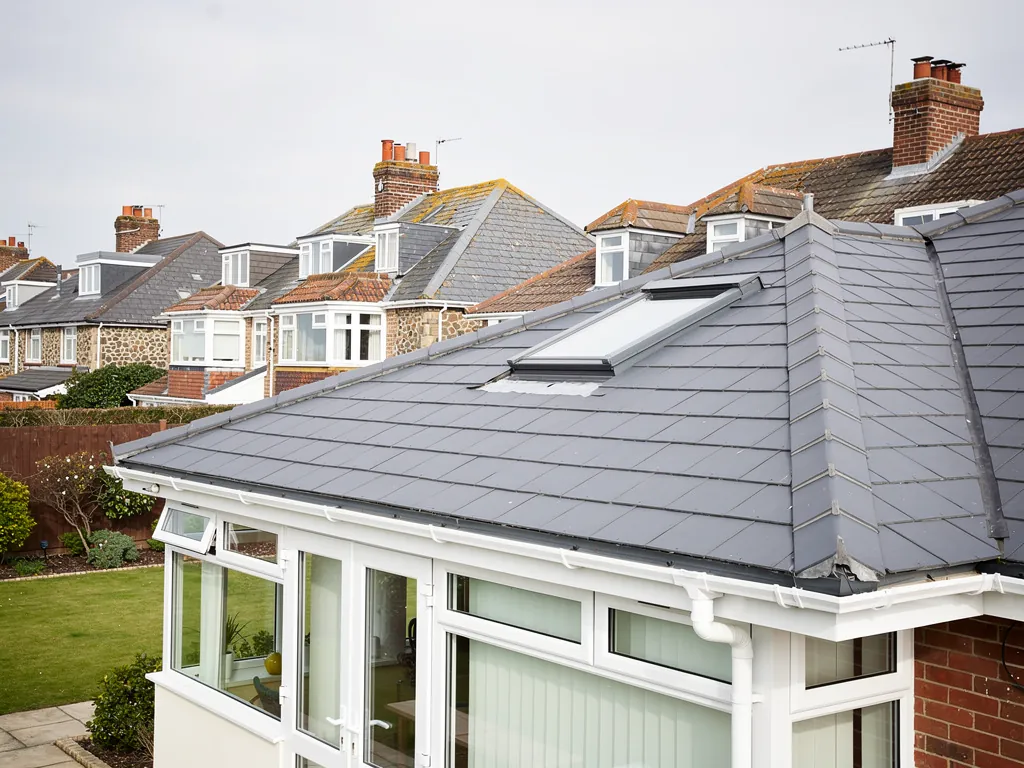
East Dean roofs
Flint, brick and tile at the head of the Lavant
-
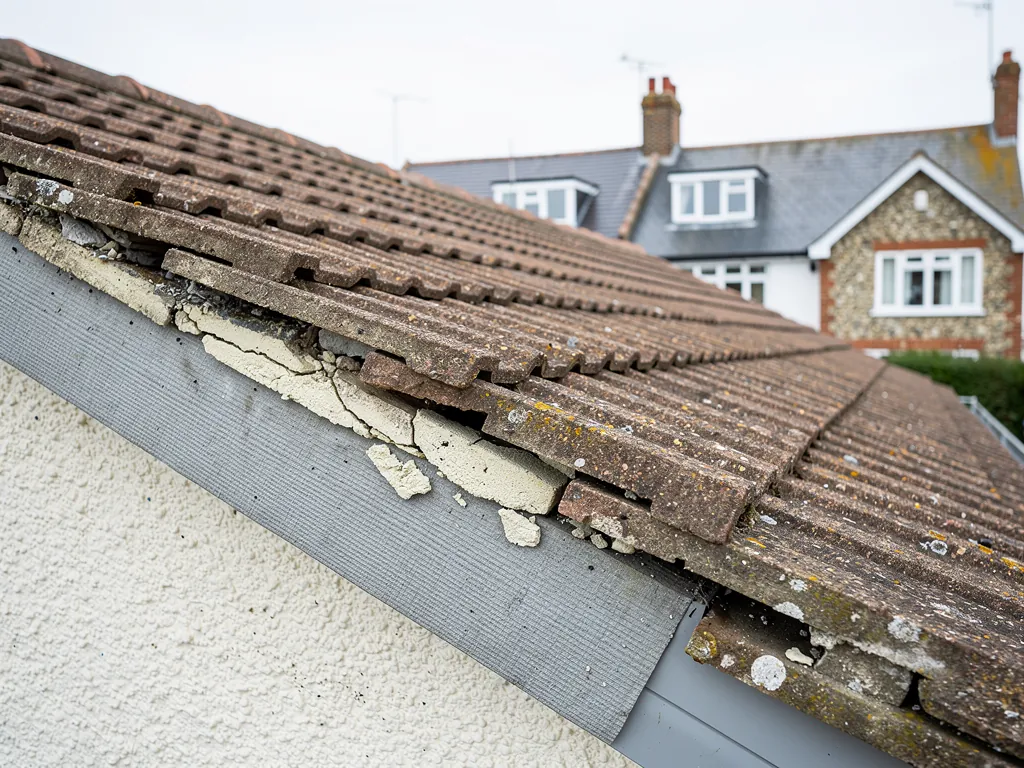
A 1630 farmhouse with half-hipped gables
A farmhouse south-east of the church, Nos. 30 and 31, was built about 1630 with half-hipped gables. Its walls are flint with a brick plinth and angle dressings, and a half-hip puts a small slope where a plain gable would end.
-
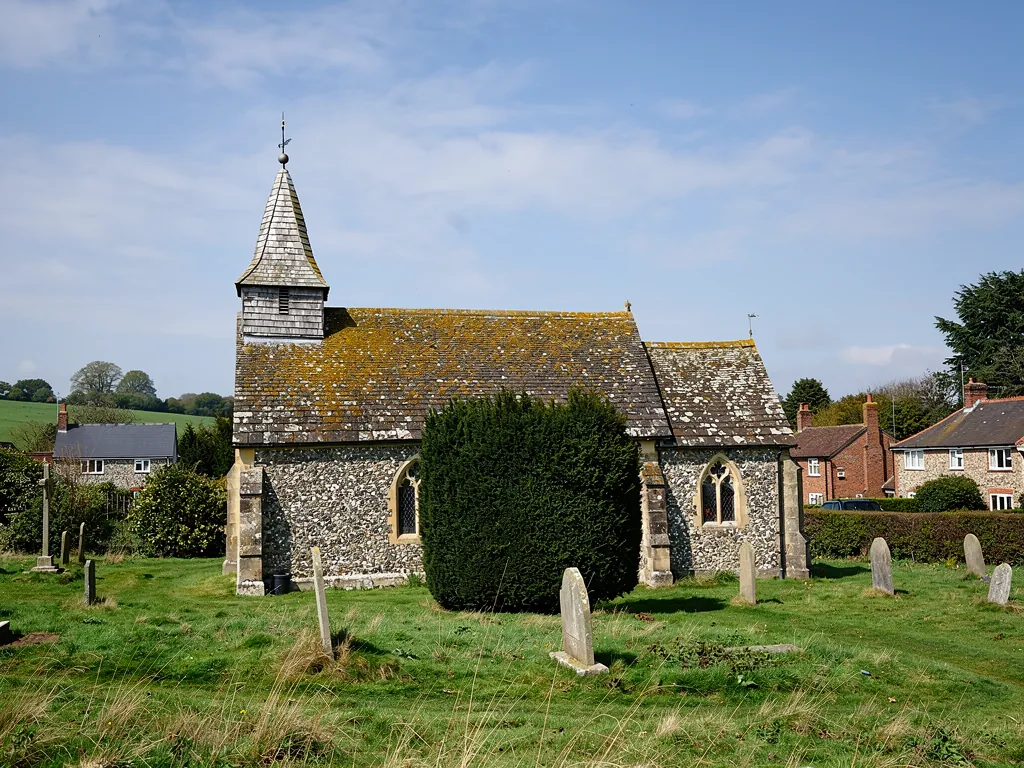
All Saints in flint rubble
All Saints has flint rubble walls with ashlar dressings, patched in places with brick, under a tiled roof. It seems to have been begun in the 12th century, and its listing is Grade I.
-
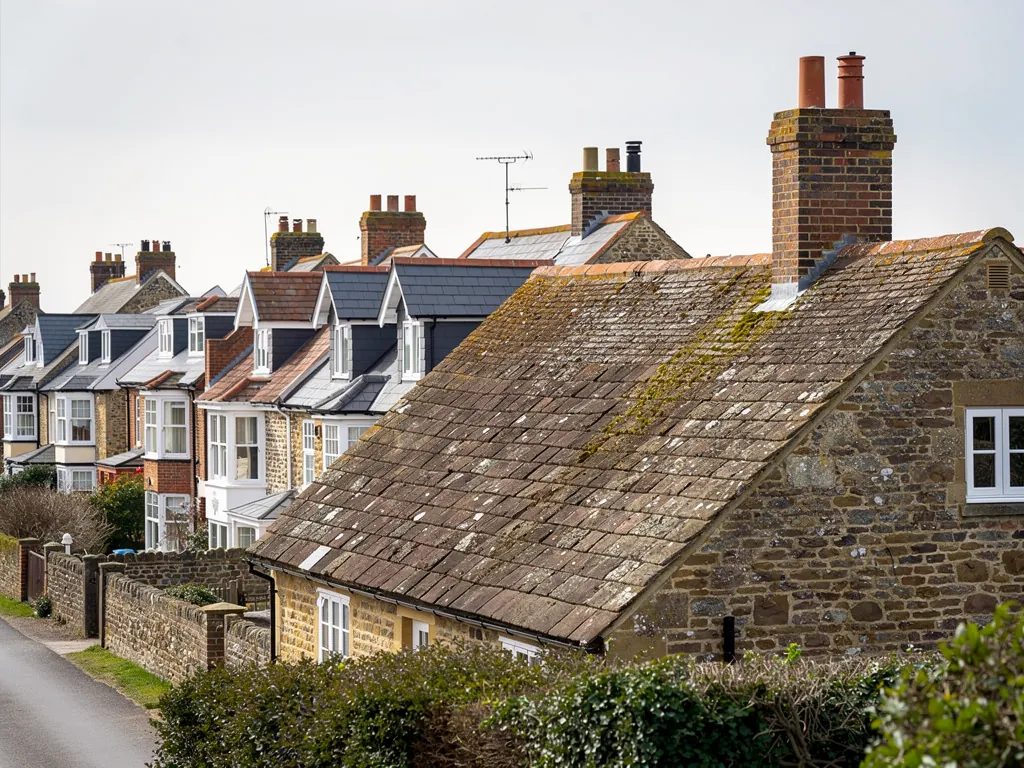
Woodland and heath on both sides
The high ground north and south of the valley is woodland or heath, reaching 700 to 750 feet on Graffham Down. A roof below trees collects leaves in its valleys and gutters, and shaded tile stays damp longer.
Map of East Dean, 11.6 road miles north of Bognor Regis, with the nearest towns we also cover.
East Dean and its Lavant valley
- Council
- Chichester District Council
- Planning
- South Downs National Park Authority
- County
- West Sussex County Council
- Conservation area
- East Dean (West Sussex), on the South Downs National Park Authority's Chichester conservation area maps
- Listed landmark
- Parish church of All Saints, Grade I, first listed 5 June 1958
- Distance
- 11.6 road miles north of Bognor Regis, about 20 minutes by car
Lavant head
From the 1630 farmhouse to All Saints
East Dean's roofs reward patience: old farm gables, a Grade I church and tree cover that keeps every slope damp.
Chapter 1: Half-hipped gables on the 1630 farmhouse2440
Sheet 01 / 03East Dean is a large downland parish of 4,652 acres, and the village lies at about 300 feet in the valley where the River Lavant rises. The Victoria County History singles out a farmhouse south-east of the church, Nos. 30 and 31, built about 1630 with half-hipped gables. Its walls are flint with a brick plinth, the brick base at the foot of the wall, and brick angle dressings. This is the sort of building that tells a roofer why slow, careful work matters in this valley.
Three calls on a half-hipped roof
- PatchCracked tiles and a loose hip fixed, with the rest left alone.
- OverhaulRidge, hips and verges renewed, covering kept in place.
- Re-roofBattens, underlay and tiles renewed once they have reached the end.
1.1 What a half-hip changes
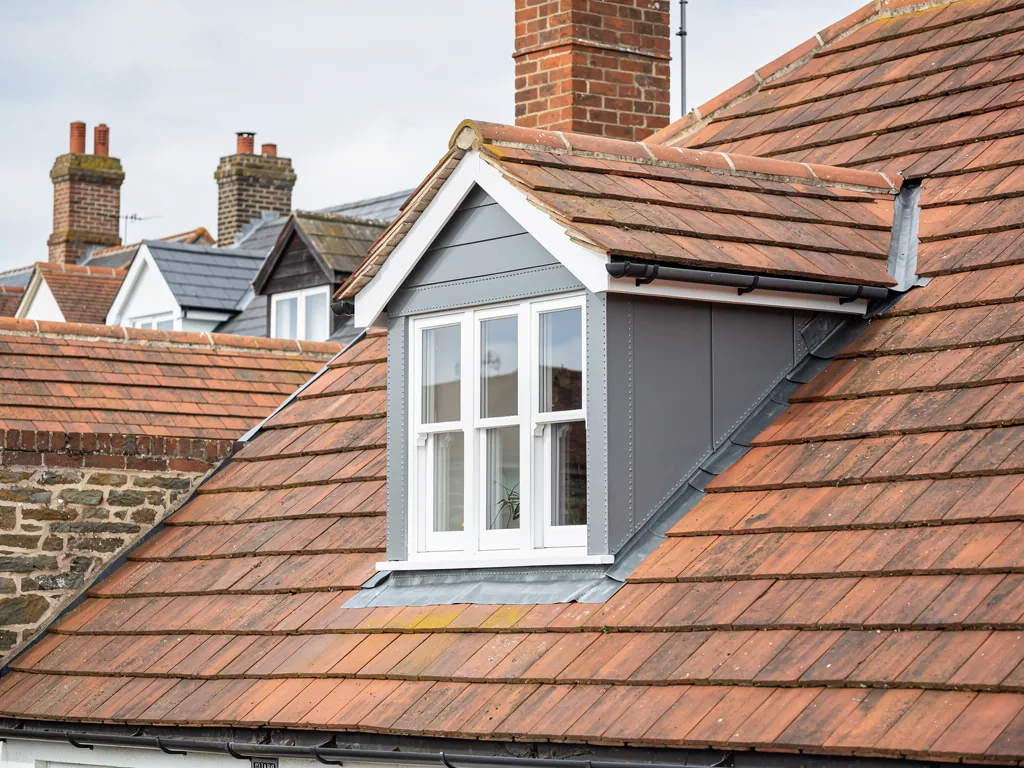
A plain gable ends in a vertical wall, and the roof edge there is called the verge. A half-hipped gable clips the top of that wall with a small sloping face, so the ridge stops short of the wall and the roof turns the corner with a short hip. That makes more junctions to keep watertight. Each hip needs its own tiles cut to the angle, and the point where ridge, hip and the two slopes meet is among the places where water first finds a way in. BS 5534, as revised in 2014, ended the reliance on a mortar bed alone for ridge and hip tiles, which now also take screws, clips or a dry-fix system. On a roof like this, a good repair re-secures those tiles without altering how the gable reads from the lane. Where the old bedding has crumbled, it is raked out and renewed neatly, so no loose mortar is left to fall into the gutter.
1.2 Flint walls and a brick plinth
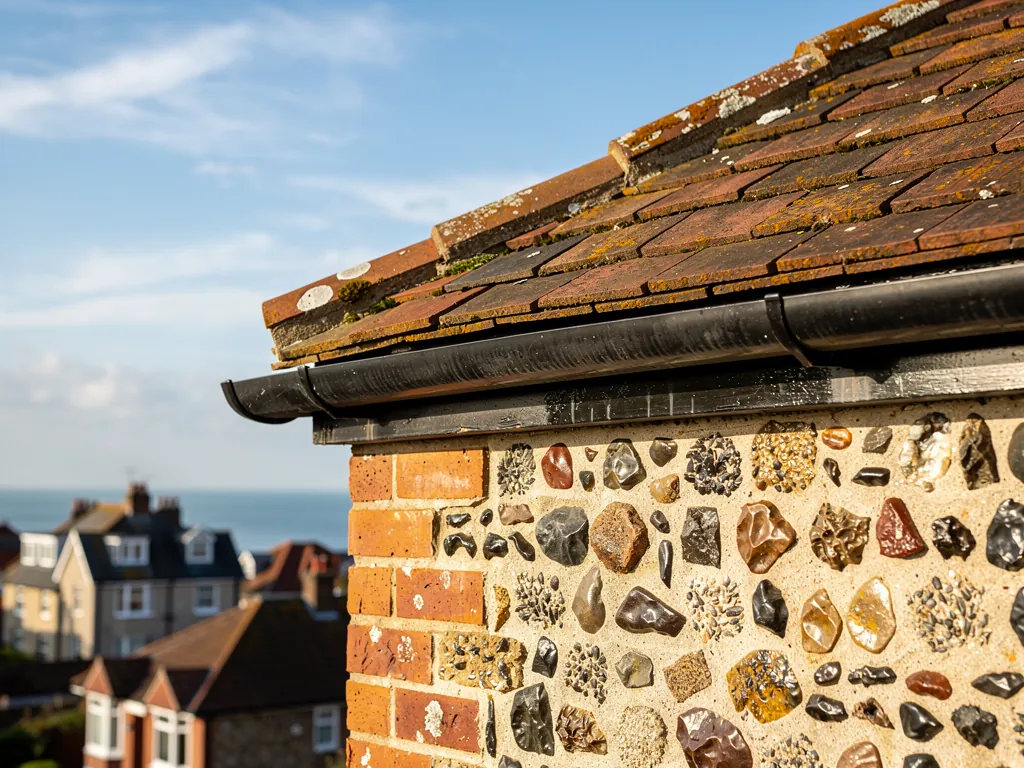
Flint walls are hard to repair and easy to damage, so the roof has to be worked on without ladders or scaffold tubes resting against loose facing, and the foot of every ladder is set on firm ground, clear of the plinth. Where the roof meets a flint wall, the seal is a lead flashing, tucked into a raked-out joint and dressed down over the tile, rather than a bead of sealant. We photograph each such junction as we find it, and the pictures go to you with the quote. A flashing of that kind is dressed by hand to the wall, which is slow work, and it is the reason a small flint-and-tile job can take longer than the size of the roof suggests. Our pitched roofing page describes how tiled roofs are repaired and recovered.
1.3 Choosing between a patch and a re-roof
An old farmhouse roof is a good test of the repair-or-replace question. A few cracked tiles and a failed hip are a patch. Soft battens, perished underlay and tiles that crumble in the hand point towards a re-roof. You get a verdict with photographs, and if a modest repair will last, a modest repair is what we propose.
Chapter 2: All Saints, flint rubble and the faculty route2806
Sheet 02 / 03The parish church of All Saints has walls of flint rubble, finished with ashlar, the squared stone blocks round corners and openings, patched in places with brick, and it carries a tiled roof. The county history says work seems to have begun in the 12th century. The church is listed Grade I under list entry 1026377, first listed on 5 June 1958. It is an Anglican parish church still in use, which settles the consent route for works to the building itself.
Roofs under tree cover
- Clear leaves from valleys
- Rake moss from shaded slopes
- Flush gutters and outlets
- Cut back branches touching tile
2.1 Consent for a listed church
For a church in use, the ecclesiastical exemption takes works out of the council's listed building system and into the faculty jurisdiction. It does not take away the need for planning permission when development changes the exterior. Roof work on the church itself belongs to the parish and its architect. What follows is for neighbours: a house beside a Grade I church shares its churchyard walls, its trees and sometimes its drains, and an early conversation with the parish saves trouble later. If we are asked to work next to the churchyard, we agree the access and the tidying-up in advance.
2.2 Valleys and gutters under trees
Woodland and heath climb to 700 or 750 feet on Graffham Down, either side of the valley, and many East Dean roofs sit close to trees. Leaves and moss gather where a roof is shaded. The valley, the lined channel at the internal angle of two slopes, is the first place to clog. When it clogs, water tips over the lip and runs down the wall beneath, and the gutters collect the same debris. Clearing both is a modest job, and our roof repairs page explains how a small leak is traced to its cause. Cutting back a branch that touches a roof is also worth doing, since a branch rubbing in the wind wears tile.
2.3 A parish with little shelter from the weather
The village sits low in a valley, though the parish runs up onto high downland, and sea weather, gales and driving rain reach it all the same. An exposed gable end or an unfixed ridge is worth checking after a storm. If water is coming in now, say so when you call: leaks and storm damage take priority, and we begin by making the roof safe.
Chapter 3: The Park, the council and a second East Dean2684
Sheet 03 / 03Hold the county in mind. This East Dean is in West Sussex, within the Chichester side of the South Downs National Park, and is a different place from the East Dean on the East Sussex coast. The place names are the same, and the planning authorities differ. Check the county on any form, any quote and any planning application you send, because a letter that goes to the wrong council can cost weeks. Our own survey notes carry the full address for the same reason, and the photographs are filed against it, which keeps your roof separate from any other.
Mind the county
East Dean here is the West Sussex village at the head of the Lavant. Give your full address on every form so the right council reads it.

3.1 Who decides in this part of the Park
Applications for this part of the Park are lodged with Chichester District Council, acting for the Authority, while the Authority itself remains the planning body. Building control is a district matter. The Authority's conservation area maps list East Dean (West Sussex) as a conservation area, so the look of a roof from the lane carries weight with the planners. Whether any Article 4 direction reaches a particular house is a question for the council's planning officers, so put it to them before any work that would change how the roof looks.
3.2 Repairs, listed houses and Building Regulations
On a listed house, the Authority's line is that ordinary upkeep and small in-situ repairs matching what exists do not need listed building consent, while a change to the building's character does. For Building Regulations, the Planning Portal's test is whether the work touches under 25 per cent of the total building envelope and under 50 per cent of the roof. A job past those marks is one to raise with the district's building control team, and when we send the quote we tell you which side of the line your roof falls.
3.3 Roof windows and loft rooms
An old farmhouse invites thoughts of a roof window or a loft conversion. The limits are tighter inside a National Park and a conservation area, and our guide to skylight planning permission explains why, so read it before you commission drawings. A half-hipped roof also changes where a window can sit, since the small hip leaves less plain slope than a full gable would.
When you contact us, describe the roof's shape, say if the house is listed and tell us if trees overhang it. Photographs from the ground let us say what to expect before we visit, and the survey that follows gives you a verdict, a set of pictures and one written total price for the work. East Dean is a small place, and a roofer who arrives knowing about the half-hips, the flint and the trees has less to learn on your time.
Roofing for East Dean homes
Frequently asked questions
Questions from the Lavant spring to Graffham Down
How do you repair the hips on a half-hipped farmhouse gable in East Dean?
We press every hip tile, photograph any that shift and re-fix them with screws or clips as well as fresh bedding, which is what the 2014 revision of BS 5534 expects. The hip tiles are cut to the angle and matched to the existing roof, and the ridge end is made secure where it stops short of the gable wall.
Can East Dean's flint walls take scaffold when the roof is repaired?
Usually, if the scaffold stands clear of the wall on its own base and is tied back only where the wall is sound. We look at the facing at the survey and say where the poles should go. Loose flint is photographed before work starts, so there is a record, and any gap in the wall surface is noted and left for the owner to repair.
My East Dean roof is shaded by trees and keeps growing moss. Does it need replacing?
Not necessarily. Moss and leaf litter hold water against tile and block gutters, but a roof that is otherwise sound may only need cleaning, clearing and a few repairs. We inspect the battens and underlay, say whether the tiles are still serviceable, and propose a re-roof only when the covering is spent.
Does the East Dean conservation area stop me fitting a roof window on my cottage?
It can limit what you may do without consent, and being inside the National Park adds more care. Put the question to the council's planning officers, who take in applications for the Authority here, before you commission drawings. Our skylight planning guide sets out the main points to raise with them, and the age and listing of the house will matter to the answer.
Nearby areas
Get a quote
Tell us about your roof
Describe what's happening and we'll call you back.
Loading the enquiry form. You can also call 01243 252373.