
Roofers in Hawkley
Malmstone cottages, Teulon church, the Hangers
Hawkley's roofs are the clay tile and slate of malmstone cottages around the two greens, the helm tower of a Victorian church, and houses set below the wooded slope of the Hangers.


Hawkley roofs
From the Upper Green to the Hangers
-
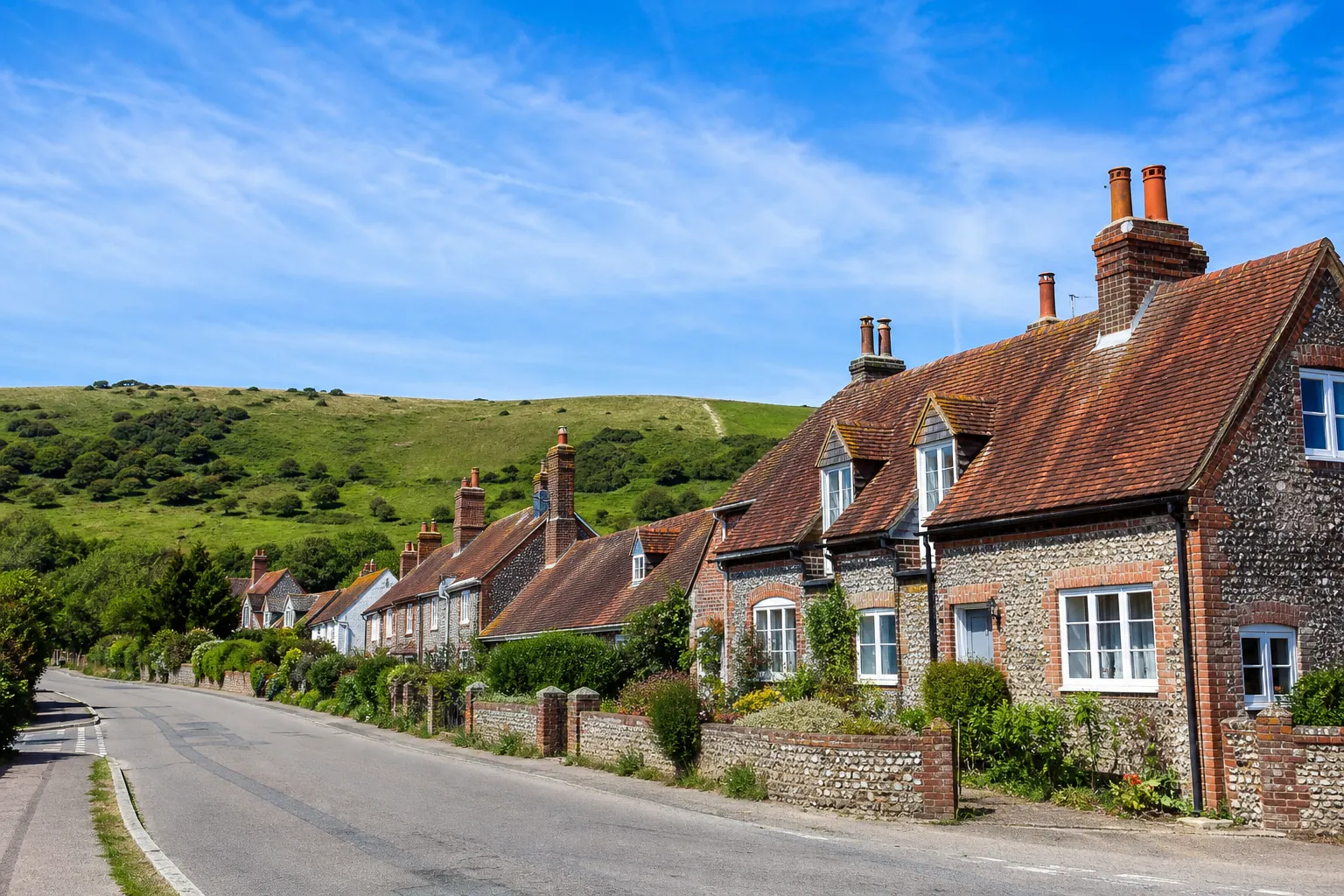
Malmstone cottages on the green
The cottages around Upper Green are narrow two-storey semi-detached pairs from the mid 18th and early 19th centuries, built of malmstone with brick or coursed rubble stone dressings. A semi-detached pair shares one ridge, so work on one half touches the other.
-
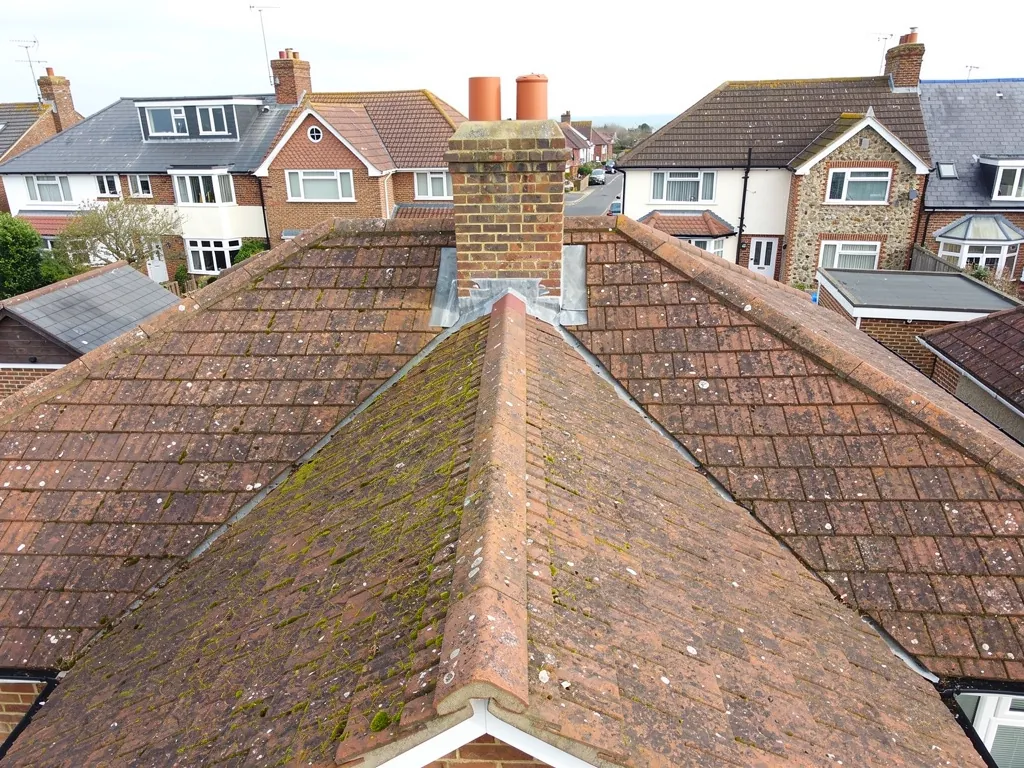
Gables, hips and decorated ridges
East Hampshire's leaflet describes gabled or hipped roofs with prominent chimney stacks, clay tiled with some slate, and some bands of scalloped tiles and decorated ridge tiles on the Upper Green cottages.
-
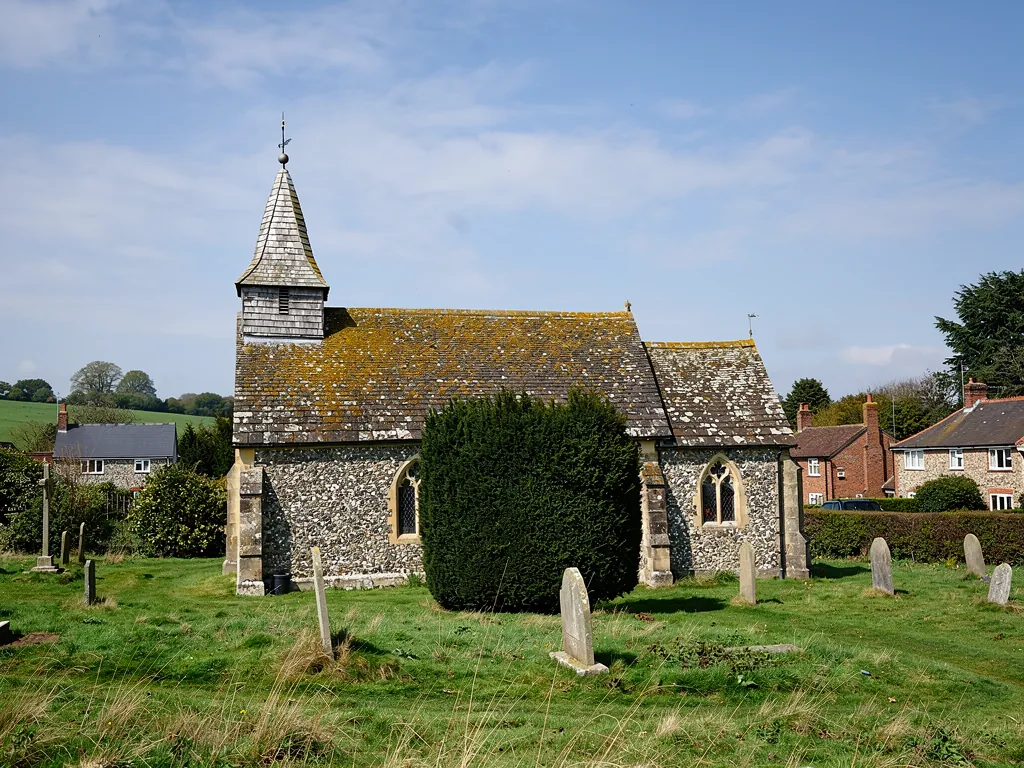
The 1865 church tower
St Peter and St Paul was built in 1865 of random rubble malmstone, to a design by S. S. Teulon that copies the Rhenish helm tower of Sompting in Sussex. It is listed Grade II* and has its own consent route.
Map of Hawkley, 28.6 road miles north-west of Bognor Regis, with the nearest towns we also cover.
Hawkley's two greens and the National Park
- Council
- East Hampshire District Council
- Planning
- South Downs National Park Authority
- County
- Hampshire County Council
- Conservation areas
- Hawkley Upper Green, designated 1982, and Lower Green, designated 1994
- National Park
- Inside the South Downs National Park; East Hampshire handles applications on its behalf
- Listed landmark
- Hawkley parish church, Grade II*, first listed 23 January 1986
- Distance
- 28.6 road miles north-west of Bognor Regis, about 54 minutes by car
Hawkley notes
Malmstone, helm tower and woodland
Three corners of Hawkley, on the Upper Greensand plateau below the Hangers, and the jobs each one tends to throw up.
Chapter 1: Malmstone cottages round the two greens2379
Sheet 01 / 03Hawkley sits on the Upper Greensand plateau against the woodland backdrop of the Hangers, and its core is two conservation areas. East Hampshire District Council designated Upper Green in 1982 and Lower Green followed in 1994. The cottages around Upper Green are narrow, two-storey and semi-detached, and they date generally from the mid 18th and early 19th centuries. They are built of malmstone, with brick or coursed rubble stone dressings around the doors and windows. Each pair of cottages is a small lesson in how neighbouring roofs depend on one another, and it is worth reading the roof the way you would read the walls beneath it.
Before work on a green-side cottage
- Find the boundary on the map
- Look up any list entry
- Keep the tile or slate it has
- Ask East Hampshire's planners
1.1 Gables, hips and prominent stacks
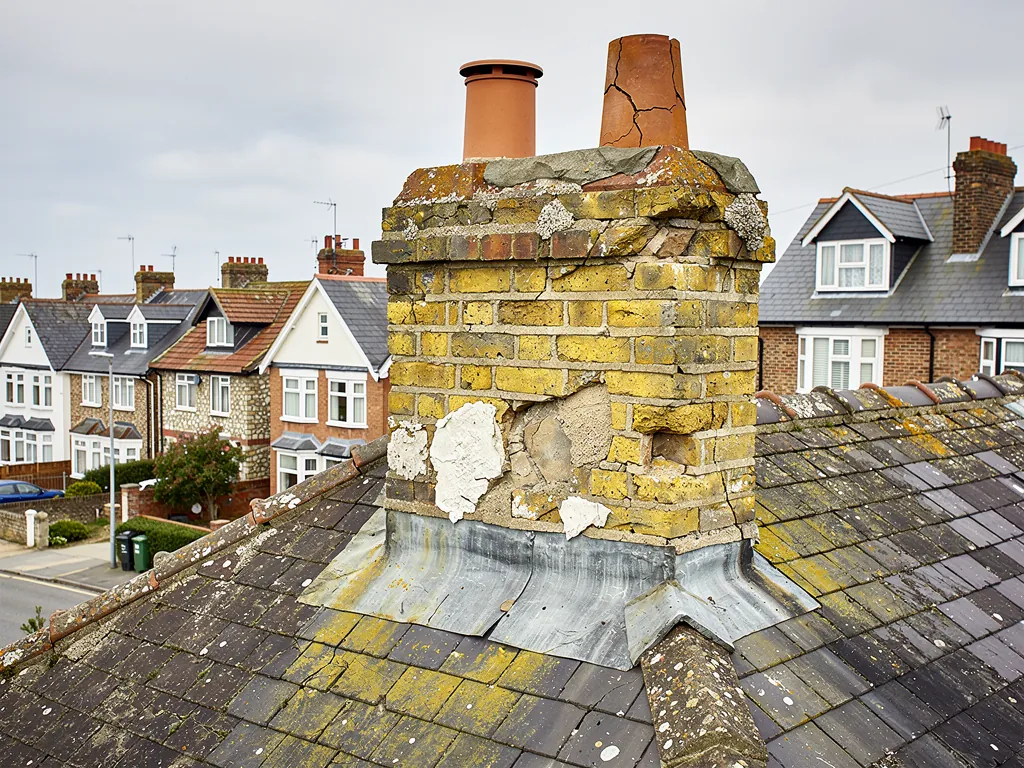
The council's leaflet describes the roofs on these cottages as gabled or hipped, with prominent chimney stacks, clay tiled with some slate. A gable roof ends in a vertical wall, with the tiles finishing over it in a verge, while a hip slopes back on all sides. Where a tiled verge meets a stone wall, the joint takes the weather on two faces, and it is the place we look first on a cottage like these. A stack stands proud of the ridge, so its flashings and pointing are open to the wind. Our chimney repairs page sets out the choices between repointing, new flashings and rebuilding.
1.2 Narrow pairs and shared roofs
A narrow semi-detached pair means a shared ridge, and often a stack on the wall between the two homes. When one owner has the roof overhauled and the other waits, the joint between the two halves is where trouble tends to start, because the old and new work settle differently. The fault you can see from your bedroom window may belong to the neighbour's slope. We separate the stretch of a job that falls on your side of the wall from the part that touches theirs, and suggest a word with them before a scaffold goes up. The survey photographs make that conversation easier, since both of you can see the same fault. Where a pair has changed hands separately over the years, the roof often carries two histories, one slope re-tiled and the other left alone, and the ridge between them shows the join.
1.3 Matching tile and slate
Because the leaflet records clay tile with some slate, the right repair keeps whichever covering the cottage already has. Mixing the two on a single slope, or switching to a concrete tile, changes the look from the green. A salvaged tile from a demolished outbuilding in the same village can match better than any catalogue product, because it has already weathered in the same air. Our slate roofing page explains how a slipped slate is refixed with a small clip called a tingle, which holds the slate without stripping the course above it.
Chapter 2: Scalloped bands, ridge tiles and a Teulon tower2867
Sheet 02 / 03The leaflet picks out details that make Hawkley's roofs worth keeping. Some of the cottages have bands of scalloped tiles, which are tiles with a rounded lower edge laid in a decorative course among the plain ones, and some have decorated ridge tiles. These are small things, but they are what a careless repair loses. A roofer who fills a gap with plain tile or a flat ridge leaves a visible scar in a pattern, so we photograph the pattern before we start and match it as we repair. If a band has cracked tiles, we look for scalloped replacements of the same size and shade rather than filling gaps with whatever is on the van.
Two ways to treat a decorated ridge
Re-bed and refix
Lift the sound ridge tiles, rebuild the bed and fix each one mechanically as well.
Replace the run
Where tiles are cracked, match the pattern and fit new ones with the same fixing.
2.1 Decorated ridges and what holds them down
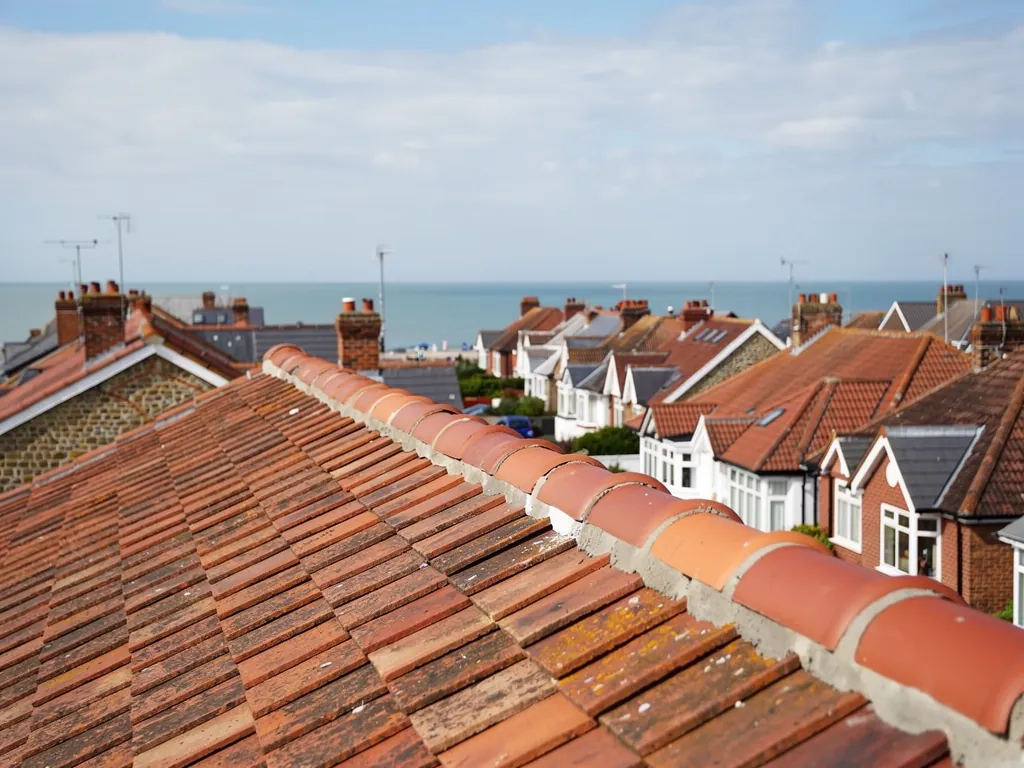
A decorated ridge tile is a fitting made to be seen against the sky. BS 5534 as revised in 2014 expects a mechanical fixing on a bedded ridge tile, since mortar by itself no longer counts. On a decorated ridge, that fixing has to be hidden or discreet, because a bolt in the wrong place spoils the line. This is where the square finish matters: the detail that holds the tile on should not show from the green. Our ridge tile repairs page explains the choices.
2.2 The Teulon church and its tower
The church was built in 1865 of random rubble malmstone, and S. S. Teulon's design copies the Rhenish helm tower of Sompting in Sussex. It is listed Grade II*. The Teulon church is Anglican and in regular use, so the exemption from listed building consent applies; the route is a faculty, and planning permission can still be required for exterior development. That is the parish's route. Our part is the neighbouring roofs, and the principle that a listed place of worship has its own consent route, which a listed cottage does not share.
2.3 Lead on tall and exposed roofs
A tall roof gives the wind and weather free play, and any lead that dresses its angles and ridges is one of the first things to check. Valley gutters and the lead lining behind a chimney are where a tall roof sheds the most water, so they get the closest look. Lead flashing can last a very long time. MyJobQuote says over 80 years for a flashing, and the cost guide Less gives 50 to 100 years for a lead flat roof, but those are typical figures, not promises. Our lead roofing and leadwork page explains how it is dressed and how it fails.
Chapter 3: Under the Hangers: leaves, moss and gutters2623
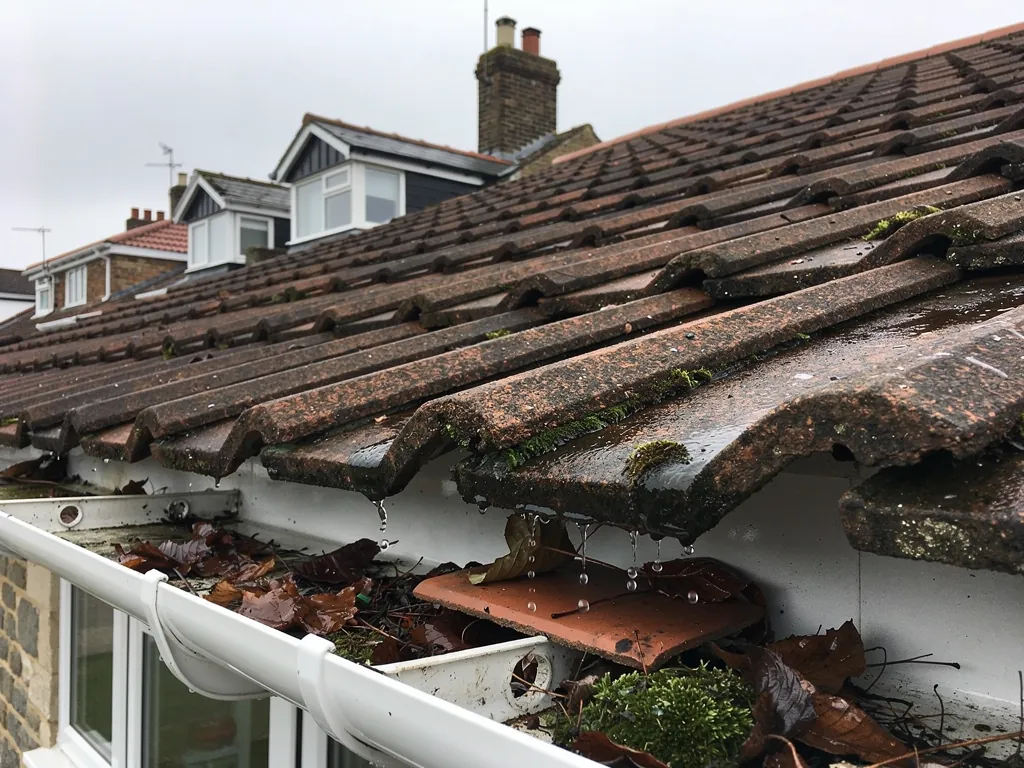
Sheet 03 / 03Hawkley is set against the woodland of the Hangers, and a roof close to trees has a different set of problems from one in an open field. Leaves gather in valleys and gutters, shade keeps a slope damp for longer, and moss grows where the sun does not reach. None of this is a fault in the roof, but it adds to the work needed to keep it sound. We put no figures on any of it, because every house sits differently under the trees, and the survey looks at yours.
How a Hawkley roof visit runs
- 1ClimbValleys, stacks, slopes and gutters get checked, and each fault is photographed.
- 2AdviseA plain call on whether the roof needs cleaning, repair or replacement.
- 3WriteA single written total follows the survey.
- 4TidyLeaf litter, old tiles and rubbish are taken away with us.
3.1 Moss, leaf fall and gutters
Moss holds water against tiles and can lift them at the edges, and the roots work into the joints between courses, and a gutter clogged with leaves overflows against the wall instead of reaching the downpipe. A valley is the angle where two roof slopes meet, and it carries a lot of water, so a valley that fills with debris can back up under the tiles. Our roof cleaning and moss removal page explains how a roof is cleaned without damaging the surface. Cleaning is not always the answer, and where the tiles are soft or flaking, you hear that rather than being sold a clean. We decide tile by tile, not slope by slope. Gutter clearing is a smaller job that often does more good than a full clean, and a good place to begin.
3.2 Who decides, inside the National Park
Hawkley is inside the South Downs National Park. In this part of East Hampshire the district council takes in planning applications for the Park Authority, while building control remains with the district. Work that does not materially affect a building's outward appearance is not development in planning terms, but a conservation area or a listed building changes that, so put your plans to East Hampshire's planners first. If you doubt that a repair stays within the original look, describe it to them in writing and keep their answer. Ask East Hampshire's planners, too, whether any Article 4 direction covers your house.
3.3 Roof windows in the Park
People ask about roof windows for cottage loft rooms. Inside the National Park, and especially inside a conservation area, think twice before ordering, and then read our guide to skylight planning permission first. Converting a loft in a two-storey house raises escape-route questions for building control, so a survey comes before any design.
Hawkley roof repairs and more
Frequently asked questions
Questions from the Upper Green to the Hangers
Can the scalloped tile bands on Upper Green cottages be repaired without losing the pattern?
Usually, yes. We photograph the bands first, then replace only the cracked or slipped tiles with matching scalloped ones and leave the sound ones in place. If a whole band has failed, it is relaid in the same pattern, tile by tile, working from the survey photographs so the rhythm of the courses is kept. A plain tile dropped into a decorated course shows from the green, so we match shape and colour before the written quote is prepared.
Does Hawkley's malmstone make a roof harder to repair than brick?
The stone does not change the covering, but it changes the joints, and the joints are where a cottage roof usually fails first. Where a tiled verge or a flashing meets rubble stone, the lead has to be shaped to an uneven face, and pointing has to match the mortar already there. It takes more care than a straight brick wall, and we look closely at those junctions before saying whether a repair will hold.
Who do I ask before changing the roof of a house in Hawkley's conservation areas?
East Hampshire District Council's planners, who take in applications for this stretch of the South Downs National Park on the Park Authority's behalf. Upper Green was designated in 1982 and Lower Green in 1994. If the house is listed, listed building consent is also required before works that alter its character. Rules change, so ask before you order materials, and keep the council's reply with your papers.
Do the trees on the Hangers make moss and blocked gutters a regular problem?
They can. Shade keeps a slope damp, leaves gather in valleys and gutters, and moss follows. How much depends on the house and the slope, so we look at yours rather than quote a rule. We clean a roof only when cleaning will help, and if the tiles are too far gone, a repair or replacement is the fair answer. Clearing the gutters and valleys before autumn is a sensible first step on any roof under trees.
Nearby areas
Get a quote
Tell us about your roof
Describe what's happening and we'll call you back.
Loading the enquiry form. You can also call 01243 252373.