
Roofers in Hove
Regency terraces, slate rules, seafront Hove
Hove grew from 101 people in 1801 into a watering-place, and its roofs include the Grade I terraces of Brunswick Town, where an Article 4 direction protects natural slate.
Hove roofs
From Brunswick Square to Old Hove
-
Brunswick Square and Terrace
Brunswick Square, completed in 1827, and Brunswick Terrace, finished in 1828, are Grade I listed. Roof work there starts with the list entry, because listed building consent covers works that affect a building's character.
-
Streets under the 1993 slate rule
The Brunswick Article 4 Direction, approved in August 1993, asks for consent to change the type of roof covering and requires natural slate where it already exists on all or part of a pair of buildings.
-
Old Hove and its parish church
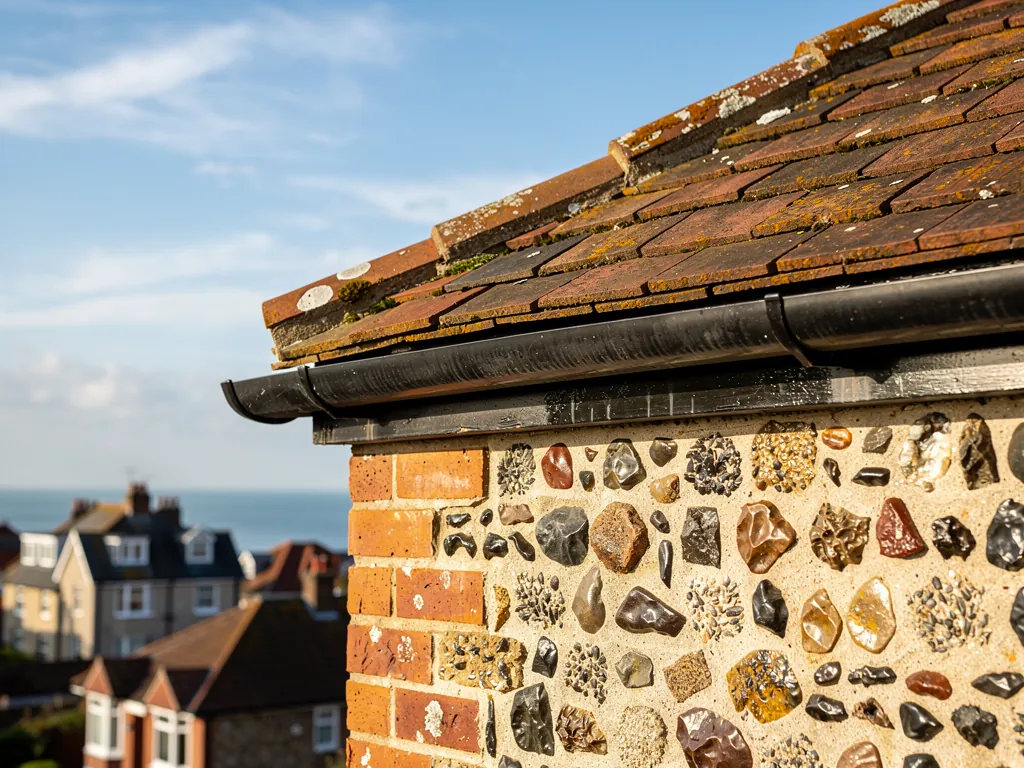
Old Hove was designated a conservation area in 1997. Its old parish church of St Andrew was rebuilt in 1836, except for the nave arcades, in flint-work with dressings in Roman cement, so walls and roof edges meet in more than one material.
Map of Hove, 27.4 road miles east of Bognor Regis, with the nearest towns we also cover.
Hove's two conservation areas
- Council
- Brighton & Hove City Council
- County
- East Sussex
- Conservation areas
- Brunswick Town, designated 1969 and extended in 1977; Old Hove, designated 1997
- Article 4
- Brunswick direction, approved August 1993, for named Brunswick Town streets
- Listed landmark
- Brunswick Square and Brunswick Terrace, Grade I (1827 to 1828)
- Distance
- 27.4 road miles east of Bognor Regis, about 46 minutes by car
Hove notes
Brunswick's terraces and Hove's slate rule
Three parts of a town that grew fast from the 1800s, and the questions each raises before a ladder goes up.
Chapter 1: Brunswick Square, the Terrace and the 1969 boundary3111
Sheet 01 / 03Hove is a town that arrived quickly. The county history says it had only 101 people in 1801, yet fifty years later it had over 4,000, and its growth as a watering-place began in the second quarter of the 19th century. It lay along the coast to the west of Brighton, beyond the end of the west cliff, and the parish reached north to the lower slopes of the Downs. Hove Borough Council designated the Brunswick Town Conservation Area in 1969 and extended it in 1977, and Brighton and Hove City Council now looks after it. Brunswick Square, completed in 1827, and Brunswick Terrace, finished in 1828, are both Grade I listed, and so is St Andrew's Church on Waterloo Street, which dates from 1827.
Before roof work on a listed terrace
- Read the list entry
- Ask the city council
- Photograph the whole run
- Match the slate and lead
1.1 What Grade I means for a roof job
Grade I is the top of the listing scale. Under the 1990 listed buildings Act, any work that would change what makes a listed building special needs consent before it starts. Putting back exactly what was there is one thing, and altering the covering, the stacks or the rooflights is quite another. On a listed house the list entry is our first read, ahead of any quote, and we suggest you ask the city council's conservation team whether your repair counts as like for like before the scaffold goes up. That one call can save a stop-start job.
1.2 Shared terraces and chimney stacks
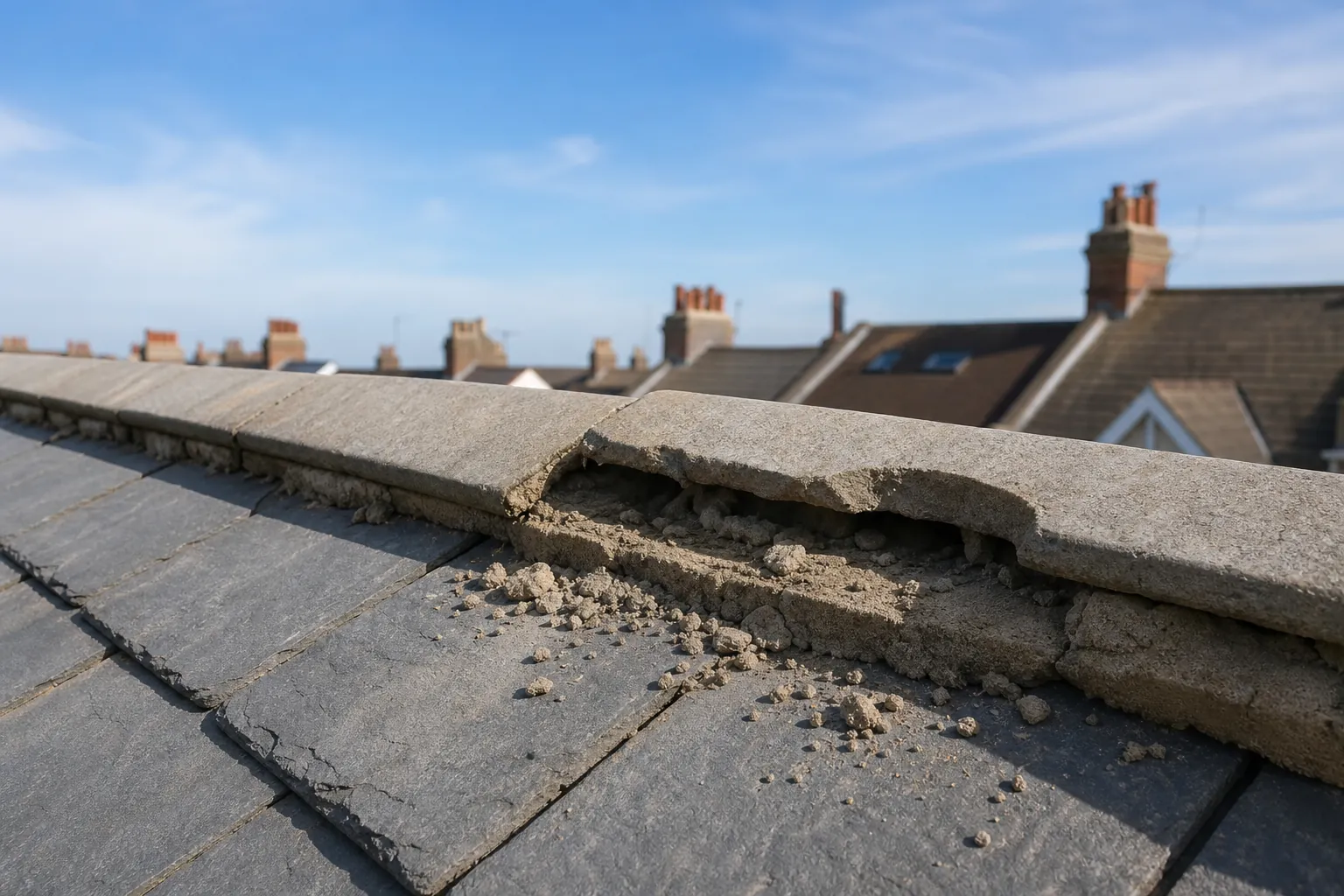
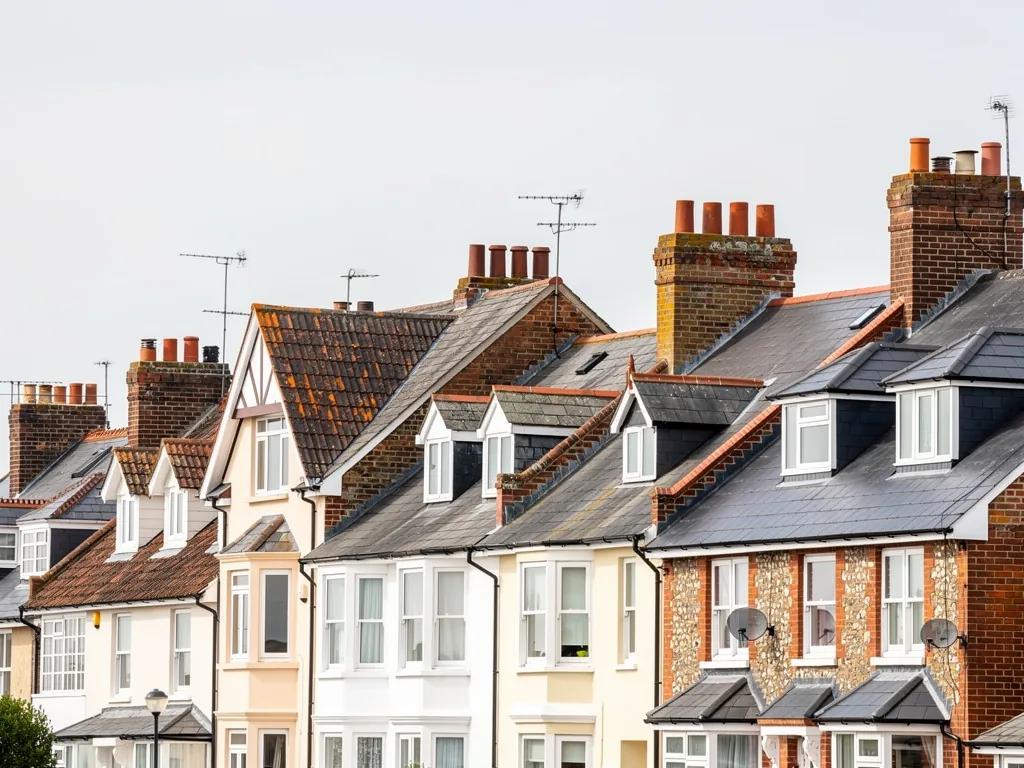
In any terrace the neighbours share more than a wall. Rain finds the weakest point along a whole row, so a leak in your top-floor bedroom may begin at the party wall flashing, in a neighbour's gutter or at a stack that serves four houses. Flashings, the metal strips dressed into the joint where a roof meets masonry, are among the details that fail first on an old roofline. Chimney stacks carry their own protection in the Brunswick direction, which asks for consent before stacks or pots are removed in the streets it covers. Taking out a chimney breast on a party wall brings Building Regulations approval and a party wall notice, so that is a conversation to have with the neighbours early. Our chimney repairs page explains how stacks are repointed, flaunched and flashed. Photographing the whole run of roofs from the road, and from the nearest safe point above it, shows where neighbouring work has changed the line.
Chapter 2: Natural slate and the Brunswick Article 4 direction3111
Sheet 02 / 03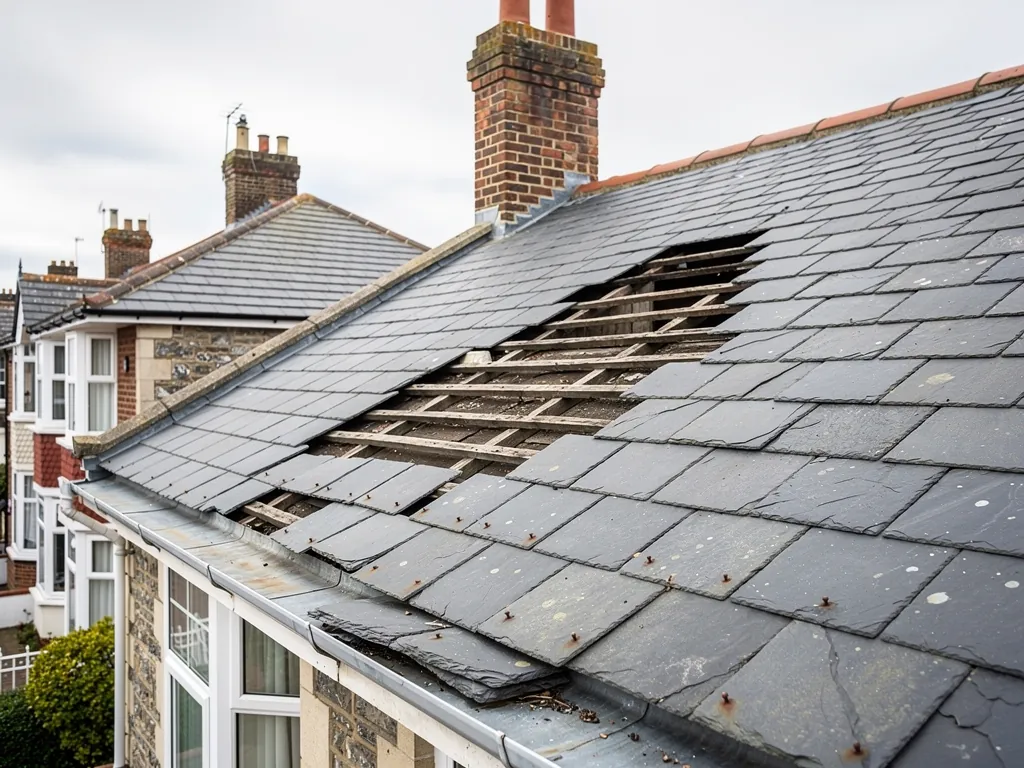
The Brunswick Article 4 Direction was approved in August 1993, and Brighton and Hove City Council now administers it. It applies to named parts of Brunswick Town: Cavendish Mews, Cross Street, Farman Street, Ivy Mews, Ivy Place, Kerrison Mews, Lower Market Street, and parts of Upper Market Street and Waterloo Street. Within them, consent is needed to change the type of roof covering, and natural slate is required where it exists on all or part of a pair of buildings. The direction also reaches replacement windows, altering the roof, porches, sheds, hard standings, gates and walls, and painting the exterior. Dormers and rooflights need consent too, and so does removing a chimney stack or its pots. Like-for-like repairs do not. If your street is not on that list, the direction does not apply, though conservation area and listing rules still might.
Two ways to deal with a slate roof
Like-for-like repair
Matching natural slates replace the broken ones and fixings are renewed, which the direction does not stop.
Change of covering
Switching to another roof covering in a named street is the work that needs consent first.
2.1 Replacing slipped slates with the same stone
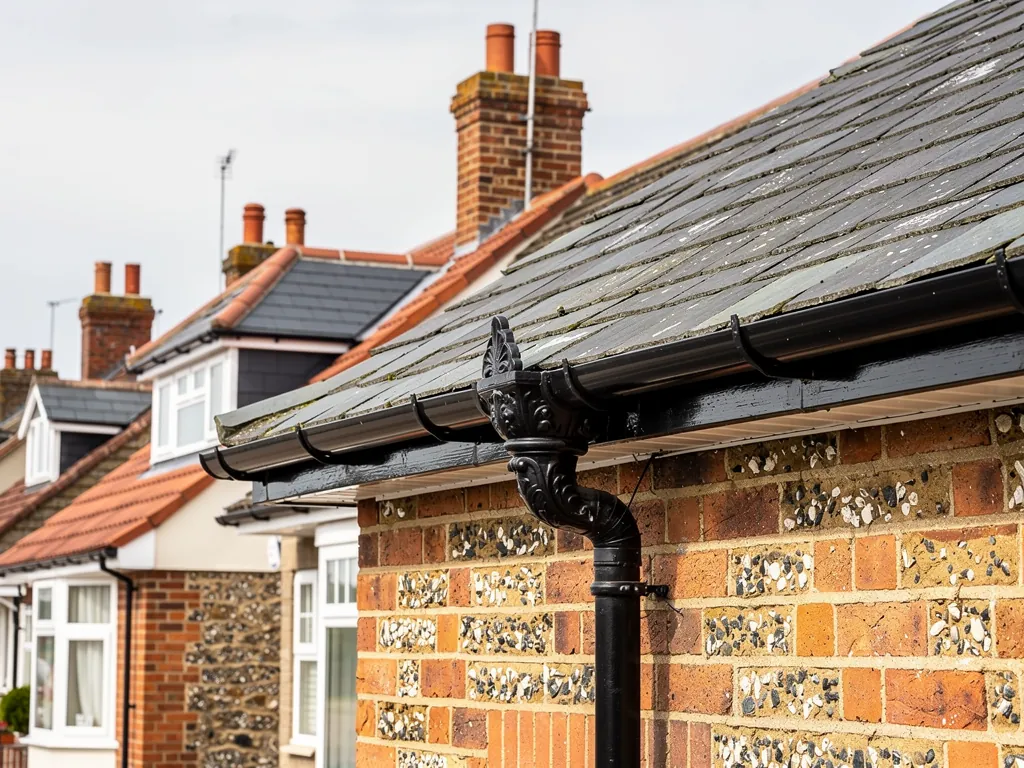
Natural slate is a stone that splits into thin, hard-wearing sheets, and a well-kept roof of it can outlast almost any alternative; Checkatrade's slate guide puts the life of stone slate beyond a century. Because slate is long-lived, the likely call on a sound Hove slate roof is a repair. A slipped slate can be pinned back with a tingle, a strip of metal gripping the slate's tail so the courses above stay put, and cracked ones swapped for matching slates, reclaimed where the colour and thickness must agree with their neighbours. A roof that has lost its fixings across a whole slope is a relay, with sound slates reused and new battens and underlay beneath. Moving to a concrete tile or a different look in a named street is the step that needs consent. Slate roofs also depend on what surrounds them: lead at the chimneys and abutments, a sound batten under every course, and gutters that carry the water clear of the wall. We follow the water from the slope to the downpipe. Our slate roofing page walks through stripping a slope, sorting the slates and laying them again.
2.2 Rooflights and other directions in Hove
A rooflight on the street-facing side of a house in the named streets needs consent, and it is worth reading our guide to skylight planning permission before you plan one. Brighton and Hove City Council lists other Article 4 directions around town, including ones for Adelaide Crescent, Palmeira Square and Western Road, and for Brunswick Place North. Each has its own wording, so read the one for your street. If you cannot tell which applies, a short email to the council's planning team will settle it, and we can send that team the photographs and measurements from our survey.
Chapter 3: Old Hove, St Andrew's flint and flats2257
Sheet 03 / 03Old Hove was designated a conservation area in 1997, and its old parish church of St Andrew was rebuilt in 1836 except for the nave arcades, in flint-work with dressings in Roman cement. Flint and cement dressings take rainwater differently from slate, so a roof edge beside them wants careful lead work. For a Church of England church still in worship use, the Church's own faculty route stands in for listed building consent, so a parish takes roof plans through that process. Hove grew from 101 people in 1801 to a municipal borough with a royal charter in 1898, so its roofs were not all built at once. The first job on any Hove roof is to establish which decade it belongs to, because the age of the battens, the underlay and the fixings underneath tells us more than the covering on top.
How a Hove roof job runs
- 1SurveyWe photograph the roof, the flashings and the chimneys from the closest safe points.
- 2VerdictA plain answer with reasons: mend the roof, make it last with a patch, or renew it.
- 3Consent checkWe note any listing, conservation area or Article 4 point and tell you who to ask.
- 4WorksThe scaffold goes up once licensed, and the site is cleared when the roof is done.
3.1 Flats, shared roofs and who decides
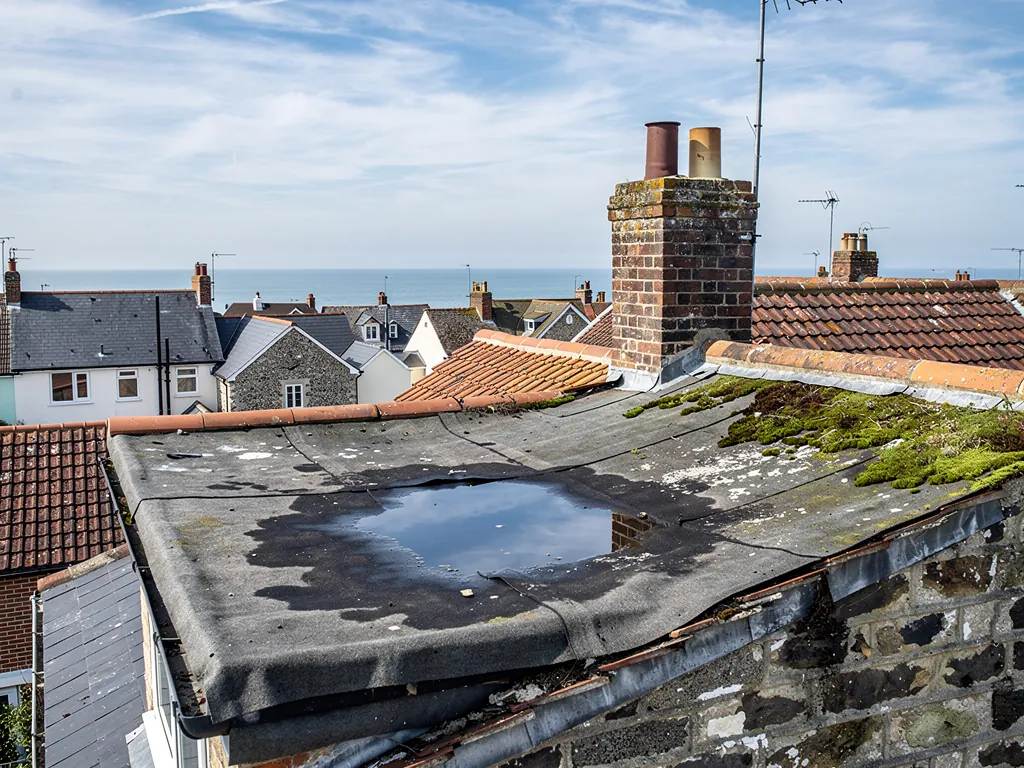
Where a Hove home is a flat, its roof is normally shared, so the decision sits with the freeholder or managing agent, not with one leaseholder. The permitted development rules for houses do not cover flats, which makes the council's planning team the right first call for any change to the look of the roof. Where a block has a flat roof, the covering is laid to a fall, so water runs off rather than lying, and BS 6229:2025 sets a minimum finished fall of 1:80. Roofers design steeper, so the finished surface still drains. Our flat roofing page describes the membranes we fit and how falls are set. The Planning Portal sets the test: building control need not normally be sought where less than 25 per cent of the building envelope and less than 50 per cent of the roof is involved. A big job on a shared block can cross that line, and the council's building control team or a registered building control approver can confirm.
3.2 Seafront weather
Along the front the weather arrives at full strength: gales, rain driven sideways and salt in the air. Roofs there get tested every winter, which is why we study edge trims, ridges and flashings first, and let the survey photographs decide between a mend and a new covering. The age of the roof and the state of its details settle the job, not the postcode. A scaffold on a Hove street needs a licence from the city council as highway authority, so build that wait into your dates and check with your roofer who files it. Once the survey is done, one total price follows in writing, covering the whole job.
Roofing services for Hove homes
Frequently asked questions
Questions from Brunswick Town to the seafront
Can slipped natural slates in a Brunswick Town street be replaced without consent?
In the streets named in the Brunswick Article 4 Direction, consent is needed to change the type of roof covering, and natural slate is required where it exists on all or part of a pair of buildings. A repair in kind does not. A listed house brings its own consent test, so ask Brighton and Hove City Council which rules apply to your address before you start.
Does lead flashing repair on a Grade I terrace roof need listed building consent?
Listed building consent turns on whether the work changes what makes the building special, and a flashing repair may or may not. Renewing lead in the same form is different from changing the material or the detail. We start from the list entry, photograph the lead and suggest you ask the city council's conservation team first.
Who arranges roof work on a block of Hove flats?
A flat's roof is normally shared, so the freeholder or managing agent usually instructs and pays for it, with leaseholders contributing under their leases. The permitted development rules for houses do not cover flats. We can survey the roof, photograph the faults and write up one total price, which the managing agent can then take to the residents.
Should a roof close to Hove's seafront have its flashings checked more often?
Near the sea a roof meets gales, driving rain and salt air, which is a reason to look at flashings, ridges and edge trims after a rough winter. Condition matters more than distance, though, and an older roof further inland can need the same attention. A survey with photographs shows which details are loose and which are sound, so nothing is replaced without cause.
Nearby areas
Get a quote
Tell us about your roof
Describe what's happening and we'll call you back.
Loading the enquiry form. You can also call 01243 252373.