
Roofers in Slindon
Estate flint, clay tile and Top Road thatch
Slindon's roofs are estate cottages in flint and clay tile on the Downs dip slope, with thatch surviving on Top Road, slate from the 19th century and two listed churches.
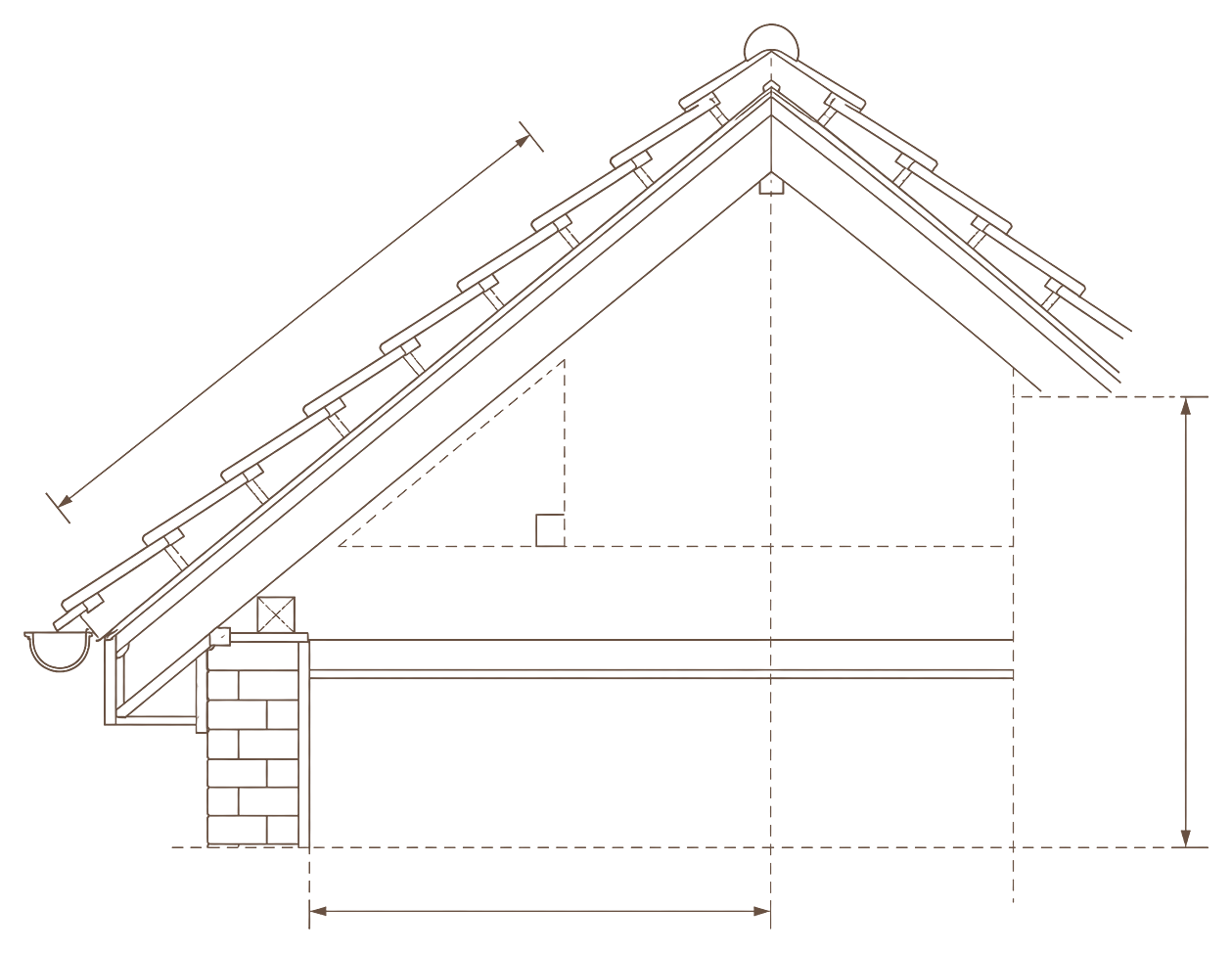

Slindon roofs
Estate cottages, thatch and church roofs
-
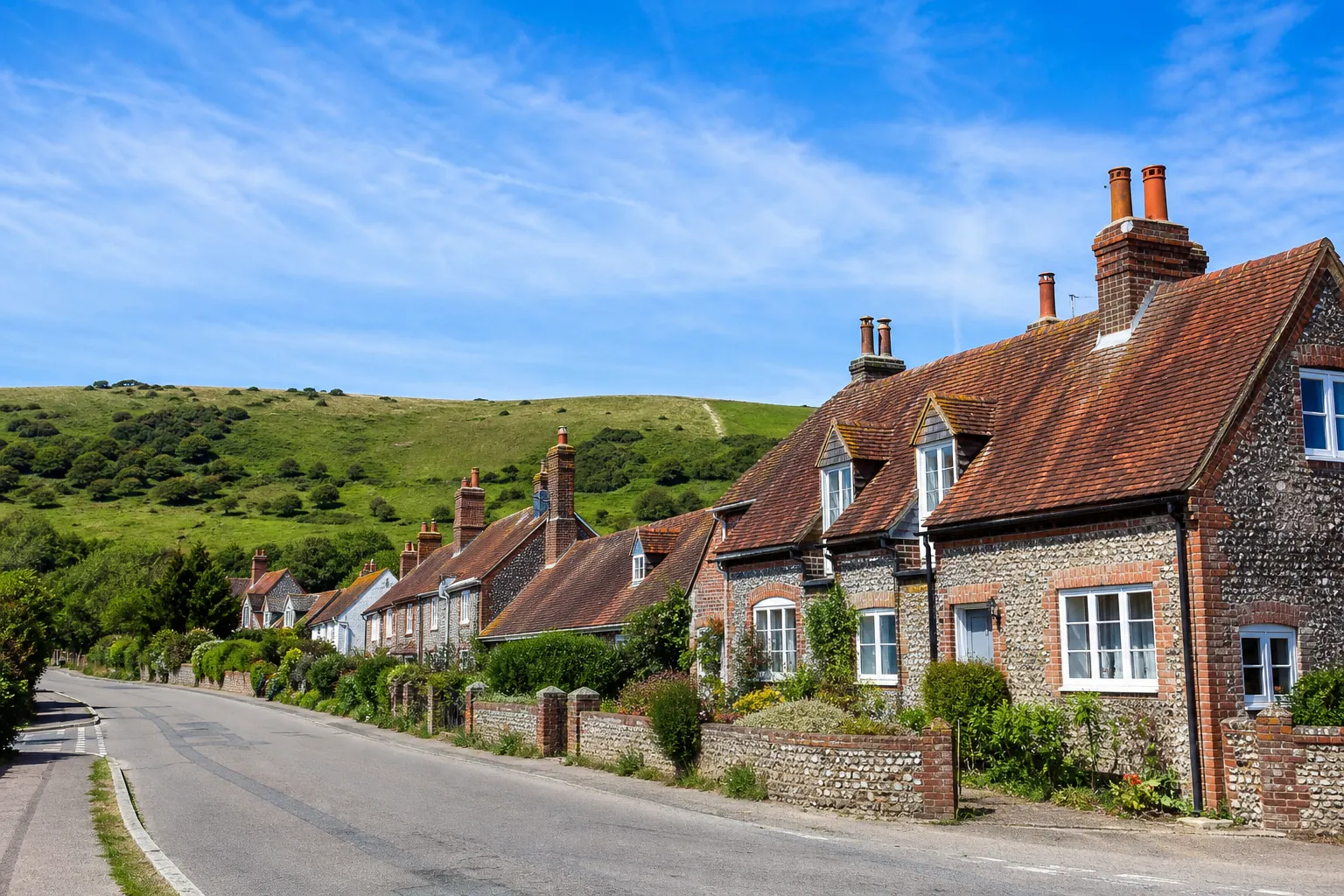
Estate cottages in clay tile
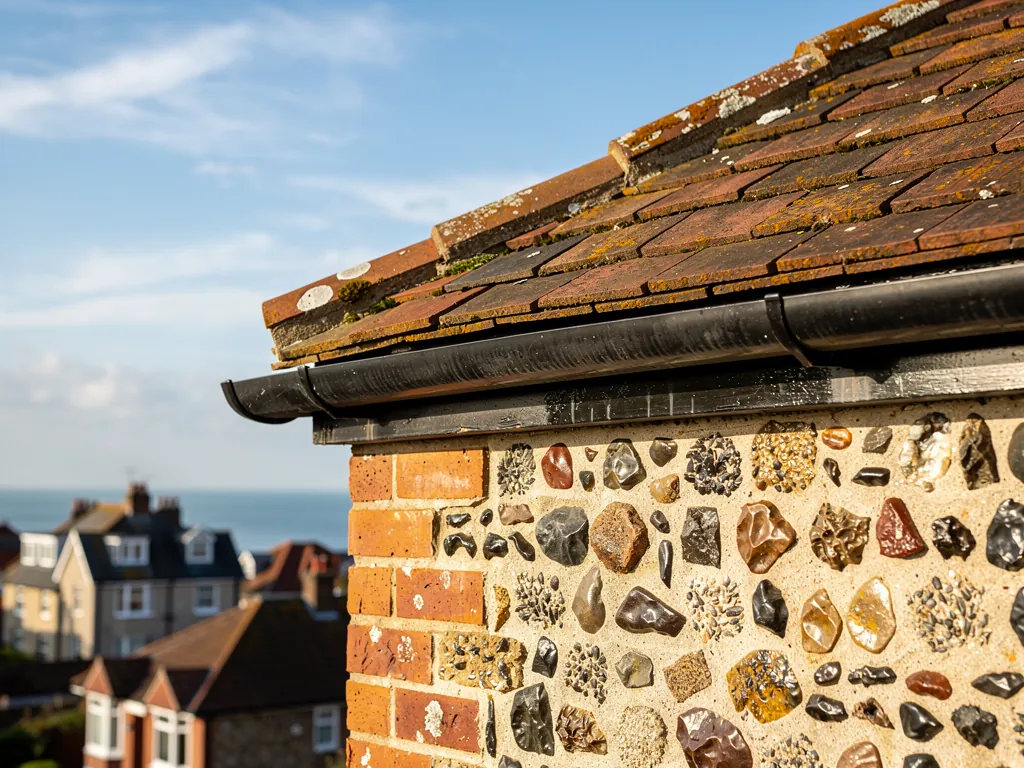
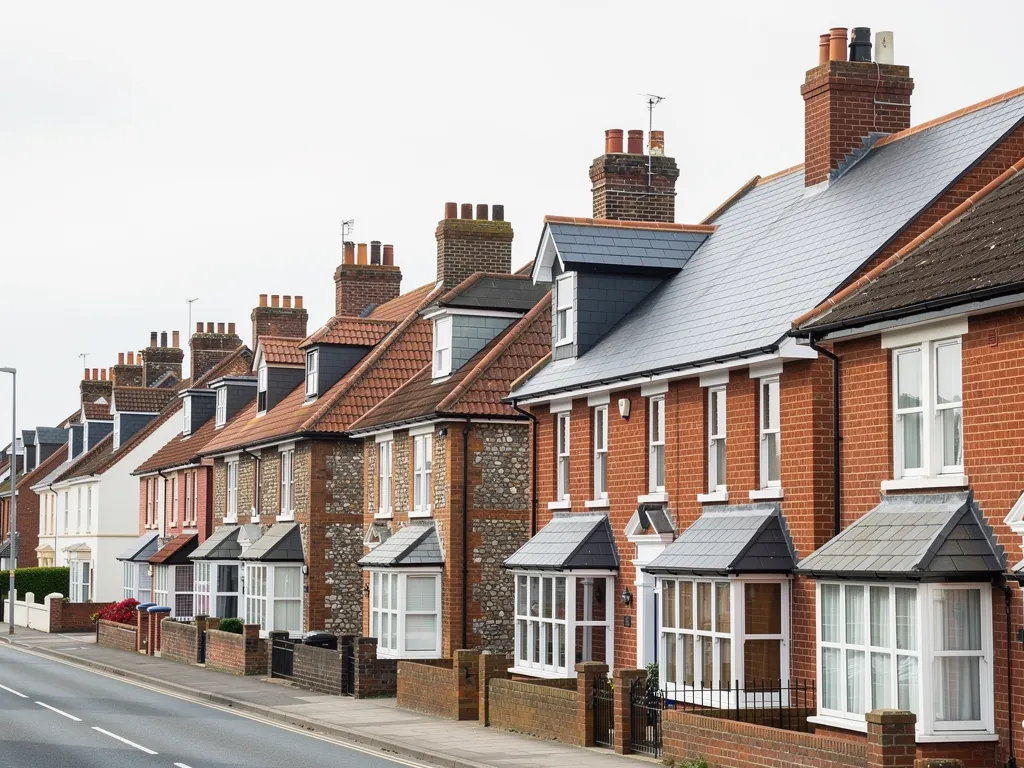
Slindon is the centre of the Slindon Estate, now owned by the National Trust, and its estate cottages share a consistent palette of materials, notably flint and clay tiles, which makes matching tile a first question on any repair.
-
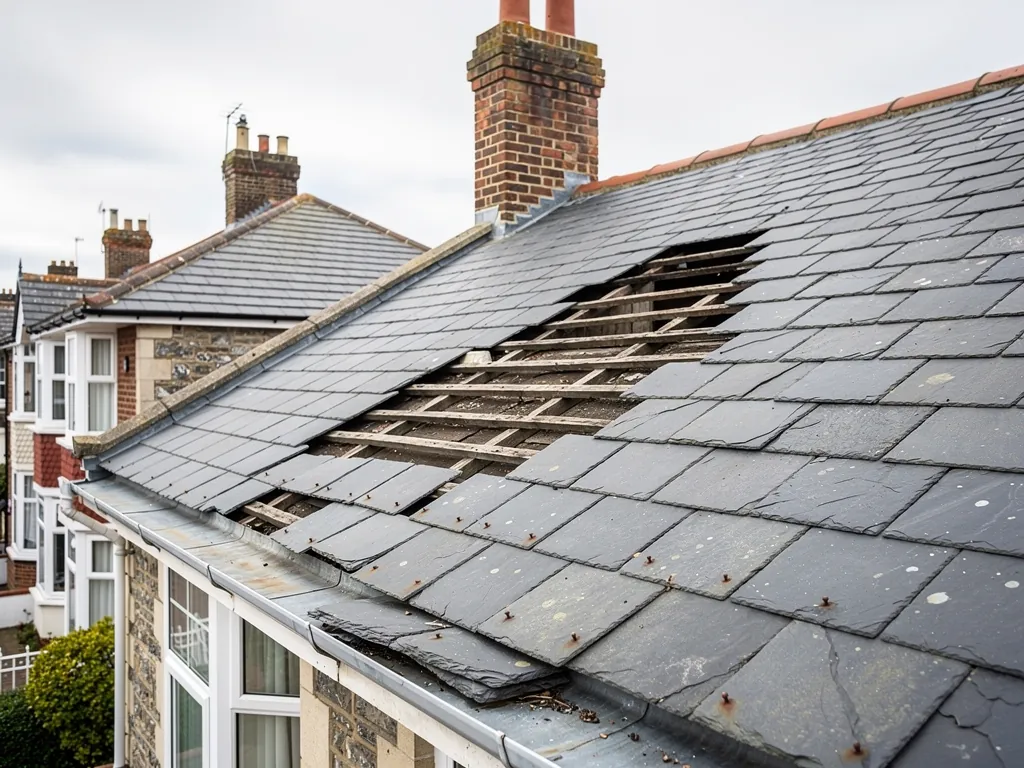
Thatch and slate on Top Road
Thatch survives on the old Post Office on Top Road, and old photographs show it was once much more common. Slate is the village's other roofing material, and it presumably arrived in the early 19th century.
-
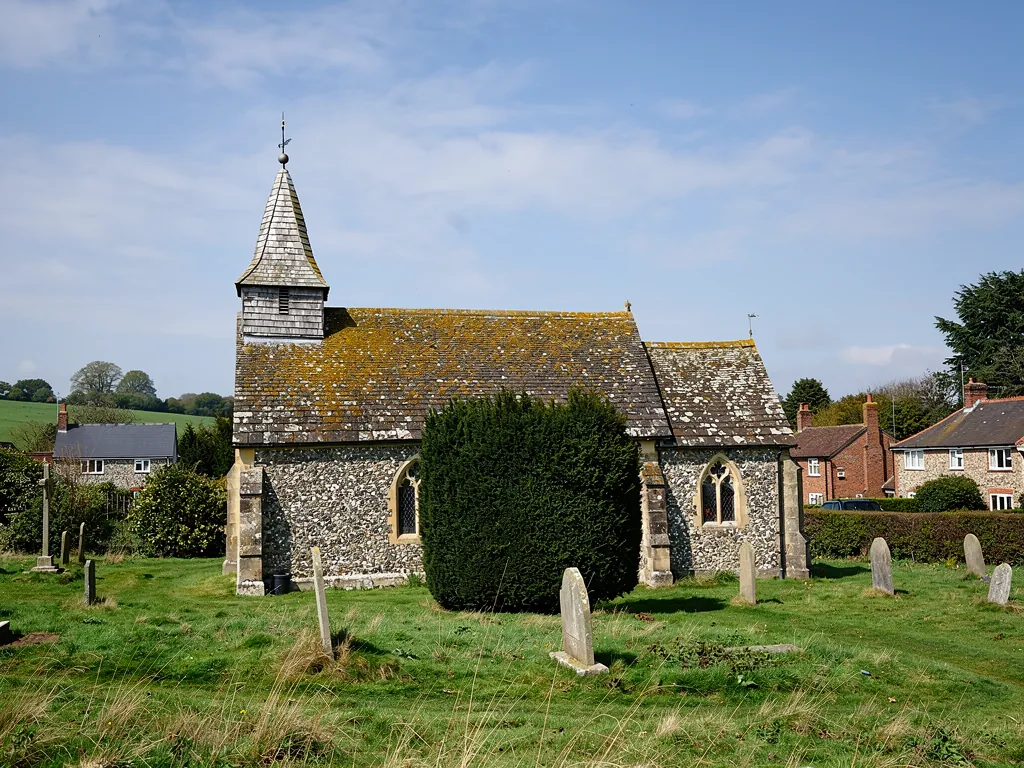
Two church roofs in one village
St Mary's has a 13th-century chancel, a tower added when Sir Thomas Jackson restored it in 1866, and a Grade I listing. The Catholic church of St Richard went up in 1865 to a design by C.A. Buckler.
Map of Slindon, 7.2 road miles north of Bognor Regis, with the nearest towns we also cover.
Slindon village inside the National Park
- Council
- Arun District Council
- Planning
- South Downs National Park Authority
- County
- West Sussex County Council
- Conservation area
- Slindon, first designated by Arun District Council in February 1976
- Article 4
- None on the South Downs National Park Authority's list of directions
- Listed landmarks
- Parish Church of St Mary, Grade I; Slindon House (Slindon College), Grade II*
- Distance
- 7.2 road miles north of Bognor Regis, about 15 minutes by car
Slindon notes
Flint, clay tile and a sloping village
How the estate, the Downs slope and the National Park shape the way a Slindon roof is repaired, matched and consented.
Chapter 1: A village on the Downs dip slope1952
Sheet 01 / 03Slindon sits on the dip slope, the gentle southern face of the South Downs, and the SDNPA's appraisal records that the northern end of the village is about 40 metres above the southern end. That is a modest climb, but it shapes the village: lanes tilt, gardens step, and a scaffold on a sloping verge needs levelling before it goes up. The same appraisal notes that the Slindon Estate, now owned by the National Trust, has cottages sharing a consistent palette of materials, notably flint and clay tiles. When a whole row looks the same from the lane, one mismatched roof stands out to everyone who walks past it.
Before matching estate tile
- Tile size and colour
- Hand-made or machine-made
- Pegged or nibbed fixing
- Which slope faces the lane
- Condition of battens
1.1 Matching clay tile to the cottage next door
Hand-made clay tiles weather unevenly, and a new tile beside a century-old one stays brighter for years. Where a repair is only a few tiles, we search out reclaimed tiles in the same size and colour so the patch does not shout from the road. Where a whole slope has failed, we may strip it, sort the sound tiles into stacks, and relay them on new battens and underlay, topping up with new tiles on the least visible courses. Each course, a single horizontal line of tiles, is counted and sorted as it comes off. Putting the new tiles on the rear slope or the lowest rows keeps the lane side looking as it always has. The survey photographs show which tiles are cracked, which are sound and which have simply slipped, so you see why we recommend what we do.
1.2 Flint walls at the eaves and the gable
Flint walls have deep, irregular faces, and a roof that has lost its gutter pours water straight down them and into the footings. So on an estate cottage we check the gutter and the first row of tiles before anything else. The eaves are the lower edge of a roof, where the tiles overhang the wall, and they take most of the water. The verge, where the roof slopes down beside a gable wall, gets the same attention: tiles bedded and pinned over a neat undercloak, the thin starter course that sits beneath them. Our pitched roofing page explains how we strip and relay a tiled slope, and our roof repairs page covers the smaller jobs that keep an older tiled roof going.
Chapter 2: Thatch, slate and listed cottages2013
Sheet 02 / 03Thatch is the older covering here. It survives on the old Post Office on Top Road, and the appraisal says old photographs show it was once much more common. Slate is the village's other roofing material, and the appraisal supposes it arrived in the early 19th century. A Slindon lane can therefore show three coverings within a short walk: thatch, clay tile and slate. Each has its own kind of repair, and none of them can be swapped for another without changing the look of the building.
Three calls on an older Slindon roof
- RefixA few slipped slates or tiles go back, held with tingles or clips.
- RelayThe slope is stripped and relaid, saving every good slate or tile.
- ReplaceThe covering has reached its end, so a matching new one goes on.
2.1 Slate repairs on an older roof
Slate is a thin stone held to the roof by nails through two small holes. When the nails give way, a slate slips and a gap opens in the covering. Often the answer is a tingle, a thin metal strip that clips under the slate above and keeps the loose one in position without disturbing its neighbours. If the nails have given out over a whole slope, we relay it, reusing the sound slates and replacing the cracked ones. Natural slate is a long-lived material: the trade body CORC puts a well maintained slate roof at 100+ years, so a slate roof is rarely a reason to start again. Our slate roofing page explains the process from strip to relay.
2.2 Listed houses and what counts as like for like
Slindon has listed buildings, the parish church and Slindon House (Slindon College), Grade II*, among them. The National Park Authority's guidance is that routine upkeep and small repairs made like for like, in situ, need no listed building consent, whereas works that alter the building's character are caught by the rules. The line between the two is not always obvious. Swapping slate for concrete tile, or changing the size or colour of a clay tile, is no longer a like-for-like repair, so ask the Authority before you commit. Checking the national list entry is part of the survey, and the photographs you receive show each detail we found.
2.3 Thatch next door
Thatch is a specialist trade and we leave it to a thatcher. What we do is mend the slates or tiles on the neighbouring slope, renew the lead where it meets a thatched gable, and repoint or rebuild the chimney that rises through it. We tell you at the survey which part of the work belongs to each trade, so nobody climbs onto a thatched slope by accident.
Chapter 3: Churches, conservation area and National Park rules3111
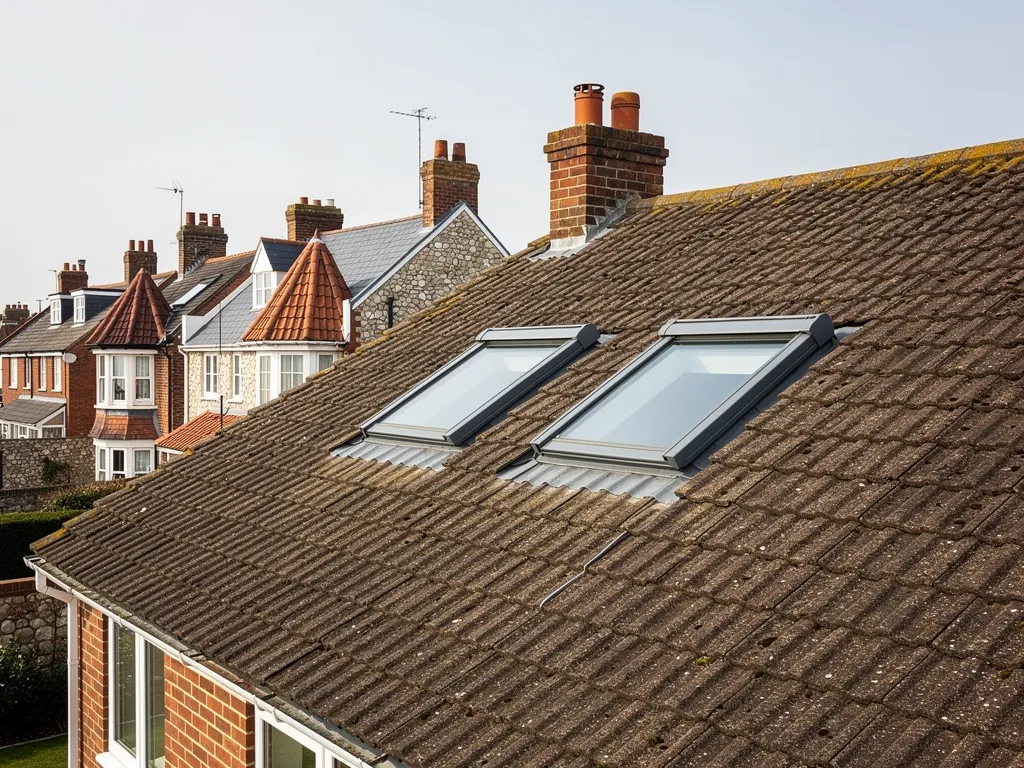
Sheet 03 / 03Slindon was first designated a conservation area by Arun District Council in February 1976. When the South Downs National Park was created in April 2011, the National Park Authority became the village's planning authority. For Slindon the SDNPA decides planning applications itself, while building control stays with Arun District Council. That is a split worth remembering, because one roof job can need an answer from each body. Roof windows, dormers and extensions follow tighter rules inside a National Park, so read our skylight planning permission guide before you plan one.
Who to ask before the work
- 1ListingCheck whether your house has a list entry before anything is priced.
- 2The ParkThe National Park Authority's planning team decides what needs consent.
- 3ArunArun District Council's building control covers regulations for the work.
- 4QuoteA single written price follows the survey of your cottage roof.
3.1 Two churches, two consent routes
St Mary's parish church, Grade I since 5 June 1958, has a 13th-century chancel and a tower added when Sir Thomas Jackson restored it in 1866. The Catholic church of St Richard was built in 1865 to a design by C.A. Buckler, an unusual presence in a village of this size. An Anglican church that is in use goes through the faculty system and is exempt from listed building consent, and a Roman Catholic church in use is exempt too, with its own approval process. Neither exemption reaches a house, a cottage or a hall, so the roof of a private listed home is treated differently from the church roofs. If your roof meets a churchyard wall or a neighbour's gable, tell us at booking, because shared walls can mean a party wall notice before anyone touches the abutment.
3.2 The possible Article 4 direction
The village appraisal floats an Article 4 direction for the conservation area at some future date, which could remove permitted development rights that homes now enjoy. None appears on the Authority's list at present. Rules change, so ask its planning team before you alter a visible slope. An unlisted cottage with a sound roof usually needs no permission for a like-for-like re-cover, but a different material, or a roof window in the front slope, is the sort of change the team will want to see first. Our slate roofing page also explains how we match old slate on a house that falls under these controls. Building control may apply as well, and the written quote names who we expect to notify.
3.3 Roof access on a sloping lane
Because the village steps up towards the Downs, scaffold towers and ladders often stand on a slope, on grass verges or on the narrow lanes between flint walls. We plan the access before the survey ends, and if a scaffold has to stand over the lane, West Sussex County Council must issue a licence, which the firm erecting it requests. The council asks for at least 10 working days, so a roof job on a lane with no private frontage needs a little more lead time than one set back from the road.
Services for Slindon roofs
Frequently asked questions
Questions from Top Road to the estate lanes
Can the clay tiles on a Slindon estate cottage be matched when some need replacing?
Often they can. We search for reclaimed tiles matching the size, colour and finish, and we put any new tiles on the least visible rows. If most of a slope has gone, we strip it, reuse every sound tile and top up with matching ones. The survey photographs show which tiles are cracked or loose, and you hear whether a repair, a relay or a new covering suits the roof before any price is written.
Who decides if I can alter a roof in Slindon, Arun District Council or the National Park?
For Slindon the South Downs National Park Authority is the body that decides planning, and Arun District Council runs building control. A like-for-like repair on an unlisted house seldom needs planning permission, but a new material or a roof window may. Ask the Authority's planning team first, then ask Arun's building control whether the work is notifiable, and keep both replies with your quote.
Is there an Article 4 direction on roofs in the Slindon conservation area?
The National Park Authority's list of Article 4 directions does not include Slindon. The village appraisal does raise a possible future direction, so the position could change. Listed buildings are treated separately: consent is needed for works that change their character. Check with the Authority before altering a visible roof slope, and pass on its reply so our written quote matches it.
Do you work on the roofs of houses beside St Mary's and St Richard's?
We repair and re-roof houses and cottages in the village, including those inside the conservation area and those with a list entry. A church in use follows its own consent route, so that work belongs to the parish and its own advisers. We do help with neighbouring homes, flint walls, lead and chimneys, and we read any listing before we write the quote.
Nearby areas
Get a quote
Tell us about your roof
Describe what's happening and we'll call you back.
Loading the enquiry form. You can also call 01243 252373.