
Roofers in Washington
Greensand village below Chanctonbury Hill
Washington stands on a narrow Greensand ridge beneath the Downs, and its buildings of brick, flint, clunch and sandstone mean that roof work here often ends against old masonry.
Washington roofs
Brick, flint and clunch along the Greensand ridge
-
Four building stones in one village
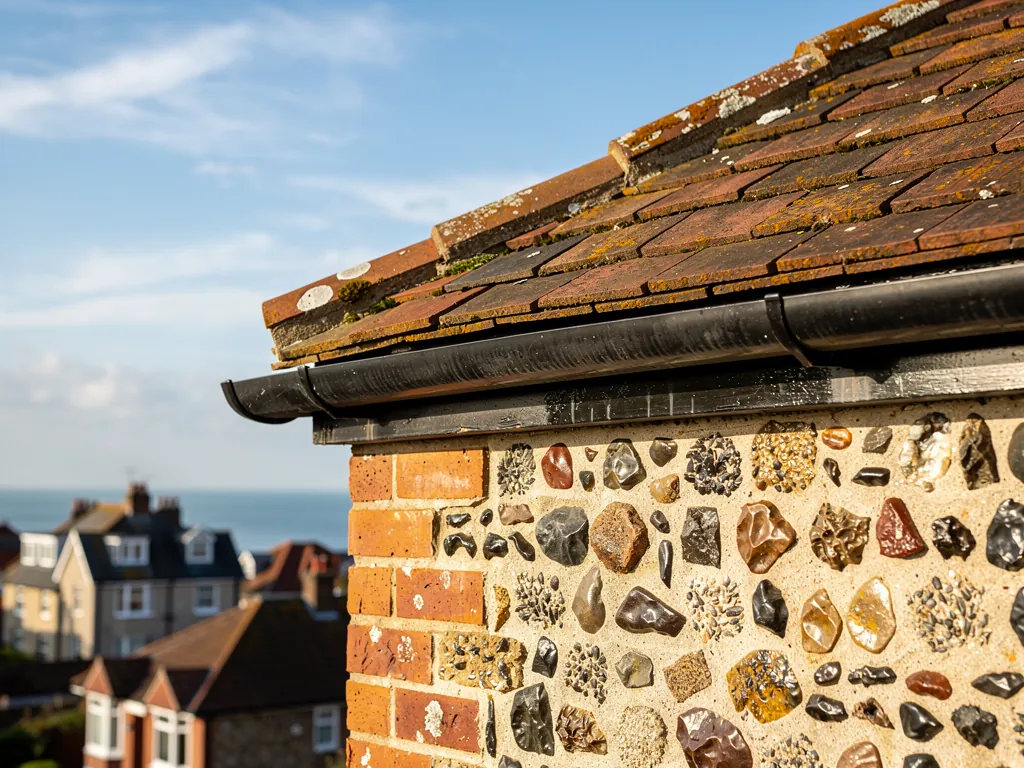
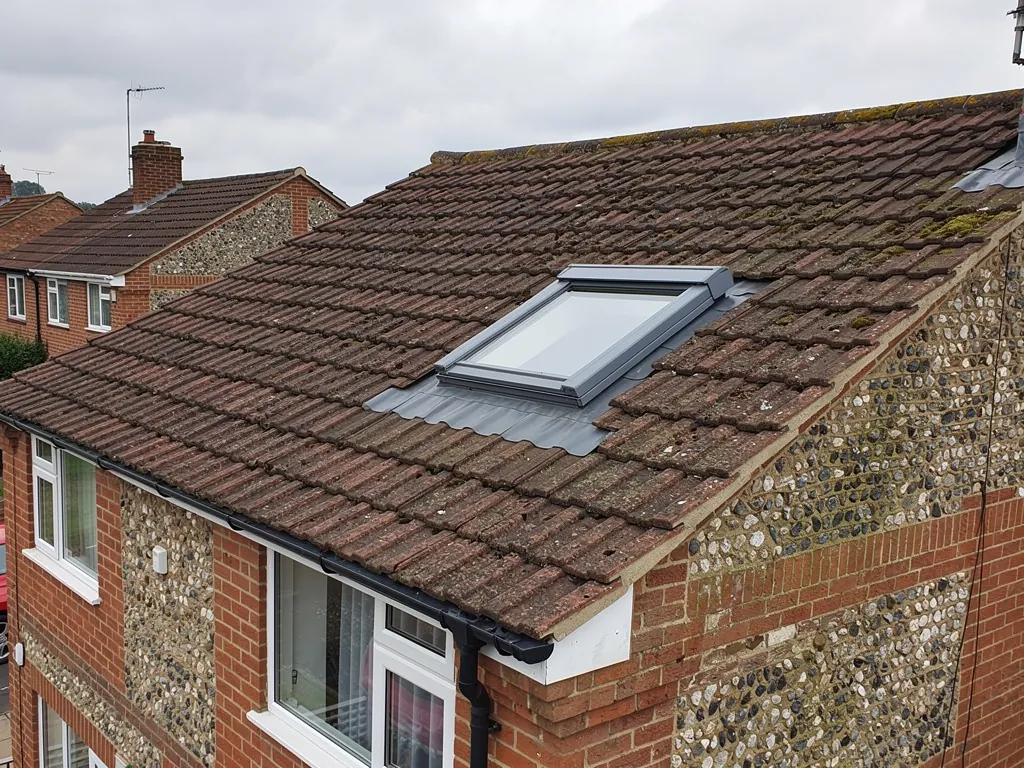
The village buildings are of brick, flint, clunch and sandstone, a mix that comes from standing where downs meet Weald. A roof here often finishes against one of those walls, and each material moves in its own way.
-
St Mary's and its rebuilt walls
St Mary's church is built of ashlar, with only the tower and north arcade surviving from before its 19th-century rebuilding. It is a Grade II* building, and as an Anglican church it answers to the faculty system.
-
Brickworks and a Bostal quarry
A large brickworks on the Gault clay north of the village ran from 1839 to 1899, and a chalk quarry near the top of Washington Bostal worked from at least 1839. Brick and chalk were local trades for a very long time.
Map of Washington, 21.1 road miles north-east of Bognor Regis, with the nearest towns we also cover.
Washington Conservation Area and the Park
- Council
- Horsham District Council
- Planning
- South Downs National Park Authority
- County
- West Sussex County Council
- Conservation area
- Washington Conservation Area, one of the Horsham-district areas mapped by the South Downs National Park Authority
- Listed landmark
- St Mary's, the parish church on The Street, listed Grade II*, entry 1027198
- Setting
- On the Upper Greensand below Chanctonbury Hill, 782 ft on the parish's south-east border
- Distance
- 21.1 road miles north-east of Bognor Regis, about 31 minutes by car
Washington notes
Greensand, ashlar and the Bostal quarry
What decides a roof job here: the walls the roof lands on, the church and conservation area, and the big hill behind the village.
Chapter 1: Roofs that end against clunch and flint2379
Sheet 01 / 03Washington stands on a narrow ridge of Upper Greensand, north of the chalk, and its buildings are of brick, flint, clunch and sandstone. That mix comes from sitting on the border between downs and Weald. For a roofer it matters because the roof is only half of what we repair. The other half is the wall it lands on. Clunch is a hard chalk cut as building stone. Flint is tough and unforgiving. Sandstone weathers at its own pace, and brick moves differently from all three. Where one roof touches walls of several kinds, the joints open and close at different rates, and that is where leaks usually begin.
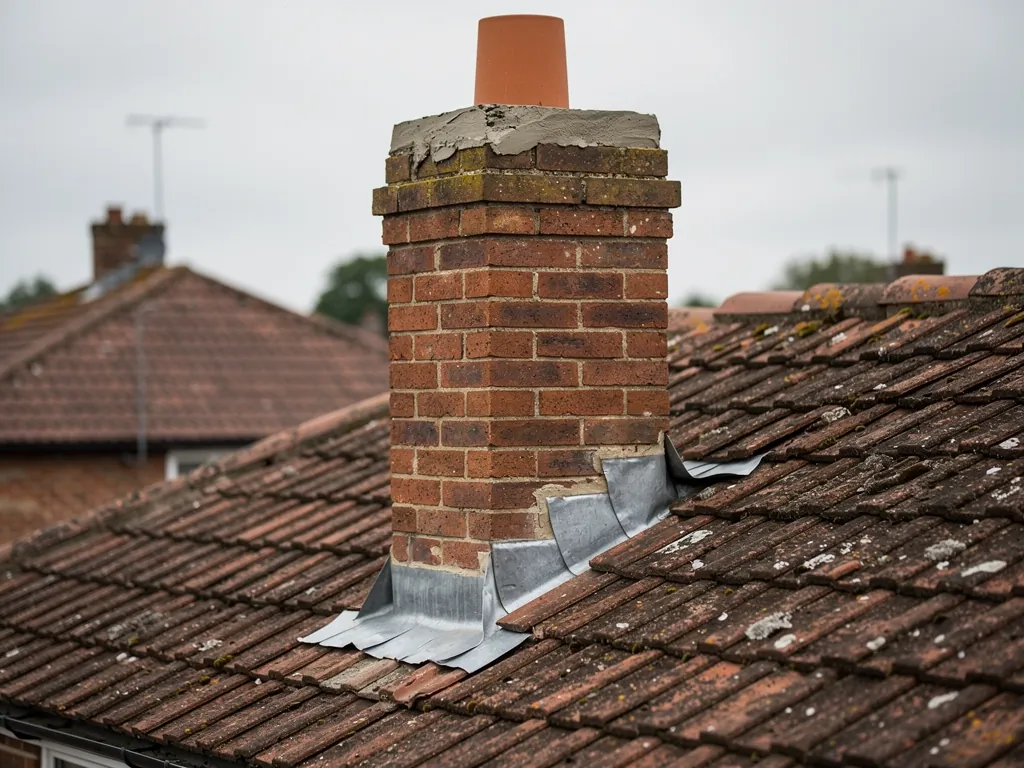
At a masonry junction we check
- Pointing in the wall joint
- Age and state of the lead
- Flaunching on the stack
- Damp marks inside the loft
- Gutter outlets below
1.1 Where the roof meets flint, clunch and sandstone
Flashing is the metal skirt that stops rain tracking down a wall or a stack into the house. Lead suits it best, because it can be beaten into a surface that is anything but flat. We tuck the upper edge into a groove in the masonry, wedge it, then point over it. On smooth brick that groove is neat and shallow. On rubble, flint or soft stone the joints are deep and ragged, so the wall may need repointing first, or the new lead has nothing firm to bite on. We photograph the old lead, show you where it has lifted or split, and say plainly whether it can be re-dressed or must be renewed. Our lead roofing and leadwork page explains the lead codes and what each one is used for.
1.2 Brick chimney stacks
Brick stacks are a feature of roofs in brick country, and they take a battering from above. Flaunching, the sloping cap of mortar that holds a pot upright and throws rain clear, cracks first. When that happens, rain finds its way inside the stack and travels down the flue. The brickwork below can lose its pointing, and the lead tray at the base lifts. We look at all of it from the roof, not from the ground with binoculars. Most stack faults are small and can be fixed without taking the stack down. A stack that leans or has crumbling bricks is a bigger job, and we tell you that before you see a price. Our chimney repairs page walks through the options.
1.3 Reading a roof by its walls
On a Washington survey we begin with the walls. Cracks running up from a roof junction, damp patches on a chimney breast indoors and crumbling pointing beside a flashing all show where water gets in. The covering itself is often fine. A repair that cures the real cause holds, and one that smears sealant over the symptom does not.
Chapter 2: St Mary's, The Street and the conservation area2867
Sheet 02 / 03The parish church of St Mary sits at the centre of the old village, and it is the listed building Washington is best known for. It is built of ashlar, which is stone cut into fine, squared blocks, and everything except the tower and the north arcade was rebuilt in the 19th century. It carries a Grade II* listing, under list entry number 1027198. Around it, the South Downs National Park Authority publishes a map of the Washington Conservation Area, one of several in the Horsham district that it mapped. So a fair few roofs in the village sit under some form of control.
Before work near St Mary's
- 1Check the mapLook at the Authority's Washington conservation area map for your house.
- 2Search the listLook for a list entry if the house looks old.
- 3Ask about directionsAsk the Authority whether an Article 4 direction touches your street.
- 4Agree the scopeSettle whether the work only replaces what is there before we price it.
2.1 St Mary's and the faculty system
The Church of England keeps its own consent route, the faculty system, for churches in regular worship, and St Mary's falls under it, so listed building consent does not apply to the building. The parish and its advisers take those decisions, and a roofer joins only after the scheme is agreed. If you sit on the parochial church council and want a view on the state of a roof, a written survey with photographs of each fault is a useful thing to have in the file before any paperwork starts.
2.2 Homes inside the conservation area
For an ordinary house the questions differ. Swapping a few slipped tiles or renewing a flashing leaves a house looking as it did, which is why such jobs are not usually development at all. Switching to another type of covering is another matter, and so is anything that alters the roof's look from the street. Inside a conservation area, ask before you start. If your house is listed, the Authority's own guidance accepts routine maintenance and small repairs in matching materials without consent, but wants to hear about anything that changes the building's character. Our pitched roofing page explains stripping, battening and relaying a tiled slope, and our guide to skylight planning permission is worth reading before you sketch a roof window or a dormer.
2.3 Who decides what
Washington is within the National Park. For the Horsham district's slice of it, the Authority takes planning applications itself, while building control stays with Horsham District Council. The two do not share a front door. Before anything beyond a routine repair, ask the Authority whether an Article 4 direction covers your street, and ask Horsham whether your job needs a building control application.
Chapter 3: Below Chanctonbury Hill: wind, ridges and scaffold3050
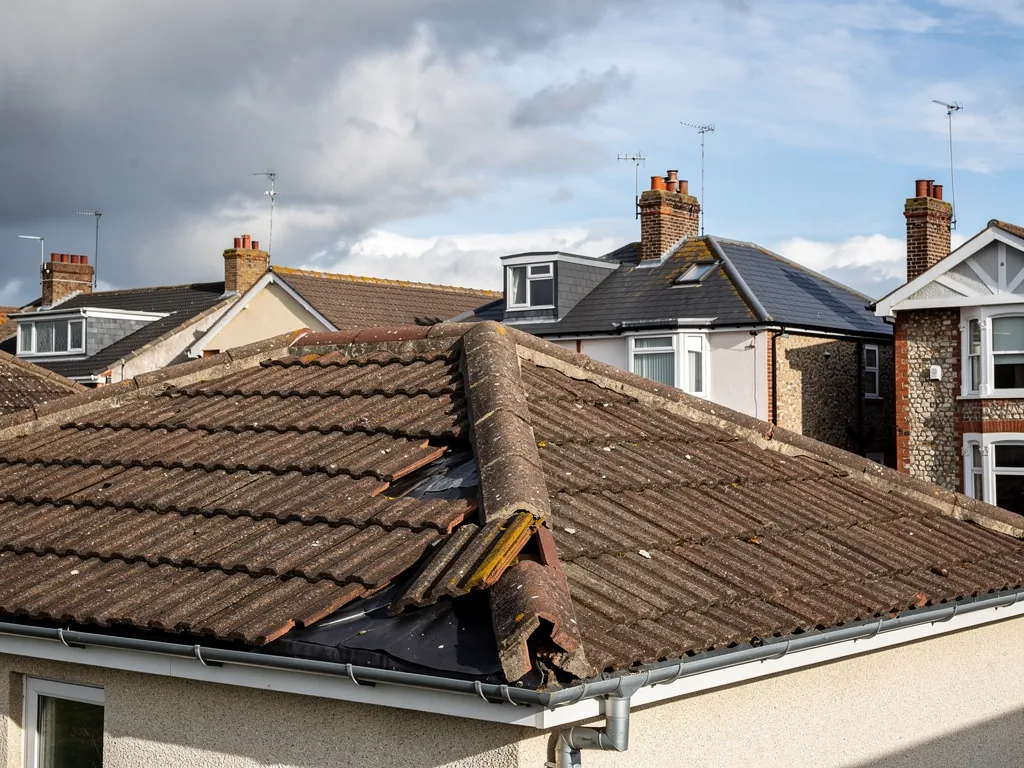
Sheet 03 / 03Washington sits on the Greensand beneath Chanctonbury Hill, which at 782 ft on the south-east edge of the parish is one of the highest points in the county. A roof below a big hill deserves a check after a gale, and the places weather reaches first on any roof are its crown, its corners and its gable edges.
Three calls after a Washington gale
- RebedCapping has cracked mortar but the tiles are sound and can be refixed.
- RefixA few tiles or the verge need mechanical fixings and nothing more.
- ReplaceThe covering has failed across the slope and repairs would only chase leaks.
3.1 Ridges, hips and verges that stay put
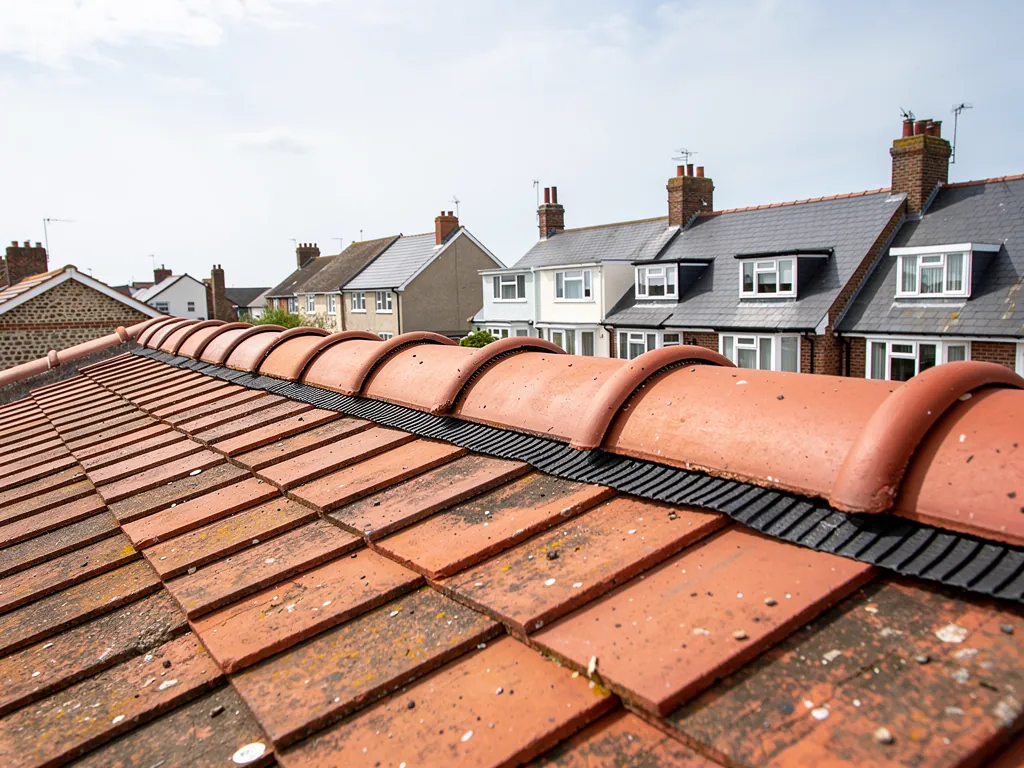
Ridge, hip and verge are those three exposed places: the ridge crowns the top where two slopes meet, the hips run down the outside corners, and the verge dresses the edge over a gable end. For generations all three were bedded on mortar alone. Since BS 5534 was revised in 2014, the tiles along ridges and hips must be held by more than mortar; screws, clips or similar mechanical fixings are added. A roof laid before that may have capping that only sits on its bed, and once the mortar cracks the tiles can lift in a blow. We test them by hand, tile by tile, and report what we find with photographs. The verge deserves a second look as well, because the pointing there tends to fall away in strips and the tiles beneath it lose their support. This is usually a smaller job than a customer fears.
3.2 Scaffold for a village roof
A roof above first-floor height needs safe access, and on many Washington jobs that means scaffolding. Where it has to stand on the pavement or road, it needs a licence from West Sussex County Council. The council wants at least 10 working days' notice and charges £266 for a month. Factor that delay into when you want the work to begin. On a single-storey extension or a low outbuilding a tower or roof ladders may do instead, which keeps the job simpler. After the survey, the price comes to you in writing as one sum. Whoever quotes you, ask whether scaffold and VAT are inside it.
3.3 Bats, birds and the roof space
Bats are protected, roosts included, under the law, and government guidance lists roof repair as work that may disturb them. Nesting birds are covered too. If a bat or an active nest turns up, we stop and you hear what must happen before roofing carries on.
Our services in Washington
Frequently asked questions
Questions from The Street to the Bostal
How is lead re-dressed where a roof meets a Washington clunch or flint wall?
The old lead is lifted and checked first. If it is sound, it can be re-dressed into the wall joint. If it has split or worked loose, a fresh strip is cut. Because clunch and flint walls have deep, uneven joints, the pointing is often renewed before the lead goes back, so the new flashing has firm mortar to grip. We photograph each step, so you can see why the lead needs renewing before agreeing to it.
Does a roof repair in Washington's conservation area need permission from the National Park Authority?
Mending a roof with matching materials seldom alters how a house looks, so it generally falls outside the definition of development. Swapping to a different type of covering, or reshaping the roof, is a different question. On a listed house the Authority accepts routine maintenance in matching materials without consent. For anything else, check with the South Downs National Park Authority first.
Who handles building control for a re-roof near St Mary's, the Park or Horsham?
Building control here stays with Horsham District Council, not the National Park Authority. Planning Portal's rule of thumb is that building control approval is not normally required for a re-roof affecting less than 25 per cent of the building envelope and less than 50 per cent of the roof. Horsham's building control team can tell you for certain whether your own job needs an application, and we explain it where the work is notifiable.
Do I need a scaffold licence to repair a roof on The Street?
If the scaffolding blocks the pavement or road, yes. West Sussex County Council issues the licence. The council wants at least 10 working days to pass before the scaffolding goes up, and its published charge for a month is £266. A scaffold set up entirely on private ground needs no highway licence, and we check which applies at the survey visit.
Nearby areas
Get a quote
Tell us about your roof
Describe what's happening and we'll call you back.
Loading the enquiry form. You can also call 01243 252373.