
Stone roofs and the Park · 9 min read
Stone roofs in the South Downs National Park: planning and who decides
Own a stone roof inside the South Downs National Park and the first question is who to ask. This guide sorts out which authority decides what, and when a roof job needs consent.
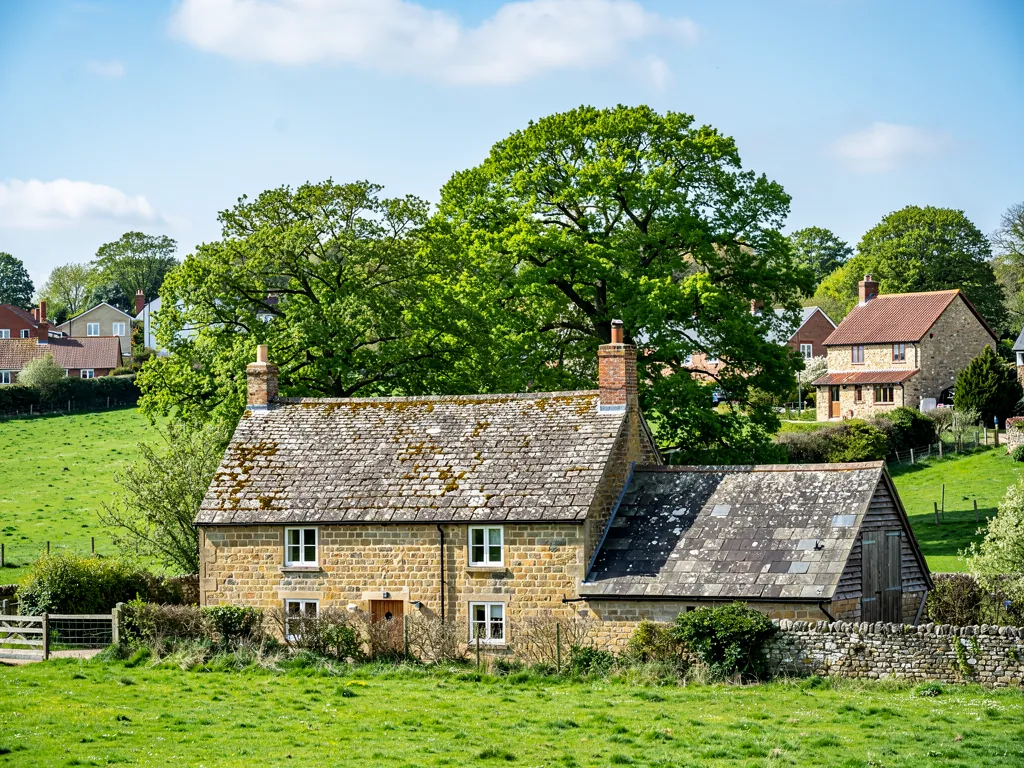
A stone roof inside the South Downs National Park sits under more than one set of rules, and the first muddle is usually over who to ask. The Park has its own planning authority. The district councils that cover it still do some of the work, and on one subject, building control, they do all of it. Which of them answers your question depends on the part of the Park your house stands in.
This guide sets out who decides what, using the Park Authority's own published position, and then goes through the roof jobs people ask about: repairing slipped stone, re-laying a slope, changing a covering, putting in a roof window and working on a listed or conservation-area building. Treat it as orientation rather than legal advice. For your house, the planning team is the authority, and a call before work begins costs nothing.
We explain the consent route for your roof at the survey and, where the work is notifiable, handle the Building Regulations notification. The decisions on planning itself stay with the authority.
Which authority decides, area by area
The South Downs National Park Authority, usually shortened to SDNPA, is the planning authority for the whole Park. How applications are handled differs from one area to another. The SDNPA's own planning enquiries page divides the Park into two kinds of area, and the split follows the district council whose land the house is on.
| Part of the Park lies inside | Who handles planning |
|---|---|
| Arun, Adur and Worthing, Horsham, Brighton and Hove, Lewes, Mid Sussex, Wealden | The SDNPA directly, in what it calls recovered areas |
| Chichester, East Hampshire, Winchester | The district council, on the SDNPA's behalf, in what it calls delegated areas |
What delegated means for you
In a delegated area you apply to the district council, and its planners deal with the application for the Park Authority. The planning authority is still the SDNPA, so the policies applied are the Park's. In a recovered area you deal with the SDNPA itself. If you are unsure, a call to the district council's planning team will confirm which kind of area your address is in.
Building control is separate
None of this changes building control. West Sussex County Council's explainer of who does what puts building regulations, listed buildings and conservation areas with the district and borough councils, and planning inside the Park with the SDNPA. So a stone roof in the Park can have two answers to two questions from two bodies, and we help you sort which question goes where.
Where our places fall, inside the Park and outside it
Our work reaches well into the Downs, and the line of the Park runs through it. Midhurst and Petworth lie inside the Park, in the part of Chichester District where the district council handles applications for the SDNPA. Cocking, below the Downs scarp, is delegated in the same way, so its applications also go to Chichester, and its church tower is roofed in stone slates, according to the Victoria County History.
Other places sit in recovered areas, where the SDNPA decides itself. Findon, in Arun District, is one, and the same history records its rectory as roofed in Horsham stone. Amberley and Coldwaltham, in Horsham District, are two more. A house in either kind of area is still a house in the Park, and the roof rules are the Park's.
Towns just outside
The boundary matters, because a few miles can change the answer. Pulborough and Storrington sit outside the Park, in Horsham District, as does Horsham itself, where the town centre appraisal singles out Horsham Stone roofs as part of the locality's traditional character. There the district council is the planning authority throughout. Arundel too is outside the Park boundary, and Arun District Council decides.
A village postcode is a poor guide to the line, since the boundary follows the land and not the post. If your house is near a boundary, check with the planning team before assuming either way. We note the planning authority on the survey sheet so that any application, or any call, goes to the right place first time.
The wider picture of stone roofs across our patch is in the Horsham stone roofing hub.
Like-for-like repairs and re-laying: when planning is not needed
The starting point is the Town and Country Planning Act 1990 and its section 55(2)(a), under which works that leave a building looking materially the same from outside are not classed as development. Putting back stone slabs for stone slabs, in the same courses and the same colours, does not change how the roof looks. So a roof put back in the same material is not usually something that needs planning permission.
The rule has limits, and the Park makes them matter. Changing the material is the clearest case: stone to concrete tile, or stone to a different stone that reads differently from the lane, will often change the appearance. The same goes for visible changes in the courses, the ridge or the verges. An Article 4 direction can also take away rights a house would otherwise have, and a listed building has a regime of its own. If the answer is not obvious, ask the planning team before the work, not after.
What counts as like for like
The SDNPA's listed-building guidance puts regular maintenance, and minor repairs in matching material made in place, outside the need for listed building consent. A re-lay of a whole slope in sorted original stone sits at the larger end of that idea, so on a listed house we talk to the conservation officer first. Our short answer on like-for-like stone roof repairs and listed building consent goes into the question further.
The practical advice is simple. Photograph the roof before any work starts, keep the sorted stone and note where reclaimed or replacement slabs have gone in. If you ever need to show the planning team that the work matched the roof, or a purchaser's surveyor asks what was done, the record makes it easy.
Listed buildings and conservation areas inside the Park
Two protections change the picture. The first is listing. Section 7 of the Planning (Listed Buildings and Conservation Areas) Act 1990 stops anyone altering a listed building in a way that affects what makes it special, whether architectural or historic, unless the works are authorised. A stone roof is often central to that character, so changing it is not a decision to take lightly, and the covering is the part of the building most visible from the lane.
The second is the conservation area. Arun District Council states that the South Downs National Park is responsible for any conservation areas within the Park, so a conservation area inside the boundary is the Park Authority's to manage. Midhurst, for instance, has a character appraisal published by the SDNPA, which records that most of the roofs in its conservation area are clay tile, with some Welsh slate. Our guide to re-roofing a stone roof in a conservation area goes through the permission question in more depth.
Article 4 directions
An Article 4 direction is a local order withdrawing specified permitted development rights across a defined area. Whether one affects your roof depends on the exact direction, and the answer is on the council's record, not in a general guide. We do not state what any direction covers where we have not read it. Ask the planning team whether any direction applies to the address.
Churches and chapels
Buildings used for worship have their own consent routes, which vary with the faith and with the state of the building. If you look after one, the denomination or the planning team is the first call.
Dormers, roof windows and other changes to the roof
Work that changes the shape of a roof is a different matter from repair. Under the General Permitted Development Order, a dormer extension is covered by Class B of Part 1, and Class B does not apply to a dwellinghouse on article 2(3) land. National parks, conservation areas and areas of outstanding natural beauty are all article 2(3) land. In plain terms, a new dormer in the South Downs National Park needs planning permission and does not count as permitted development.
Roof windows are a different class and have their own limits, including a rule on side slopes that every such window must be obscure-glazed. Class C is not excluded in the Park, so a roof window can be allowed without an application, unless an Article 4 direction or a condition removes the right; listing adds its own consent. Our guide to skylight planning permission sets out the rules in full.
Stone roofs and new openings
Cutting a hole in a stone slope is not routine work. The slabs around it have to be lifted and re-laid in order to keep the courses and the lap, and the timbers beneath need framing round the opening. On a heritage roof, a new opening may also be the kind of change a conservation officer will want to see before it is made.
Flats
Flats fall outside the Order's definition of a dwellinghouse, which takes these rights away from a flat in a converted stone house. If that describes yours, ask the planning team directly.
Whatever you plan, the roof needs to be shown to us first, from the ground, the slopes and the loft. Photographs from the loft and of every slope tell the planning team, and us, what is there.
Building Regulations, notification and what to send us
A stone roof job can fall under the Building Regulations whichever authority handles planning. Whether it does depends on how big a part of the roof is affected and whether the covering adds weight, and our guide to roof structure under stone works through the weight test. We set out the position for your job, and the building control team confirms it.
Inside the Park, building control stays with the district council rather than the SDNPA, so the team to call is the one for your district. Where work is notifiable, we handle the notification, and we explain it in plain words at the survey.
A short list to send
To let us give you a clear answer on consent, it helps to have:
- The full address and postcode, so the authority can be checked
- Whether the house is listed, as shown on its paperwork
- Photographs covering every slope, each stack and the gable ends
- Photographs from the loft if you can safely take them
- Any earlier planning or listed building paperwork on the roof
Ring 01243 252373 or send photographs by WhatsApp and we will come back to you, with a view on which questions need asking and of whom. After the survey, the quote that follows names a single total and says plainly which approvals the job needs, if any, before work starts.
Planning outcomes are decided by the authority, not by a roofer, and we never promise one. What we can do is help you ask the right body the right question with the right photographs in hand.
Questions
Park roof questions
My cottage is just inside the Park boundary. Who do I ask before re-laying the stone?
Start with the planning team for your district council. In Chichester, East Hampshire and Winchester it handles applications on the SDNPA's behalf. In Arun, Horsham and the other named areas the SDNPA deals with them itself. Building control stays with the district council in every case.
Does living in the National Park make my stone roof listed?
No. Listing is a separate protection placed on individual buildings. A house in the Park can be listed or not, and the national park status affects planning rules without making the building listed. Your property paperwork, or the planning team, will confirm whether yours is on the list.
Will the Park Authority carry out building control on my roof?
No. West Sussex County Council's guide says building control sits with the district and borough councils, and the SDNPA is responsible for planning in the Park. A notifiable roof job goes to the district's building control team, or else a registered building control approver.